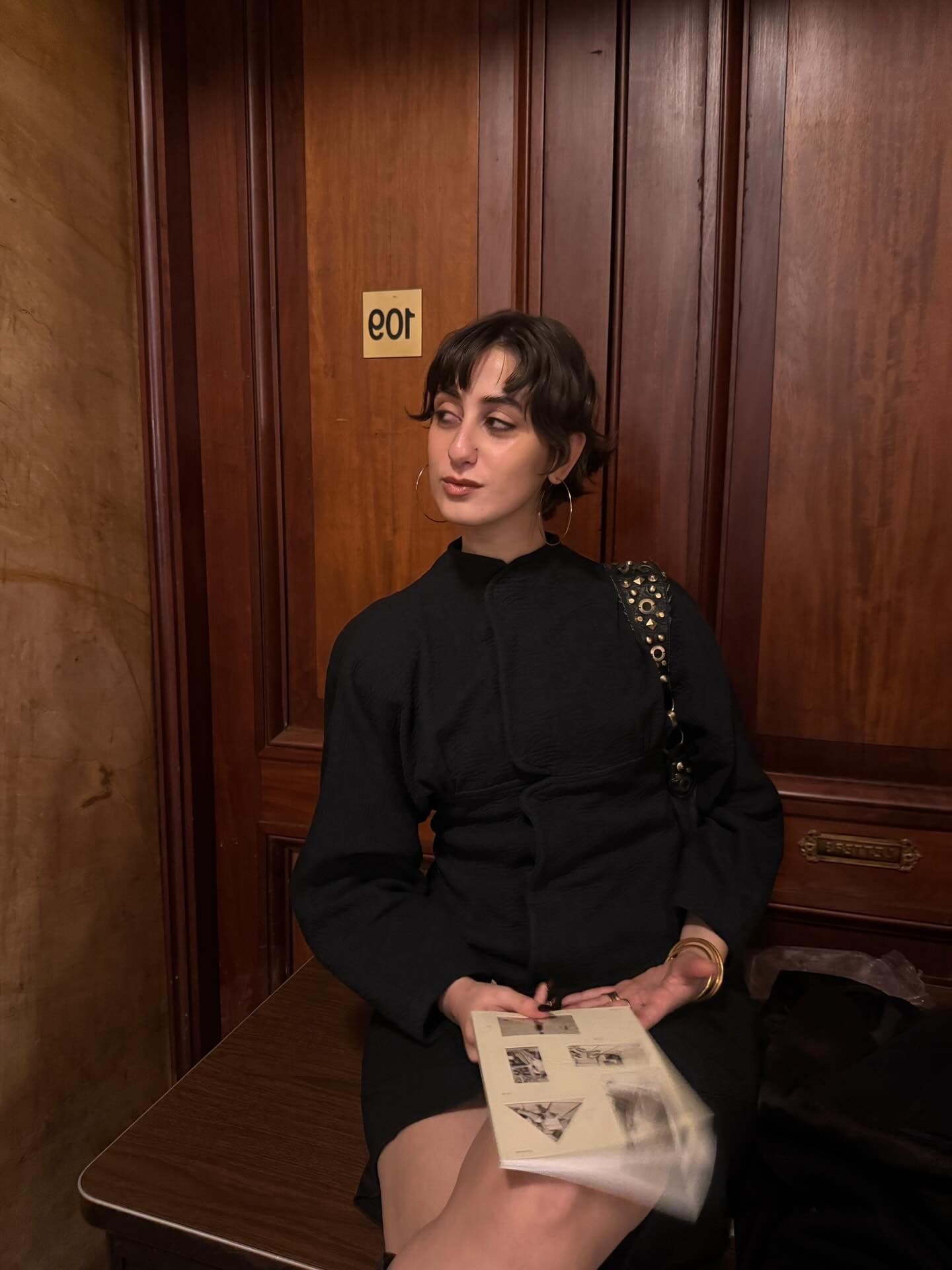
When our new first lady of New York City does something, I automatically think it's correct. After Zohran Mamdani was sworn in at City Hall on January 1st, his cool and creative artist a wife, Rama Duwaji, made headlines on one side of the internet for wearing $600 boots because, as a democratic socialist, how dare she purchase or own a pair of shoes priced reasonably if the quality matches? What that side didn’t know is that, for events, Duwaji tends to rent her clothes—and those $600+ Miista boots were just one example of that. "Thrifting is something Rama does often—she’s an exceptionally savvy shopper—so renting second-life fashion felt like the most authentic way to approach a moment of this magnitude," her stylist Gabriella Karefa-Johnson wrote on her Substack, Brain Matter. She goes on to share that Duwaji's looks typically consist of rented vintage clothing, often from Albright Fashion Library, and borrowed pieces from small businesses. This had me thinking about the rise and popularity of clothing rental services.
Clothing rental services are by no means a new thing, with the first widely recognized one, Rent The Runway—inspired by the idea that occasion or statement dresses often being worn once before just occupying space in one's closet—launching in 2009. What’s interesting to me at this time, though, is what about this day and age is inspiring Rama and others to turn to renting. Are we, as a collective, growing increasingly non-committal, even when it comes to our clothes, or are we just growing comfortable with a lack of ownership? And if so, is there any downside?
 Nancy Kaszerman/ZUMA Press Wire/Shutterstock
Let’s take a look at the data: 83% of Gen Z have already thrifted or are interested in thrifting, and 82% of consumers now consider resale value before buying something new. Long story short: for the first time probably ever, a generation has grown up thrifting and, therefore, is entirely comfortable wearing pre-owned clothing. But this isn’t to say that thrifting doesn’t come with built-in drawbacks. “While thrifting lowers cost, it still creates friction: inefficient resale processes, time spent li sting and selling, closet space constraints, and uncertainty around quality,” Sixiuan Li, founder of BNTO, says. “Rental removes those barriers entirely. Consumers get flexibility without long-term commitment, no resale hassle, no closet clutter, and no maintenance and laundry! In rental-first models, ownership becomes complementary rather than default.”
We also live in an age of subscriptions that have replaced the concept of ownership: streaming services, ride-sharing, Airbnb, and housing in general, so it's not completely out of the realm that, especially during tough economic times and a declining economy, our shopping habits would follow suit. Plus, the fashion trend cycle is faster than ever, resulting in quick outfit and clothing turnover. "People want variety: on average, garments are worn only about seven times before being discarded or donated," Li says. "Each discard also carries emotional guilt around waste and overconsumption."
The clothing rental market has expanded in tandem with this desire. Now, the top clothing rental services include BNTO, Vivrelle (for designer handbags), Switch (for designer accessories), Armoire, Nuuly and Pickle, which allows you to "rent" directly from others' closets. "There’s a growing awareness around quality and circularity, and rental offers a smarter way to access high-quality fashion while buying less and still staying on top of the latest trends," Sky Pollard, Head of Product at Nuuly says. "It’s also a more cost-effective way to experiment with style."
All in all and completely unsurprisingly, Rama Duwaji is onto something here: why own and over-consume when you can have a stacked revolving rotation of vintage Balenciaga, ballgowns, and brooches, all while saving money? Renting clothes leaves space for constant reinvention, trial and error, and experimenting with personal style—perhaps this comes from a non-committal place, but the concept of not being stuck with one identifier or aesthetic sounds freeing. While it would be nice to own things every now and again, or to at least have the financial option to do so, when it comes to clothes, access is all that's necessary to make (some of) us happy.
So, we thank Rama Duwaji for reminding us of the importance, both personally and politically, of circular fashion.