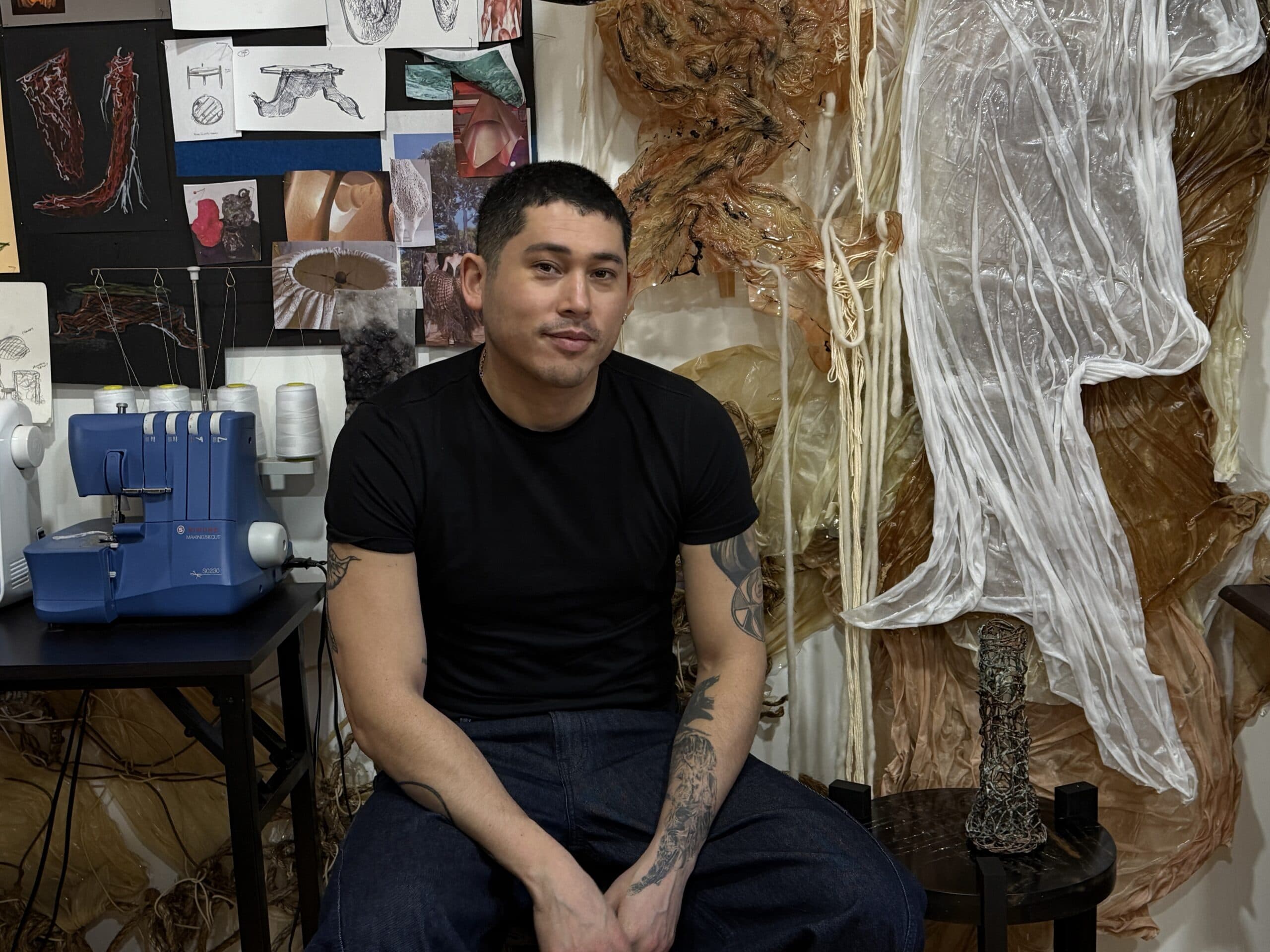
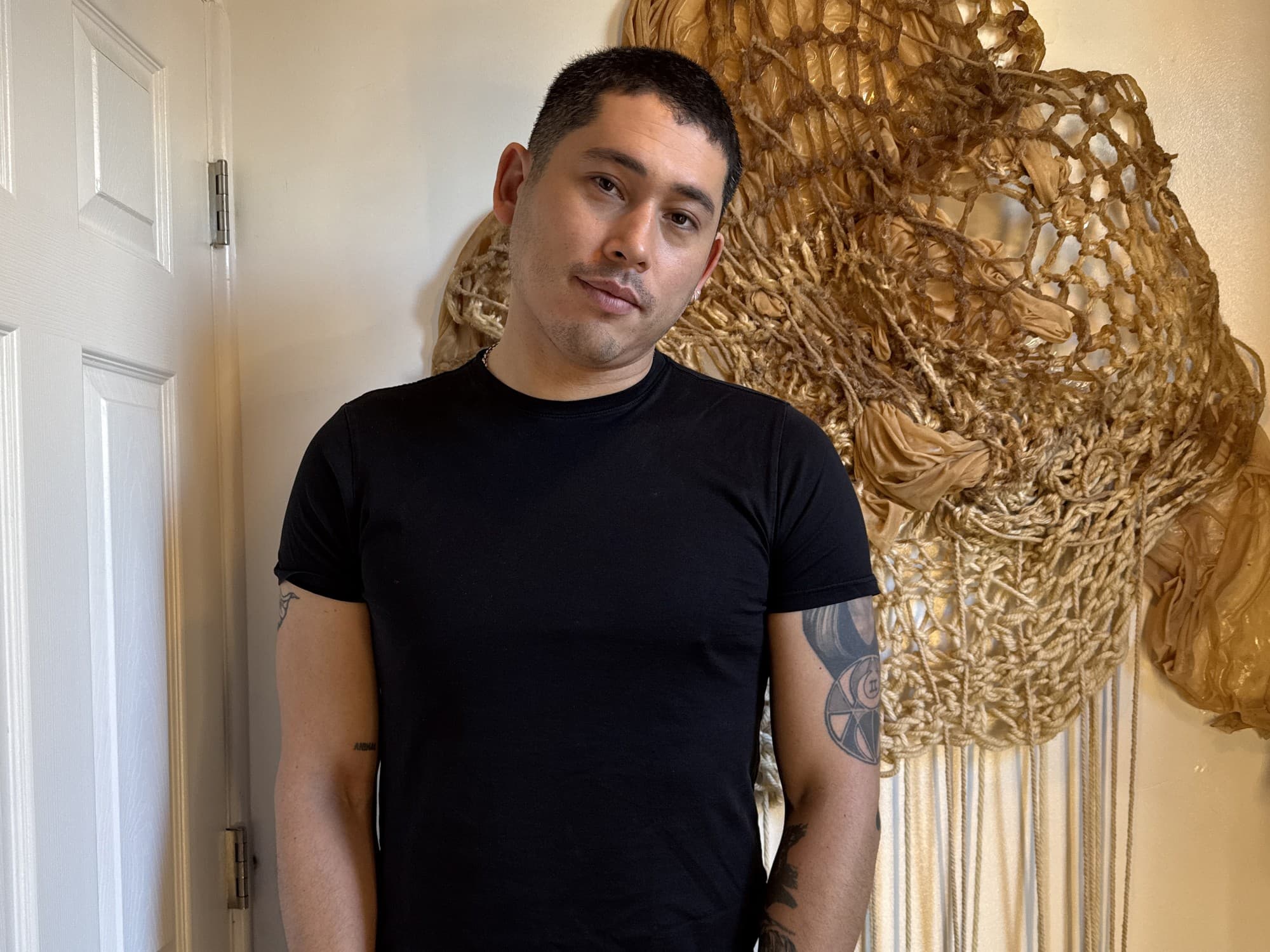
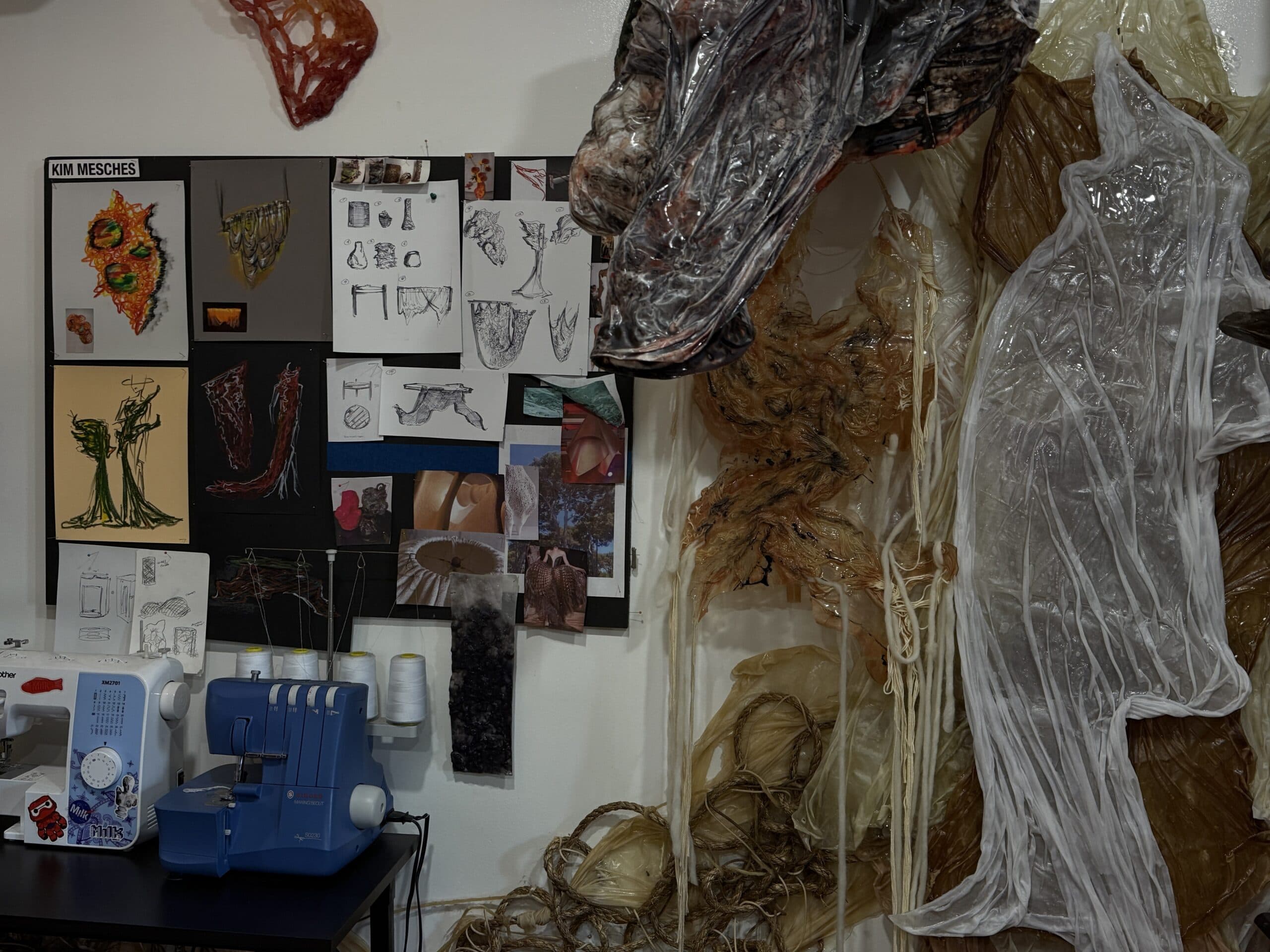
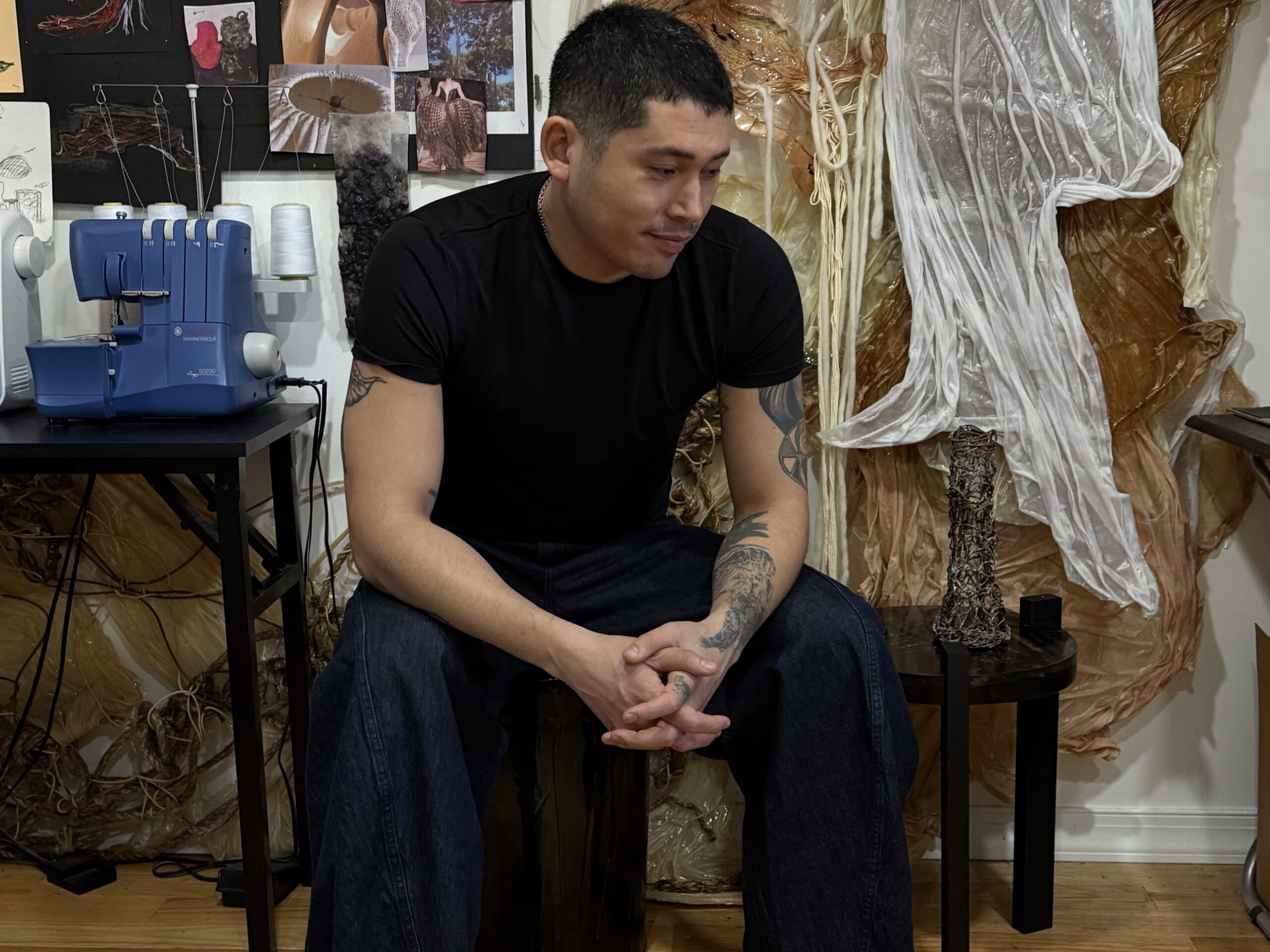
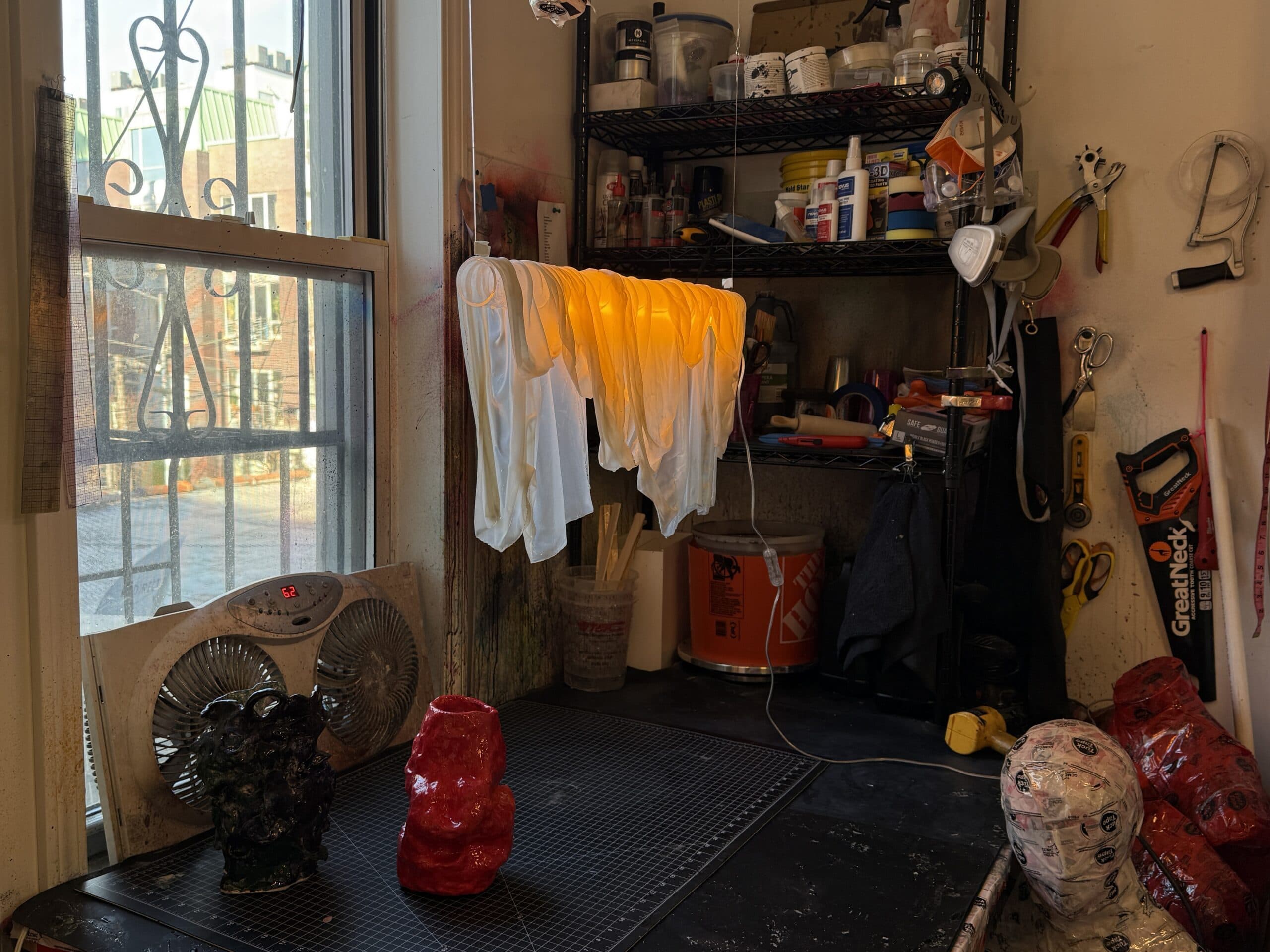
I met Kim Mesches at his Williamsburg home and studio hybrid: a lived-in space filled with light fixtures, garments, and wall art all created by Mesches himself (alongside work by his grandfather, painter and visual artist Arnold Mesches) as well as scraps from old projects patiently waiting to be turned into new ones. This is one of the first things that I noticed about Mesches’s artistry: he is beyond comfortable turning old art into new art. This isn't because he lacks a sense of attachment to his work, but because he is committed to continuously evolving and doesn't beat himself up when something doesn't turn out how he imagined it would. Entering his apartment, one of the first pieces of art that I spot is woven and dyed with coffee. “We experiment out here for the sake of trying shit,” he says. “I love throwing stuff at the wall and seeing what sticks.”
After earning a degree from the Fashion Institute of Technology, Mesches began making pieces, garments and otherwise, with epoxy, fabrics, and anything that he can get his hands on and incorporate. For most of his work, the process begins when the material is liquid. “It’s very messy and toxic,” he says. “It has to be done over an eight hour period of time where it’s curing and it can be moved and manipulated.” Then, everything is hand-dyed, hand painted, or dressed with materials to create different textures or effects. This is all to say that his traditional fashion education led him to feeling creatively free while working with non-traditional materials–this also, in turn, led to him becoming a fearless artist.
Over a cup of tea, I picked Mesches’s brain about everything related to art, fashion, and creativity.
When did you first know that you were going to be an artist?
"I've been doing art for my whole life. This iteration of work came after I started doing more experimental pieces for styling photo shoots, because I work as a stylist as well. I started experimenting and making more sculptural things and it's kind of evolved since then."
What form of art did you begin with?
"My background is in fashion design. I went to FIT and got a degree there. I had a clothing line way back in 2013-2015, I think it was, and I sold at a bunch of boutiques in the city. I started doing styling work where I was assisting different stylists and working on that side of everything, and I really loved it. So since doing that, I kind of moved away from just designing wardrobe clothes and doing more sculptural things for editorials and then kind of playing with materials. It kind of evolved from there."
How does what you're doing now feel different from straightforward fashion design? Does it give you a different feeling?
"Yeah, totally. I mean, it's completely free because it's art and it mixes media and I'm allowed to do anything from sculpture to ceramic, to lights, to even cast pieces that are still used for editorials."
Do you go in with a vision or are you more of a freestyler?
"For some pieces, I start with a general idea and then they just kind of change into something else. One piece, for example, which is now just a hanging piece was originally a huge cast piece that when you wear it, it changes color with body heat."
How does that work?
"It's a special chemical you can add at a certain point in time. They're really cold right now. You see one's black with red, but when I could add a heat gun or leave them in the sun, it'll turn bright yellow.Those are just prototypes, but I'm trying to do more object based things and design work at the moment.
Does making art ever feel scary?
"I guess so. You kind of just have to just surrender to it and let it kind of do its thing. When you leave it alone after it's at a certain point where you're happy with it, it still has to cure and it can totally just combust almost. It can cure completely different or it can change. It's really strange, but it's a fun process to see what happens. Luckily I've done it so many times that I can kind of know what's going to happen and what the result will be, but I've had many failed experiments for sure."
Were you creative as a child?
"Oh yeah. I was sketching, drawing all the time. I used to make all these clothes for Beauty Babies with a big box of scraps my mom had."
Where did your interest in fashion come from?
"I've always been interested in fashion. My aunt was actually am image consultant in the '80s. She was on Oprah and stuff. Her name is Emily Cho and she wrote a bunch of books in the '80s about like finding your own personal style. So it might've been genetic."
Are you still working as a stylist?
"Yes, I'm still with an agency and I style for brands like Ralph Lauren and also do Macy's a lot. I do more commercial brands. I don't do as many editorials, but it's really fun to work with creative people who do other projects like this."
How did you begin making art with non-traditional materials?
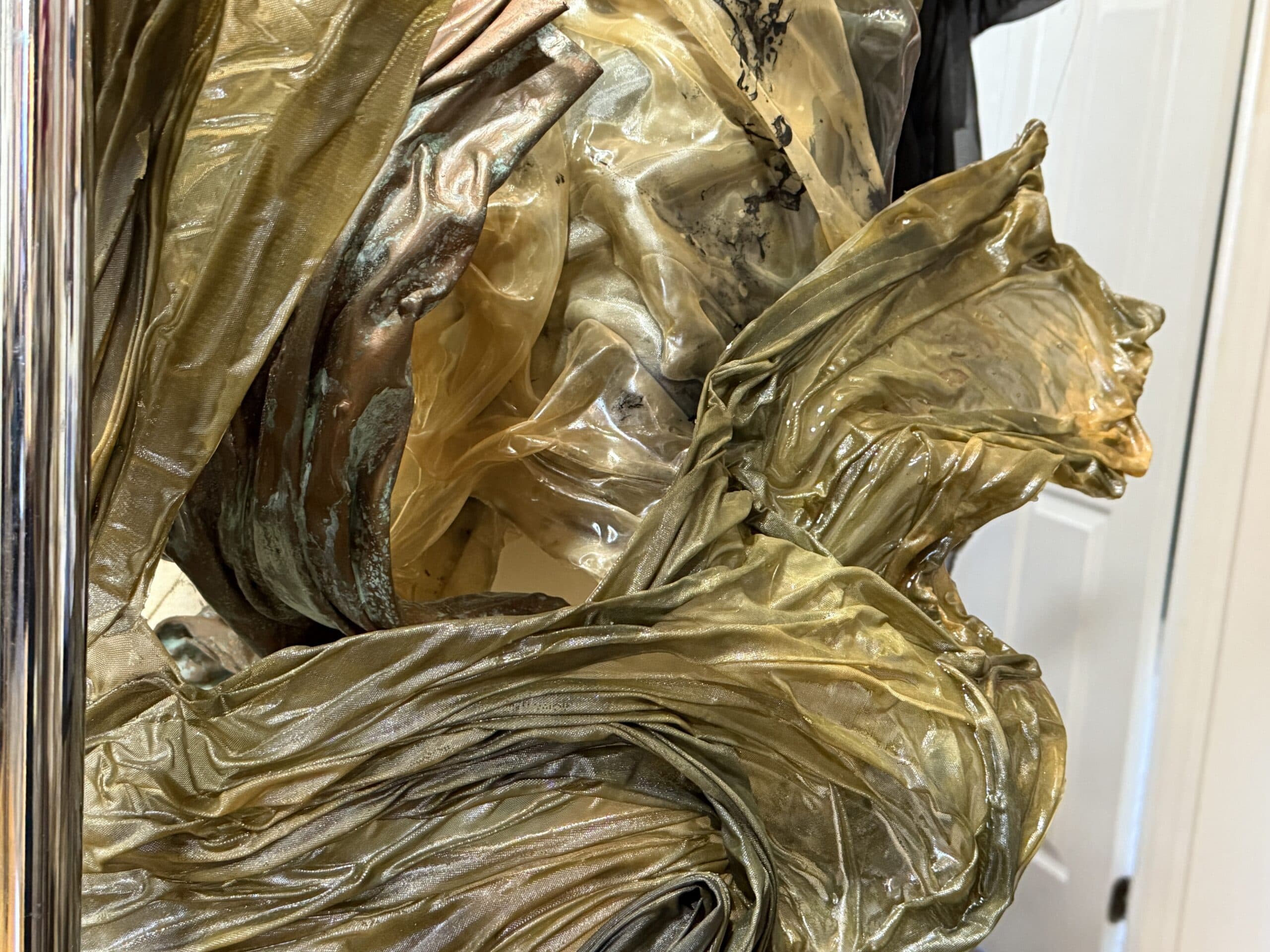
"I always like to see what happens with materials, so I'm always experimenting with anytthing I can find. I have some pieces that I'm working on that's a copper material that you add a chemical to and it becomes a teal color—I find that stuff so interesting. Anything chemical and scientific is really fun.I've always just tried new things and then found different routes that make sense or don't make sense. I love seeing what happens when you mix two things together."
Do you feel attached to the art that you make? Do you have favorites?
"I do have a few favorites. This is piece over here that I did for Marina Abramović. It was a project with the photographers Luigi and Lango for their photo book. I worked with Michael Philouze, who was the men's editor at Vogue. He was doing this project with them and he found me on Instagram and was like, 'Hey, can you make this crazy thing? She's inspired by death and rotting and fish, like the insides of fish and crystals.; And I was like, 'Yeah, of course. I got you. I love this stuff.' It has dyed fabric, iridescent mica powder, pink Himalayan salt, and beads—all like encrusted and stuff that she's into."
What do you do when you make art that you don't like?
"If I'm over it, I'll just chop it up and see what I can make. I like to reuse pieces a lot. I like to cut things up and experiment. I trash things or I turn them into bigger collages or mosaics or something like that."
Do you feel a sense of community amongst artists in New York City?
"Yeah. I think there's such a sense of creativity and collaboration. Now that I'm moving more into like the design world, I'm starting to meet really, really cool people. I just did a coffee table collab with this interior design studio called Studio SII. They're really cool. We met on Instagram. I love creating with people who are in this world and especially in the design and art world.Ppeople are really, really collaborative or they're just on their own path, being more insular. But yeah, the community is really cool. I also just signed with this gallery called Tuleste Factory. They're really cool people and it feels like a nice community."
What would you like to create in the future?
"I want to make more lights, functional objects, and I always love having a part that notes back to the fashion background of mine. My goal would be to have my own design studio and to just be able to make large pieces for homes or hotel lobbies or architectural things. I did this big cast piece for Ashley Graham for the 2025 Pirelli calendar. I would love to do bigger and crazier pieces that take the aesthetic that I've developed and utilize it in different ways."
What advice would you give to an aspiring artist?
"Just experiment, I think. It took me ten or fifteen years to find the right avenue where I can flex as much as this. I've always either made things that were trendy or felt right at the moment, but didn't really feel like my personal aesthetic. I think that's important is to just start experimenting and figuring out what you like and what works. THenjust keep going and just keep making stuff until something eventually clicks.
What inspires you?
"I'm inspired by the city, I'm inspired by street style, I'm inspired by sculpture, I'm inspired by architecture, I'm inspired by science, nature, and under the sea stuff. I've alway loved under the sea things. I've always been a marine person, which I think is pretty evident in my work. I want everything to feel whimsical and organic. I think movement and science are two of the biggest things I'm always trying to convey."
What do you do when you don't feel creative?
"I think it's kind of healthy to let myself feel that way. I don't think anyone should try and force creativity—it'll come in waves and that's fine.
How would you describe your work in three words?
"Surrealist, organic, and chemical."
Do you think taking risks is an inherent and necessary part of being an artist?
"Totally. That's what makes a good artist. I think it's fun. What's point otherwise?"