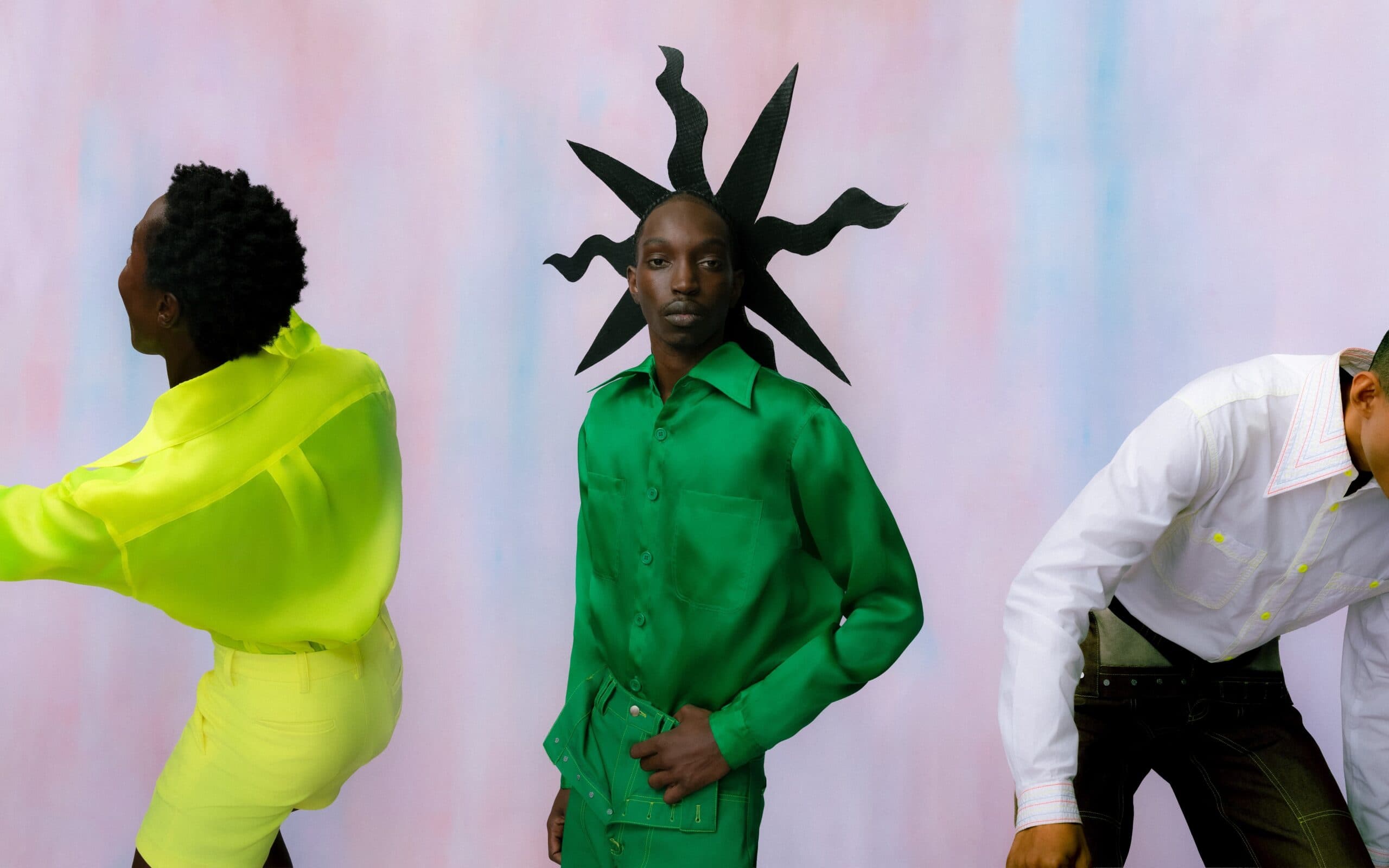
Jacques Agbobly, founder and designer of namesake brand Agbobly which officially launched as we know it today in 2023, spent this past New York Fashion Week showing support for this community through his attendance. "That's the way we keep the fashion wheel churning," he says. We take a brief moment to first unpack the hectic nature of any fashion week and establish common ground of both being exhausted before acknowledging both of our West African heritages.
Agbobly, who won the Fashion Trust U.S. prize for inclusivity in fashion in 2023, grew up in Togo and remained there until the age of nine with his dad's side of the family—fashion was never really far away, though. "My dad sold secondhand clothing from the markets in Togo. He would go and rummage through clothes that were discarded and sent from America or Europe," he says. "Oftentimes, these garments were thought of as having a higher social standing because they came from overseas. He would always give me the freshest clothes and I would always dress in the freshest clothes." With his mother in America and his father seeing the importance of a mother figure for a young man, Agbobly was sent to live with his aunt and grandmother, which unlocked a new exposure to fashion, art, and general: his grandmother rented out part of her home to seamstresses, and his cousin Rosaline spent a large portion of her spare time sketching. "I was the baby of the family and I was very sheltered, but I was also very encouraged to just explore creative avenues," he says.
Agbobly moved to Chicago at the age of nine and into a housing community that was keen on championing his artistic pursuits and nurturing his creativity. An after school program within that community committed to helping children with their homework, but also made sure to expose them to all that the city had to offer. "It was like having a genie. I would literally be like, 'Hey, I want to try ballet,' and they would get me into a ballet class or I would be like, 'I want to try acting,' and they would get me into a play," he says. "That community was a lot of people that didn't have access to the arts or anything. A lot of kids who grew up in that space, they're Black and brown like me, and came from not so wealthy families. The odds were against us, but in that space, they made everything a possibility." Ultimately, that genie caught onto his love for fashion, 'Project Runway,' sketching, and Alexander McQueen—this resulted in them banding together and connecting him with a fellow Black queer designer in Chicago who helped him make his first dress.
You could say that things for Agbobly have recently come full circle—once a student at Parsons and now a teacher there, he does his best to make underrepresented students feel like the institution was made with them in mind, or is at least open to adapting to make space for them. "It's a predominantly white institution and an institution that wasn't made for people like me that look like me. I felt very misunderstood," he says of his time at a student there. "A lot of professors didn't really know how to guide me to do the work that I wanted to do. They would constantly validate me and say, 'Hey, your work is important', but they didn't really know how to kind of steer me into completing that work or providing me with those resources."
In Chicago, Agbobly felt solace in having a community of other Black kids to lean on and relate to. At Parsons, he shared classrooms with only one or two people that looked like him. But, graduating in the first pandemic class in 2020, the collective turmoil and uncertainty that we all felt, and sort of losing sight what he loved about fashion to begin with, it was Parsonss knitting professor Annie Larson who steered him back in the right direction. "I always admired her work after graduating and wanted to reconnect with her," he says. "She invited me over to her studio space, and while we were there, she was like, 'Do you actually want a space here?' She has a large following on Instagram. So we did a GoFundMe and I raised, I think $12,000 for me to be able to get a studio space and pay for it for a year and also launch my collection."
This isn't exactly where his namesake brand was born, though—it was a knitwear brand called Black Boy Knits and was more so viewed as a way of getting by throughout the pandemic, but ultimately led to the realization that something bigger, more intentional, and more permanent was possible. "It's kind of like starting a sculpture almost: you start with the foundation and you kind of have to keep carving it until you get what you want to get out of it. I feel like that's been my journey," Agbobly says. "I started with Black Boy Knits and I didn't had a vision. I wanted to just make sweaters, something that I was really passionate about, and it eventually became this ready-to-wear brand."
 Delali Ayivi
 Delali Ayivi
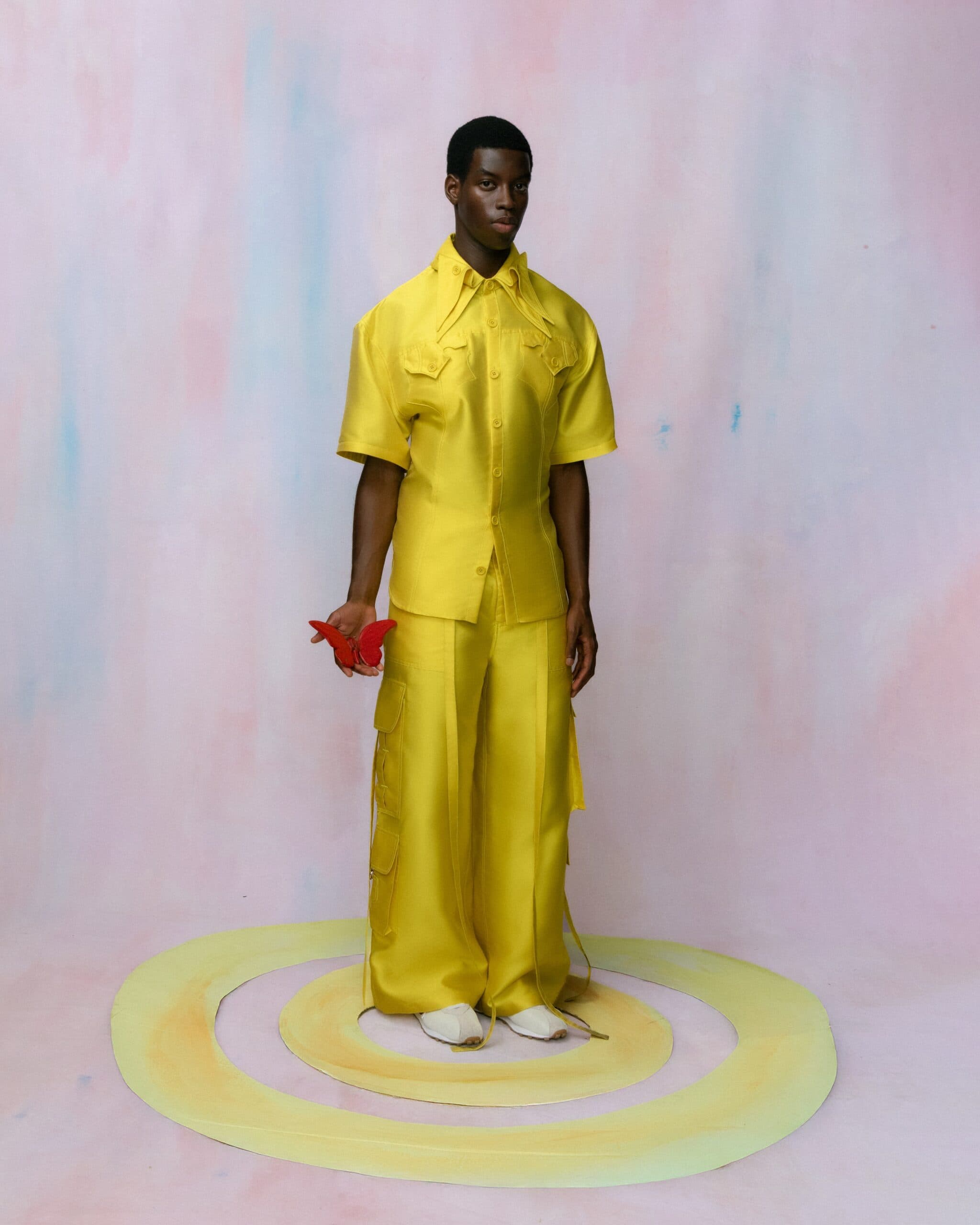
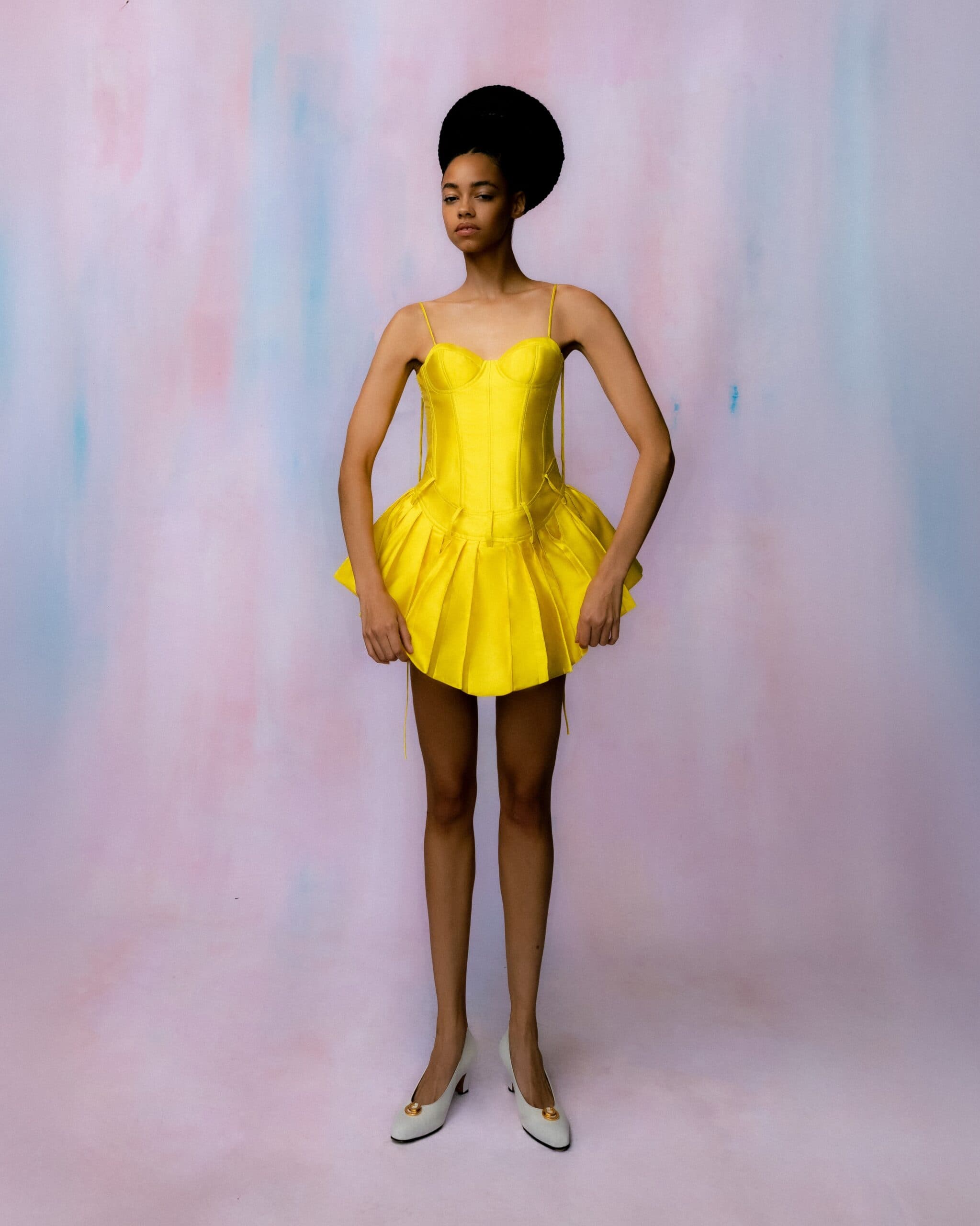
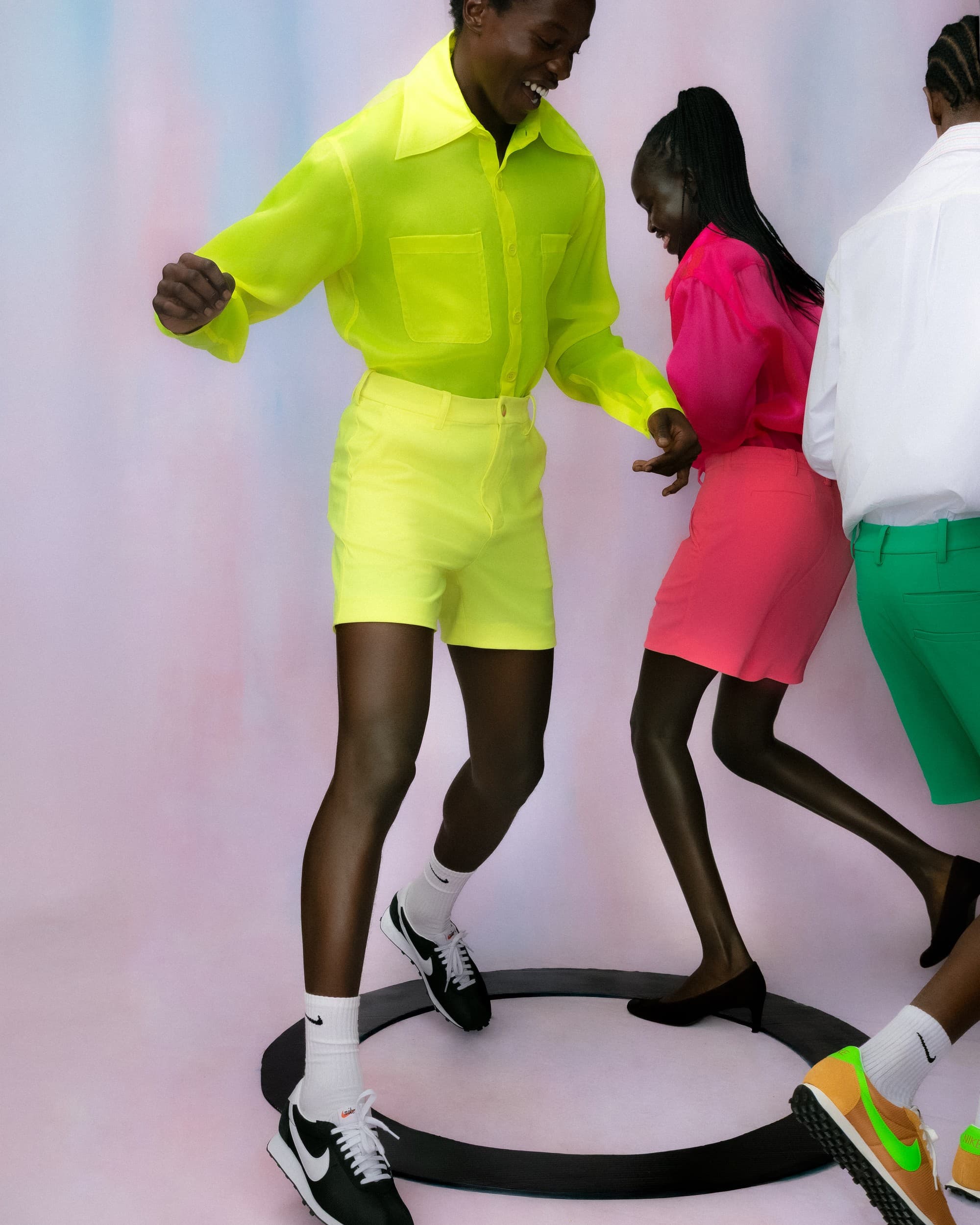
Agbobly's childhood and background, especially those initial fashion origins and lasting visuals that he has of his grandmother's workspace, remain omnipresent in his designs. He is most concerned with telling stories often overlooked in the larger fashion conversation. "There's a lot of things that make an Agbobly piece, and a lot of it has to do with color, storytelling, craft, and also taking up space. I think through my pieces, I invite the word to really take up space and showcase who they are on the inside." Through his collections, he continues telling stories about his migration from Togo to Chicago, and his time spent in both places. His first collection, 'Togo Vivi Na,' was a love letter to his first home told through ginghams, stripes, and neon knits. His sophomore collection, 'Bienvenue À Bord,' French for 'welcome aboard,' focused on migration, airports, and the different dress practices he witnessed in both America and in Togo. "I call the target audience [for that collection] 'Afro-politans," he says. "These are people who were either born in Africa or have strong ties to their African culture through family or parents, and are trying to figure out a way to navigate that and represent their culture through the way they dress." Considering that his collections sold at retailers like Nordstorm and Farfetch, I think it's safe to say that consumers resonate with these deeply personal stories.
 Courtesy of Agbobly
At any point in time, but during Black History Month especially, it would've felt wrong not to touch on inclusivity and representation within the fashion industry, and inquire about if Agbobly feels a sense of community in his current home, New York City. "I started at a time when there was a lot of reckoning for and holding a lot of institutions accountable for their lack of representation and the way that they treat Black and brown people in their organizations. We saw a lot of things that were put in place to kind of rectify that. But then over the years, I think we've definitely gotten a bit lax with that kind of support," he says. "However, I also think that there's still sort of this issue in the industry where you can only support one Black designer at a time. And I think that that's something that I have an issue with because a lot of our stories are similar, but are so very vast—there's definitely opportunities for us all to exist in this space."
Agbobly is at a place now where he feels comfortable slowing down—and encourages that of others as well, because existing in the fashion industry today is difficult and tenfold for Black creatives. "I want us to really rethink what it means to support designers from varying backgrounds," he says. "I think more than ever, especially with everything that's going on with the retail stores as well as just politically, I think that we need to really come together and really hold each other down and support."
He finds comfort in the future of the industry through the students that he teaches at Parsons—and hopes to be able to make things easier for them in some way shape or form. "What I really enjoy is that a lot of people are creating spaces for themselves outside of the industry or outside of the norm. And I think it's pretty badass," he says. For example, students at Parsons took it upon themselves to start their own runway show through a group called Dialective for which Agbobly had the joy of serving as a judge on.
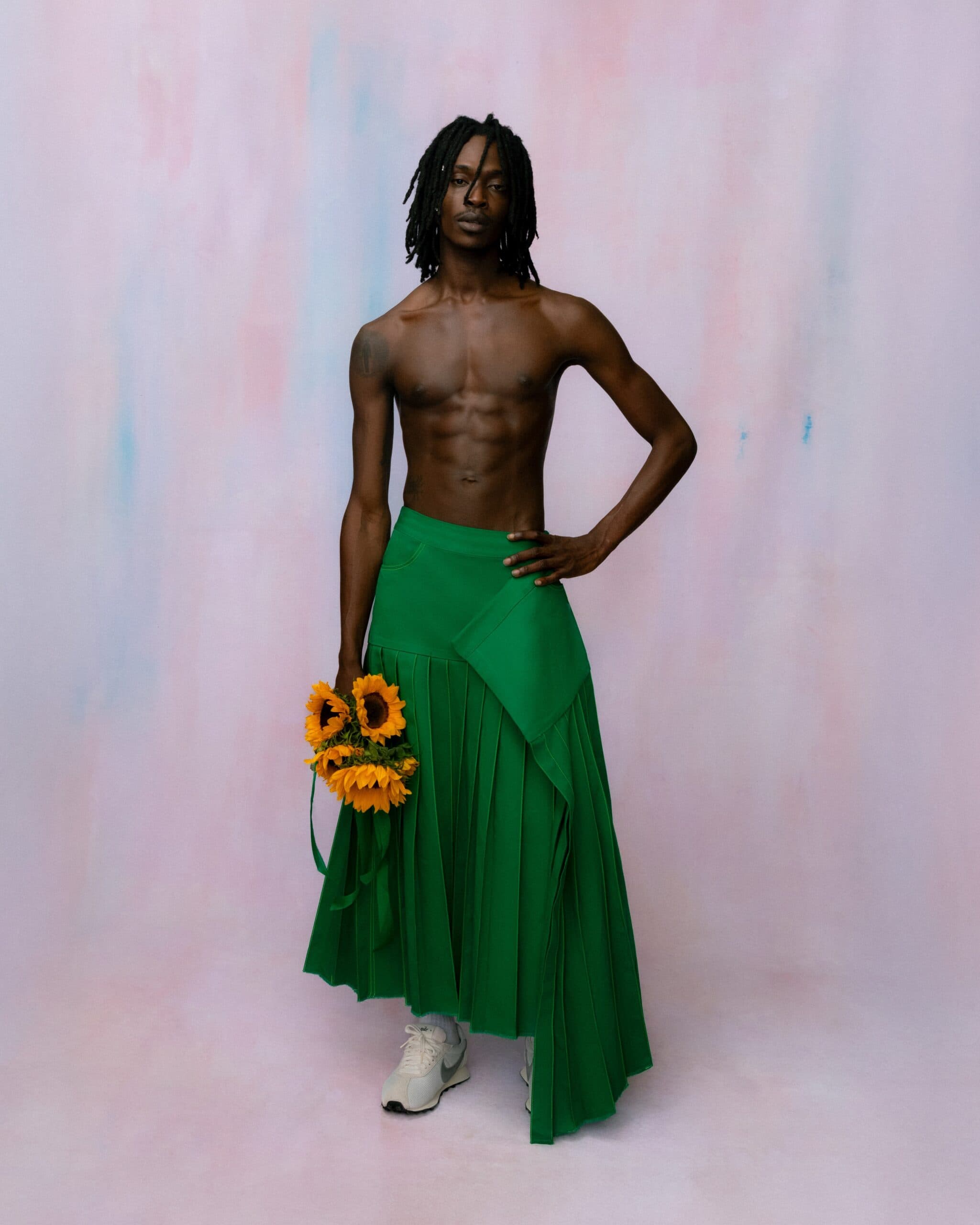 Delali Ayivi
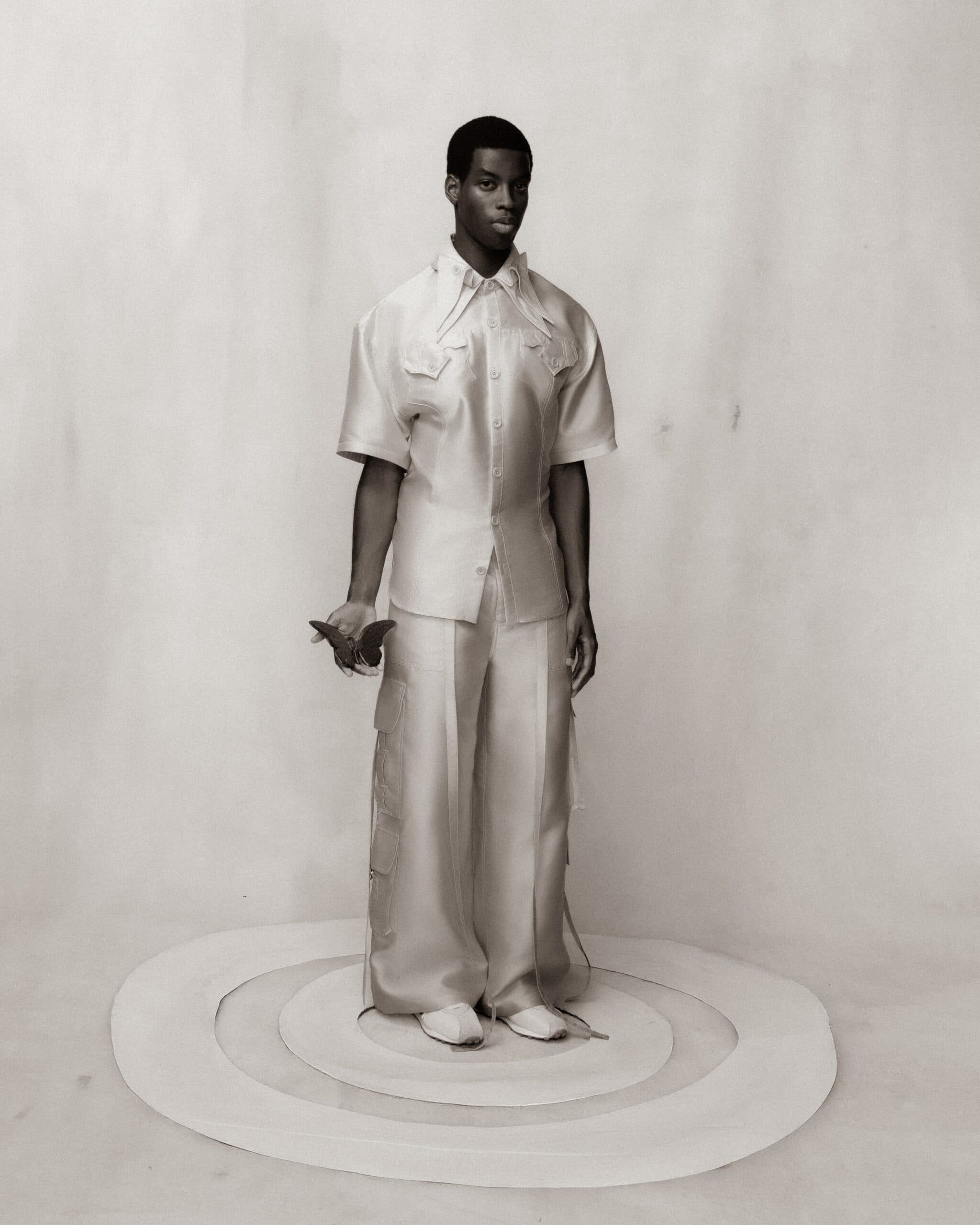 Delali Ayivi
As for the rest of 2026? Agbobly, on top of continuing to create, share stories about his background through his designs, champion the next generation of designers in a way that he didn't experience, and tighten the visual identity of his brand, is looking forward to simply existing—he did, after all, launch a major collaboration with G Star at the tail end of 2025. "I've been doing this for six years now, and for the first time in my life I feel like I am not so hellbent on chasing something," he says. "I feel like I'm very content with where I'm at, but I'm excited to keep pushing it." But have no fear: he did tease hopes to show at next season's New York Fashion Week.
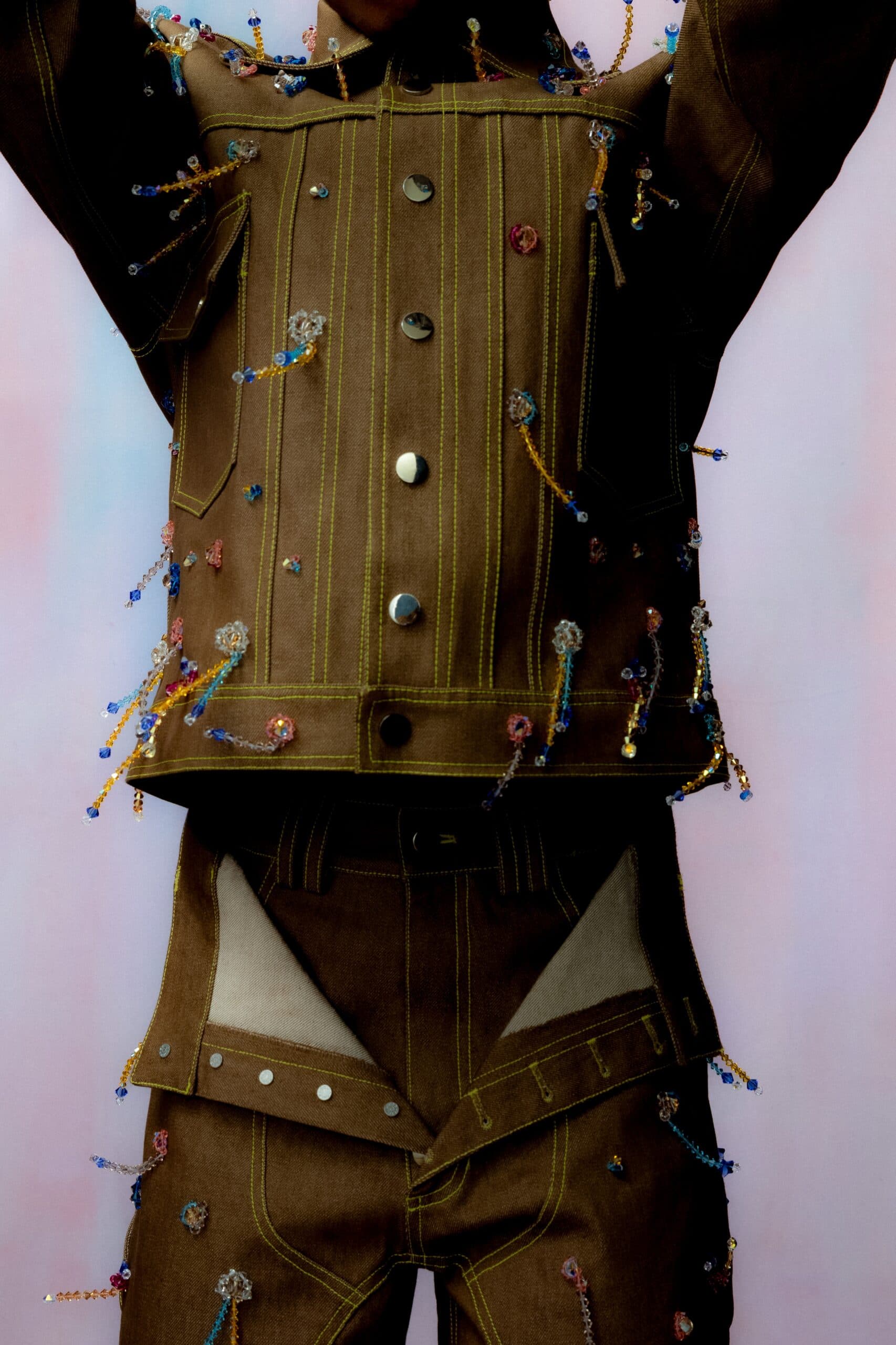 Delali Ayivi