Lately, life has felt heavy. If the lack of humanity surrounding us isn’t enough, turning 40 this year, losing a writing gig, and facing a looming mortgage payment is enough to make me want to scream into the abyss for hours. Since 2020, weekly therapy sessions have been my saving grace. But after nearly six years of hour-long visits once a week, the coping tools I had learned suddenly didn't feel like enough.
In a recent session, my therapist asked, “What are you doing to take care of you?” I didn’t have an answer. She followed up with, “Where are you in your spiritual practices?” She asked this way because she knows I’m not religious, but I believe deeply in a higher power. “I’m nowhere,” I said. “What could you do today to nourish that?” she challenged me.
I went home and lit one of my Brother Vellies copal incense sticks. Founder Aurora James was my introduction to researching spiritual practices rooted in Indigenous cultures, and as the scent from the incense wafted through my home, I felt an instant sense of calm. In a world where we're told apps and wearable tech are the key to calming the mind and getting better rest, how could copal be so effective at slowing down my anxious mind?
Soon, I was reading about the Mayans’ connection to the stars, dating back more than 2500 years. I wanted to experience the fullness of these rituals, to follow how Indigenous cultures, like the Maya and Polynesians, practiced grounding and wellness. Especially now, when so much of modern wellness has been whitewashed, and it’s clear that Mexico and Hawai‘i preserve this history and share it with people like me.
So, with my therapist's words ringing in my ears, I packed my bags and began.
Stop One: A Natal Chart Reading in Maui
 Bianca Lambert
Like many people, I find myself drawn to astrology during periods of uncertainty. As a teenager, I’d religiously check my horoscope in the grocery store checkout line in CosmoGirl magazine. I wear my Rellery Leo necklace and ring like a badge of honor. While I know my horoscope can’t predict everything, there has to be something to it—even if Western science says otherwise—because the traits of the lion align with me almost perfectly.
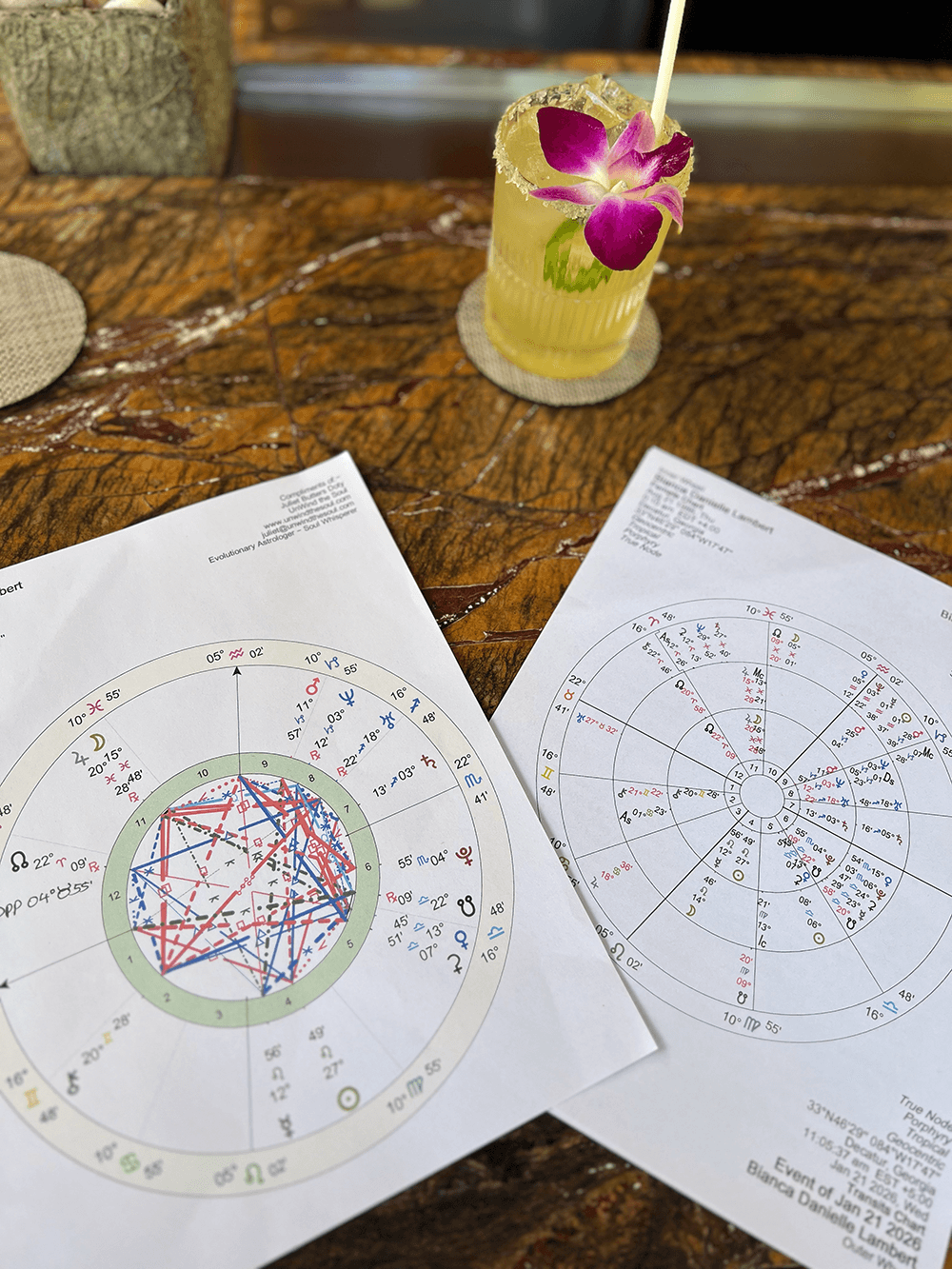
My curiosity led me to the Four Seasons Maui, the same property that served as the backdrop for the first season of The White Lotus. There, I received an Evolutionary Astrology Natal & Transit Chart Reading with Juliet Butters Doty, an astrologer with decades of experience in evolutionary astrology, who analyzes birth and transit charts with a focus on the soul's journey.
“A natal reading covers the sacred geometry a soul enters the world with—or, as I like to call it, the ‘first breath’ moment,” Doty explains. “That’s why an exact birth time matters; even a few minutes can change everything, depending on the time, date, and place of birth.”
A transit reading is more about the now: “Why and when a soul is being urged to change or level up into a new tier of responsibility,” she explains. “It reflects how the planets are ‘tickling, assisting, urging, or pushing’ a person’s unique planetary arrangement, pointing toward what’s incoming.”
While I knew Juliet wasn’t a medium, I still felt a little guarded about how much I shared. When she placed my charts in front of me, it was hard to deny the math and knowledge involved. During our hour-and-a-half session, Doty used the planets and stars to tell me about myself—from my difficulty in prioritizing my own needs to the Virgo energy in my chart that makes my inner voice hyper-critical. What surprised me most was how closely my reading mirrored the work I’ve been doing in therapy, which felt especially reassuring, given how profoundly it’s changed my life for the better.
I walked out of our session feeling lighter, less anxious, and even hopeful about where my life is headed in this giant year of transition. The biggest lesson: I can’t control everything. I chuckled, having heard this from Juliet and my therapist back-to-back. As Juliet ran over my chart, she confirmed that all of the work I’ve been doing will pay off, even citing exactly when I’d see it. But that requires me to stay curious and open, not let anything get in the way of my creative gifts—another point my therapist makes every week.
Stop Two: Stargazing In Lānái
 Bianca Lambert
On this journey, I knew I had to include stargazing, another ancient practice. Studies have found that simply looking at the stars can have meaningful effects on our mental health. Similar to the Japanese practice of forest bathing (shinrin-yoku), which involves immersing oneself in nature to calm anxiety, stargazing, which looks to the skies, can help reduce stress and anxiety, improve mood, promote a sense of calm and perspective, and relieve rumination. These are all ailments I’m working every day to manage. And truthfully, there’s something freeing about being a Black girl from the South, raised in a Baptist church, and allowing faith and spirituality to be tied to nature, planets, and a light source like the stars.
Stargazing sits at the intersection of astronomy, which studies the stars and planets, and astrology, which interprets them. Before astrology was labeled a pseudoscience—and astronomy a “real” science—during the Scientific Revolution of the 17th century, astrologers were highly regarded. Astrology and astronomy were once sister disciplines and studied together as part of the seven liberal arts, and used in medicine and navigation.
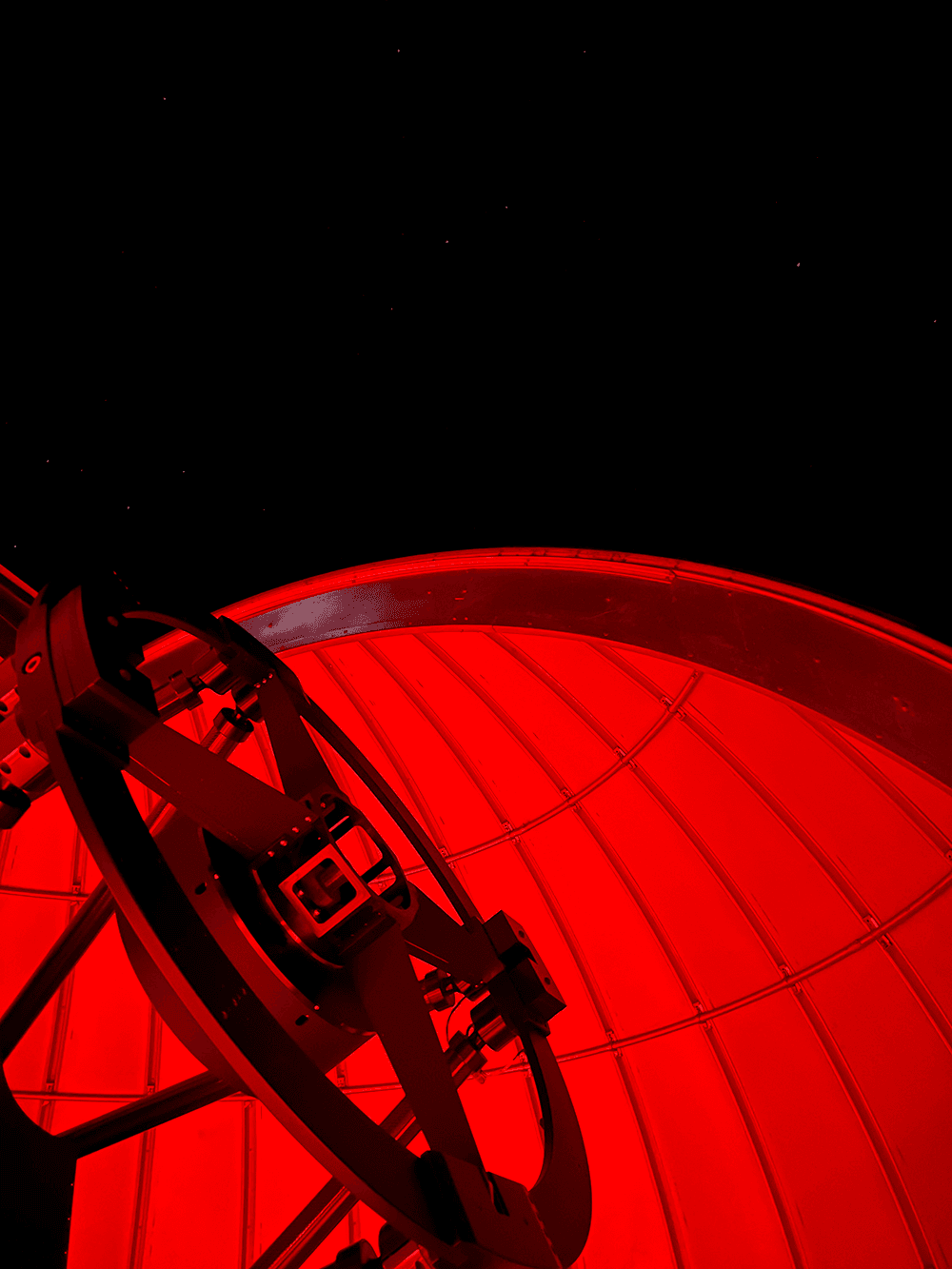
So, I knew I needed the science to balance what many would call the pseudo. I landed on the island of Lāna‘i, an hour and twenty-minute ferry ride from Maui. The stargazing experience takes place at the Four Seasons Lāna‘i and begins with an Ike Kupuna—ancestral knowledge—led by cultural advisors, who share how Indigenous Hawaiians and people of the Pacific used the stars to guide their way on the ocean. Afterwards, I was led into a moving dome with a 3.2-foot telescope.
My inner child rejoiced as I looked into the telescope and saw Saturn and its rings. It was glorious. Stargazing felt like an immediate self-care solution. My Apple Watch showed my heart rate slowing. My brain took an intentional mental break. No thoughts of job listings. Money. Or any stress about the future.
The experience brought to mind a line sung by Beyoncé: “If you feel insignificant, you better think again… You’re part of something way bigger.”
Stacian Watts, M.Sc., RP, a registered psychotherapist and founder of the Toronto-based Watts Psychotherapy, explains that what I was experiencing is awe. “Some of the research on awe suggests that it quiets the brain's default mode network, which pulls us out of rumination and more into the present moment,” she says. “When we’re in this state, we become more curious and receptive, which makes us more open to learn, explore, and engage with perspectives beyond our own.”
When we experience awe, she explains, there’s an inner expansiveness that stretches us, and that can shape and change our brains. “Our attention shifts outward beyond ourselves and our habitual thinking, and in those moments we feel a part of something larger than who we are, which allows our worries and sense of self to soften and fall into perspective,” she says.
I felt the same sense of awe as I kayaked out to sea and whale-watched the next day, even experiencing one breach right in front of me. That sense of expansiveness stayed with me as I continued exploring how the stars and sky can shape our inner worlds. Which led me, once more, to the Maya.
Stop Three: Purification in Mayakoba
 Bianca Lambert
Beyond stars, Doty also spoke about the moon and its emotional significance during times of transition.“Emotional (Moon) struggles can be harnessed and turned into a learning curve—learning how to move through uncomfortable emotions rather than comforting ourselves in old, habitual ways,” she explains. The more I sat with the idea of lunar nourishment, the more I realized how deeply it echoed beliefs Indigenous cultures have lived by for centuries.
The Mayan held the moon in high regard, viewing it as a powerful female deity—often identified as Ixchel, the Moon Goddess—who influenced water, fertility, agriculture, and life cycles. As expert astronomers, they tracked lunar phases, creating precise calendars to guide farming, fishing, and ritual life.
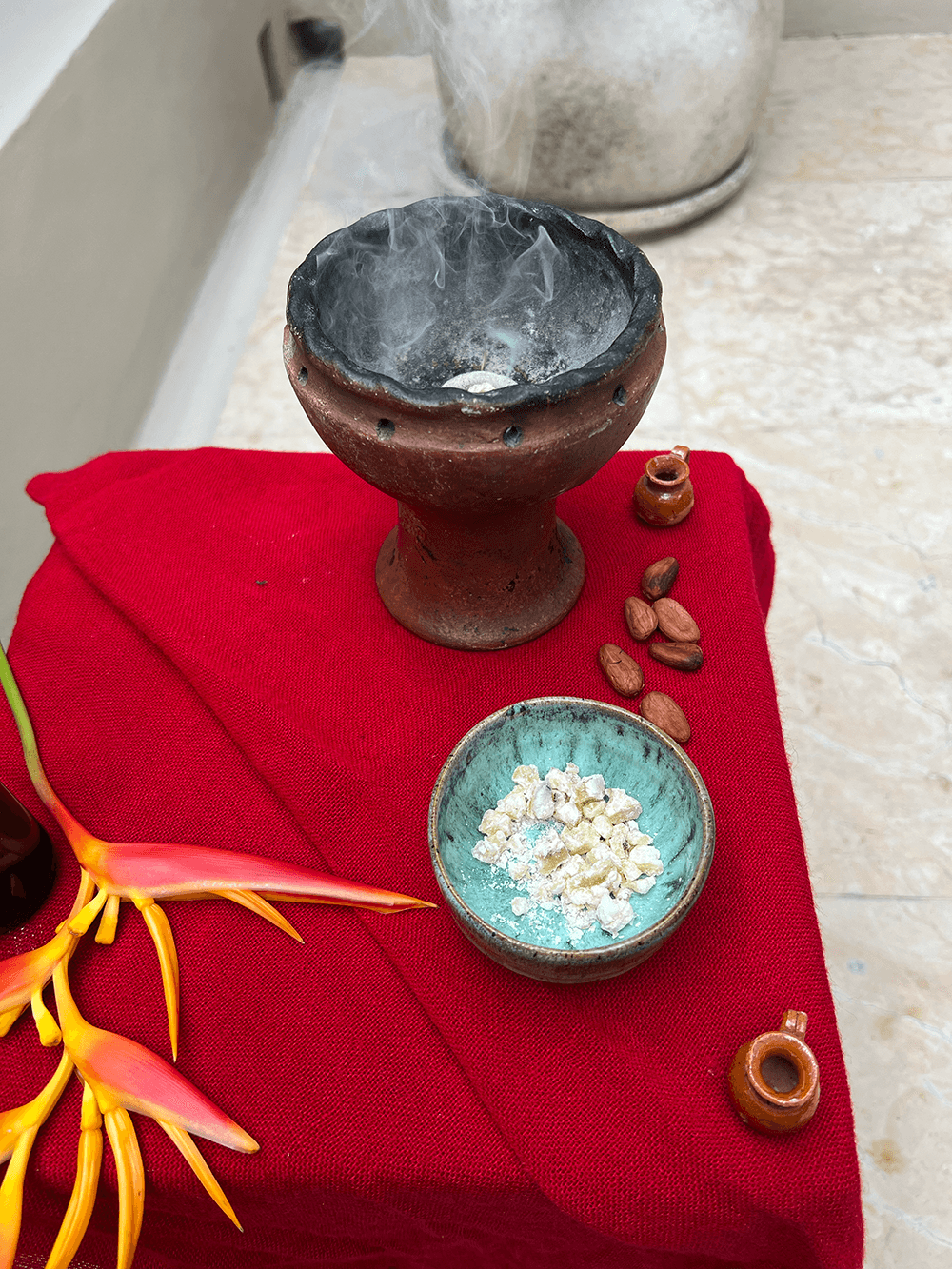
That history led me to the Riviera Maya, where ancient artifacts of the Maya empire are still preserved. There, I visited the Fairmont Spa Mayakoba, where many of its treatments are rooted in Mayan traditions and are led by staff whose lineage traces back to the Maya themselves. One essential offering is the Pom Copal Purification Treatment. The Mayans believed that copal—a natural, aromatic tree resin—was the link to the underworld, and that, through its smoke, they purified themselves to empower their spirits. This 90-minute treatment merges traditional energy cleansing with herbs and copal, detoxification with Mayan clay, and a grounding hot-stone massage to stimulate circulation and promote relaxation.
The service starts with stating an intention. This can be for the moment, for life, or anything you choose. I came into the service with an open heart, ready to release, so finding my intention was easy. I wasn’t judging myself for letting myself experience this fully like I would have a few years ago.
Then I stepped out onto the balcony where my provider cleansed me with smoke from the copal, asking me to select a piece, choose something to let go of, and place it in the vessel. She gently swept my body with a bundle of fresh herbs to help cleanse my energetic field and release what I no longer wished to carry.
When the actual massage happened, I was so relaxed during the experience that I woke myself up snoring. After we were done, my mind wasn’t racing, and my body was the most relaxed it’s been in months. I hold all my stress in my shoulders and neck, and my practitioner noticed, too.
As a Black American, I yearn for the Indigenous practices of my ancestors—practices erased from my family history through slavery. Therapy is all about caring for your cognitive health, but it doesn’t cover the “faith” part of what I need to be a fully engaged human. My therapist often asks me, when I get stuck in the analytics of something, whether I have faith. I’ve often told her I think having faith in some situations is “delulu” and we fall out laughing.
From my natal and transit chart readings to stargazing in Hawai‘i and the cleansing ritual in Mexico, I now carry a deep appreciation for Indigenous cultures and gratitude for those who shared their knowledge, traditions, and history with me along this journey. One thing I learned is that faith is a verb. Therapy is essential for me, but pairing it with ancient practices rooted in awe and ritual was the key to helping me feel like my best, whole self.
In looking to the stars, I found them reflecting something older, deeper, and already within me.