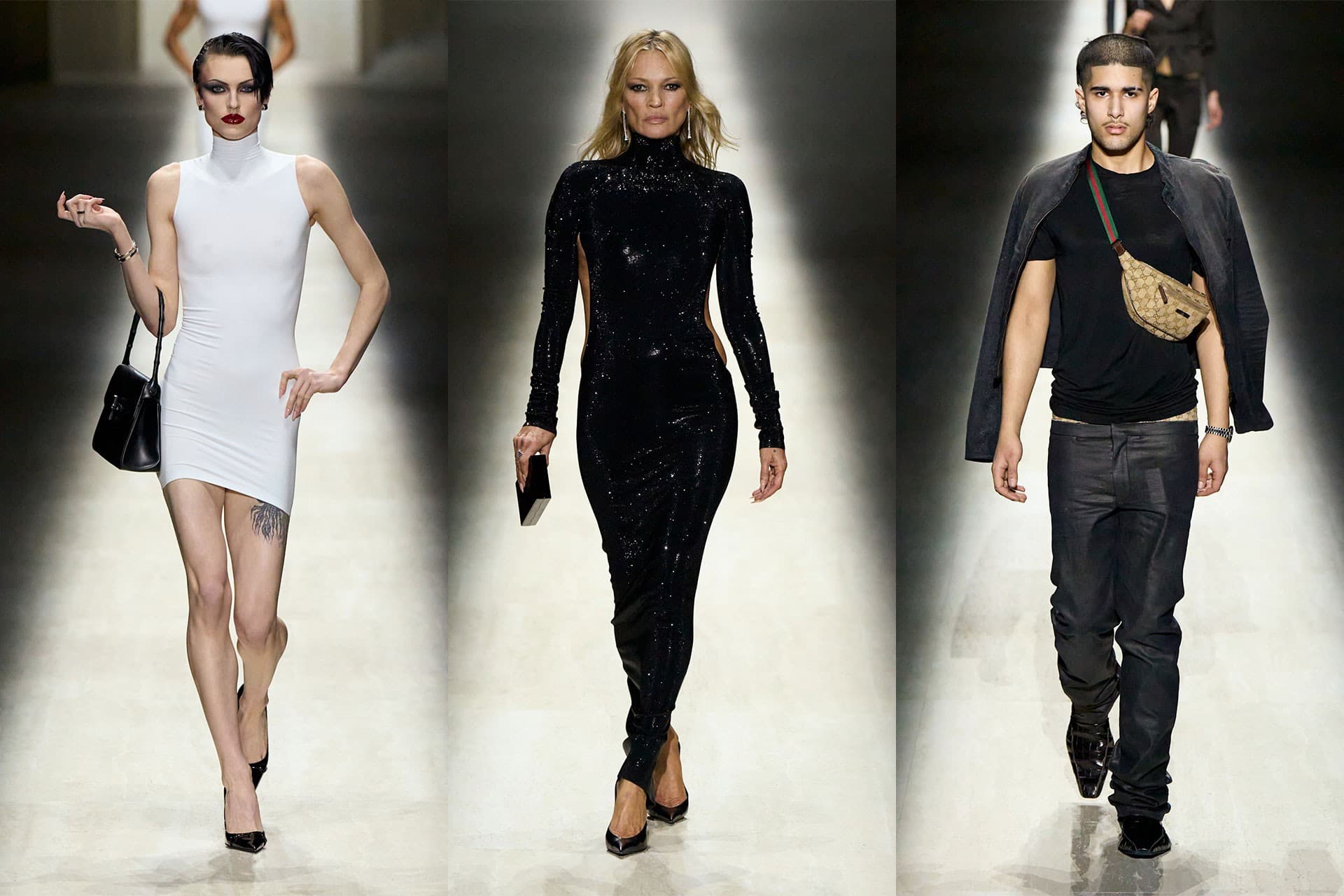
Arriving at the Gucci show location—Milan’s Palazzo Delle Scintille—yesterday felt indicative of what would come once the lights went low and the runway began. Out on the streets, pressed against barricades, were hordes of people. Fans of fashion, fans of K-Pop stars in attendance, fans of Demna…the presence was akin to the crowds typically posted up at a movie premiere, and certainly Demna’s first ever Gucci show was a blockbuster.
In the year since the Georgian designer was appointed to take the helm of Gucci, he has done the groundwork to establish the Gucci archetypes. The universe of wearers that make up Gucci’s demographic. But yesterday, he focused on one particular set of characters. The starting point, explained by Demna backstage following the show, was the set, inspired by the Uffizi in the Piazza della Signoria in Florence. The Gucci museum sits directly opposite the gallery, which is filled with some of Italy’s most famous art pieces. The proximity underscores Gucci’s place in Italian culture, how it is threaded through the identity of the country both spiritually and physically. That cultural positioning was explored through his debut Gucci Archetype collection campaign last September. This season, Demna had one intention: “My idea was to put Gucci back in the cultural spotlight.”
 Launchmetrics
 Launchmetrics
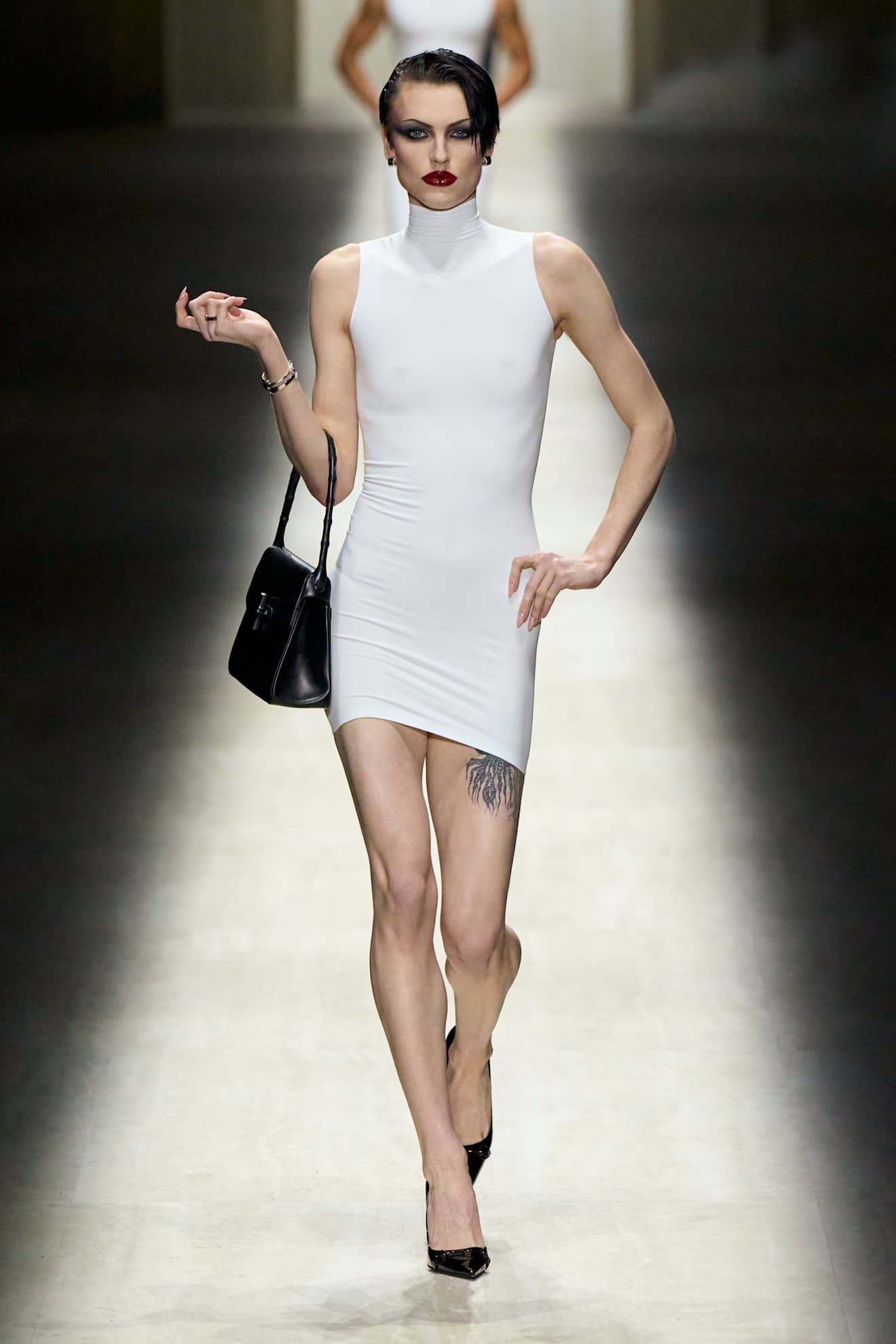
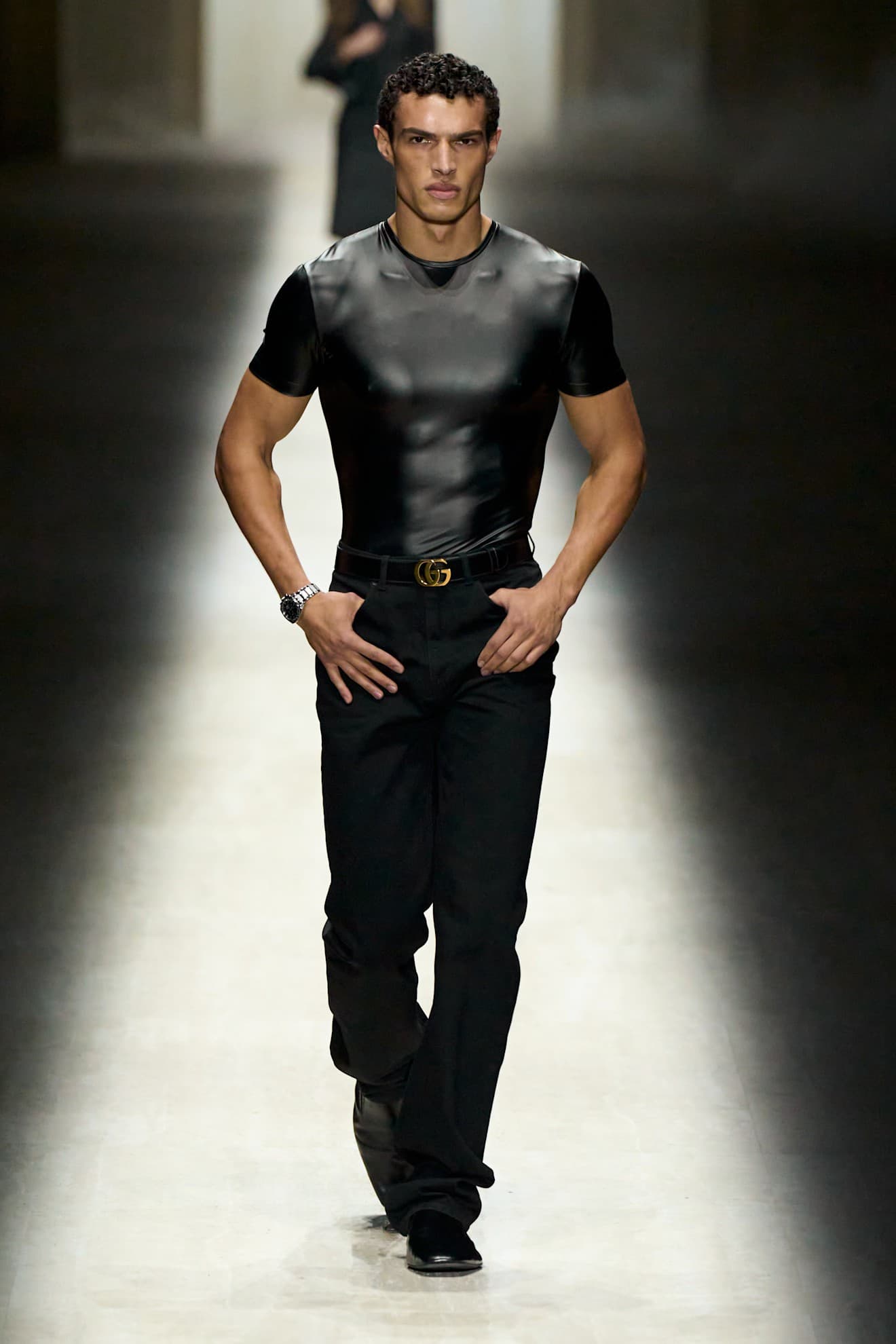
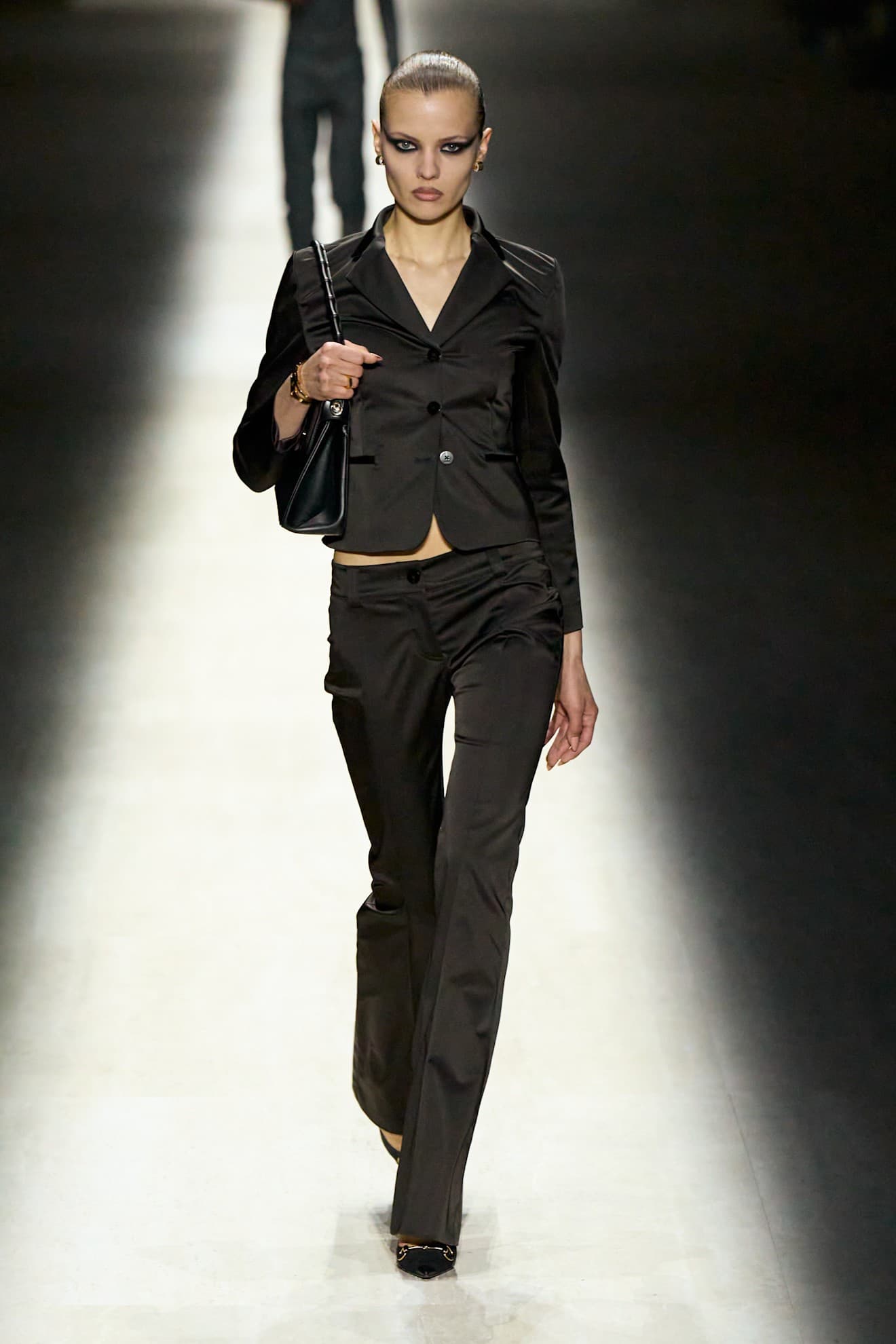
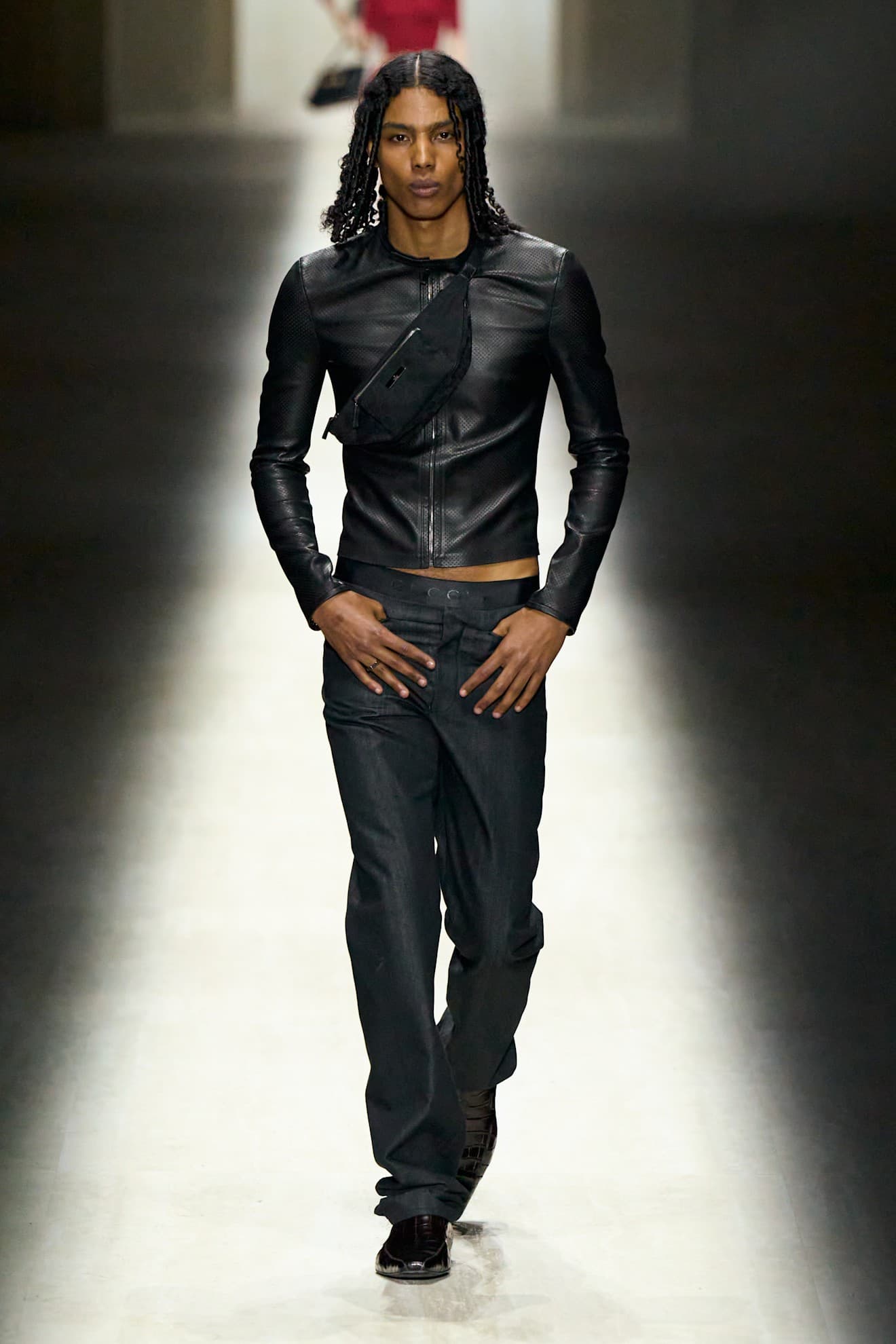
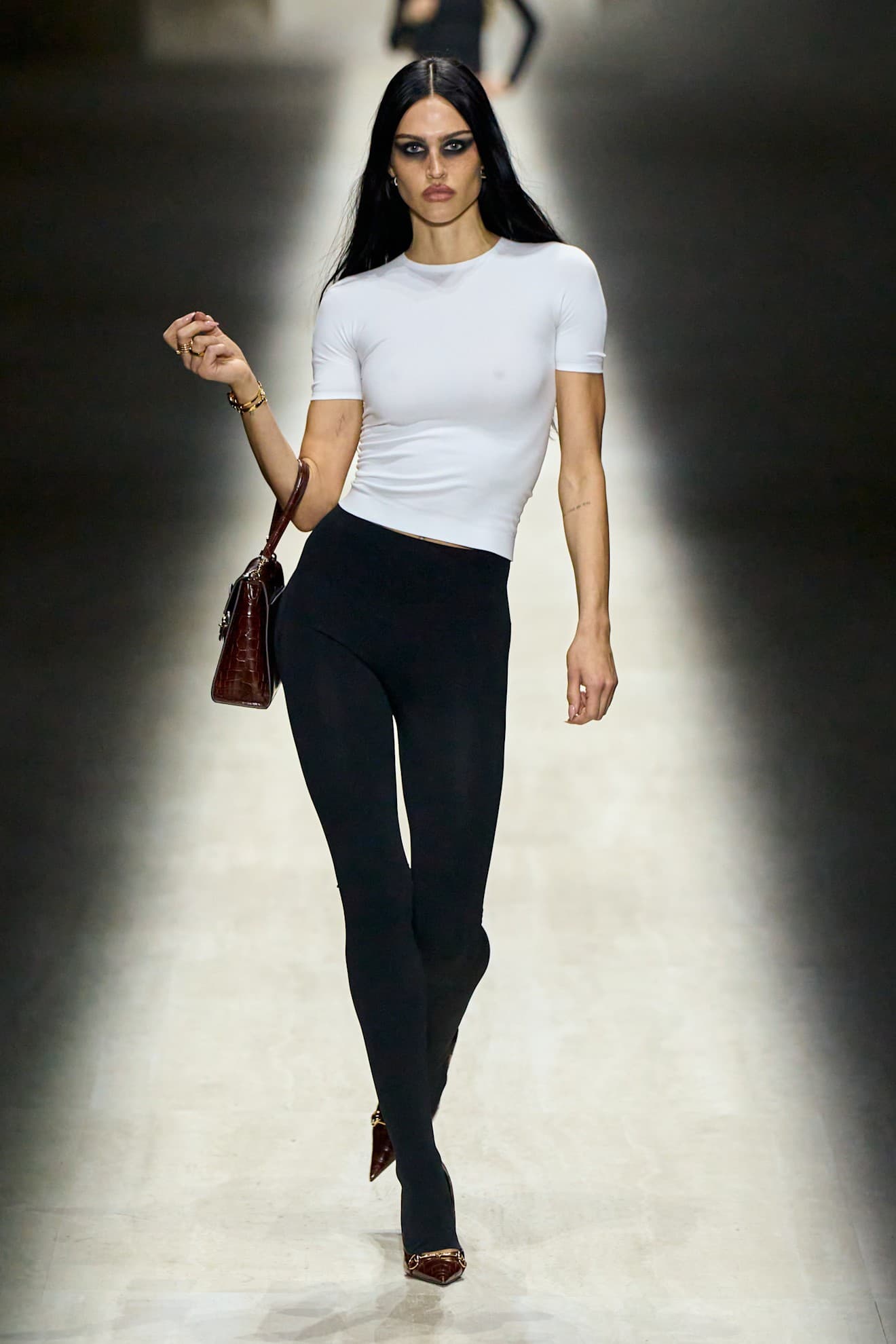
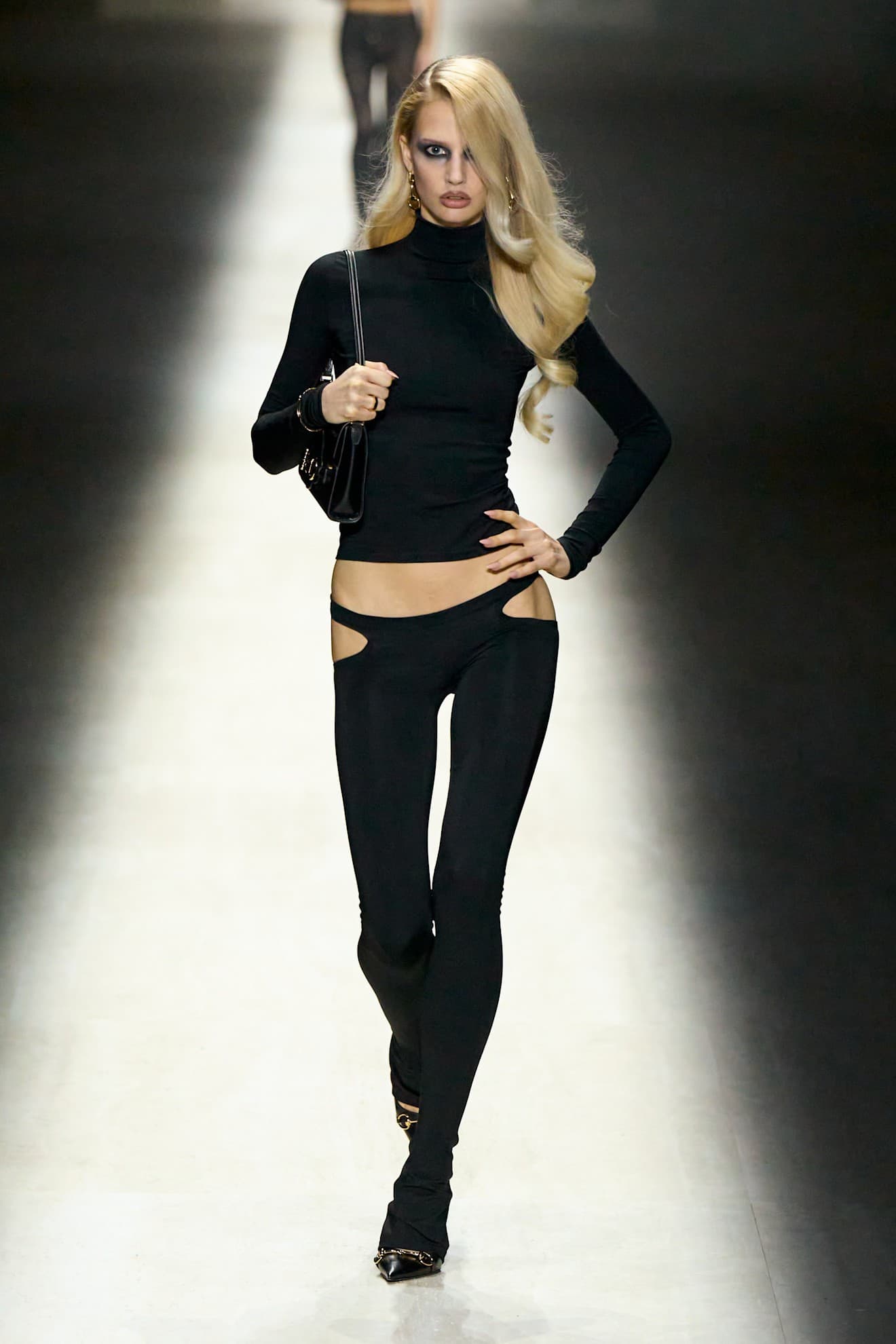
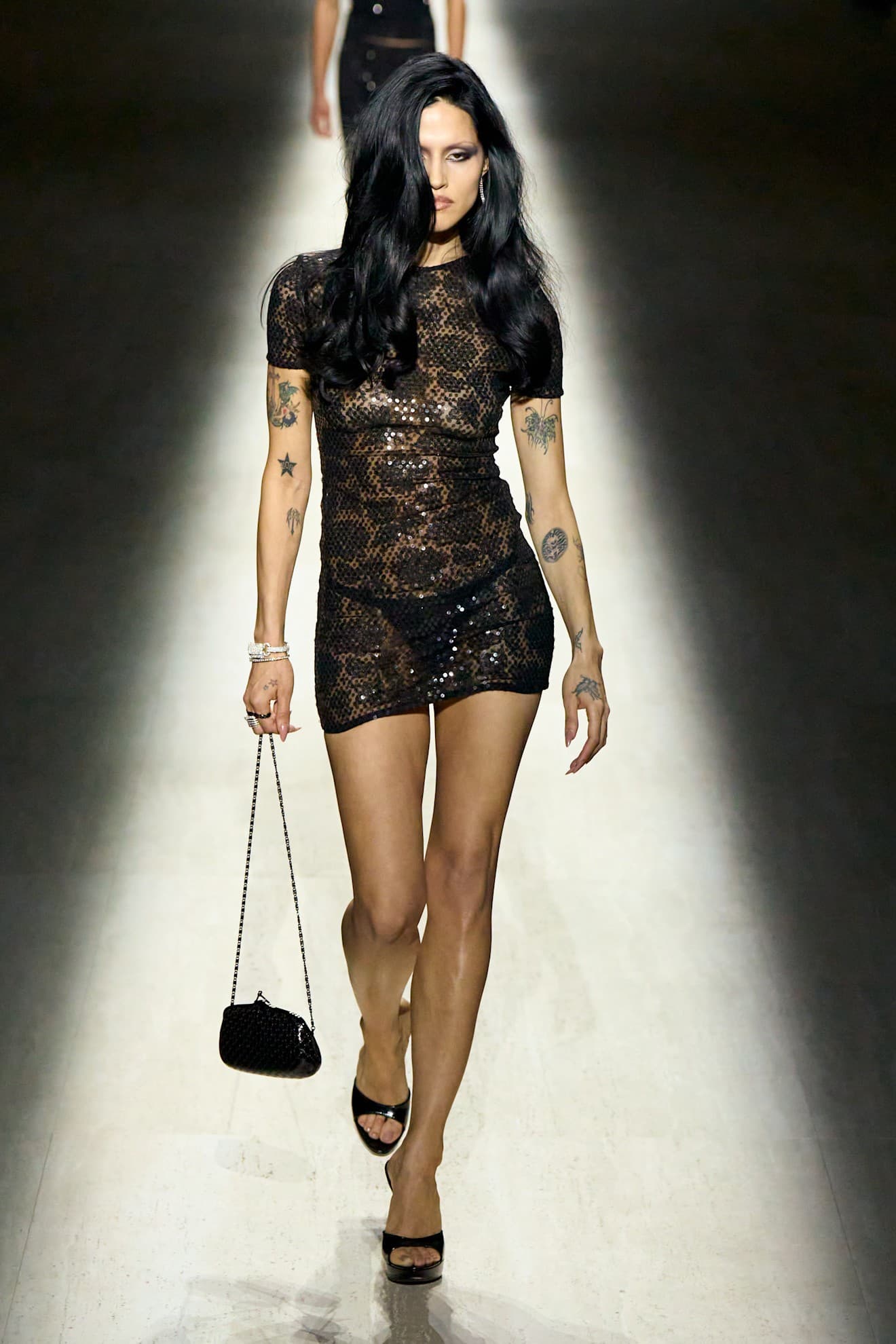
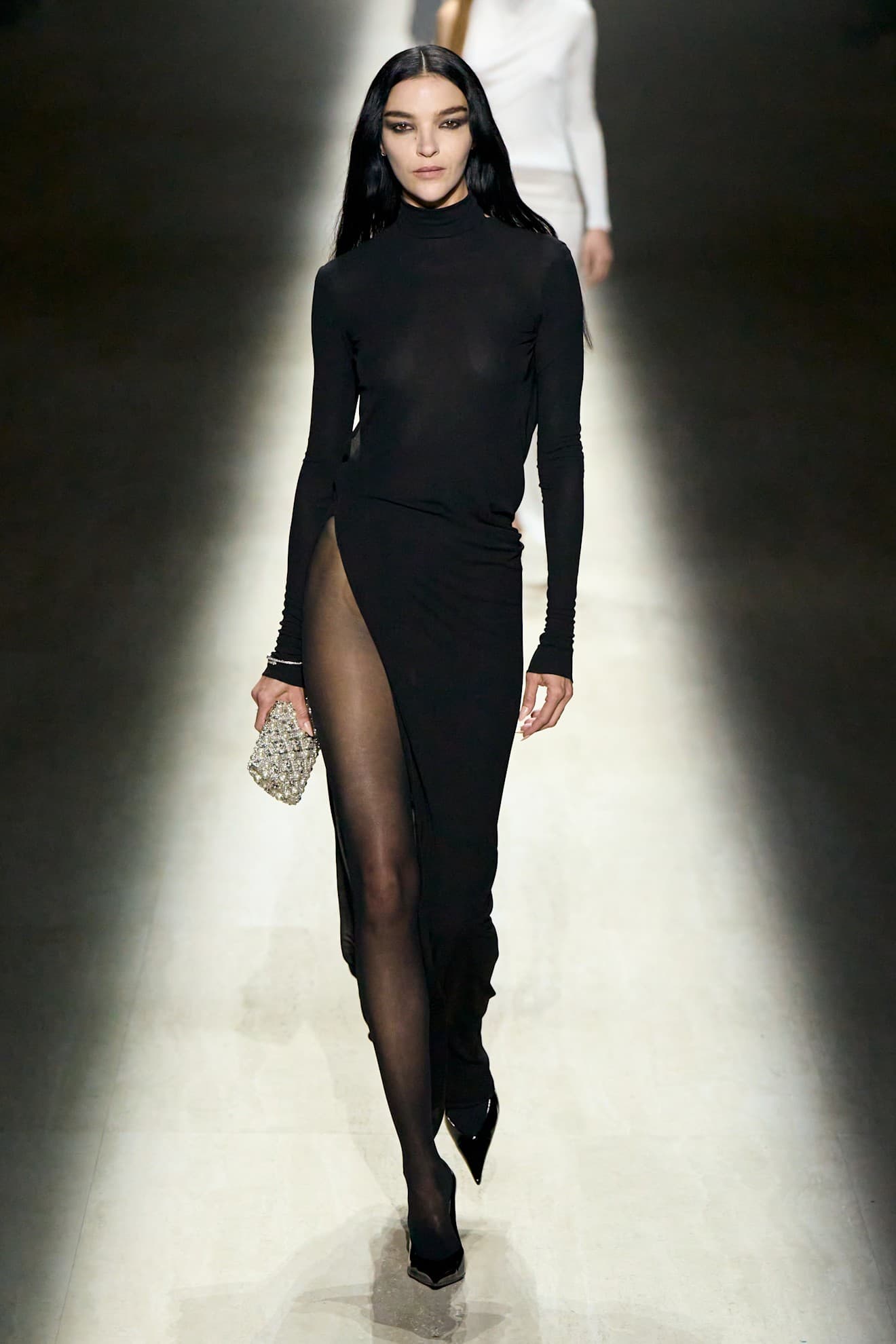
There has been a lot of chatter since Alessandro Michele’s departure that the brand needed to return to Tom Ford’s hyper-sexual interpretation of the Italian house. This was the same Gucci that brought Gucci back from the brink and turned it into one of the most culturally relevant and commercially successful luxury brands of the ‘90s, so it makes sense why, yesterday, Demna leaned into this silhouette with a heavy hand. There were elements of similarity beyond the clothes, chiefly in the stark, singular spotlight that highlighted the runway just like back in the day. But his gamble for renewed relevance wasn’t so simple. Yes, there were many moments borrowed from the archives: ultra-low suit pants, hip-skimming leather two-piece sets with skin-tight biker jackets, draped evening dresses missing side panels, and Kate Moss’ return in the famous GG logo thong, closing the show. But amidst the ample references to Ford’s Gucci, there were also references to what is happening in culture now—how it informs our style, and where it lands us when the perception of taste is concerned. Sex, and the selling of sex, the body, and subversion, was just the first, most obvious layer of Fall/Winter 2026.
 Launchmetrics
 Launchmetrics
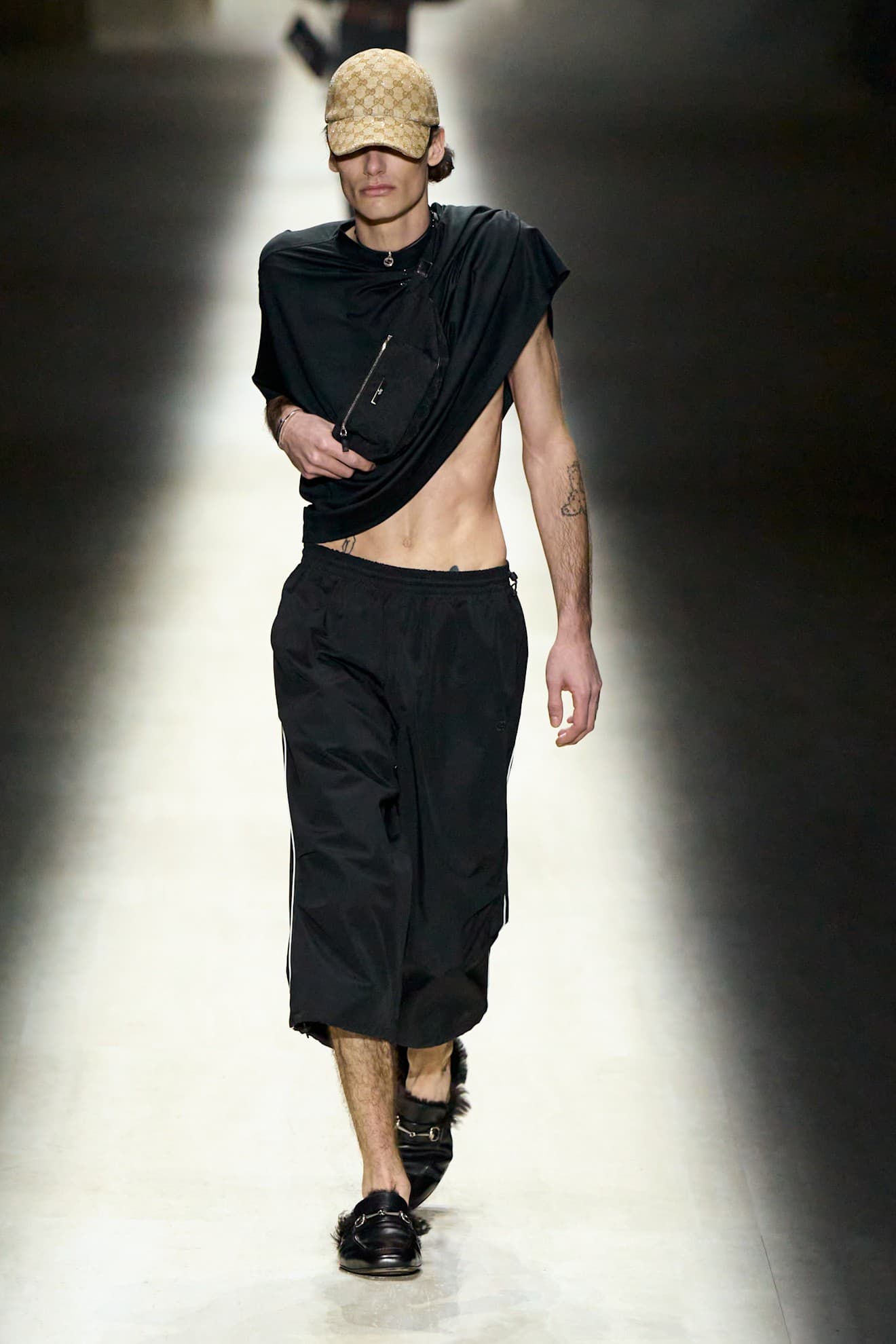
The casting reflected that tension. There were ultra-famous models, like Alex Consani, Moss, Mariacarla Boscono, Karlie Kloss, and Vittoria Ceretti. They were interspersed with internet personalities and Gen Z digital natives like Gabbriette, Wildflower cases co-founder Sydney Carlson, TikToker Meredith Duxbury, Emily Ratajkowski, Elon Musk’s daughter, Vivian Wilson, and rappers Fakemink and Nettspend. Fakemink, a British rapper who is best known for viral music on TikTok and being a current fixture of the UK’s underground rap scene (alongside EsDeeKid, who sat front row with Rico Ace and performed later that night at the afterparty) paused halfway down the runway to take his phone out of his Gucci monogrammed fanny pack, worn slung across the body. I especially liked these styling tricks, referencing the Italian boys with ripped jeans and mullets—Gucci bags and caps that may or may not be counterfeit—or groups from the UK’s ends, where it’s all black tracksuits and Gucci slides.
 Launchmetrics
 Launchmetrics
Demna has always deftly executed the bringing of streetwear into a luxury market. But here, it felt less about elevation and more about the way a motif can infiltrate multiple demographics and appropriate a different meaning in each context. Gucci, while a luxury house, is not a brand so un-democratic that it isn’t able to be accessed by various groups of society. Its accessibility—culturally, if not always financially—is why it is so embedded in Italian life. This was a point that felt explicitly emphasised in Fall/Winter 2026, and one that was perhaps missed by an urge to blame the over-referencing of Ford’s silhouette. It’s precisely what frees it from the restraints of couture and savoir-faire; it doesn’t need to push a narrative of boundary-breaking art to maintain relevance. Gucci has and always will be a consumer-driven brand, but its consumer is amorphous. That gives it the freedom to code-switch in ways that other more insular luxury houses cannot.
 Launchmetrics
 Launchmetrics
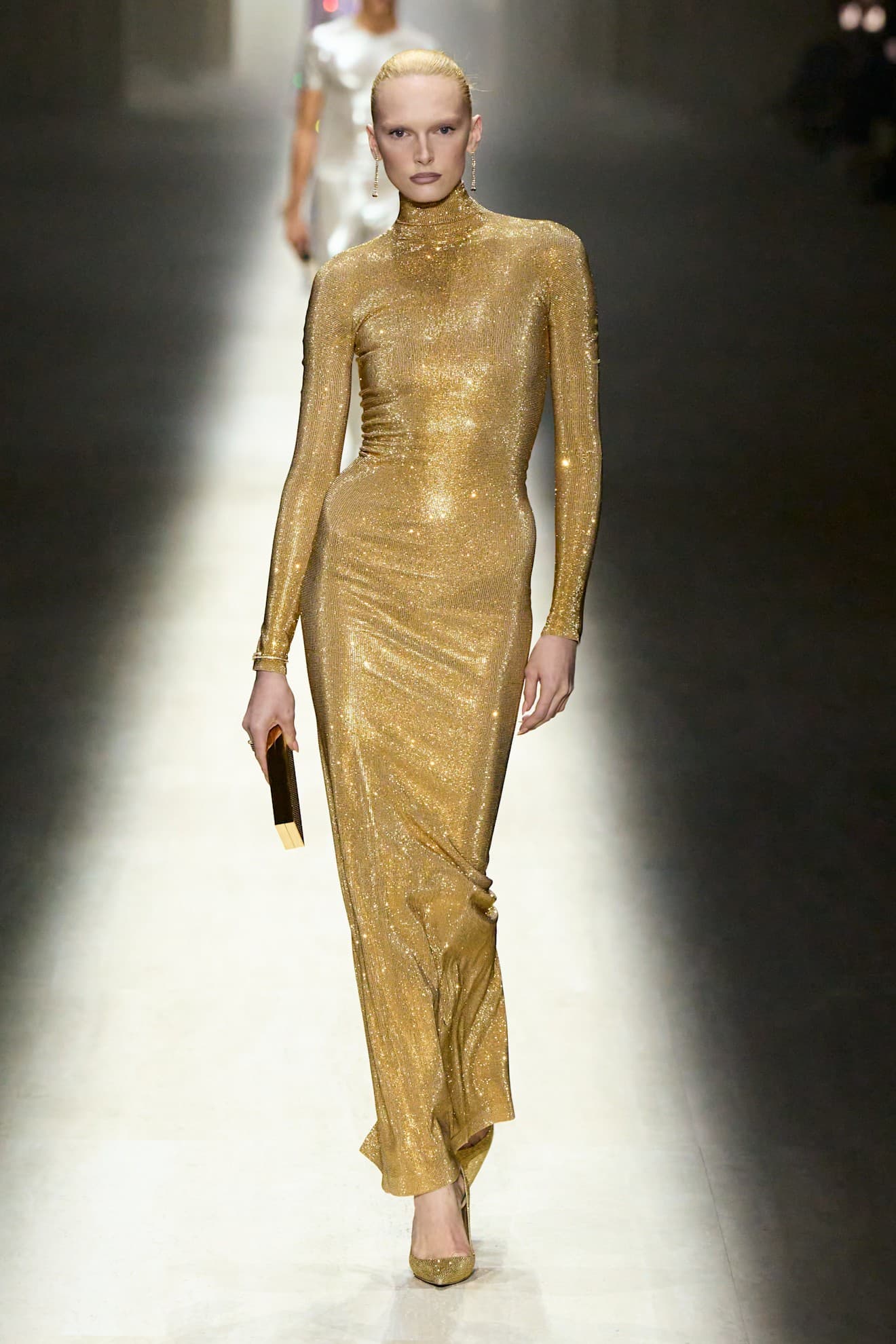
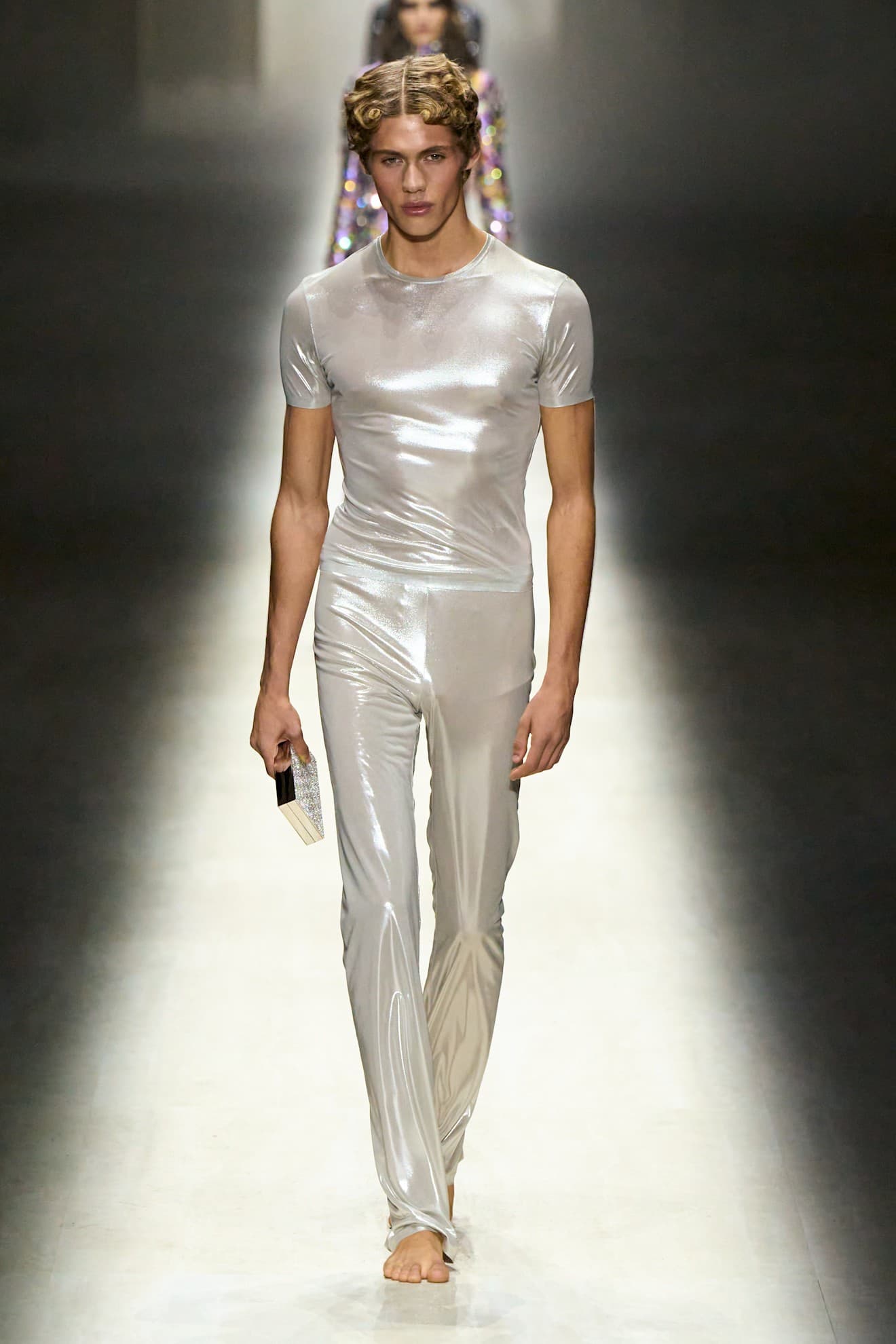
After the boys with the Gucci monogram bum bags, “super sexy party girls” in fur coats and sky-high stilettos, flanked by shrink-wrapped party dresses (see: Gabbriette and EmRata’s looks), and rhinestone-embellished evening gowns, stalked down the runway. This body-focus underscored much of what was happening on the runway, not only as both a reference to the 90s and a read on what the girls are wearing today, but also a nod to much of the shapes depicted by the Italian renaissance artists on display at the Uffizi. There were fluid, high sheen suits and athleisure that was paired with knife-sharp heels. The affluent Milanese woman was represented in the Horsebit handbags and glossy floral print dresses, while a series of reflective lounge suits felt equally upscale and also very online, like something a vlogger might wear during a daytime filming session, or a tapped-in fashion person might welcome people to dinner in.
 Launchmetrics
 Launchmetrics
It was your choice, and that seemed to be the point of the whole collection: how do you want to have fun with your clothes? Gucci Fall/Winter 2026 is, yes, most overtly about sex. It is also very fun. Fashion is, above all, a function to make us feel something (from an esoteric perspective, that is). Sometimes, we do not have to overwork ourselves to make it mean more than that.
 Launchmetrics
 Launchmetrics