My obsession with skincare began at 12 years old, when I was battling hormonal acne that embarrassed me to the point where I'd get picked up from school at least once a week. This overwhelming shame around my skin made me desperate for anything that would stop my pimples in their tracks. I'd pry open Advil Liquid Gels and rub the contents on my inflamed skin, beg my mom to let me get on Accutane, call dermatologists' offices to enquire about laser treatments that I couldn't try because of my age, and spend hours scouring Walgreens' beauty section for the magic cure to my acne. It consumed so much of my 12-year-old thoughts, and even though I've gotten a handle on my skin as an adult, that same shame still comes up every time I get a one-off pimple now.
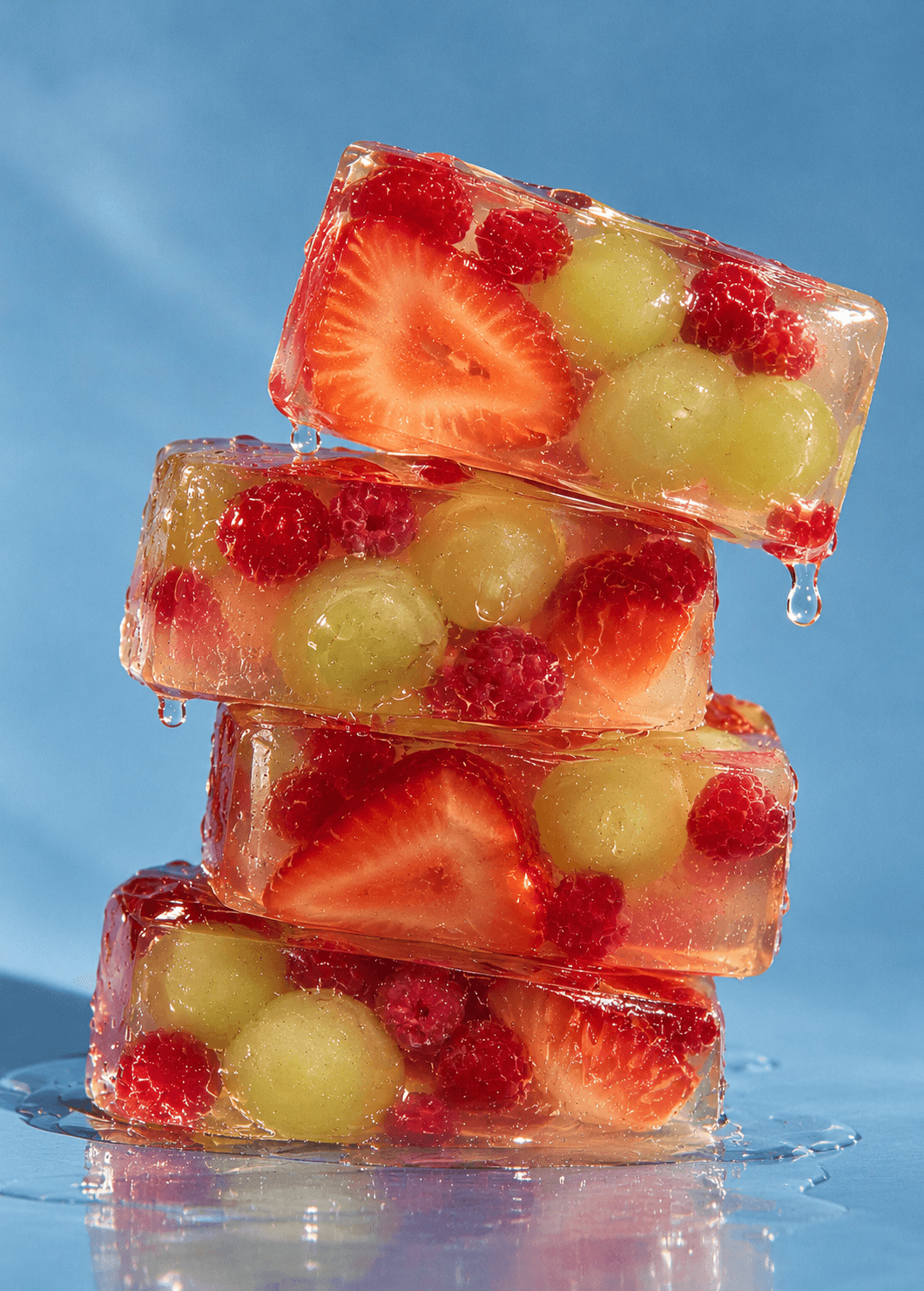
This childlike fear of bad skin has made me an avid consumer of skincare TikTok, always keeping an eye out for tricks I haven't tried yet—ones I can keep in my back pocket in case a pesky whitehead comes up. Swipe after swipe, my algorithm feeds me creators pushing laser treatments worth flying to Korea for, the $15 hair serum that grew their hair back overnight, and the face-taping routines that will get rid of my wrinkles for good—and I can't get enough. And lately, my feed is filled with creators telling me to "eat my skincare." Specifically, they want me to do so in the form of oversized collagen or beef gelatin bars (which they're calling "nature's Botox") filled with a combination of fruits, chia seeds, and sometimes honey. Now, logically, I know that these gelatin bars aren't going to magically make my skin better forever. But, I can't help but want to give them a try—my 12-year-old self is screaming: "This one could be it!"
But before I purchase all of the items and brave my kitchen (a place I do not frequent), I tapped dermatologists to get their thoughts on TikTok's latest skincare hack.
Meet The Experts
Dr. Sapna Palep is a board-certified dermatologist and Co-founder of Journelle Skin.
Dr. Pearl Ugwu-Dike is a NYC-based board-certified dermatologist, trained at Harvard and NYU.
What Is The "Eating Your Skincare" Trend?
Lately, it's hard to escape the eating your skincare trend on TikTok, at least on my algorithm. The trend started to appear right after the summertime, as many creators began demoing how to make them with just a few ingredients: beef gelatin powder, cold water, flavored liquid (like fruit juice), and fresh pieces of fruit. Some add in natural sweeteners like honey or Tajín for punch. Alongside tutorials on making them, many creators praise these jiggly bars as "natural Botox," giving them credit for making their skin tight and radiant.
What makes these different than the gelatin sticks that the likes of Kylie Jenner have promoted is that these are not meant to support weight loss or act as a dietary supplement. Instead, these homemade gelatin bars are designed to support the skin and provide nutrients that support collagen production and anti-aging.
How Does Food Impact Your Skin?
I'm pretty neurotic about my skin (reread the introduction if you weren't sure), and it's taken years of trial and error for me to narrow down exactly what causes a breakout. Food and alcohol, in particular, are two of my most confusing triggers. Right now, I can confidently say that whiskey will make my rosacea flare up and milk chocolate will always give me a pimple smack-center of my cheek. And on the inverse, consistently eating salmon for dinner and adding collagen powder to my coffee will make my skin glow as if I've just gotten a facial. The noticeable impact that food makes on my skin is common, as Dr. Pearl Ugwu-Dike, explains, "Beautiful skin starts long before you open your medicine cabinet. Nutrition is fundamental to skin health, and I think we’ve historically underestimated how much what we eat contributes to the way our skin looks, functions, and ages."
According to Dr. Sapna Palep, this means making "a healthy, well-balanced diet" a top priority if you're looking to improve your skin. "Vegetables, fruits, and healthy fats are not only good for your body and overall health, but also help the health of your skin."
But Should You Make Beef Gelatin Bars?
If you've found yourself on the verge of a late-night Instacart order of beef gelatin, grapes, kiwis, pomegranate seeds, chia seeds, and a foil tin, I'm right there with you. The promise of waking up with glowing skin is just a click away! But before getting all of these supplies, you may want to consider whether the juice is worth the squeeze.
"I don’t think there’s anything inherently wrong with enjoying them," Dr. Ugwu-Dike says of the aesthetically pleasing snack. "But I wouldn’t prescribe them as an anti-aging intervention."
Rather, both Dr. Palep and Dr. Ugwu-Dike recommend leaning into the trend as an additional way to get collagen into your diet. "Ingesting collagen and gelatin can help boost hydration levels and provide an influx of amino acids that help your body produce collagen," Dr. Palep explains. "An increased production of collagen helps skin look plump, firm, and more youthful."
So yes, you should try it. But don't expect it to be the end-all, be-all solution to your skincare sorrows.
So, What Are The Best Foods For Your Skin?
In short, the best foods for your skin are whole ones—the ones that are jam-packed with nutrients and come from natural sources.
"Foods that are high in Omega-3 fatty acids, such as sardines, are going to help support normal cell membrane function and may play a role in regulating inflammation," Dr. Ugwu-Dike says.
Dr. Palep adds eggs to the list, for their high content of Vitamin A and E that encourages cell turnover and collagen production. Plus, walnuts, salmon, and flaxseeds for their omega-3 fatty acids, which support skin barrier protection and the reduction of inflammation. And, if you have a sweet tooth like me, dark chocolate for its antioxidant properties that help neutralize free radicals in the skin.
TL;DR
As someone who's constantly reaching for the next skincare fix, I thought that these beef gelatin bars were my answer. And while my conversations with Dr. Palep and Dr. Ugwu-Dike shared that this isn't really the case, the trend did serve as a much-needed reminder that what we consume can have both positive and negative impacts on our skin for the long haul. Will I be making these bars? Probably not. But will I be adding collagen powder to my coffee every morning? I'll definitely do my best.