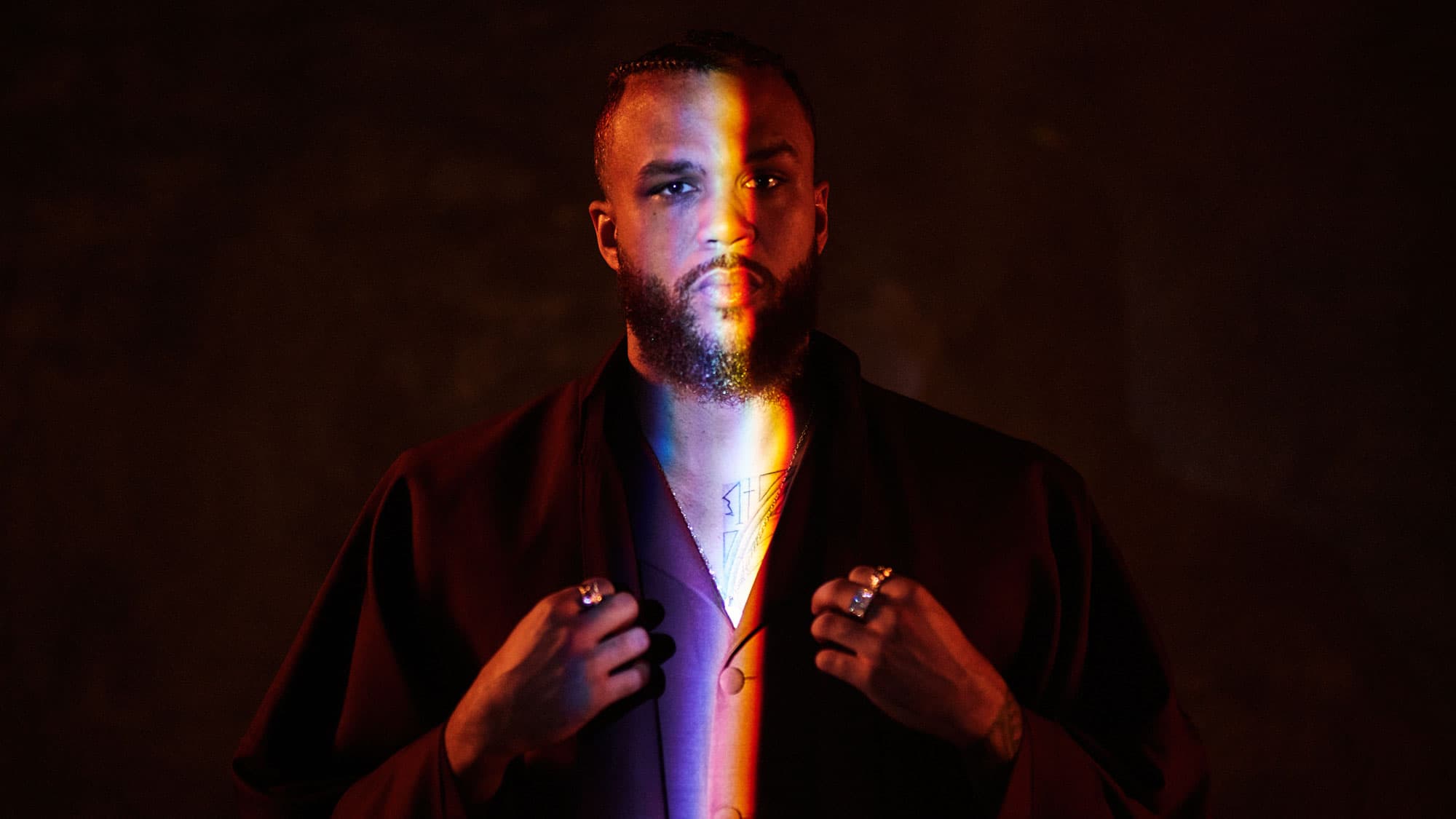
In recent months the world’s attention has quickly shifted to highlighting and sharing more Black stories within media and pop culture. Through the darkness of racial injustices and systematic oppression, many beautiful stories that have inspired and uplifted generations of Black people have come to light. During this time, it’s never been more important to finally see the beauty and plight of Black people accurately represented in mainstream media, especially with those of us behind the scenes creating and depicting our own stories. For Nigerian-American artist
, this is nothing new. After his mega-hit “Classic Man” that was released back in 2015, Jidenna became known as one of the sharpest, most well-dressed men in the industry. While his reputation still rings true today with his impeccable style, Jidenna is more than just a handsome comb-over in a three-piece suit.
After his latest studio release,
85 to Africa
, an album heavily fueled by Afro and Caribbean beats that paid homage to the artist’s roots that hail back to the motherland, we saw a very different side of him. Fast-forward just a year later, and now he’s on a journey to bridge a gap through Pan-Africanism. For Jidenna, being Black and really homing in on our roots isn’t a fad, it’s something he’s put his life, music, and heart into. Which really comes to life in his latest single, “Black Magic Hour.”
With an opportunity to break the stereotype of “magical” Black people and showing the effort and science that we put into ourselves, Jidenna takes us on a heightened journey of various voodoo religious customs and practices while highlighting its culture in his latest music video. Intrigued by his approach to his latest song (to be featured on the upcoming project
African On All Sides)
, I had the utmost pleasure of catching up with him about his efforts through Pan-Africanism and what he’s feeling the most when it comes to his personal style.
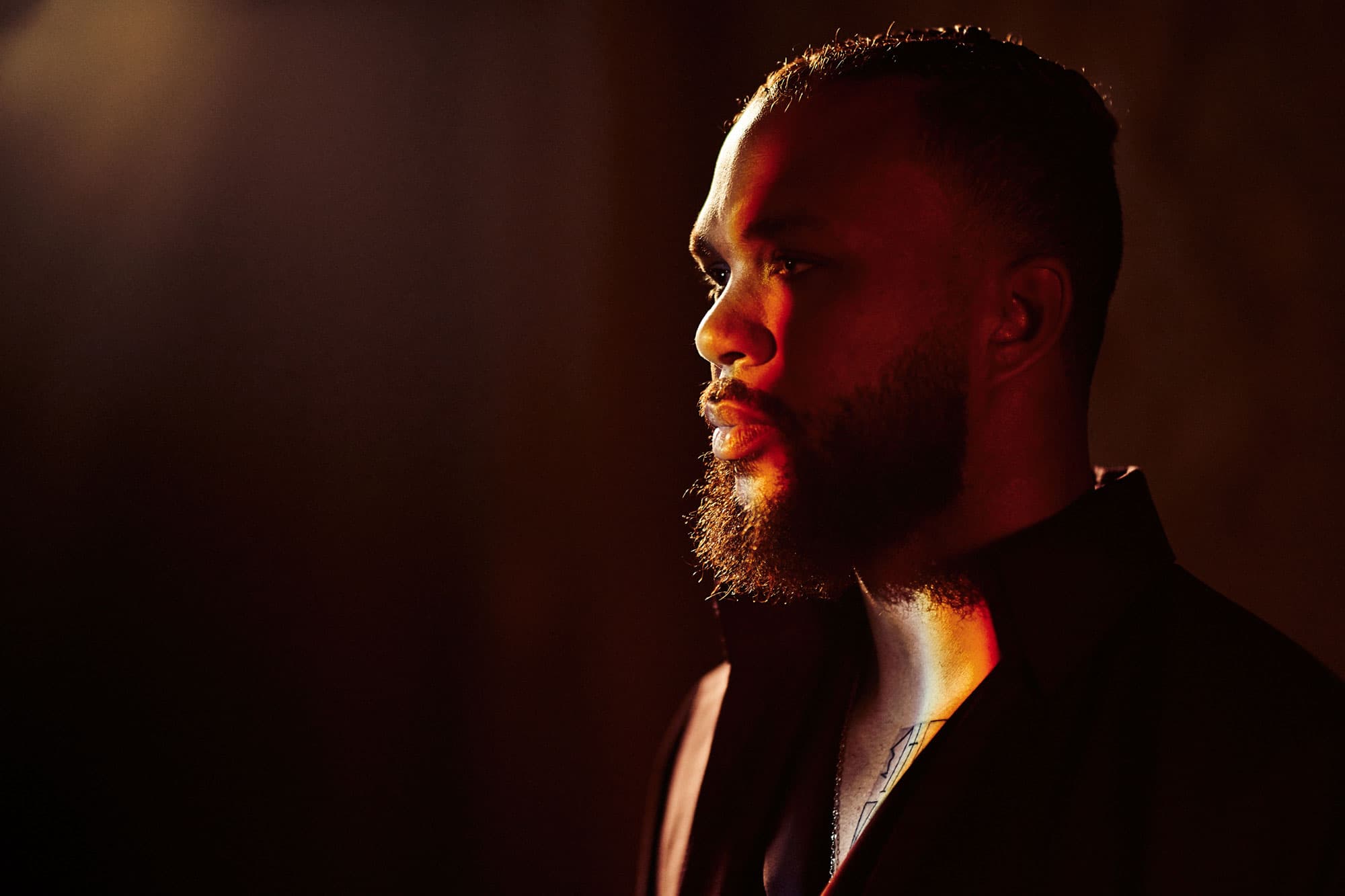 Photo: Patrick Struys
[Listicle particle error: Unhandled HTML element 'big' in post 2650786105 (context: Element not in supported or skip lists) Element HTML: African On All Sides]
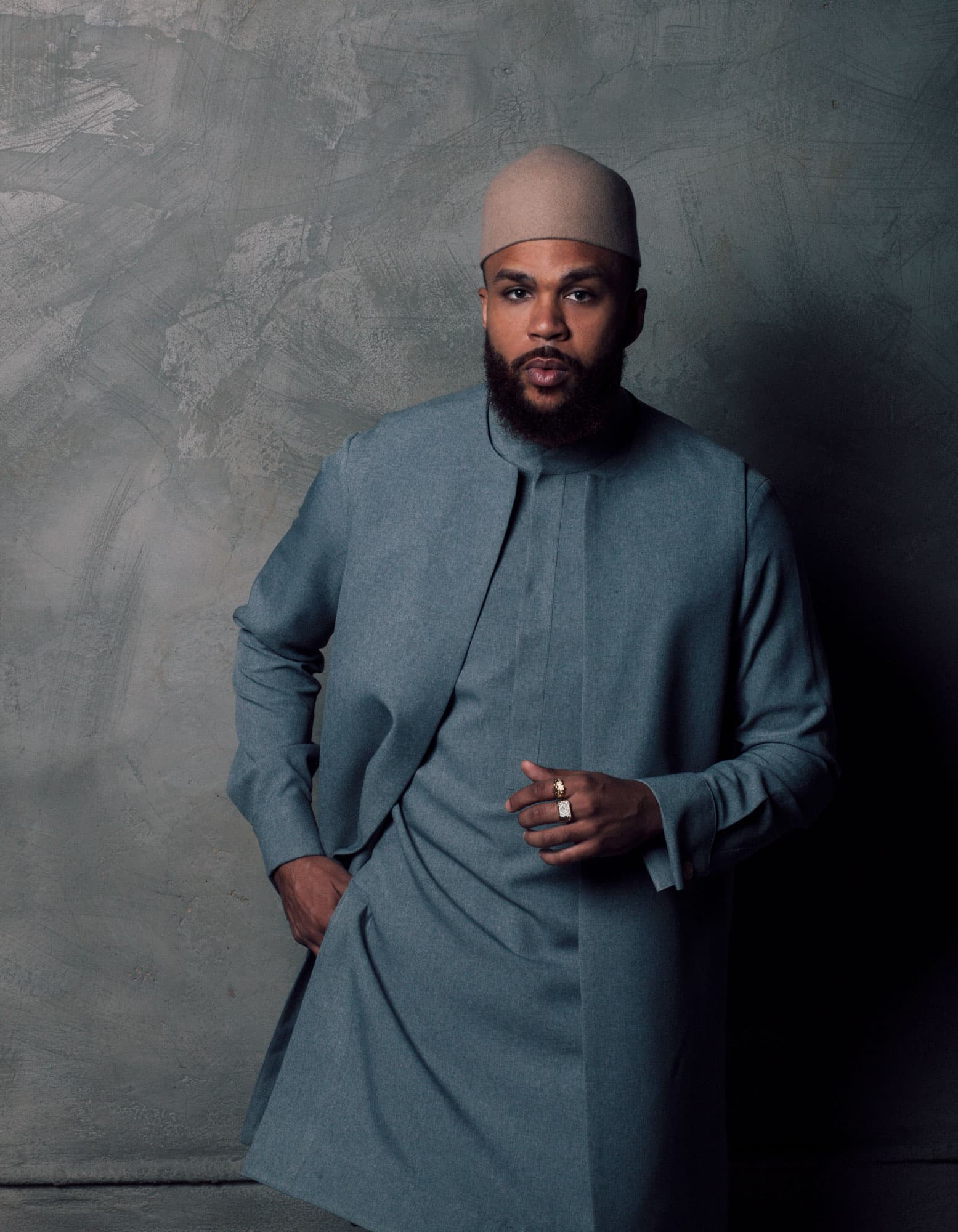 Photo: Tyler Adams
[Listicle particle error: Unhandled HTML element 'big' in post 2650786105 (context: Element not in supported or skip lists) Element HTML: ]
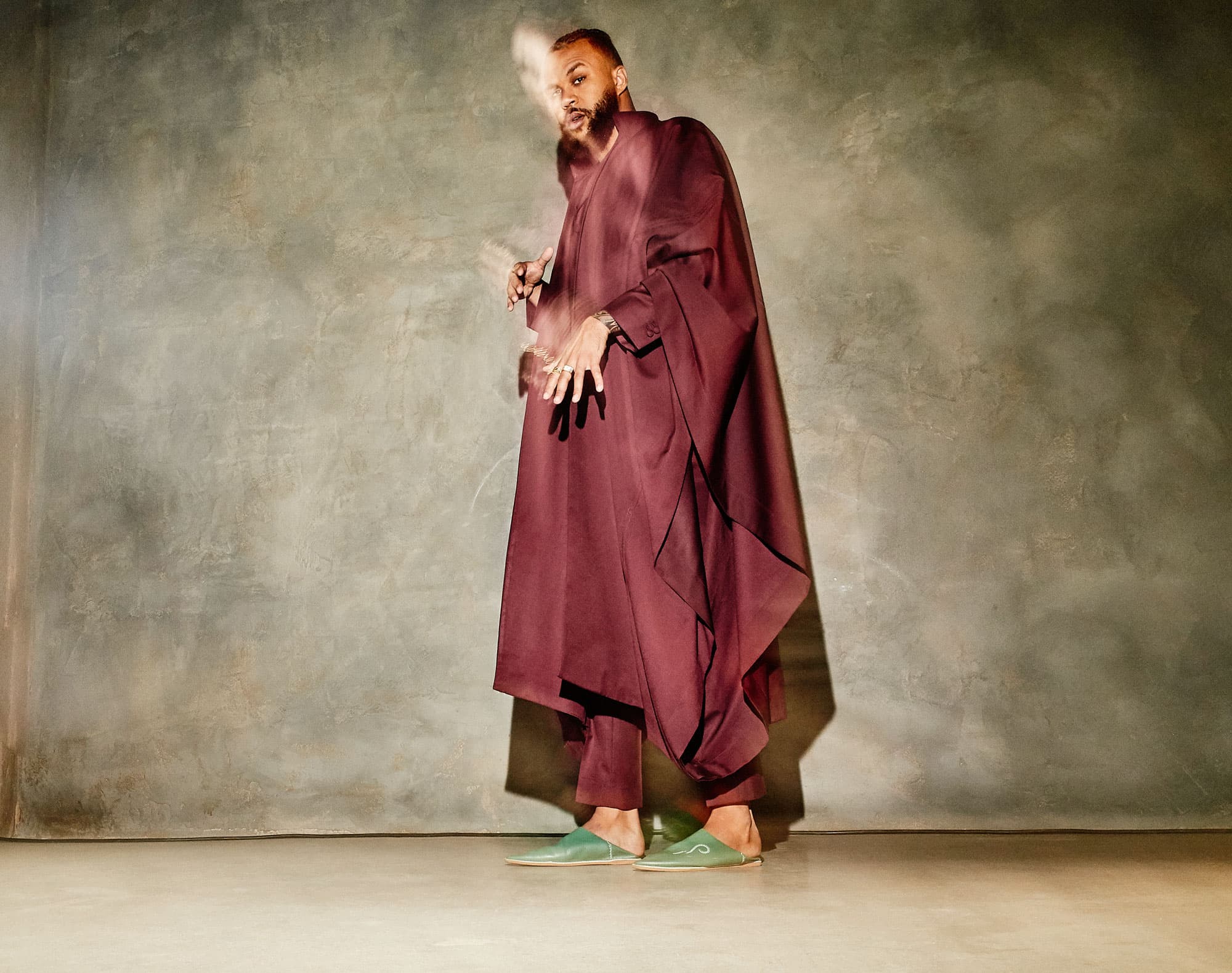 Photo: Patrick Struys
Let’s talk about your style. How has your music influenced your change in personal style?
“As we speak, I’m wearing these huge pants that I like by designer Kenneth Nicholson. They’re really wide, but it looks like African hippie flared pants. That’s what I’m on now—I’m on some Afro-bohemian chic shit. Last year I was on this classic like, James Dean mixed with some FILA shit. So I always like taking different silhouettes and just building around them. Last year was also t-shirts, bandana tied around the neck, high-waisted pants, and some sneakers. While the year before was all traditional, and then the year before that was the suit.
“I’ve always evolved like, every couple years, I can’t stay in the same uniform, but I am a fan of uniforms. When I moved from suits to traditional [dress,] it was because I started traveling more and more to Africa for business, as opposed to just for family visits. People wear suits out there, of course, but the other suits—our suit is traditional. I’ve always thought it was fly, and my whole team—many of which are Black Americans—all incorporate traditional [dress] into their outfits. My tour manager and my main manager will wear a traditional outfit with pinstripes and some Jordans and then put a grill in their mouth. So we flip it in different ways.”
I know your roots are from Nigeria; what are some other African countries that have inspired your look, taste, and sound?
“South Africa, Ghana, Senegal, Kenya, Mozambique—just a lot of the countries that I’ve traveled to. There are little things that I pick up when I go to local joints, from style to words and melodies—but most of all I pick up the power. When you start rolling through different countries throughout Africa, and it starts to feel like the ‘United States of Africa’ where you’re hopping through because of the privilege of your blue passport and green passport, it’s an amazing, liberating feeling as I’m traveling. I get to see how much I relate to so many different cultures that I’m not directly from. That’s what I want and [am] fighting for everyone else.”
Who are some of the designers that you’re into at the moment?
“My go-tos are
, which is Mai Atafo’s line, and
, a Ghanaian-British gentleman. He played a large role in my entry into suits, and Mai Atafo played a large role in my entry point into traditional styles.”
Top photo: Patrick Struys
Want more stories like this?