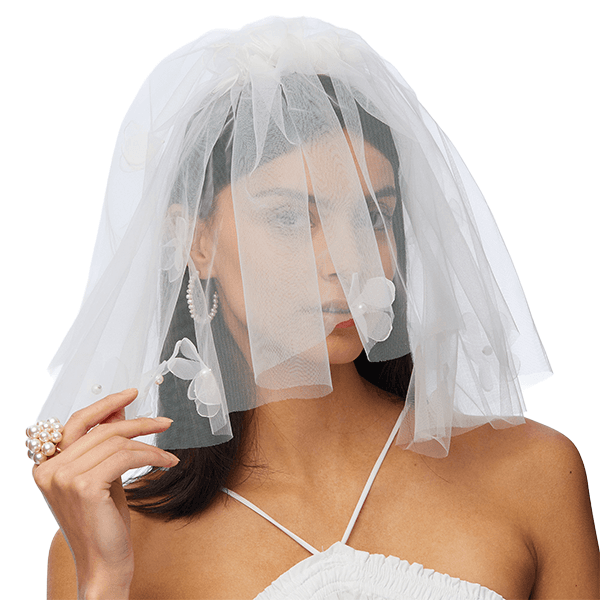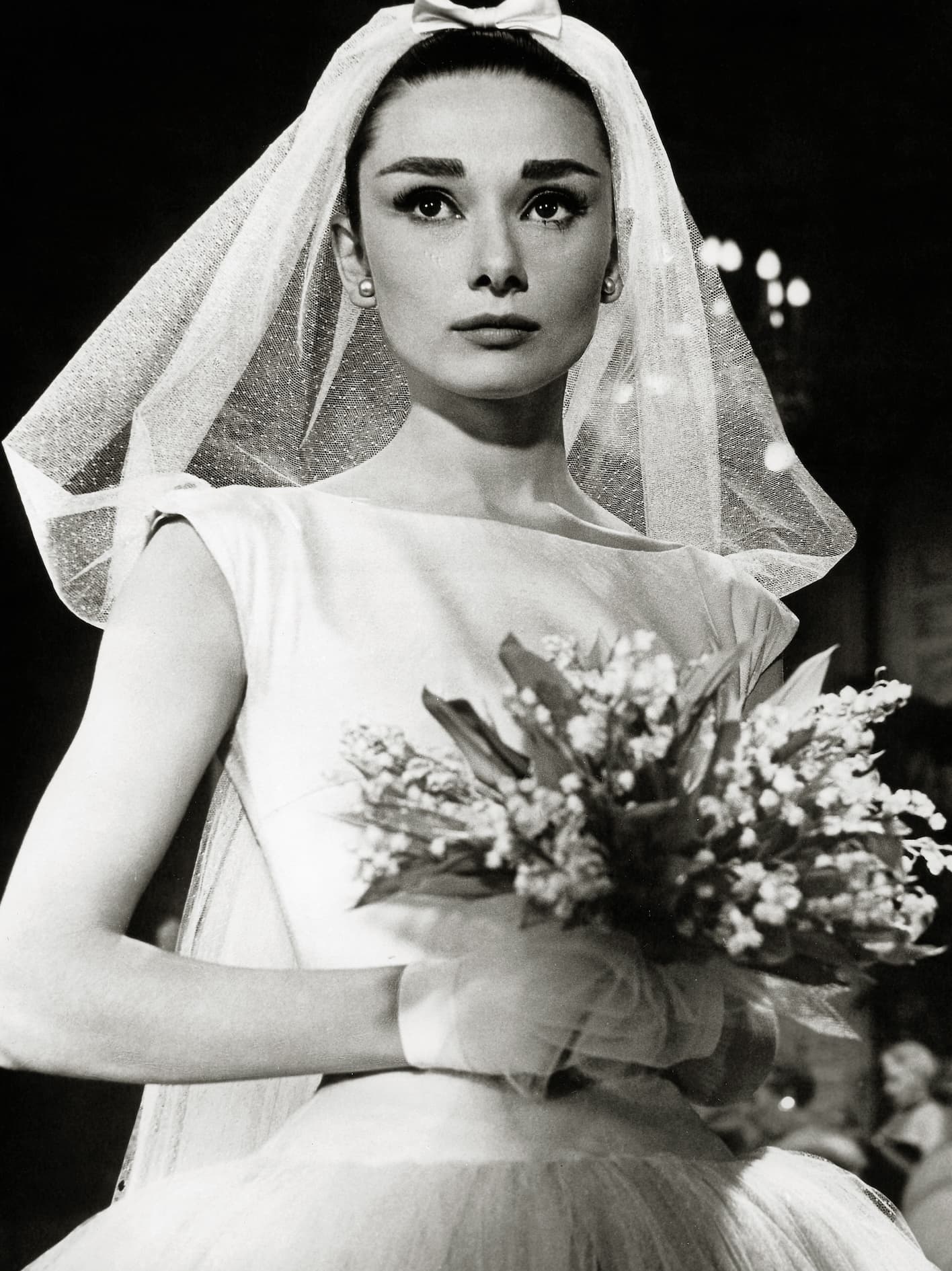
As I watch from afar as people that I once knew in high school tie the knot and scroll through the photos of fashion girl brides, I can't help but think: are veils getting shorter? While many of us might associate the traditional bride with a long, floor grazing veil—and occasionally those that pool into a train for the sake of extra extravagance and drama—the short veil has actually been a bridal trend throughout history. As with so many staples in fashion, the trend had practical origins: in the 1940s, both during war and post-war, fabric was difficult to get a hand on, shortages were widespread, and rationing was just simply necessary. While the trend didn't originate for the sake of appearing chic or fashionable, this was the norm—and so it carried over into the '50s and then the '60s. And yes, they're now back.
“We’re seeing a shift toward shorter veils as brides redefine tradition," fashion designer Monique Lhuillier says. "They feel fresh and offer a sense of ease while still capturing the romance that defines bridal fashion."
The shift back to shorter styles can be attributed to a few things: the rise in elopements and low-key weddings, more stock being put into embracing personal style, and just general practicality. "It’s a combination of practicality and style. Short veils are easier to handle and photograph, and they align with a more casual, modern vibe," Rebecca Glayzer, manager of creative merchandising at Poppy Flowers, says. "They also nod to the non-traditional 'anti-bride' style, which has become increasingly popular. Brides want something that reflects their personality rather than strictly following what we have seen before."
 THA/Shutterstock
So what exactly constitutes a "short" veil? Short veils actually come in various sizes: the birdcage veil covers just the eyes, nose, and/or chin, the flyaway veil tends to graze the shoulders, the shoulder-length veil passes the shoulders a tiny bit and sometimes sits at the collarbone, the elbow-length veil hits the elbows and, the longest of the short, the finger-tip veil reaches, yes you guessed it, the finger-tips.
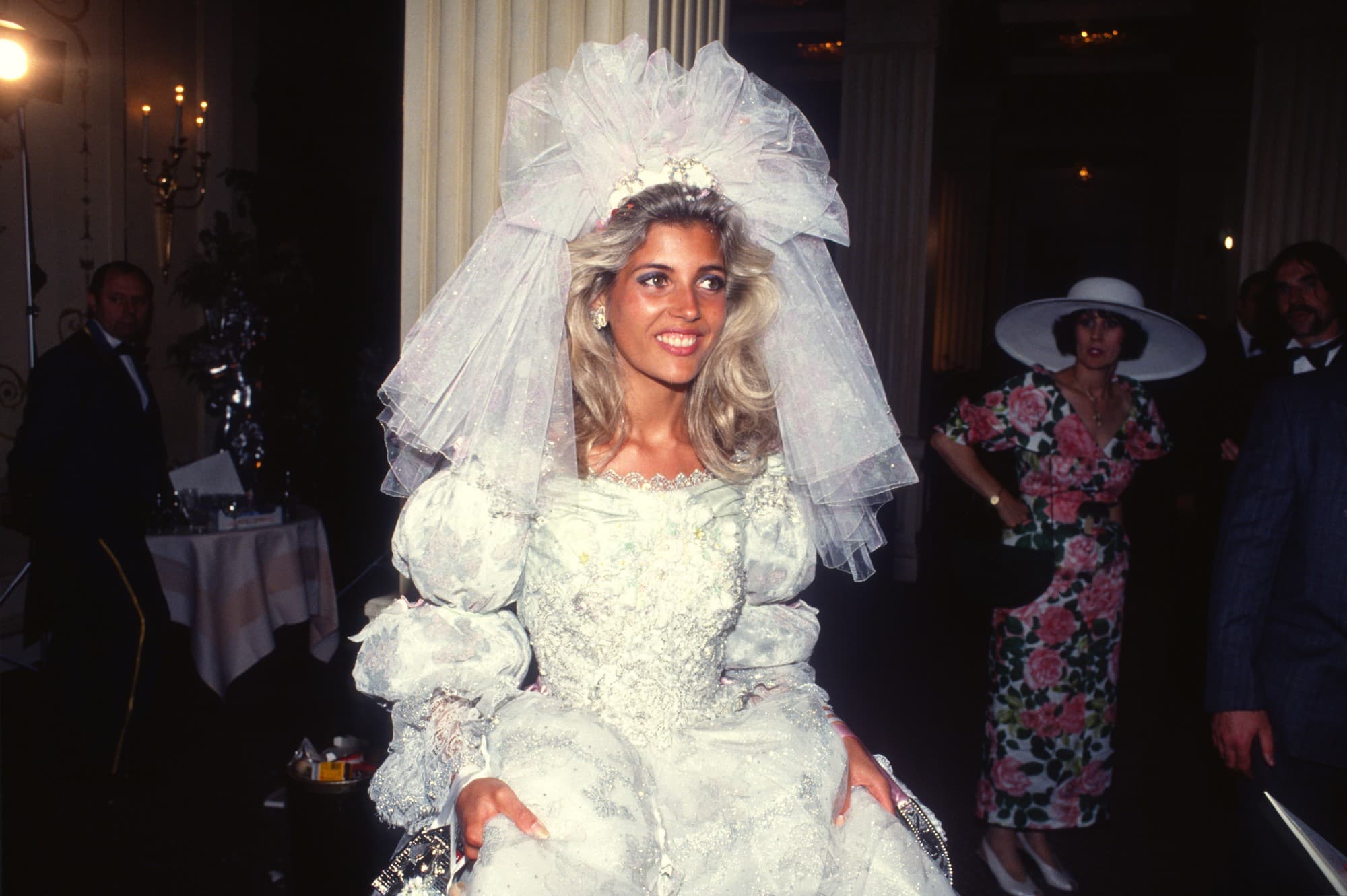 Alan Davidson/Shutterstock
We've been closely following and endorsing everything non-traditional going on with wedding and bridal trends lately. Whether it be non-traditional engagement rings, low-key micro-weddings, or brides being set on wearing only vintage pieces for all wedding-related events, it has become more about personality than ever—which is exactly how it should be for what is arguably the biggest fashion event in a bride's life. "It’s less about rejecting tradition and more about personalizing it. Couples today are making choices that feel authentic to them, defining their own version of what it means to be a bride or groom," Glayzer says. "The concept of the “traditional bride” is evolving. Couples are creating a new tradition by embracing non-traditional elements that reflect their individual style."
It's also very much about reinterpreting classic pieces and revisiting old trends—it's like incorporating details from past eras without actually wearing vintage. An ode to fashion history and embracing the cyclical nature of trends, arguably. "In a way, choosing a short veil can be compared to someone picking a more unique or updated take on a classic piece, like a pair of tabi flats versus standard ballet flats," Glayzer adds.
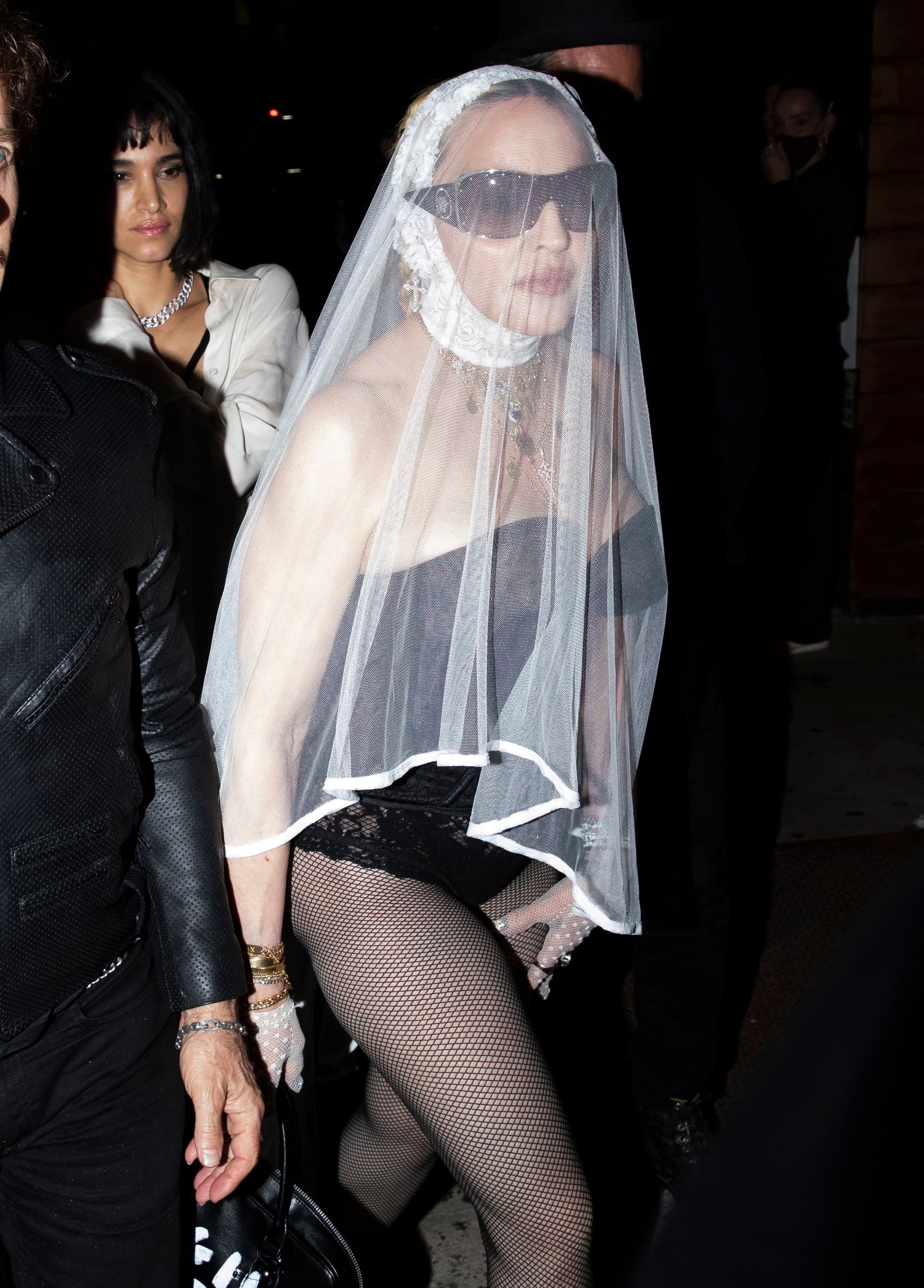 Diggzy/Jesal/Shutterstock
Historically, we saw Marilyn Monroe and Bianca Jagger wear birdcage veils. In recent years, we've seen Sofia Richie wear a finger-tip veil and Ariana Grande wear a shoulder-length Funny Face-inspired Vera Wang veil—both as modern brides forgoing "tradition" and fashion girls paying homage to the past. Ahead, we round up some of our favorite short veils to shop now.
Shop The Trend:
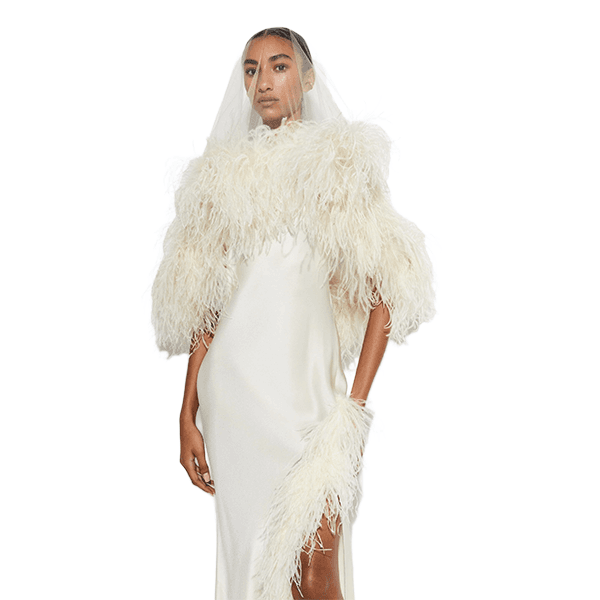
LAPOINTE Tulle Veil With Feathers
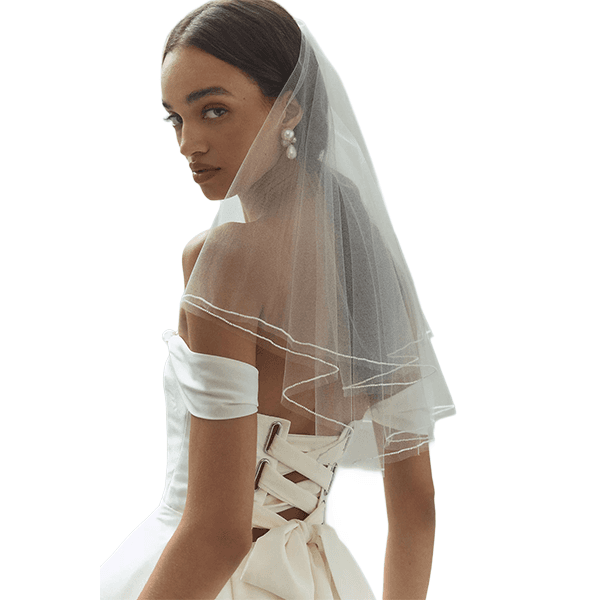
Anthropologie BHLDN Mini Pearl-Trim Shoulder Veil
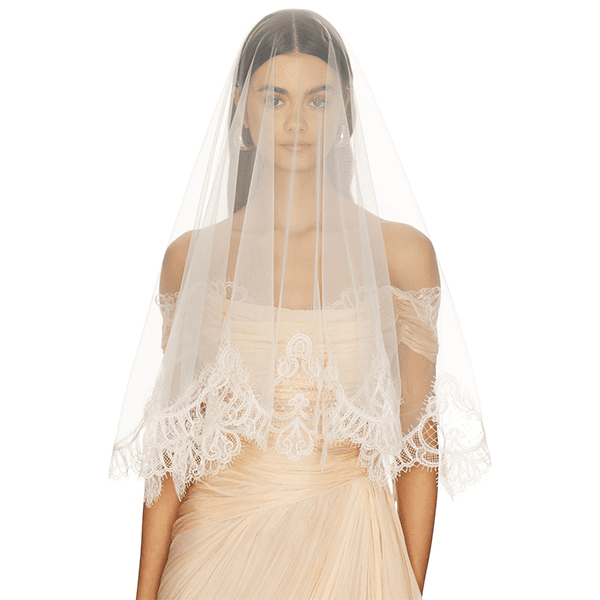
Maria Lucia Hohan Iva Veil
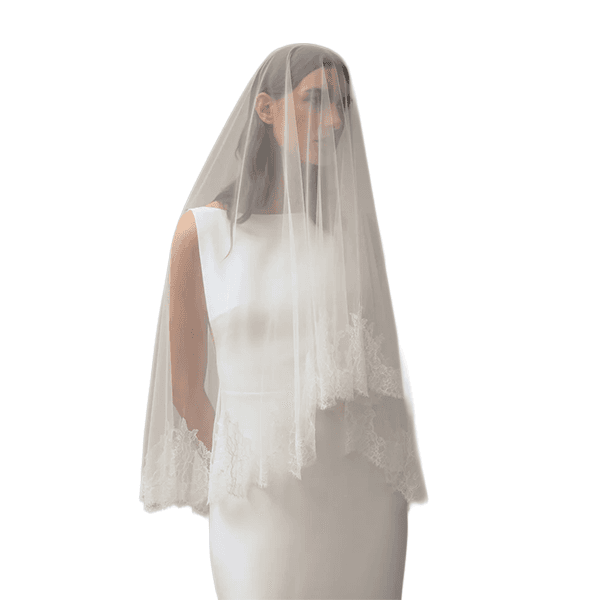
Alexandra Grecco Sullivan Veil
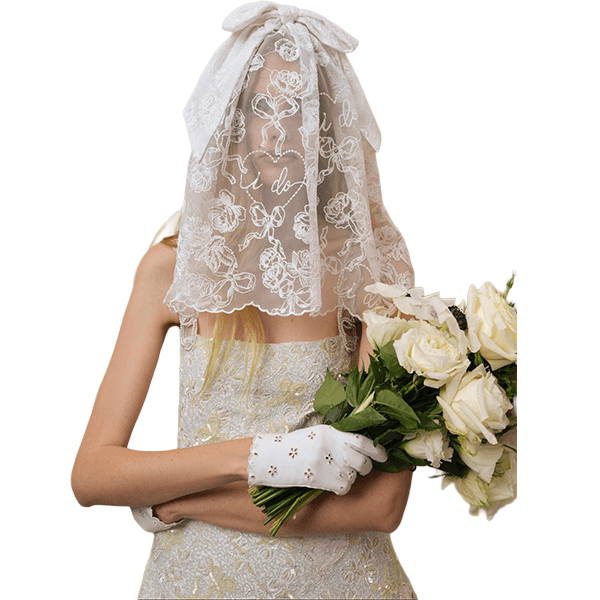
For Love & Lemons Locked Hearts Veil