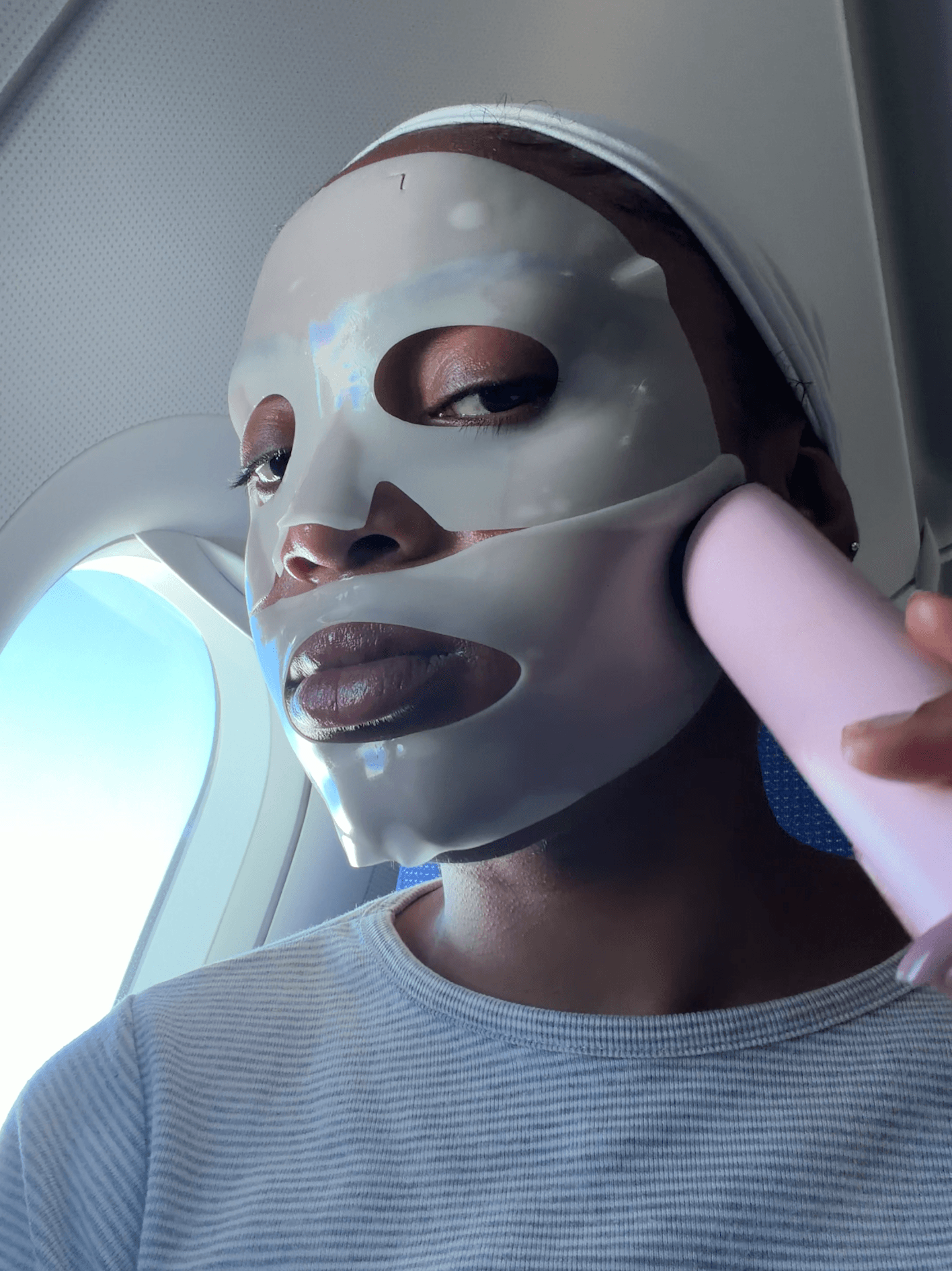
On a flight from Mexico City to New York City this summer, something clicked for me the moment my beloved Medicube Booster Pro X2 met my sheet mask-covered face. Quick preface: as a dry-skinned girl, an in-flight skincare routine has proved itself very effective. For me, the biggest benefit is emerging from the plane without red, irritated skin. While that is true, I realized that my ritual wasn't purely inspired by my desire for perfect, happy, and healthy skin—I, admittedly, also wanted to snap a photo of myself.
This moment—when I realized I put on skincare to appear like a girl so committed to self-care that she is confident enough to look scary in her sheet masks publicly—made me stop and think. Was my in-flight skincare routine performative? "I definitely think social media has created an element of beauty that is about signaling: 'I’m someone who takes care of myself. I prioritize wellness. I know what’s trending,'" Esthetician Emme Diane says. "I think it crosses that line when the visibility of the ritual becomes part of the point."
Performative beauty describes a phenomenon in which self-care becomes less about the ritual's benefits and more about being seen doing it. This phenomenon shows up every day—whether it be walking through Manhattan or a TikTok video—where you spot someone with under-eye patches on far longer than the recommended 10-20 minutes. "Eye patches and sheet masks worn publicly can absolutely lean performative because, from a skincare standpoint, there usually isn’t a benefit to doing them in public versus doing them at home," Diane says. "They’re not going to work better because you wore them to Starbucks. I can absolutely see practical situations where someone might wear them while they’re on the go. Maybe you have a 3 a.m. call time for television, and you put them on while you’re driving to the studio to depuff before hair and makeup. That makes sense to me."
At its core, the trend of wearing eye patches in public is seemingly about wanting to appear busy, on the go, and so exhausted that your errands and self-care time have to overlap—she is hyper-optimized. It also communicates a laid-back attitude: that girl isn’t only willing to show you the final results; she’s unafraid to show you the process. "Social media has glamorized get ready with me videos, which makes consumers more comfortable showing their own beauty rituals," Ron Robinson, cosmetic chemist and founder of BeautyStat, says.
Since the under-eye patch market exploded in the United States around 2023, they've become status symbols. With distinct colors and patterns, the brands are immediately recognizable: Rhode's are gray with the brand's logo, Summer Fridays' are blue, and Topicals are pink, for example. Even luxury brands like Chanel and Dior make patches, turning skincare products into outfit accessories.
At $4 to $12 per wear, the ability to afford them and wear them to the extent that they're not even receiving their full benefits—i.e., during a sixty-minute workout to the point that they begin drying out your skin—has become a flex. "Wearing the eye patches, having the perfect morning routine, doing the elaborate wellness ritual — sometimes it’s not only about how it makes you feel, but also about what it signals to other people. I don’t think that automatically makes it bad or superficial. But I think it’s worth asking: Is this actually making me feel good? Or am I looking outside of myself for validation, attention, or a sense of significance?" Diane says. "I think it’s worth asking whether the ritual is serving you, or whether you’ve started serving the image of the ritual."
Instead of pretending like everyone naturally wakes up looking polished, our social media personalities are defined by the products that make us look polished. "I think wellness has become part of personal identity. There’s a certain image attached to being someone who has the supplements, the skincare routine, the red light mask, the eye patches, the Pilates class, and the green juice," Diane adds. "Beauty has always been a way people express identity, but social media has amplified that because now the ritual itself can become part of how you communicate who you are."
At the same time, there's something refreshing about us collectively growing less self-conscious about our beauty rituals. Brands like Starface, for example, created skincare products meant to be seen—products that fulfill a functional need (treating and protecting a blemish while also keeping you from touching or picking at it) but are also cute and fun. While these, too, turn skincare into a fashion statement, they also destigmatize the shame associated with acne. "I think it’s cool that my teenage nieces now wear a fun sticker on a blemish to school. That was not the case for me. I felt that I had to “cover up” vs. letting my skin breathe, heal, and have fun with it at the same time," beauty content creator Marcela Alcalá, aka @mexicanbutjapanese, says.
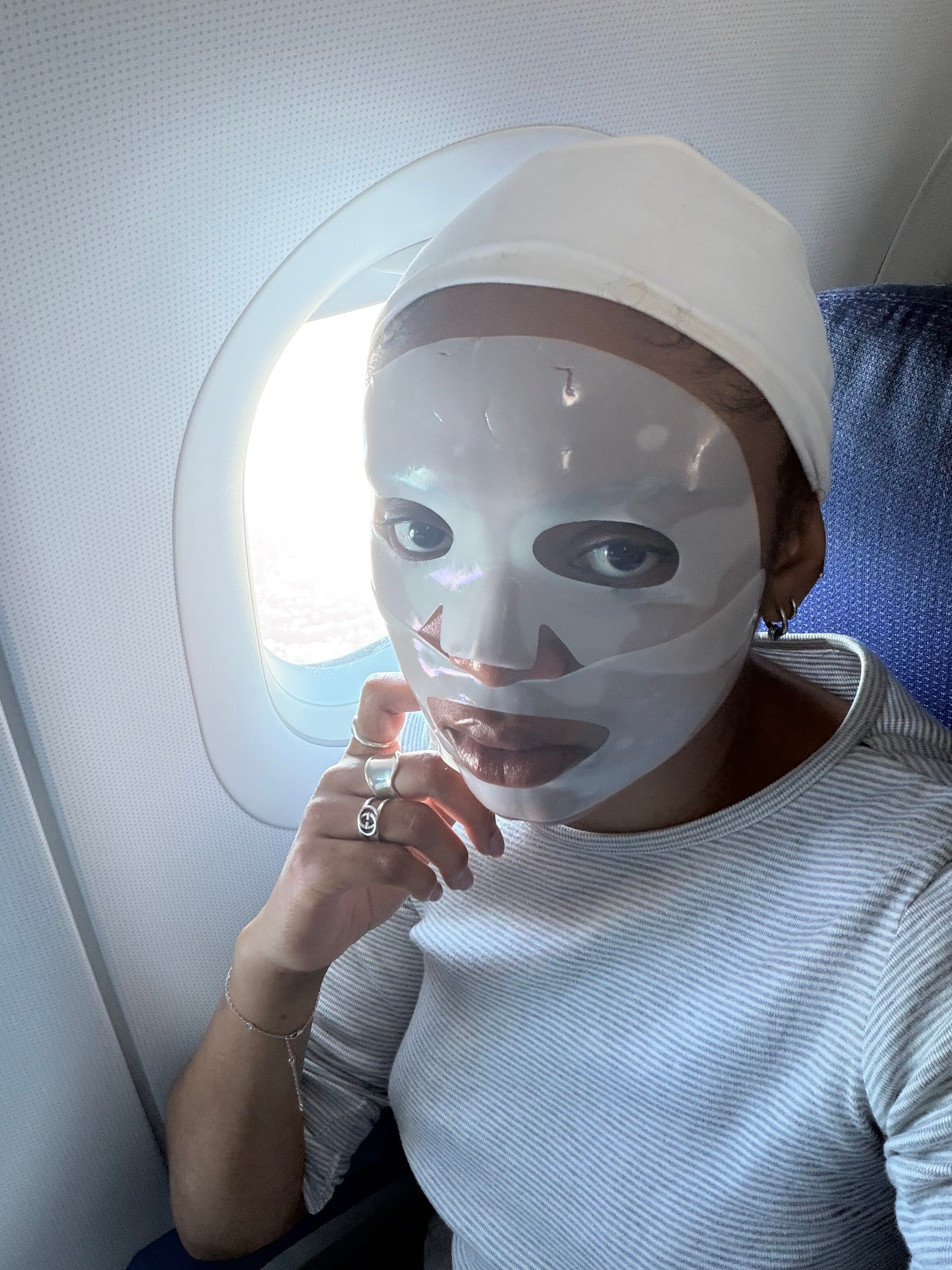 Photo: Bianca Asare
If wearing eye patches out in public or using your Medicube Booster Pro X2 with a sheet mask on a flight genuinely makes you happy, that's great—the most important part of self-care is how it makes you feel. But one question is worth asking: would you still do it if nobody saw you?