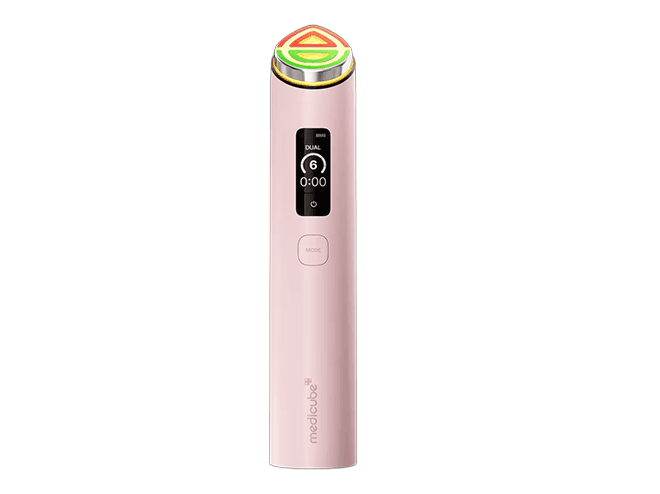
If you're on social media, even just a healthy amount, you've likely seen the Booter Pro and its successor, the Booster Pro X2, in action: the cylinder-shaped tool that glides along the face and targets skincare concerns. We're in an era of influencers driving sales, and what scares me most is the idea that we could be sold things that our favorite stars with massive followings don't even genuinely use or that, that end up being a waste of money, or, in the worst-case scenario, are actually bad for us. Every now and then, though, brands and products that are actually effective pierce through and win social media—this was the case for Korean beauty brand Medicube.
According to Medicube's media relations team lead Joe Cho, the brand owes its early success to the staple K-beauty ingredient PDRN. "Medicube was among the early beauty brands to bring PDRN into mainstream skincare, which helped us introduce the ingredient to a wider consumer audience," Joe Cho says.
Another huge win for the brand was being ahead of the game when it came to at-home skincare devices, as the category was still relatively uncommon back in 2024 when the first Booster Pro launched. "At the time, there simply weren't many comparable device products in the K-beauty space. The visible 'glass skin' effect from the device gave customers a reason to get excited about it," K-beauty expert and founder of Then I Met You Charlotte Cho says. "The device was incredibly easy to demonstrate visually. You could see someone using it, see the immediate glow, and understand the promise without needing a long explanation. Medicube then amplified that through social media and partnerships."
Medicube really struck while the iron was hot—at a time when, generally speaking, young people weren't making enough money to afford crazy expensive in-clinic treatments but still craved skincare and self-care routines that felt luxe. "We saw an opportunity to bring some of that professional-inspired approach into consumers’ everyday routines in a more accessible way," Joe Cho says.
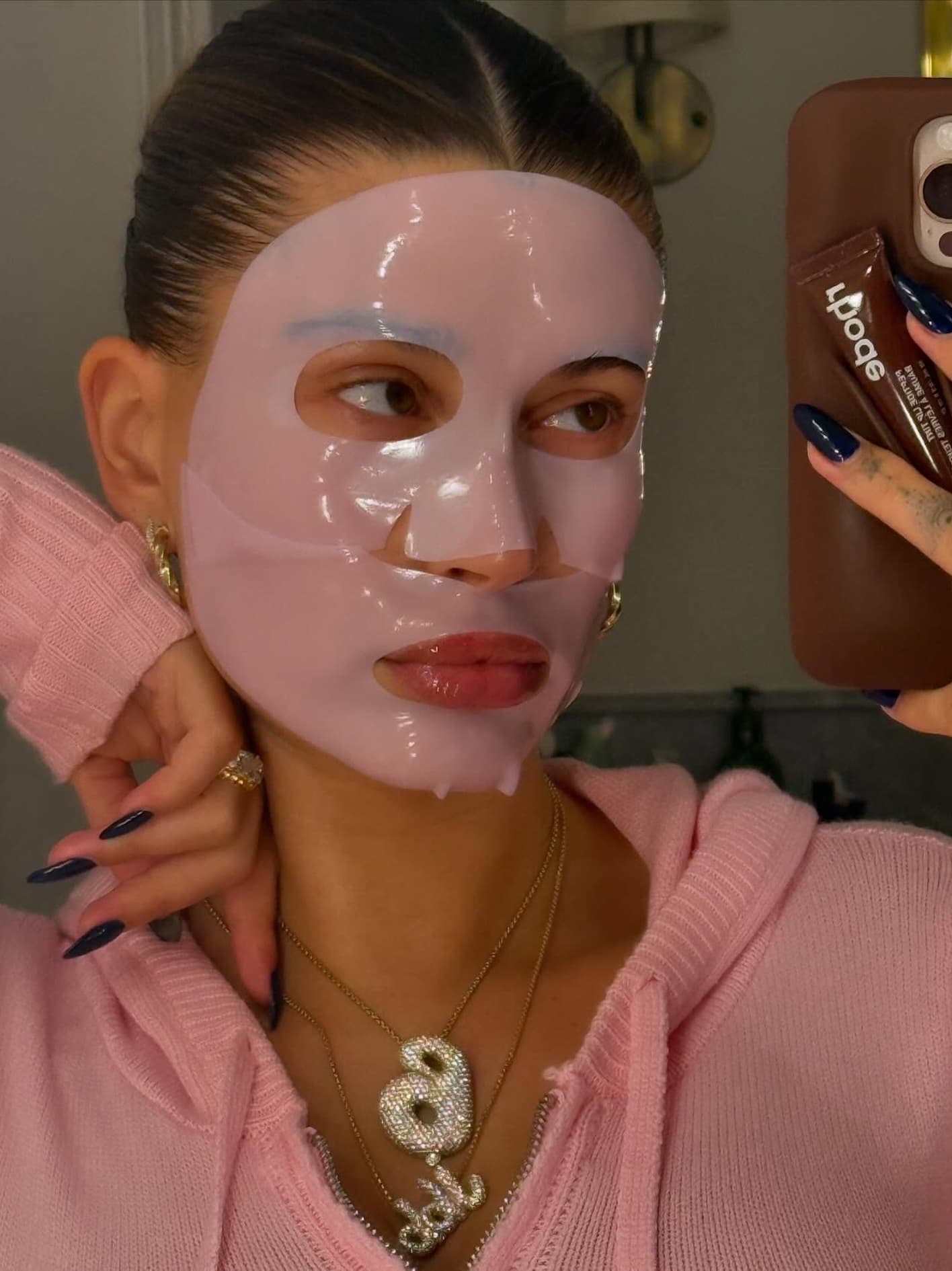
Medicube's success is marketing at its best—and with results to back up campaigns and celebrity endorsements. These endorsements have helped the brand stand out against strong K-beauty competitors like COSRX, Anua, Mediheal, and AESTURA. "They understood the power of influencer marketing very early on. They partnered with top skincare, beauty, and lifestyle creators to demonstrate the device and its results, eventually expanding that strategy to A-list celebrities like the Kardashians," Charlotte Cho says. "Large budgets that allowed for social amplification helped Medicube break through in a very crowded K-beauty market." Celebrity endorsements from the likes of Kylie Jenner, Hailey Bieber, Selena Gomez, and Olandria Carthen put more eyes on the brand, introducing it to communities it might not have reached otherwise.
While the brand certainly benefited from a general K-beauty wave, the way they capitalized on that momentum is what earned them cult favorite status. While the brand owes some of its success to TikTok, the formulas and accessible price points sort of speak for themself. "TikTok gave us a platform where we could demonstrate our products in a way that felt authentic, visual, and easy to understand," Joe Cho says. "That ability to tell our story through real people and real experiences helped us reach a much broader and more diverse audience."
From a cultural perspective, and regardless of follower count, there is something about aesthetically packaged skincare and tools that makes you feel so chic that they're worthy of a social media post. In turn, this makes us want to maintain self-care routines—and, by posting videos of us doing so at home, on a plane, or on the go, we encourage others to do the same.
Medicube reaching the heights that it has is a testament to the power of K-beauty and the ingredients it has introduced us to, but also points to challenges that might arise moving forward: many Boosterd Pro dupes hitting the market, for example. "It is becoming harder to claim innovation as a meaningful point of differentiation," Charlotte Cho says. "A lot of beauty innovation originates with Korean contract manufacturers, and increasingly, non-K-beauty brands are working with the same Korean manufacturers. That means we're going to see more overlap in formulas, ingredients, formats, and technologies. The question will become less about whether something is a 'Korean innovation' and more about who can create a compelling brand around it, bring it to market quickly, and build consumer demand.
When doing a side-by-side comparison with other beauty brands, Korean and otherwise, it's clear that Medicube's singularity comes from its transformation of skincare into a beauty-tech experience. Filling that gap in the market for prices that aren't exorbitant, paired with the influencer and celebrity co-signs that put many eyes on the tools and products, catapulted the brand.
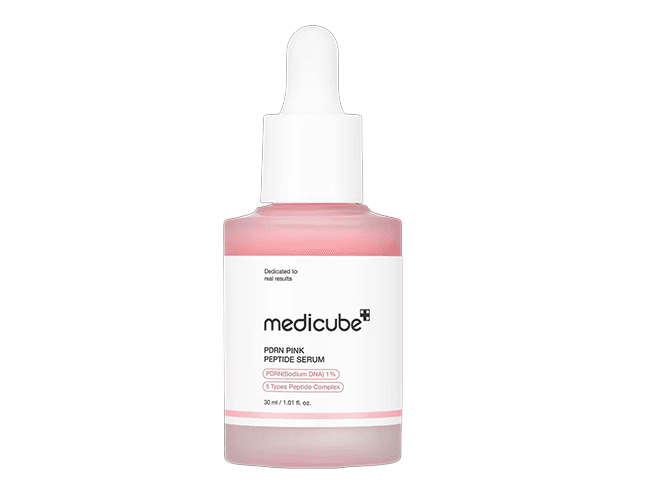
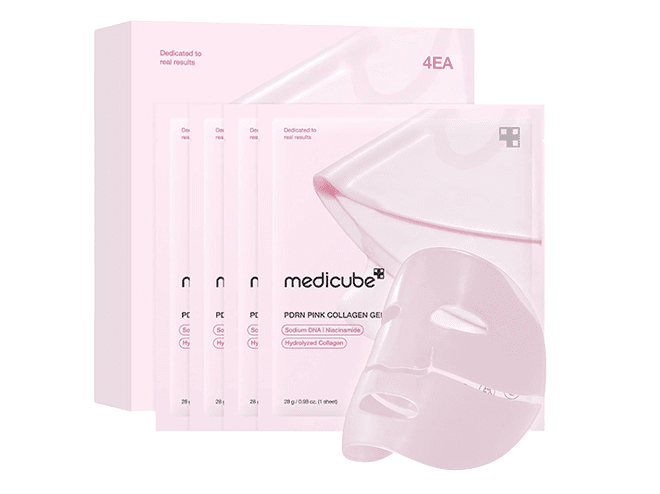
So, with a portfolio that spans targeted skincare, at-home beauty devices, and innovative formulas backed by expertise, and a marketing plan that has already won, it's likely impossible for any brand trying to replicate Medicube's magic to catch up. So, I'll continue using my Booster Pro X2 and PDRN Pink Serum at night and wearing my PDRN Collagen Gel Masks on every flight I get on—and I'd say many cult followers of the brand feel the same.