Somewhere between LAX and Tokyo, my sense of time completely collapsed. I arrived in Kyoto after my 12-hour Japan Airlines flight feeling completely disoriented. It was dark outside, and I remember asking the driver if it was morning or night. He laughed gently and told me it was evening.
That disorienting feeling stayed with me as we drove through the city, winding past streets I barely registered before pulling up to the Four Seasons Kyoto. Shizu Okusa—founder of Apothékary, a wellness brand known for its herbal tinctures—was to be my Kyoto guide. She describes her own experience in the city as life-changing. “History lives in the blood of Kyoto; you can feel it in the air,” she told me. “But it’s met with modernity. There’s a blend of tradition and modern wisdom here.”
Kyoto, Japan’s former capital, is where Shizu says her own healing journey began, which mirrors the philosophy behind her brand. “In slowness, we’re actually able to see what’s going on,” she explained. “We’re so addicted to being busy that there’s no time to pause.” This trip, she said, was designed as an intentional pause. An experiment in stillness.
By the time I reached my room, it was late. On the bed were snacks Shizu had left out for us (her favorite finds from 7-Eleven), alongside a lineup of Apothékary tinctures arranged neatly in a row. Jet-lagged and wired, I gravitated immediately toward Wine Down, a red wine-inspired tincture made with ingredients like L-theanine, California poppy, and tart cherry. I ate quickly, took a dropper full on my tongue, and crawled into bed.
I also tucked another tincture, Take the Edge Off, into my bag to have on hand throughout the trip. Made with herbs like passionflower and skullcap, it became something I reached for intuitively, whether for a quick drop or mixed in with sparkling water. What I appreciated most was how flexible these tinctures felt in my day-to-day. Just small moments of pause, folded in where they fit.
 Taylor Jean Stephan
The next morning, a group of us made up of editors, creators, people who spend most of their lives online gathered for breakfast. We went around the table sharing intentions for the trip. Nearly everyone said the same thing: we were exhausted, overstimulated, craving peace.
Later that morning, we drove about an hour outside the city to SUMIYA KIHO-AN, an onsen surrounded by nature. I’ve been to hot springs before and even live near some in Los Angeles, but this felt different from the moment we arrived. We changed into simple, identical robes. Shizu told me later that this was her favorite part. “We’re usually defined by our hair, our jewelry, what we’re wearing,” she said. “When everyone is the same, something shifts.” Wrapped in the same cotton, hierarchy dissolved. Founder, editor, influencer; it didn’t matter.
The water was hot, mineral-rich, and deeply grounding. I felt my shoulders drop before my thoughts did. There was nothing to do, nothing to optimize. Afterward, we were paired up for a traditional Japanese lunch. I sat with Shizu, and within minutes we were gossiping about our love lives, ambition, life, and having the kind of conversation that usually takes hours to reach with someone you just met. It struck me how easily intimacy formed when no one was performing. By the time we boarded the bus back, my skin felt saturated, my body heavy in the best way, and my mind was quieter than it had been in weeks.
 Taylor Jean Stephan
 Taylor Jean Stephan
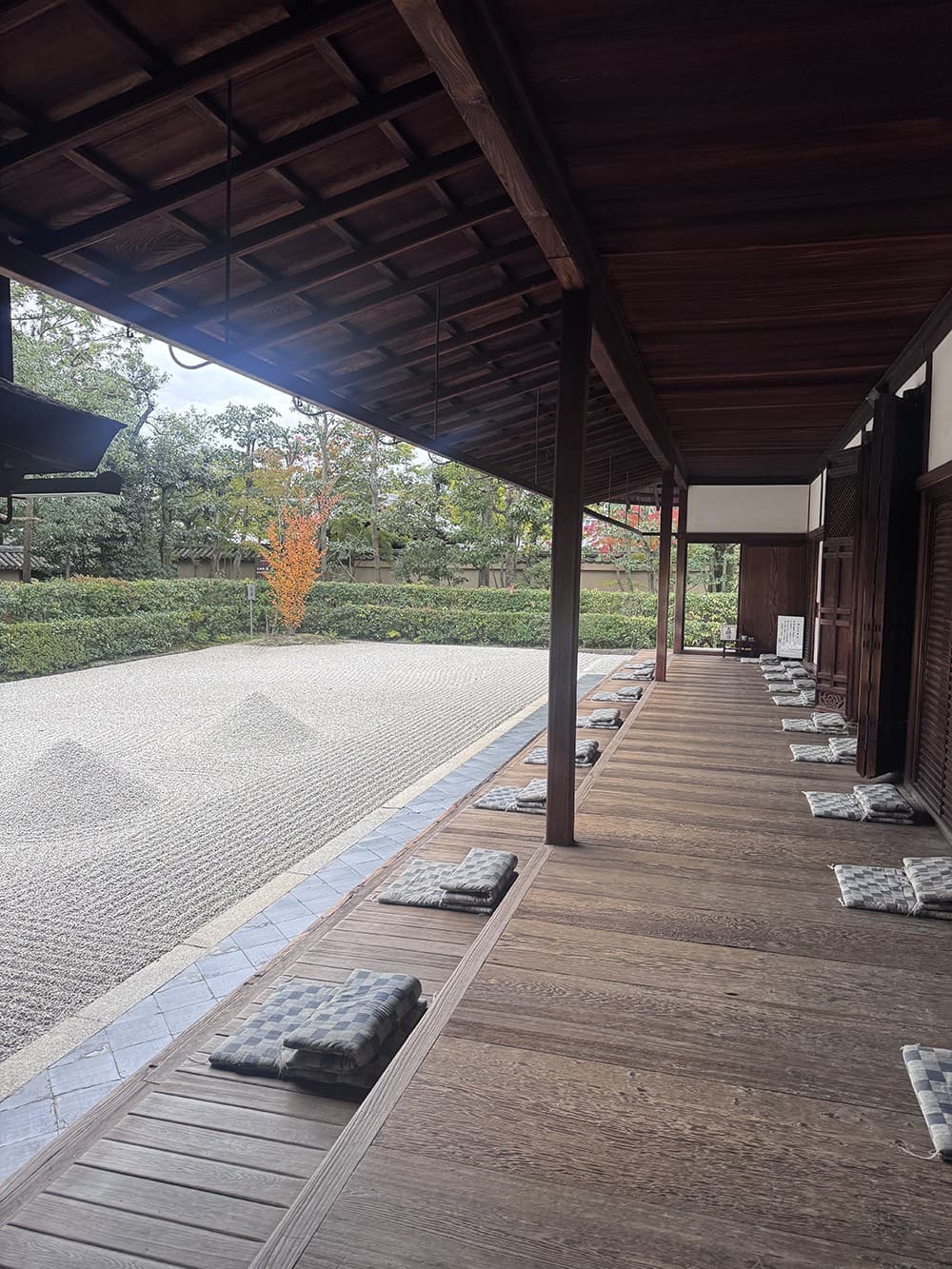
We went straight from the onsen to Daisen-in Temple, a centuries-old Zen temple—one of Kyoto’s most visited, filled earlier in the day with schoolchildren and tourists. At sunset, cushions were laid out in the garden, and a monk led us in zazen meditation.
We were instructed to meditate with our eyes open, fixed on a single point. Sitting still has never come easily to me. I’m much happier moving, whether I’m working out, sweating, or doing something active. Stillness feels foreign in my body. The monk walked slowly between us holding a wooden paddle, giving people a swift hit on the back that’s meant to sharpen focus. I waited for him to choose me, not realizing you had to signal first. He passed me again and again. Later, I learned I’d misunderstood the assignment entirely.
Behind him, the sky turned orange and pink against ancient stone. The meditation felt long. I kept reminding myself that I might never experience something this authentic again.I wasn’t good at it. But when it ended, I felt something I can only describe as a humming stillness.
To better understand why that discomfort felt so intense, I later spoke with Dominique Perkowski, an NYC-based certified Tibetan Buddhist meditation and mindset coach. “Stillness is the ability to quiet mental noise and fully surrender into the present moment without labeling, judging, or fighting it,” she explains. The benefits of meditating and finding stillness are scientifically documented, from improving memory and soothing stress to literally rewiring your brain. It’s the simplest and easiest way to change your mindset, yet so few of us tap into it because we live in a society that glamorizes the grind.
 Taylor Jean Stephan
The next morning, I woke up rested, still adjusting to the time difference, but proud of myself for having slept. At breakfast, I skipped my usual latte and reached for matcha instead. I don’t normally drink much of it, but in Japan it tasted different. It was cleaner, lighter. I had two.
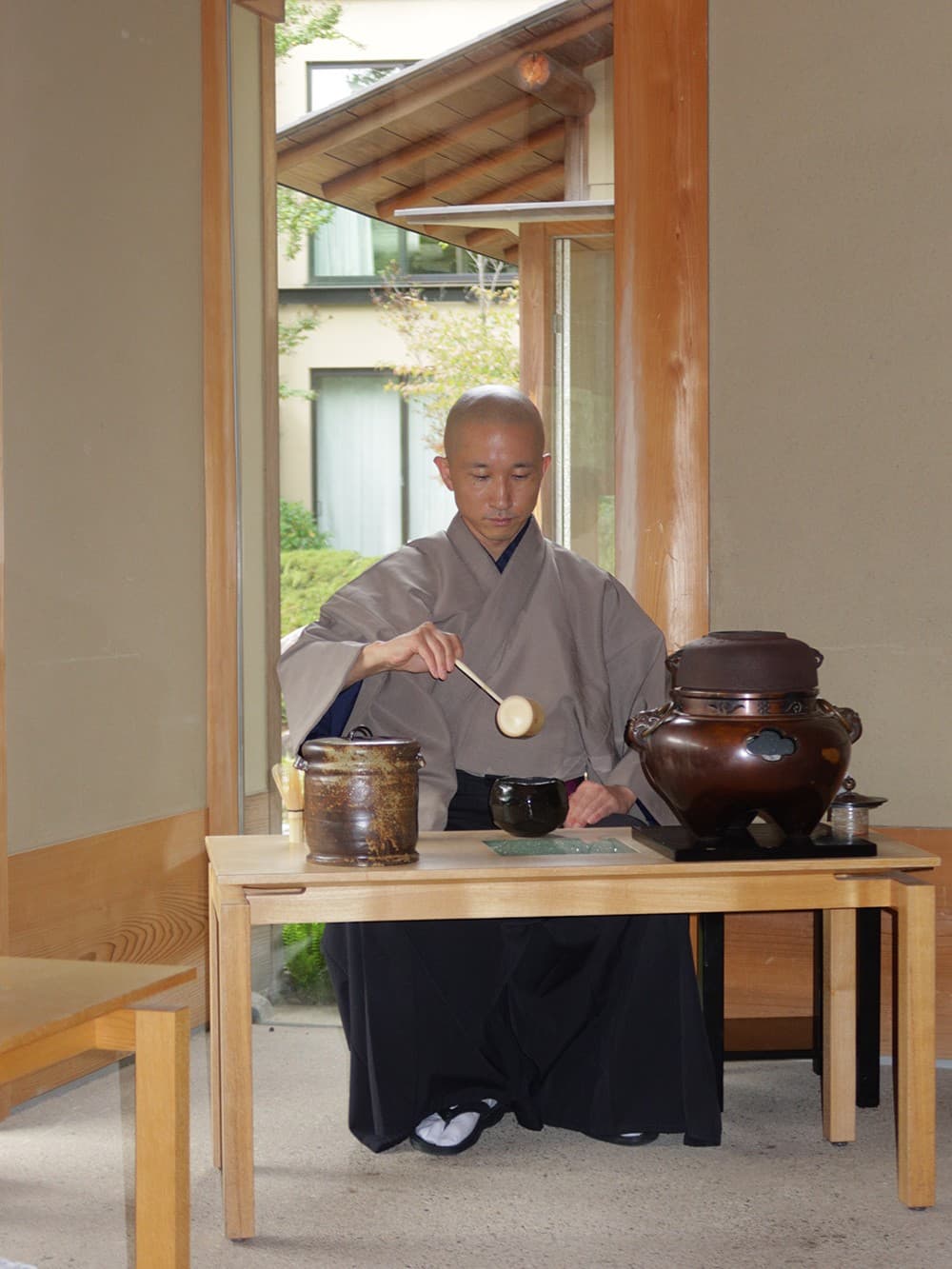
We walked to a private garden at the Four Seasons for a traditional tea ceremony led by the youngest tea master in Kyoto. He was young, charismatic, and modern, but the ceremony itself was deeply rooted in tradition.There was very little talking. Just the sound of water, whisking, pouring. Each cup of tea was prepared and handed to us individually. Fog rolled in as we sat there, time stretching, nothing else competing for our attention.
Perkowski later told me that “the goal of meditation isn’t to shut off thinking, but to train your attention so you can return to presence more easily.” In that moment, presence started feeling effortless.
 Taylor Jean Stephan
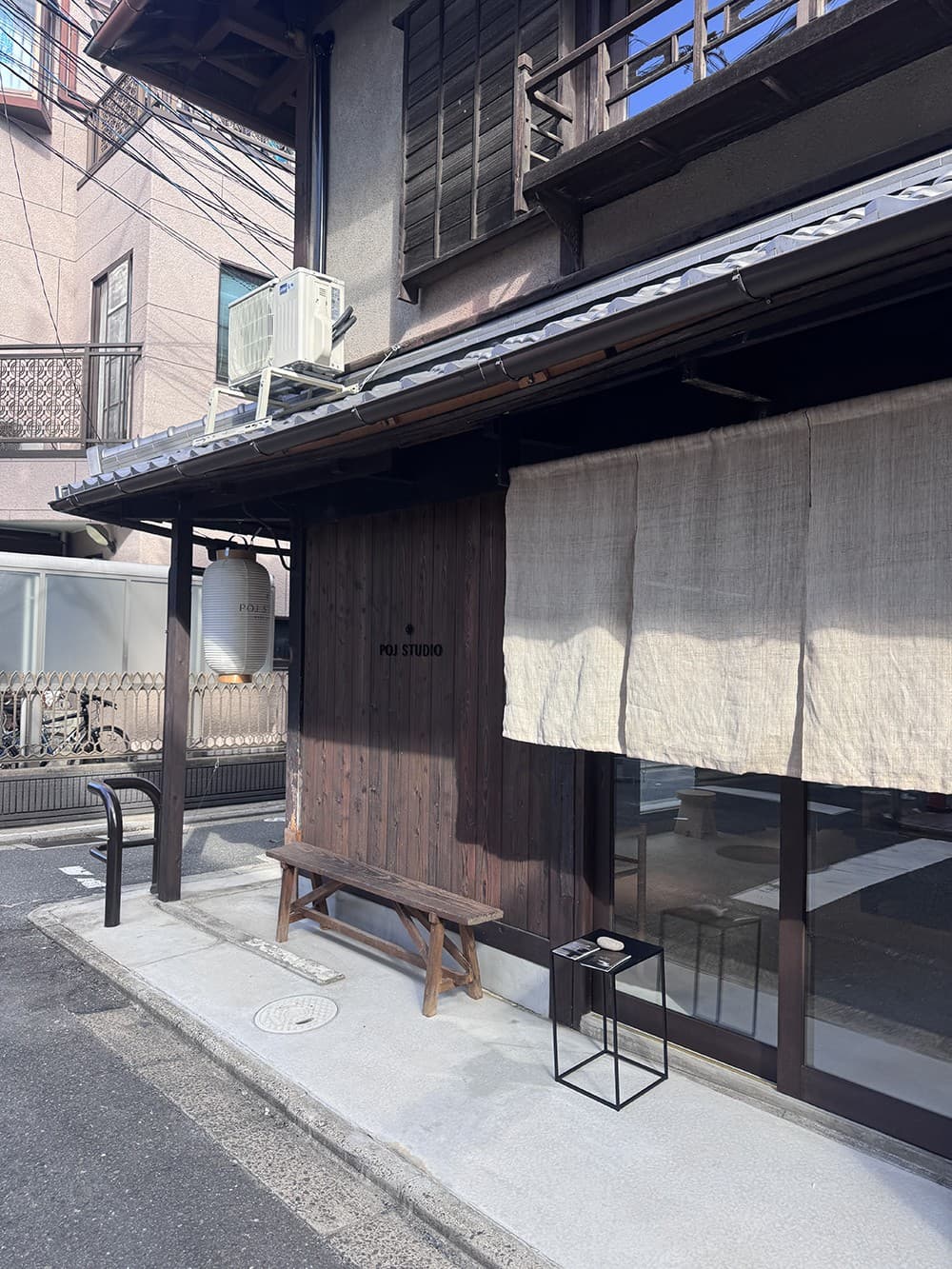
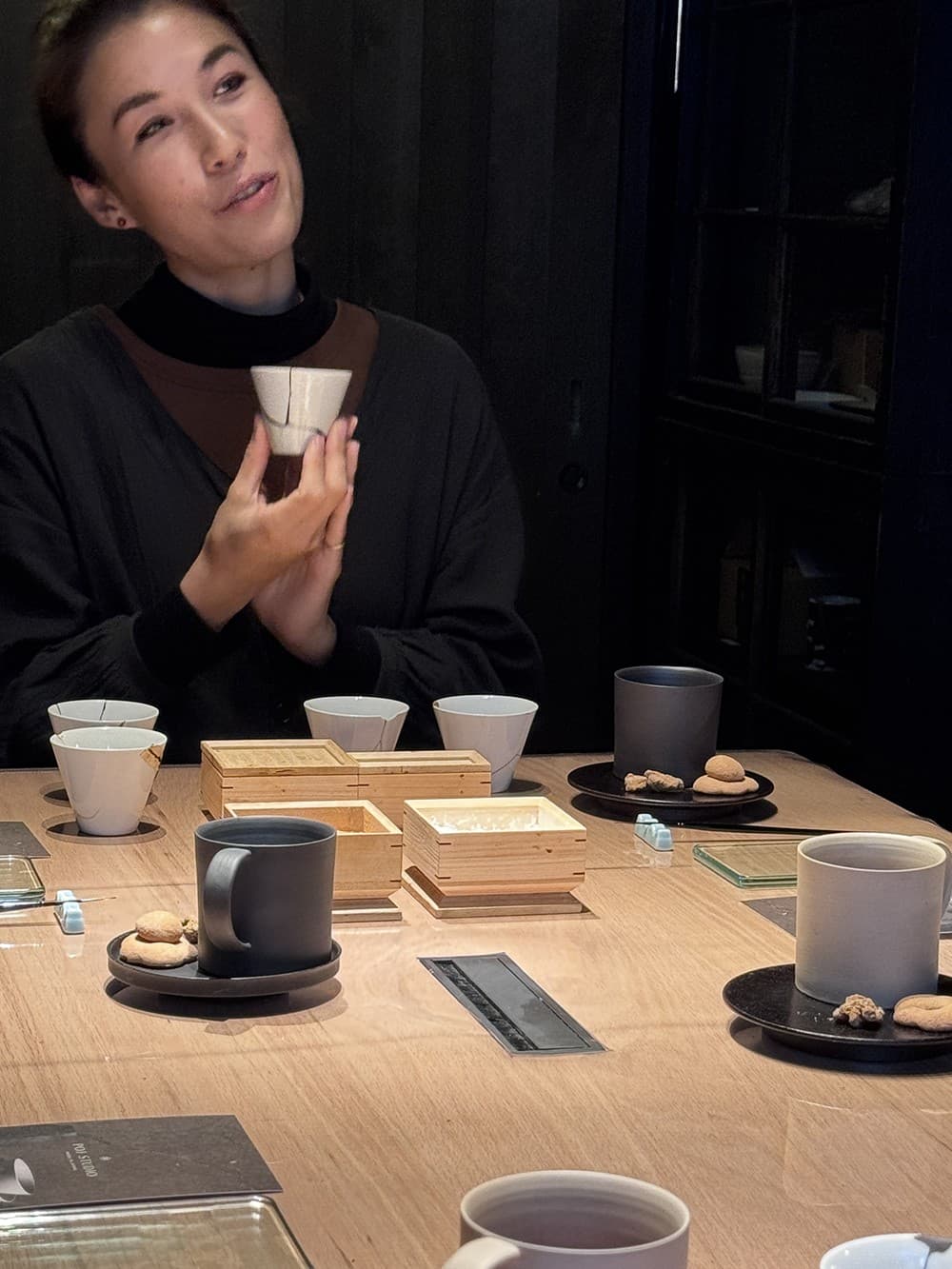
Later that afternoon, we split into small groups for a kintsugi workshop at POJ Studio, a tucked-away ceramic studio on a quiet Kyoto street. Inside, it felt like a minimalist gallery—intentional, warm, quietly luxurious.Kintsugi, we learned, is the Japanese art of repairing broken pottery with urushi lacquer and gold. The lacquer itself is toxic when wet, which meant everything had to be handled slowly and carefully. The full process takes months. We were only doing one step.
I found myself getting annoyed with how slow it all was. Some of the women were incredibly precise, painting thin, delicate lines of gold. I kept overdoing it, changing my gloves, getting lacquer everywhere. It was the moment I realized I’m a messy creative and a little bit chaotic. I’m less refined than I imagine myself to be. But kintsugi didn’t ask me to be more meticulous. It asked me to slow down and meet myself where I was.
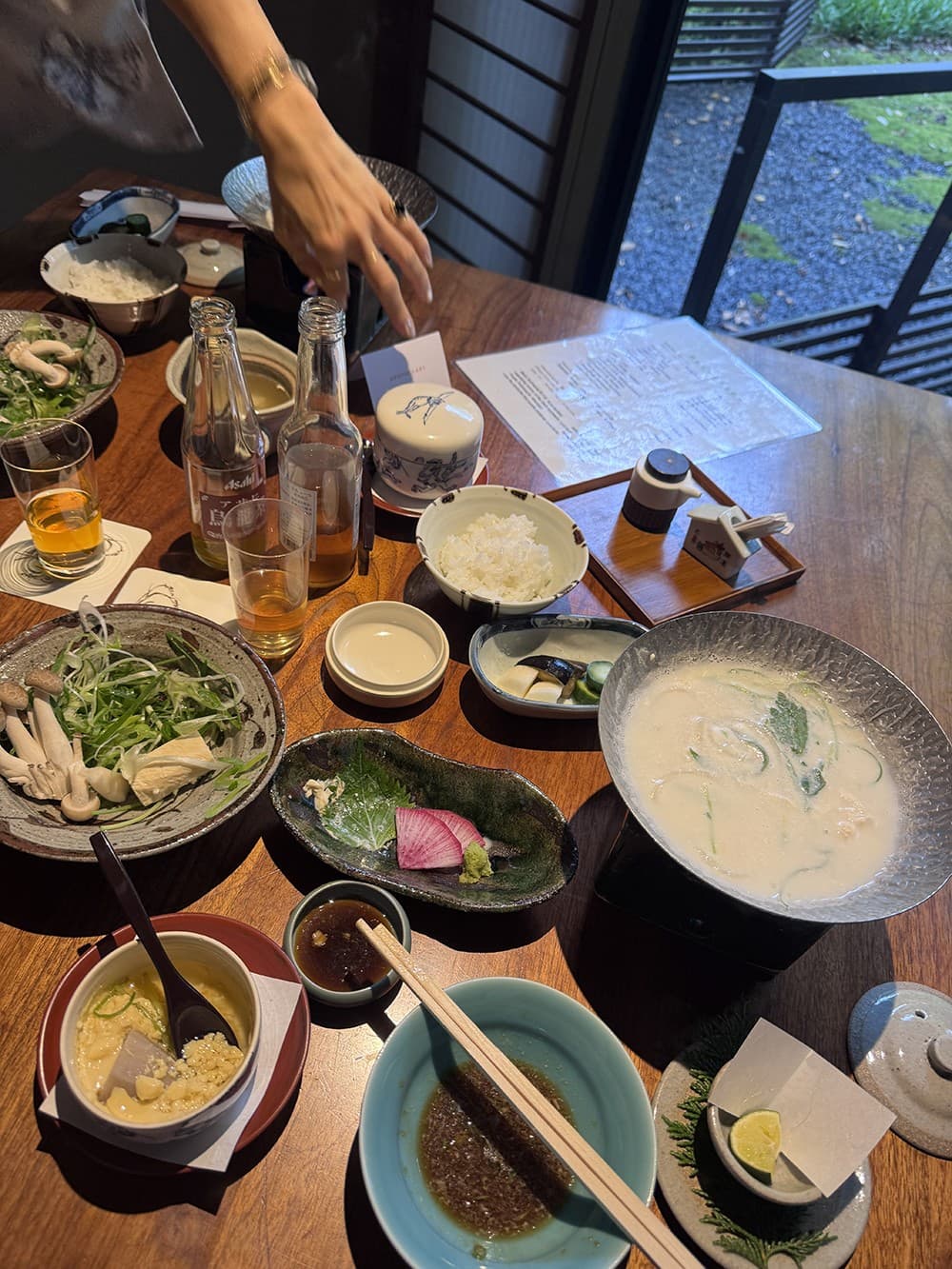
That night, we went to dinner at Toki, a quiet, elegant restaurant known for its omakase-style experience. As a vegan, I was grateful they had plenty of options for me. It was thoughtful and just as considered as everything else we’d encountered on the trip. I was seated with women I’d just met: a comedian from New York, a cooking creator from L.A., a yoga instructor. Somehow, every conversation I had in Kyoto with people who had been strangers hours earlier went deep quickly. We talked about what we were hoping for in the new year, what we were ready to let go of. Our table kept getting shushed for being too loud. We laughed, apologized, tried again.
Some of the girls went out afterward to Matcho Bar, which I’d seen all over social media, full of shirtless, very buff men. I was a little sad to miss it, but mostly relieved. I wasn’t in the mood to rip through town. I went to sleep instead. Before leaving Kyoto, I booked myself a deep-tissue massage at the Four Seasons and it was heavenly; I could have cried from joy. Then I was off to the airport.
 Taylor Jean Stephan
A lot of trips like this are exhausting. You move from one thing to the next, drink through dinners, and try to keep up. This one felt different. I barely drank. I slept. I talked to people I’d just met. I felt present in each moment, instead of just getting through the itinerary.
Perkowski told me that without intentionally creating space for stillness, we’re often at the mercy of reacting to whatever life throws at us. Some research, she noted, suggests an emotional response is chemically designed to last only about 90 seconds—anything beyond that is often fueled by our own continued mental engagement. Finding stillness helps everyone have a better handle on their thoughts. Shizu put it more simply: “When I slow down,” she said, “I feel joy.”
Somewhere between the baths, the meditation, the tea, the slow repair of broken ceramics, and long conversations over dinner, stillness stopped feeling like a concept and started feeling like a real practice I saw the appeal in. I noticed myself reaching for the tinctures the same way I reached for quiet throughout the trip: intuitively, without overthinking. I left Kyoto feeling grounded, with a new appreciation for the simple act of sitting still. And that felt like the most meaningful souvenir of all.