In Eye Diet, Sydney Gore observes the latest design and lifestyle trends worth obsessing over.
Ever since bows popped off in 2023, I’ve been patiently waiting on the edge of my seat to see what decorative motif would follow. While I resisted the whims of the coquette aesthetic, I couldn’t stay away from playful decor reminiscent of a dollhouse. As the idea of romanticizing your life began percolating on the Internet, I dwelled on how to curate my own space in a way that expressed the desire to yearn. Seemingly out of nowhere, my call was answered by a delicate detail that spoke to me like poetry: the dramatic ruffle of a curtain.
Whenever I notice this type of silhouette in a crowded room, it reminds me of the millennial proverb, “I don’t want to be perceived.” Quiet as she may be, this diva is extremely observant as she reads the room with sharp precision. (Cue the curtain bangs commentary.) For those with the eyes to see, the curtain has nothing to hide; it’s a boundary that protects the light from within. When ceramic designer Analuisa Corrigan debuted the Curtain Lamp in 2021, she knew that she’d created something special.
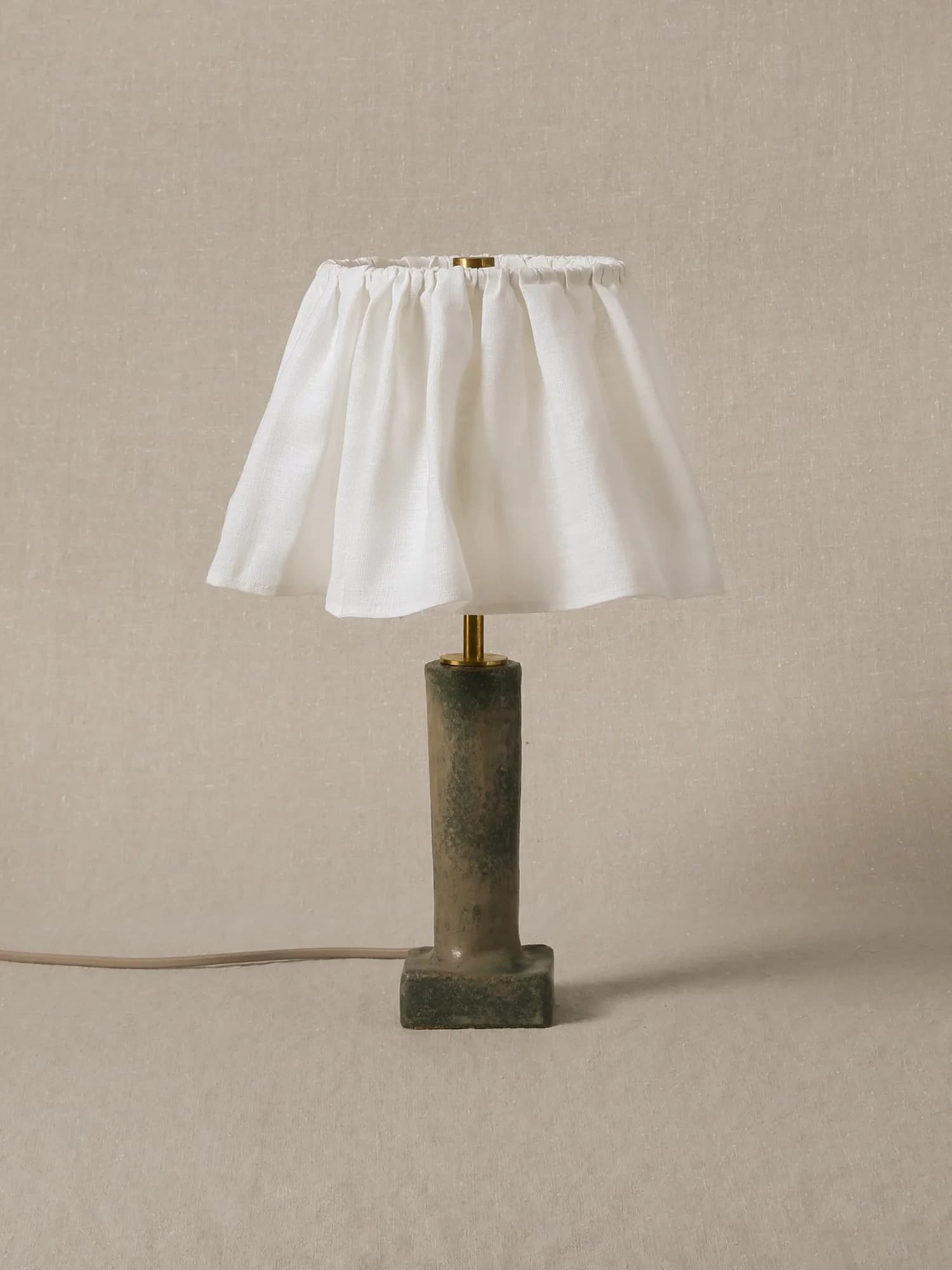 Photo: Analuisa Corriga Curtain Lamp by Analuisa Corrigan, $2,350-$2,650
At the time, the Los Angeles-based ceramic designer was craving more romanticism in her work; she loved the idea of having movement to the fabric and manufacturing a level of interaction within the environment. Corrigan was also exploring the depths of her childhood and trying to figure out how to communicate those experiences through ceramic work—she specifically found herself revisiting memories of hiding under the table during dinner parties. “I think every child has that in one form of another, whether you’ve made a fort at home, or you just feel so small in a larger space, but you feel safe,” she adds.
Corrigan translated the magic of that secret space beneath a tablecloth through a white linen fabric attached to unfinished brass hardware and a glazed clay base with an inherently masculine presentation to it. “I remember feeling really bogged down by taking myself and the work so seriously,” she recalls. “The design world can feel so serious, and it is serious, but at the end of the day we’re all individuals, and for me personally I love having a sense of playfulness in my home.”
In 2023, the Curtain Lamp became a fixture for New Yorkers that regularly dined at Gem Wine. Despite the design being duped to death by DIYers, Corrigan is committed to developing her craft as demonstrated by the new pendants she’s been making out of free flowing fabrics like raw silk and chiffon. “I wasn’t the first person to make a shape without that bottom ring, but for my work at the time and where I was in my design journey, it really unlocked something within me for more exploration and textiles and fabric,” she insists. “It made them so much more exciting for me.”
Turning The Tables
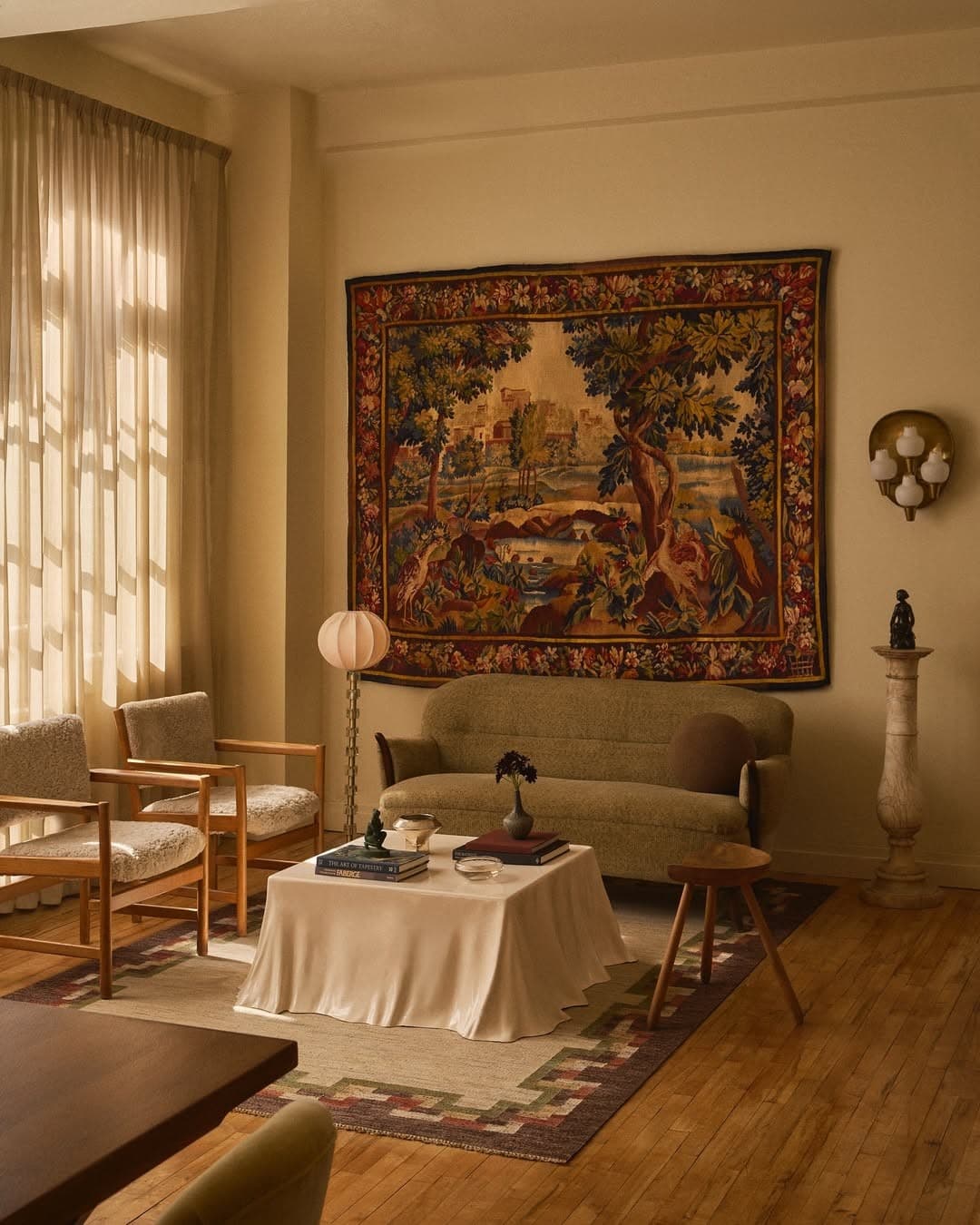 Photographed by Jonathan Hökklo “I feel like this is a piece that has a lot of shape, sculpture, and character,” Carly Kreiger says about the Tovaglia Table. “It’s not something you see often so it feels very special.”
This wholesome image reminds me of the Tovaglia Table by Studio Tetrarch for Alberto Bazzani, a gel-coated fiberglass molded to emulate draped fabric that made me gasp upon discovering it through Carly Krieger of Past Lives Studio. The New York-based interior designer was instantly drawn to the dichotomy of “the light play of the draping adding this soft texture to something that is so hard,” viewing it as a sculptural piece that serves the function of a coffee table.
Krieger suggests that this newfound appetite for whimsy is a chain reaction to the “scroll aesthetic” as we phase out of the “beigessance” and usher in a more refined version of maximalism that doesn’t scream for attention. Krieger is reminded of relics from the Secession era, like Josef Hoffmann’s table lamp and credits Corrigan for bringing the style back to the mainstream. As someone who is drawn trompe l’oeil in all forms, she has an appreciation for objects that add dimension to make something beautiful even more interesting.
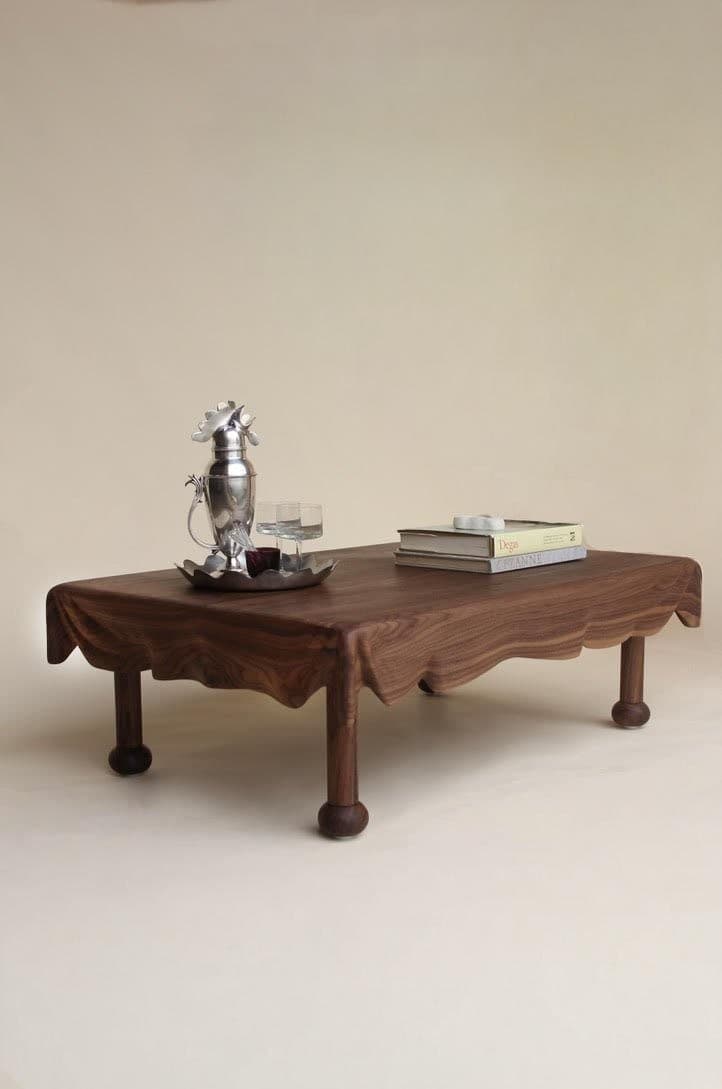 The Draped Coffee Table by Steph Throwbridge, $8,000 Photo: Steph Throwbridge
“People are looking for items that feel special, thoughtful, sculptural, or remind them of something that evokes any kind of emotion as opposed to something that feels more bland or stripped of any character,” Krieger explains. “I’m seeing that people are more drawn to pieces that feel like something that’s not ordinary. It’s great that design is being democratized and can be more affordable, but I feel like it’s the same design over and over again.”
In 2024, Steph Throwbridge began exploring a similar concept with walnut that evolved into the Draped collection. This captivating series of handcarved tables and mirrors mimics the effortless elegance of a linen. The South Jersey-based woodworker and ceramicist referenced drapery from old theaters and the drama in the details. “I loved the idea of making this harsh material look very soft,” she says. “You don’t have to have a tablecloth; it’s accessorized already. I wanted to continue that idea of dressing up your furniture, but it’s built-in like it’s permanently there.”
Blurring Boundaries
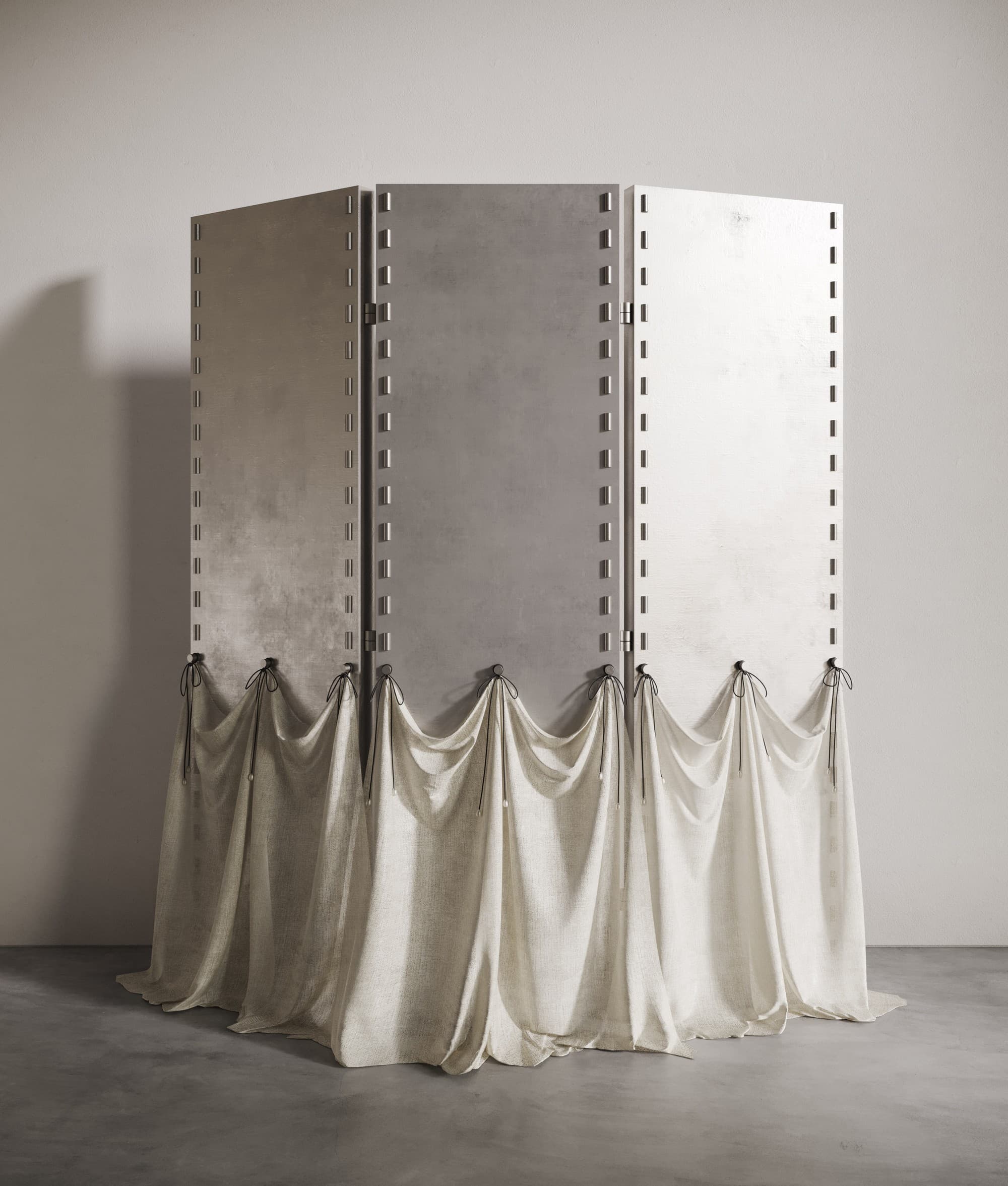 Photo: Llewellyn Chupin Studio A screen made out of patinated aluminum from the Rituals of Adornment collection.
For others, ruffles can be a beautiful metaphor for routine, resistance, and restraint. During a period of heightened toxic masculinity, perhaps we are subconsciously tapping into the divine feminine by using curtains as a tool for blurring boundaries. I witnessed this firsthand last September when I wandered into Llewellyn Chupin Studio’s booth at Collectible Fair. I couldn’t take my eyes off the hand-patinated aluminum screen decorated with silk drapes. The piece is part of Rituals of Adornment, a collection rooted in the relentless pursuit of the sacred.
Chupin describes her work as austere with feminine touches that invite a moment of private contemplation reminiscent of an altar. When the French designer was originally sketching the screen almost four years ago, she was enamored by Austrian curtains and the dusty pink drapery lining the walls of the Room of Birds at Villa Medici in Rome. Since then, Chupin has been building off this idea and pursuing drapery in other forms like stools and sconces.
“I have this fascination for draperies; I think it adds such a dramatic flair to everything,” she says. “Specifically for this current collection, if you removed all of the upholstery, it will be so much more industrial. It adds a little bit of softness to the aluminum.”
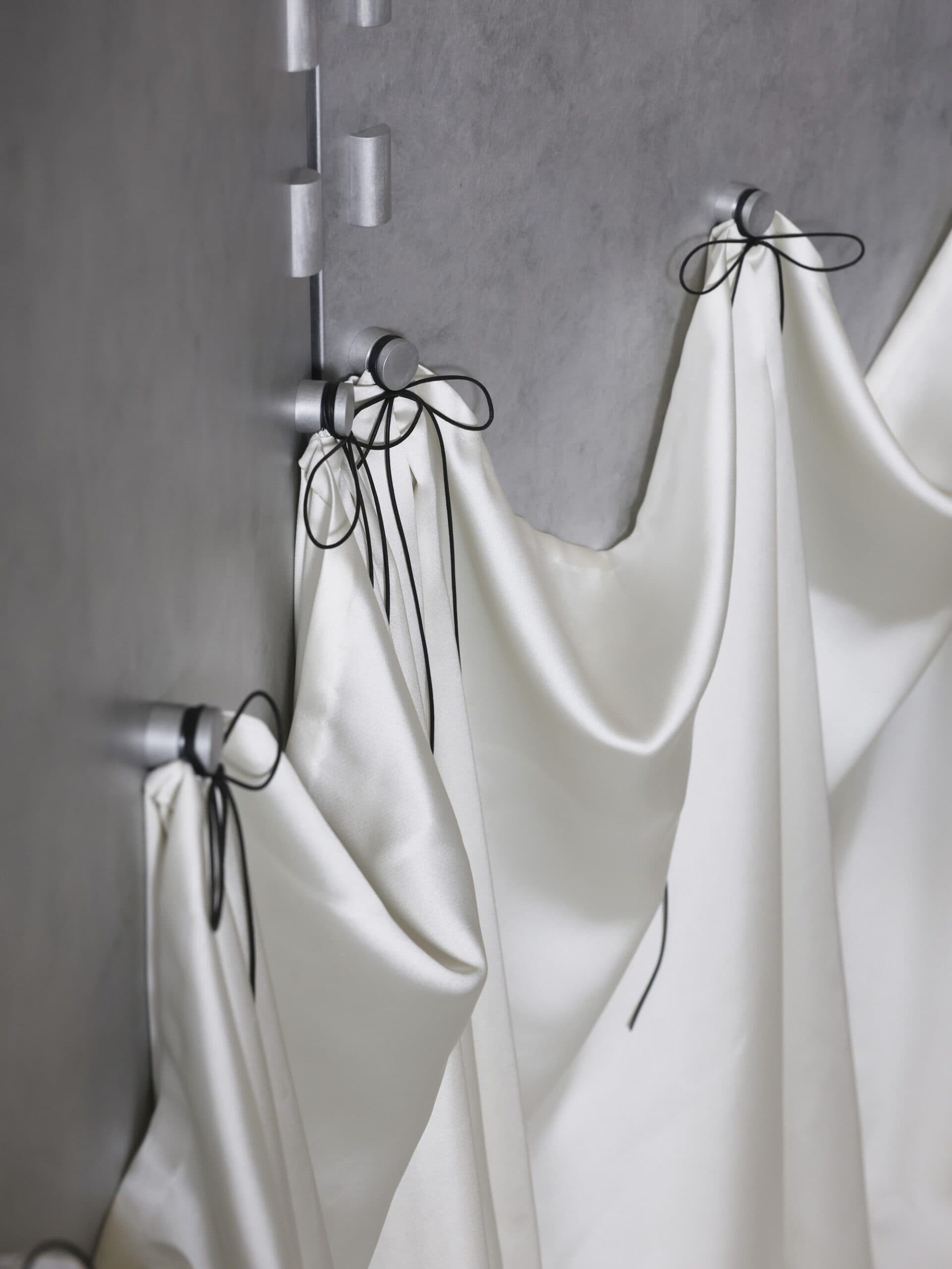 Llewellyn Chupin included tiny silver attachments to pull down the ties on the screen. Photographed by Laerke Rose
Back in 2023, Georgia Merritt presented “Vague Precision” at M. Kardana, an exhibition meant to evoke the poetic function of the pieces. The series of sculptural works includes objects constructed out of stainless steel with a cotton valence—End Table (I don’t mind when you gloss over things) and Stool (and skirt around them)—that cheekily examine varying degrees of tangibility. Liyang Zhang, a Chinese-Canadian architect and artist, has always been interested in the smaller details that offer service to architecture like gutters, awnings, and curtains.
“I was just thinking about how curtains have never really changed over time,” she says. “It’s just something that’s part of our daily routine… The way that you interact with the curtain, it becomes a daily ritual in response to the environment.”
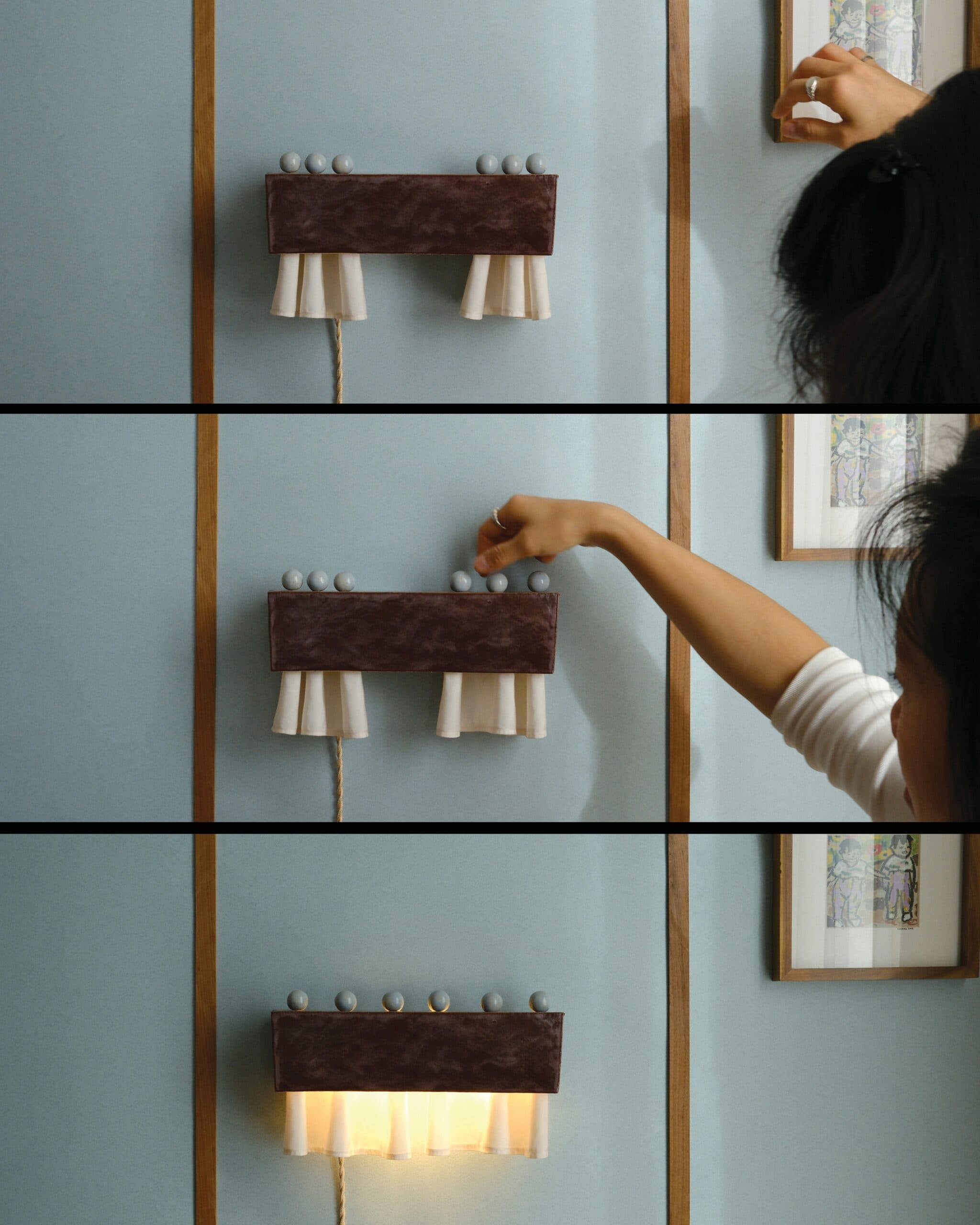 Curtain Sconce in Deep Purple, $820 at Liken Studios Photo: Liyang Zhang
At the time, Zhang was seeking an alternative to a dimmer that could recreate this bodily response. She was intrigued by the idea of something analog and adjusting the lighting through touch in a more intimate way. In terms of the product design, Zhang cites the Barbican (a brutalist masterpiece some might recognize from Harry Styles’s “As It Was” music video) as one of her main references. She was deeply moved by the heaviness of the concrete and how it gives the building such a strong presence from the outside.
“When you’re actually in the space, there’s something so soft about it—there’s curves and scalloping and textures,” Zhang explains. “I was really drawn to that idea of the contrast between the form, the strength, and the masculine on top and then the bottom being pleated. The contrast between the soft and the hard, and then the masculine and the feminine.”
Theres No Such Thing As Too Many Ruffles
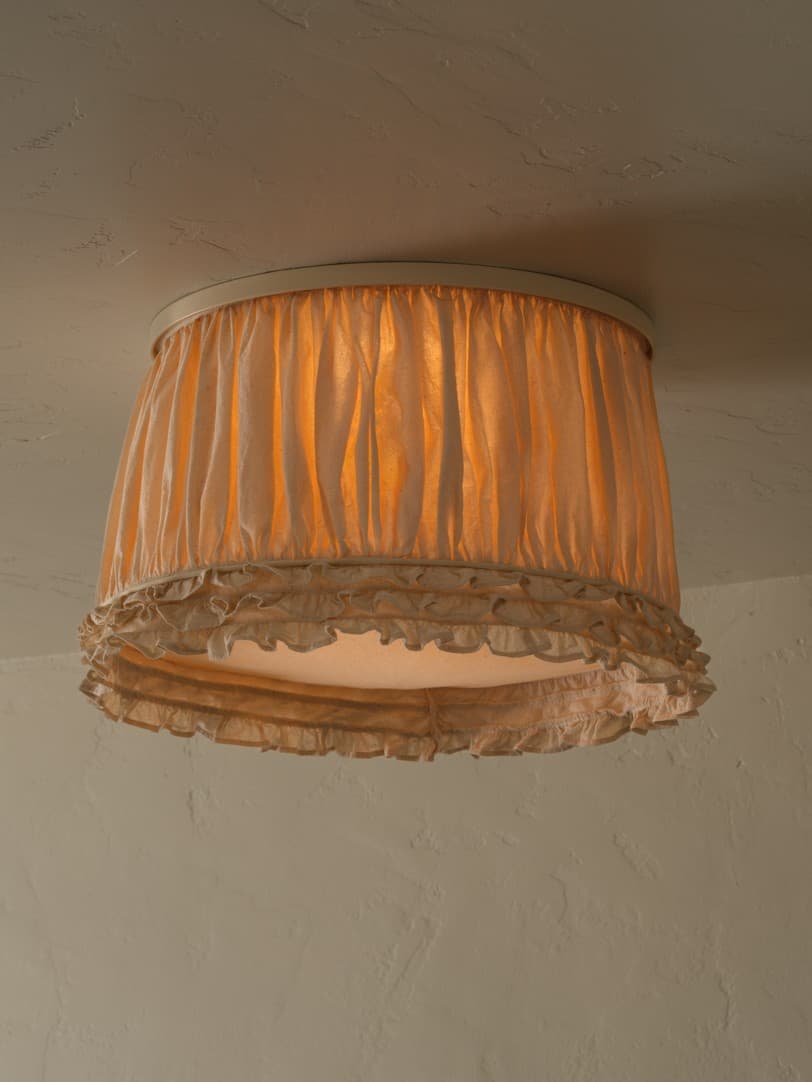 Lamp Gathered is the best seller in the new Bloomers collection, which Tulip founder Lori Smyth describes as “nice and naughty all in one shade.” Tulip
Tulip founder Lori Smyth recently fashioned a set of shades for shielding cursed boob lights based on women’s bloomers from the 19th century. More than a pretty garment, Smyth was inspired by the history of these pieces and how they embodied resistance. While conceptualizing the Bloomers collection last summer, she noticed a shift toward layered materials like ruffles and pleats that elevated feminine details in different aspects of fashion and design. (Last weekend, Tulip dropped a ballet pink version called “Pink Tease” for Valentine’s Day.)
Given the current sociopolitical climate, Smyth dialed down the tone of the campaign a bit, but the underlying message remains the same. “It’s amazing that the timing of what we’re talking about and what’s going on are so aligned, but [Bloomers] is really about the divine feminine and what that represented for women back when they started wearing bloomers,” she says. “We’re going back to traditional prints and florals and layers. That monochromatic spa look is yesterday, people are wanting to go into that warmth of adding more.”
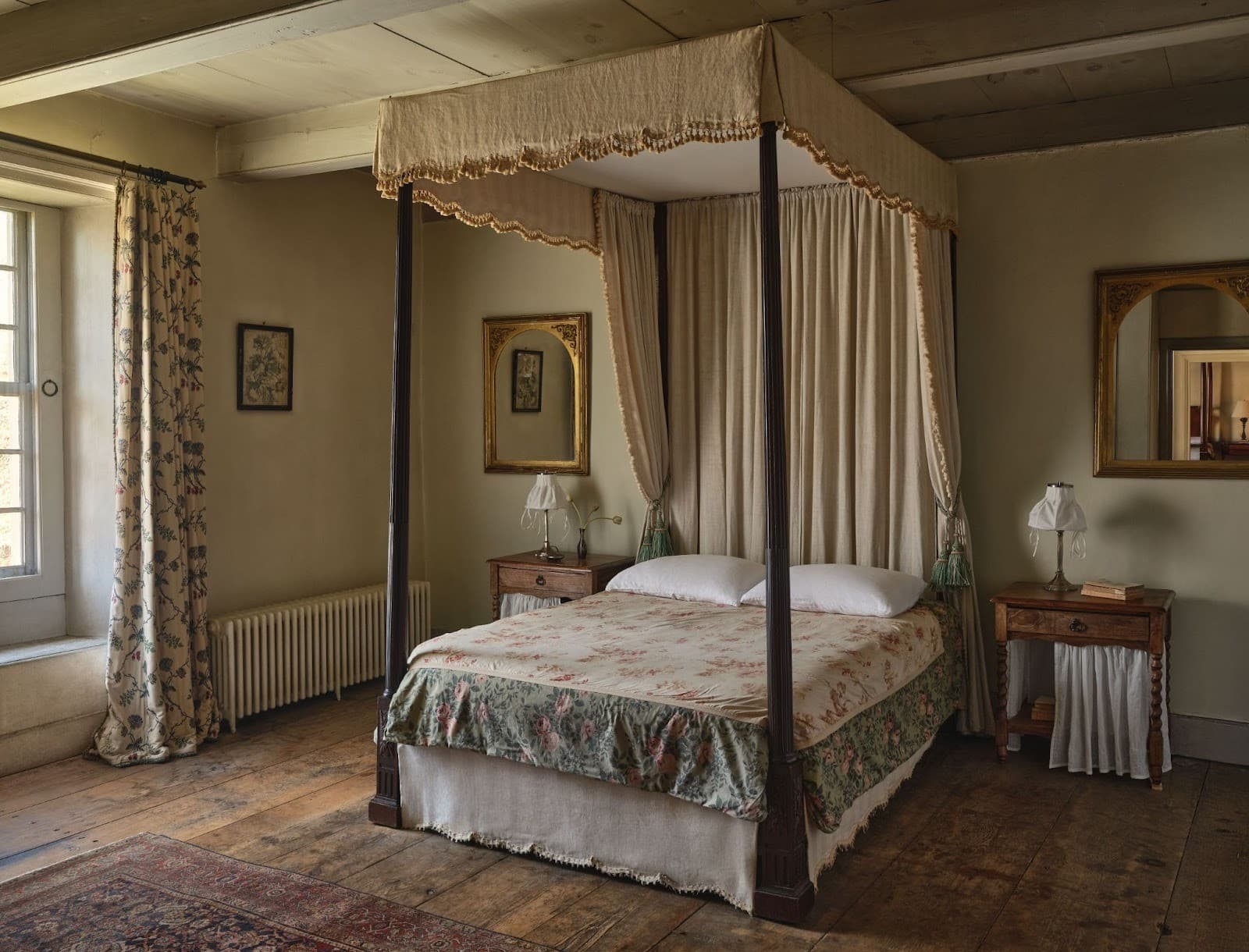 “Tetbury House is designed to feel inherited,” says Kendall Knox. “We wanted every object to feel as if it had already passed through generations, being substantial in weight, rich in texture, and a cherished piece in one’s home.” Photographed by Michael P.H. Clifford
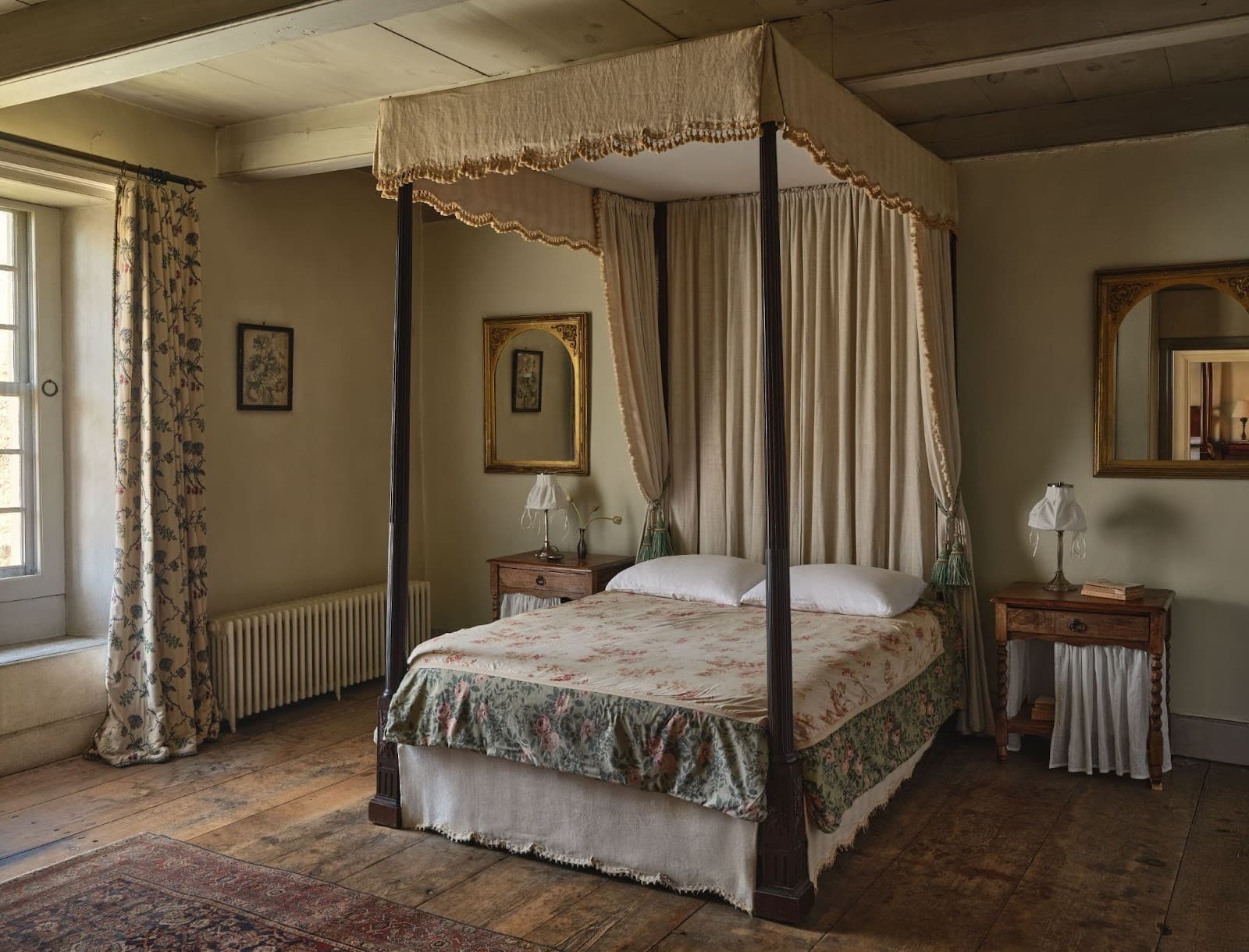
Kendall Knox, co-founder of Olive Ateliers, received the same curtain call while dreaming up the Tetbury House collection. Deeply inspired by the joinery, silhouettes, and hand-worn character of Northern European furniture, each piece was designed with the intent of “making a room feel instantly calmer and more romantic.” For the bedroom in particular, Knox fantasized a scene where linen draped on a lamp instead of sitting stiffly in place atop a hardwood nightstand with barley-twist legs and a starry dobby fabric curtain.
“There’s something charming about being able to slide the curtain open and closed, like you’re choosing what to reveal or tuck away,” she says. “It makes the lower shelf feel like a little hidden pocket so you can hide the mess, or reveal whatever tiny treasures you’re keeping, like a journal, a half-finished chapter, a tangle of chargers.”