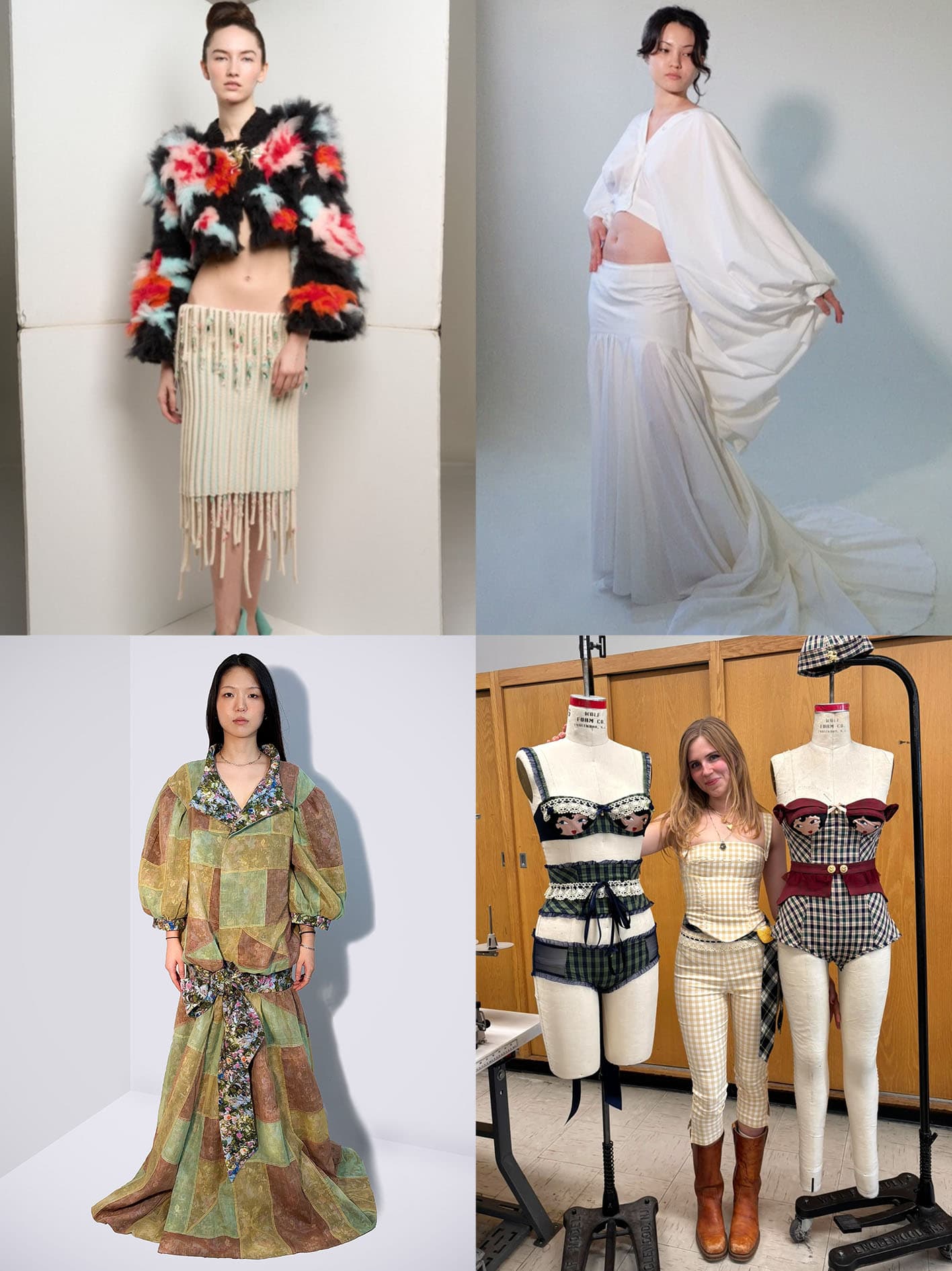
Congratulations are in order for the Fashion Institute of Technology's 2026 graduating class! Year after year, we have our eye on the world's top fashion schools for the sake of potentially spotting the next major designer before they make it big—FIT gave us Calvin Klein, Michael Kors, Norma Kamali, and Nanette Lepore, after all. While entering the workforce, especially in this day and age, might feel daunting, the fashion industry's newest members have a vision for the future. This year’s graduating class is filled with young artists committed to building a sustainable future, embracing mistakes and authenticity, and hopeful that the industry continues growing more inclusive. In honor of graduation season, we checked in with 9 members of FIT’s class of 2026 and asked them one seemingly simple question: What do you think the future of fashion should look like? What might seem like a straightforward question is actually rather complex. Ahead, the graduates paint an ideal picture of the future of the fashion industry—and offer a path forward.
Julia McClement (Critic Award Winner, Intimate Apparel)
 Julia McClement
"I hope that the future of fashion shifts toward a more sustainable approach for the sake of everyone on earth. Owning fewer pieces, but choosing ones that are timeless to you and made to last. Sustainability shouldn’t mean losing your sense of style or individuality. It should still allow people to express themselves, be creative, and have fun with fashion."
Jonathan Marroquin (Critic Award Winner, Sportswear)
 Jonathan Marroquin
"Society has an obsession with perfection, especially in the fashion industry, with how people should act, how people should look. It creates pressure on people who can’t afford nice clothing and isolates them from acceptance. Hence, the mass market thrives on counterfeits and replicas of luxury items due to this need to fit in.
Redefining a classic garment meant to radiate luxury, I contradict the standards of beauty and perfection. Demonstrated with this oversized button-down flipped upside down so the collar now sits at the waist, it creates beauty out of something that is not deemed beautiful or tailored. Beauty is not about perfection; it is about presence. It is about being seen, even in what was once meant to be hidden. Fashion is for everyone."
Rachel Marino (Critic Award Winner, Knitwear)
 Rachel Marino
"I think the future of fashion should be more thoughtful and intentional. There’s been such a strong focus on fast consumption for so long, and I think the industry is starting to shift toward valuing quality, longevity, and sustainability in a more meaningful way. I’d like to see fashion continue moving toward more responsible production practices, especially when it comes to materials, waste, and how garments are made. At the same time, I don’t think sustainability should limit creativity. I think it can actually push innovation further and encourage designers to approach fashion in new ways. I also think people are becoming more conscious about what they buy and the impact behind it, which is changing the conversation around fashion as a whole. To me, the future of fashion is about finding a balance between creativity, craftsmanship, and responsibility while creating work that feels lasting and intentional rather than disposable."
Ellen Kim (Critic Award Winner, Sportswear)
 Ellen Kim
"The future of fashion should aim to build on the existing sustainability efforts that we have at the moment. Especially with the rise of artificial intelligence, we’ve witnessed how negatively unsustainable practices are impacting our environment. I think designers from our generation are aware and will focus on creating zero-waste products, while also practicing circular design.
At the same time, the world is noticeably more interconnected than ever due to social media. We should be expecting to see more culturally-driven designs that don’t dilute local identities, but instead represent them in a prideful manner."
Ainsley Goldman (Critic Award Winner, Special Occasion)
 Ainsley Goldman
"I think the future of fashion has to move beyond aspiration built purely through status, logos, or exclusivity, because today’s consumer is searching for something deeper. In a market shaped by economic pressure, digital over-saturation, and cultural change, younger generations are no longer buying luxury simply to display wealth, they are buying into meaning, identity, experience, and emotional connection. The future of fashion should feel immersive and emotionally intelligent. Instead of asking consumers to admire a brand from a distance, fashion should invite them to live inside the story. The brands that will define the next era of luxury are the ones that understand culture in real time—through film, music, nostalgia, wellness, technology, and community—and use those resources to create experiences that feel personal rather than performative. I also believe couture has an important role in that future. Couture should not only represent craftsmanship and fantasy, but also intention. Fashion has long focused on visual impact, yet rarely considers how clothing makes the wearer feel physically, emotionally, or energetically. I think the future of couture should explore a more holistic relationship between the garment and the body, through fabrication, movement, color, craftsmanship, and sensory experience. To me, the future of fashion is not about creating more products. It is about creating deeper connections: garments that carry emotion, cultural relevance, and personal meaning, while still preserving the artistry and dream that make fashion powerful in the first place."
Kat Lin (Critic Award Winner, Special Occasion)
 Kat Lin
"I want the future of fashion to be an environment where every person has a fair opportunity to have a standing regardless of their background. I envision a fashion industry that values authenticity over exclusivity and purpose over profit."
Beatrice (Xuan) Mak (Critic Award Winner, Knitwear, and First Prize Winner, Roc Nation Inaugural Student Design Competition)
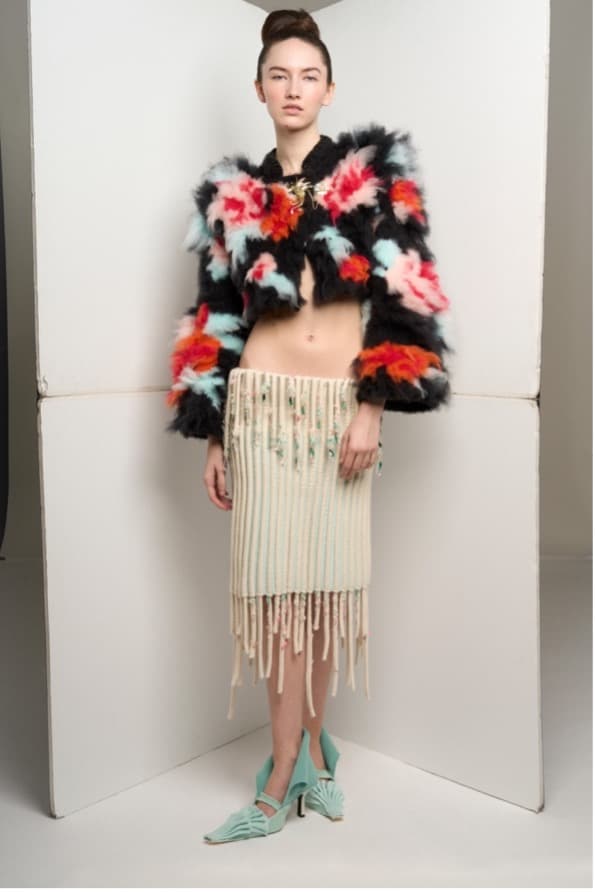 Beatrice (Xan) Mak
"The future of fashion should slow down. For too long, the industry has been driven by speed—faster trends, faster production, faster consumption. But I believe the next chapter of fashion looks more like art than business. It looks intentional.
As a knitwear designer, I work with a craft that is inherently slow. Every stitch is a decision. Every texture tells a story. That process has taught me that the most meaningful pieces aren’t the ones made quickly, but thoughtfully. I envision a future where designers are given the space to create without the pressure of endless seasonal cycles, where consumers invest in fewer, better pieces that they truly connect with, and where fashion is appreciated the way we appreciate art: for its concept, its emotion, and the hands that made it.
Fashion has always been one of the most powerful forms of human expression. It’s how we communicate identity, culture, and feeling without words. But somewhere along the way, that meaning got buried under profit margins and trend forecasts. The future I want to see is one where that meaning comes back to the forefront—where a garment can make you feel something, the way a painting or a sculpture does, where the story behind a piece matters as much as the piece itself. Slow fashion isn’t a step backward. It’s a return to what fashion was always meant to be, which is art we can wear."
Tyler Mervine (Critic Award Winner, Sportswear)
 Tyler Mervine
"When it comes to what I think the future of fashion should look like, I would like to see more size inclusivity, especially in terms of tailoring and garment fit. As a designer, much of my philosophy centers around tailoring and emphasizing the natural curves and shapes of the body, and I think that can be done for bodies of all shapes and sizes. While I acknowledge that it can sometimes be more time-consuming and costly to better understand and fit curvier figures and shapes, the right fit of a garment is the single most important element in helping the wearer feel confident and empowered—which is one of the most important aspects of design. Adding to that point, I believe there should be a more apparent shift away from overtly sex-forward fashion toward a more sensual and refined approach to clothing. To me, much of the industry tries too hard to appear effortlessly sexy through revealing clothing and shock value, but less clothing rarely equates to sexiness. Properly tailored garments that fit in a way that accentuates and uplifts both the body and the wearer often feel far more powerful and alluring.
I would also like to see a greater emphasis on fabric quality and natural fibers in the industry again. In a world filled with overconsumption and polyester, a strong emphasis on natural materials is especially important from a sustainability perspective. While natural fibers can be more expensive, the other side of that is that the clothes often look better and last much longer than polyester garments meant to be cycled out, season after season. The future of fashion depends on the state of the world and the protection of the consumer—and the only way to achieve that is by balancing business objectives with practices that do not sacrifice the health of the planet and all of its inhabitants."
Naïma Naas (Critic Award Winner, Sportswear)
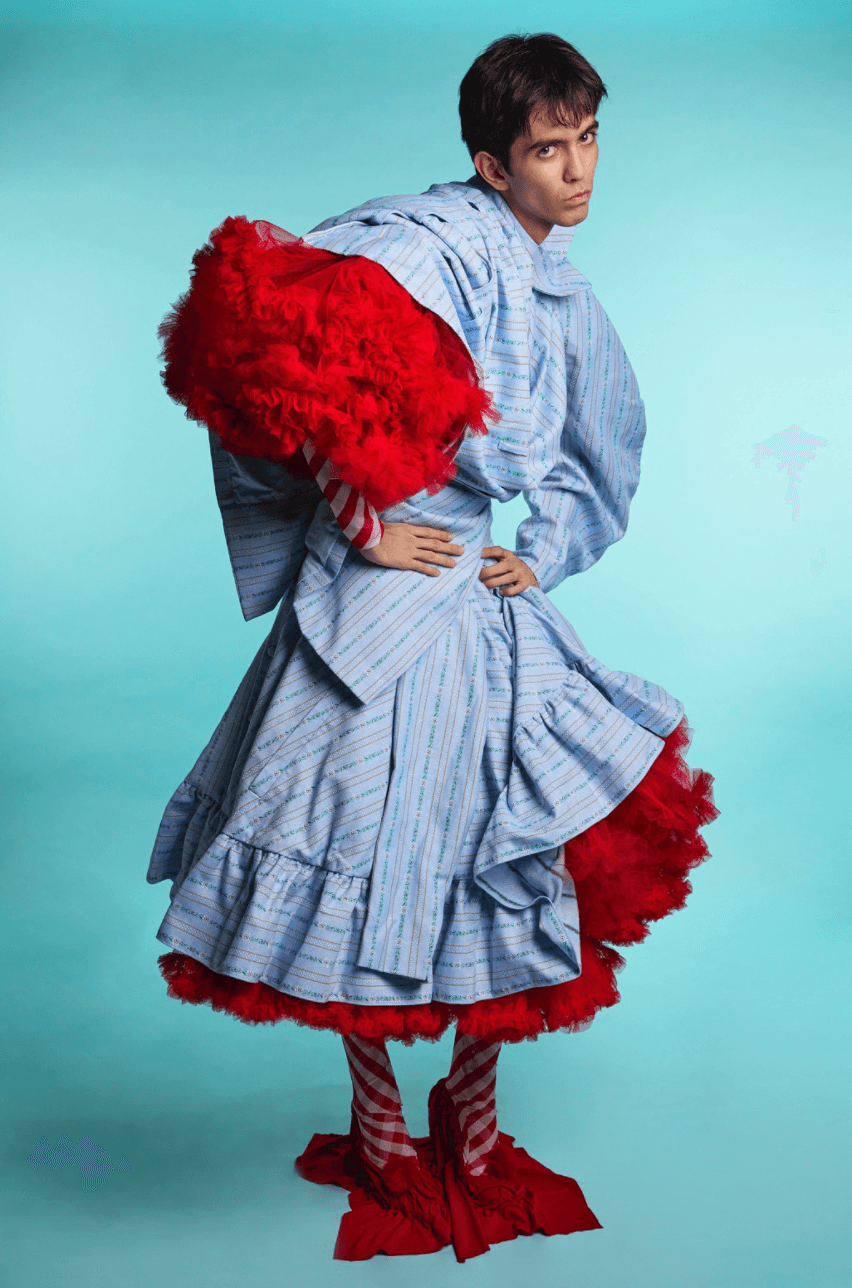 Naïma Naas
"When I picture the future of fashion, I hope for a shift away from the repeating cycle of micro-trends that dominate the industry today, and toward a world where individuality and sustainability go hand in hand. Fashion should empower people to reinterpret garments in their own way, wearing each piece in a way that reflects their unique personality rather than conforming to what’s trending. When individuals feel a true connection to their clothing, they’re less likely to discard it as trends change. Designers creating high-quality and timeless garments that last a lifetime, and that people can make their own, will cut down on waste and also create a stronger bond between the wearer and their clothes. Fashion should become a celebration of personal expression rather than a trend."