This week, my friend, K, who works in social media, told me she was going on a second date to a basketball game. Not just any basketball game, but a Knicks game—their first of the 2026-2027 season, with tickets starting at $2,000 a piece after the championship win that lit up and united New York City this summer. "He's a finance guy," she said, responding to my initial shock, jealousy, and the question of how. I've been friends with K since high school, from where we both went off to our respective tiny, remote liberal arts colleges and had entirely different experiences. I went on to date music, film, and photography majors, with the occasional art history or philosophy major sprinkled in, while she spent time with athletes, economics majors, and waspy types. I, a creative writing major at the time and now a fashion and beauty editor, thought creative couples were the best pairings, and that no one else could understand how my brain worked—least of all a finance bro. K, who grew up in SoHo with one mom who worked in yoga and sound healing and another who was a very successful investment banker, has always been more open-minded.
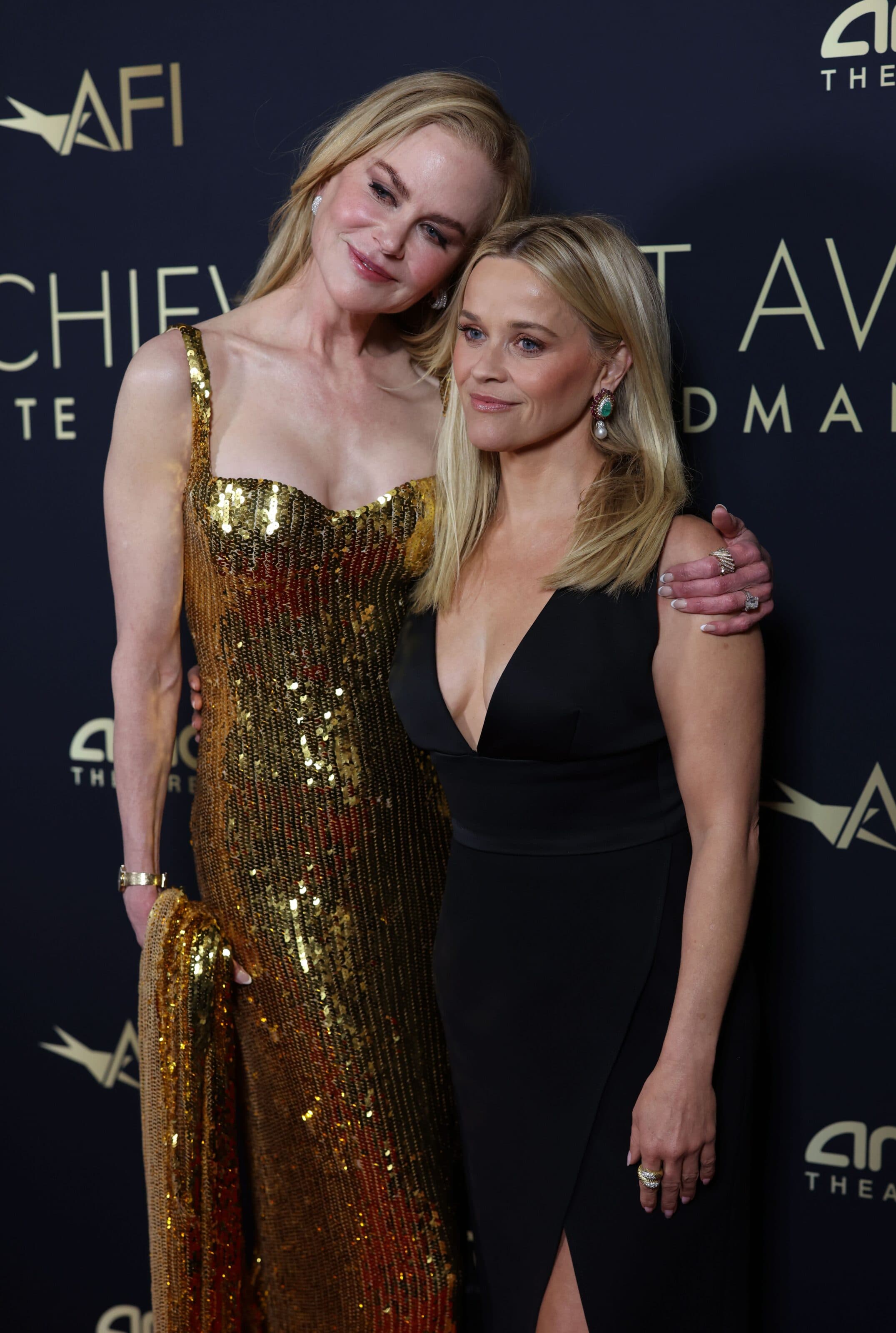
Growing up is realizing that having a "type" is a little silly, especially when doing so resulted in relationships with DJs and men who made terrible music exclusively about getting drunk and the immature shenanigans that came along with that—I quickly learned that these men weren't compatible with me just because they were also "creatives." As this lesson has sunk in, I'm wondering if perhaps it's time that I follow in Nicole Kidman, Reese Witherspoon, and Olivia Rodrigo's footsteps; each has been spotted on dates with private equity investors recently.
Their star power, combined with getting older and wiser, has made me realize that it's time I let go of the narrative that creatives go with creatives, and instead give the creative-meets-finance bro relationship a chance. Upon reflection, I think the s dynamic offers a nice, healthy balance. While creative career paths feel more uncertain, a career in finance offers a sense of stability, and that feeling likely translates over into other aspects of the relationship.
For the sake of understanding this dynamic further, and as I genuinely, for the first time in my life, seriously ask myself, "Should I start dating finance bros?" I chatted with four people in creative x finance bro relationships.
My hesitation around finance bros has, admittedly, come from the stereotype: a used-to-be, retired frat bro who exclusively spends his free time watching sports somewhere in Midtown, Manhattan, and drinking American beer. But for Hannah, who works as a beauty publicist, she and her finance bro partner share a very important creative throughline. "My partner and I met when he auditioned for my band, Limbo Baby. He connected with a friend of our founding bassist via Hinge, who invited him to a practice studio to meet us, and the rest is history," she says. "Ben is deeply creative; he is an exceptional drummer, pianist, and composer. He also loves to make up games and doodle! I'm certain he brings this spirit to his day job, as well. I have come to understand that finance, at least the sector he works in, has a lot more creativity to it than we realize." Although they sometimes differ in behavior and demeanor, Ben is practical, collected, and regimented, with a logical approach to life and a mind for math, while Hannah is a bit more charged, constantly craving variety and chasing new experiences; their dynamic is grounding. "My partner understands me better than anyone," Hannah says. "We see the world in the same way, even if we have different ways of showing it sometimes."
I've admittedly written men off based on their career listing on dating apps because I assumed they wouldn't have a creative bone in their body. So hearing that Hannah and Ben looked past job descriptions, and actually came together over creativity, really strikes me. Beyond the job description, I have also assumed that finance bros would not only not understand my job, but would also look down on it. I've thought that because they work with numbers and make a lot of money, they'll believe that they are smarter than me. Perhaps, though, that stereotype is standing in my way.
"I would say that the term 'finance bro' has really been blown up by social media," says Adam, our very creative Executive Editor Jordan's husband, who works in finance. "People have an image in their mind when they think of finance bros—it's someone who wears a button-down and a vest. But I don't think most 'finance bros' are actually even wearing those things. That's just how social media defined them." While Jordan's work is more creative and free-flowing and Adam's is more structured, technical, and factual, there are actually quite a few similarities, too: they both have had to master working well with others and staying hyper-organized, qualities that are bound to impact a relationship.
"Our differences help us balance each other, while we also have a lot of qualities in common," Adam says. "When we were picking out furniture for our new apartment, I was thinking more practically, about how pieces would be useful, and Jordan was considering what would look good and if we would enjoy seeing it every day. It strikes a good balance even for simple tasks in our day-to-day lives."
For fashion publicist Lexi, dating a man in finance has come with some sacrifices. "I can't expect to see him Monday through Thursday beyond the first hour of waking up together and maybe before bed (if I'm lucky)," she says. "His average hours Monday through Friday are 9:30 AM to 10:00 PM in the office, whereas I'm usually home by 6:00 PM at the latest. Our weekends are sacred, to say the least." His job and the stable income it provides have also offered notable perks—the ability to travel locally and internationally and regularly eat out in New York City—perks that aren't guaranteed, but might come with the reality that finance careers pay significantly more than creative ones. "Collectively, we have more means than the average couple our age (24 and 25). We eat out at NYC restaurants on a weekly basis that people typically save for special occasions, and he spoils me with gifts on holidays," Lexi says. "I help by taking care of things like his doctor's appointments and personal schedule, making sure he's eating and sleeping, and making sure he comes home to clean laundry, dry cleaning, and dishes that are done. It's not a typical dynamic for two young adults who aren't married and don't have kids, but it works for us." Lexi's dynamic with her partner isn't solely based on the jobs they hold now, but also how they got there. Lexi is a first-generation college student who went to public schools, while her partner's upbringing involved prestigious private schools, Ivy League colleges, and country clubs. "Now, his whole life is finance people who speak the finance language. My world is fashion shows, running samples, testing new products, and dealing with influencers wanting Uber codes," she says. "When we're put in each other's settings, it can be intimidating for both of us because there's such a stark contrast. But it gets easier with time as you start to learn the lingo and how to walk the walk and talk the talk."
Lexi attributes their contrasting jobs as one of the things that works so well for them. At the end of the day, they bring out different sides of each other: he brings out the structured and analytical side of her, and she brings out the creative, social, and relationship-driven side of him, adding a little more fun and spontaneity into his life, and he brings a sense of stability and perspective into mine," she says. "At the end of the day, I don't think we need to have similar careers to be compatible. If anything, our differences make things more interesting, and we get to learn from each other constantly."
So, should I be dating a finance bro? Maybe. As a scatter-brained Aquarius-rising writer who is somehow just realizing I need a partner who balances me out, I should, at the very least, give it a chance, be open to the experience, and not completely write someone off because of whatever stigma is attached to their job—which, for me, would be progress.