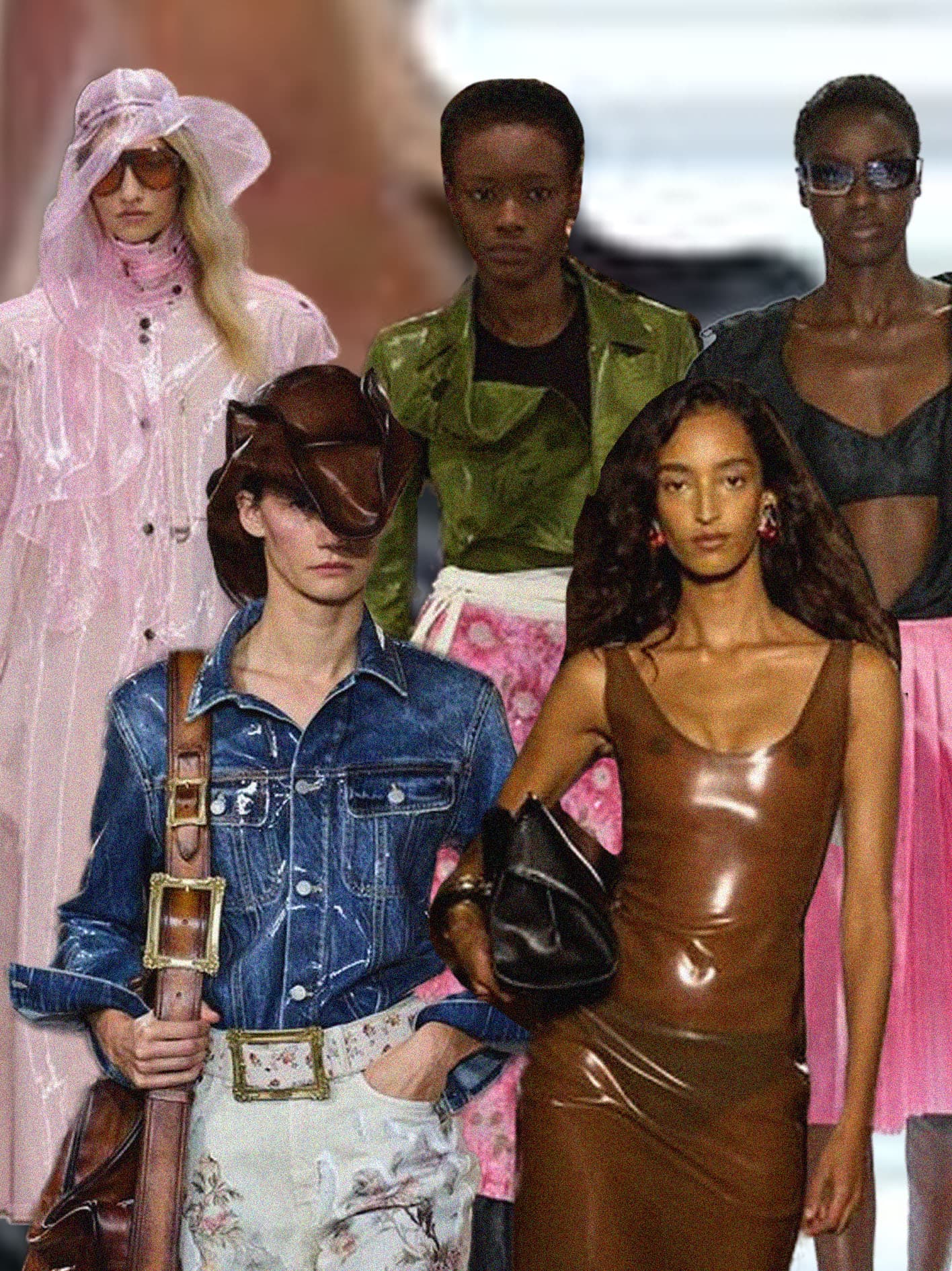
It's a very plastic time in fashion lately, with nylon trench coats, vinyl gowns, PVC bralettes, and rubberized jeans all making their way down recent runways. Now more than ever, it feels as though many of our most beloved silhouettes have been plastic-ified—and this great plastic-ification may signal a larger shift in the fashion landscape overall.
In 1938, human-made fibers, like nylon, became popular as a post-WWII solution to silk. It was only a few years later that other human-made fibers, like polyester and acrylic, exploded into mainstream wardrobes. All of these materials fall under the umbrella of plastic and have been used in countless collections over the years; There was a 1995 Alexander McQueen Spring/Summer collection that featured a series of plastic-wrapped shift dresses, and who could forget Craig Green's Fall 2019 menswear collection in which models appeared on the runway wearing colored sheets of plastic that had been bubbled and smocked to create the illusion of glass. Plastic, plastic-like materials, and man-made fibers that are essentially plastic in a woven form, have been a mainstay in fashion for decades, but this year, for the Spring/Summer 2027 shows, the material showed up more frequently than usual.
 Craig Green FW19 // Spotlight Launchmetrics
For Glenn Martens' first Artisanal collection for Maison Margiela, the opening four looks were a procession of plastic-wrapped masks, gowns, and menswear. They were meant to represent blown glass (much like Craig Green's 2019 collection), all transparent, crackly, and even fragile in their appearance. Then, for Saint Laurent's Spring/Summer 2026 show, Anthony Vaccarello sent an almost entirely ultra-light nylon collection down the runway, which appeared plastic-bag-like as it floated through the show space, before he showed a collection of latex-coated lace and rubber raincoats for Fall/Winter 2026.
Now, plastic, vinyl, rubber, and PVC are appearing on more and more runways. And while non-natural materials are hardly controversial, textiles like polyester, acrylic, nylon, and elastane are made by burning fossil fuels to create a type of plastic called polyethylene terephthalate (PET). The noticeable return of more literal representations of plastic in PVC, Vinyl, and plastic as a visual language on the runway begs the question: is fashion regressing on its sustainable efforts?
 Maison Margiela HC FW26 // Spotlight Launchmetrics
 Saint Laurent FW26 // Spotlight Launchmetrics
A late 2024 BoF article cited that 63% of fashion companies were behind on their sustainability commitments, while brands and suppliers are scaling back or struggling to deliver on their ambitions. The Apparel Impact Institute reported in their 2026 Roadmap To Net Zero report that fashion industry emissions increased by 6.3% between 2023 and 2024, marking the second consecutive year of rising emissions. Economic pressures, the fast fashion economy, and the cost of systemic change have all contributed to the industry losing momentum towards sustainability, and it seems this sentiment could be bleeding into collections, too.
But what could be perceived as apathy towards plastic could also be understood as a commentary on our continued reliance on single-use products, and the fast fashion crisis we are currently facing. But for some, it's likely just a design choice. Shiny, water-like, and intentionally "fake" looking, the quality of plastic and plastic-based materials is not something that can be replicated through waxed cotton or leather. Nylon, Vinyl, and plastic are usually worked into design codes as a way to buck against natural textures, either as cultural commentary or flat-out aesthetics.
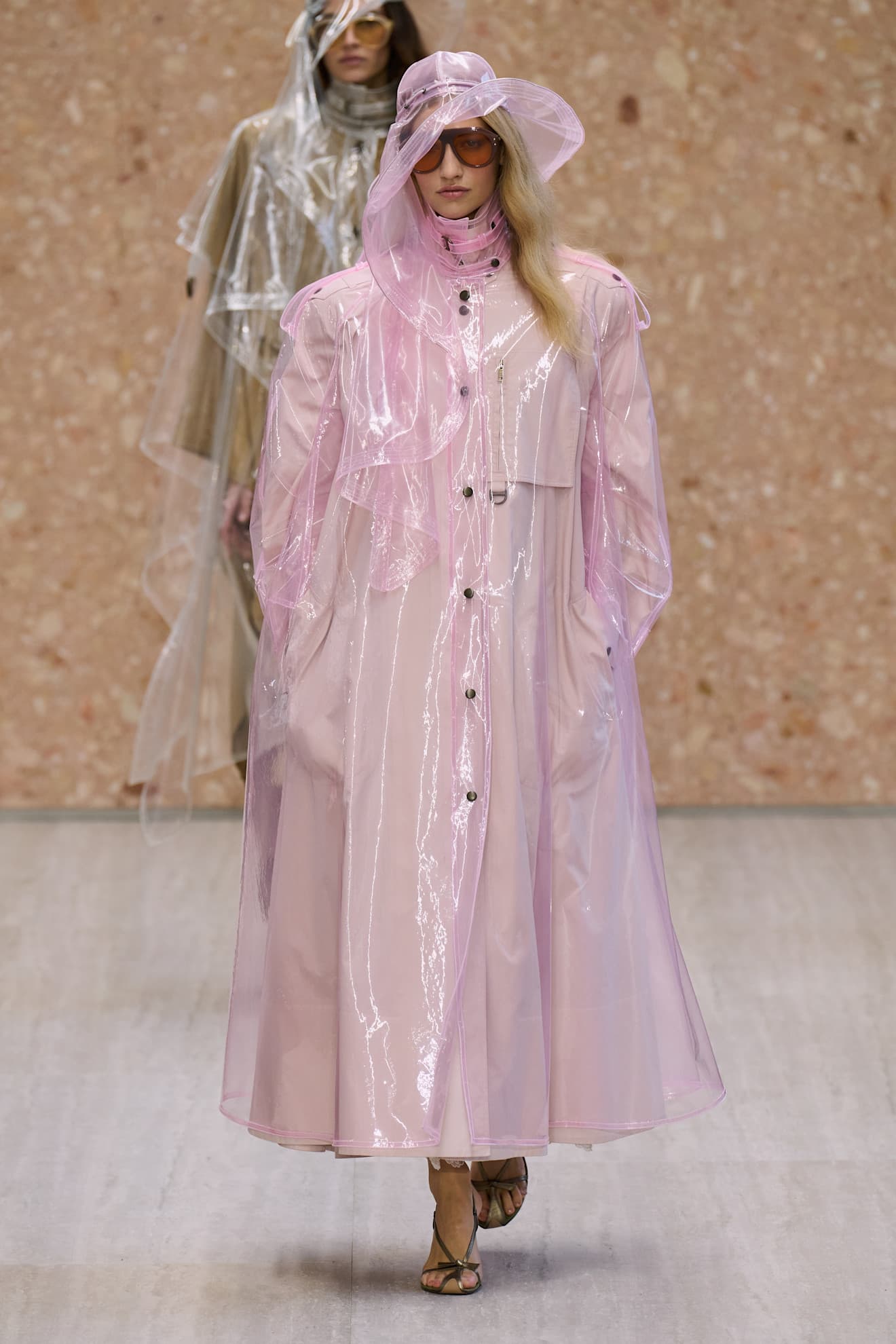 Chloé SS27 // Spotlight Launchmetrics
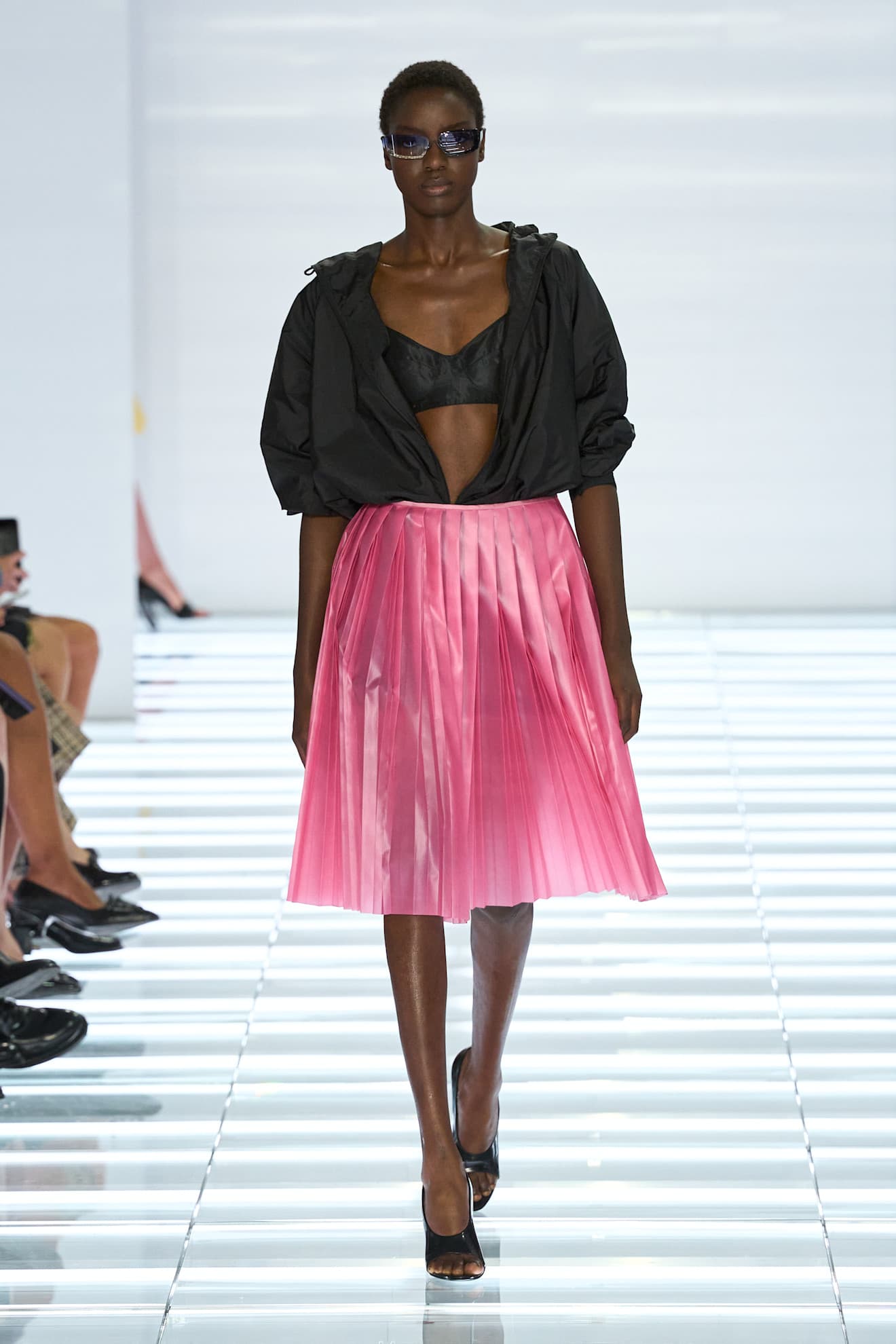 Prada SS27 // Spotlight Launchmetrics
For Chemena Kamali's Spring/Summer 2027 Chloé show, the designer sent a series of clear and smoked vinyl raincoats down the runway, almost giving the illusion of a plastic garment bag in the way they were layered over cotton trench coats, while at Ferragamo Spring/Summer 2027, Maximillian Davis offered up rubber latex mini dresses and skirt suits in milky, halfway transparent material that was belted at the waist or worn with simple black underwear for a sexier approach.
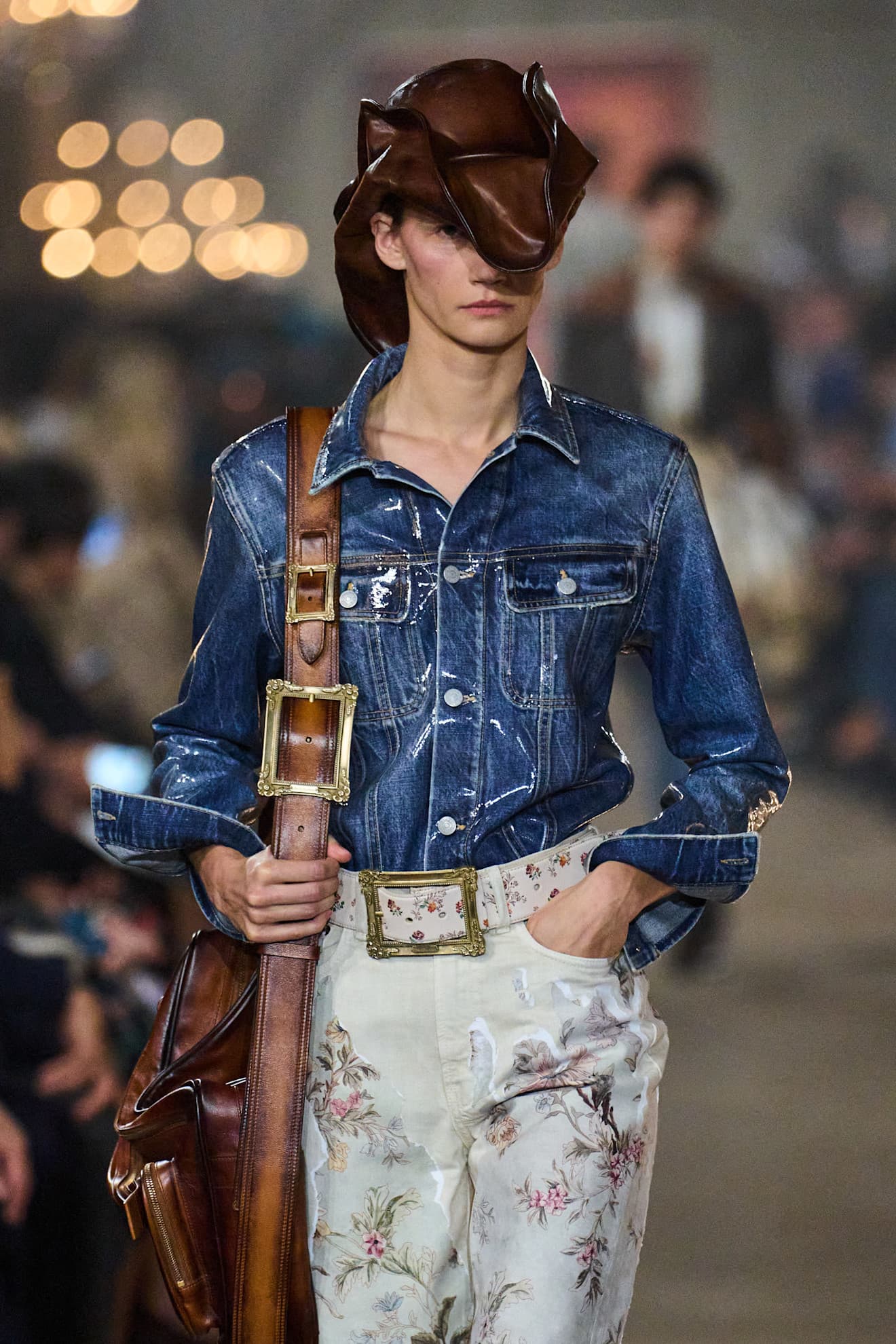 Acne Studios SS27 // Spotlight Launchmetrics
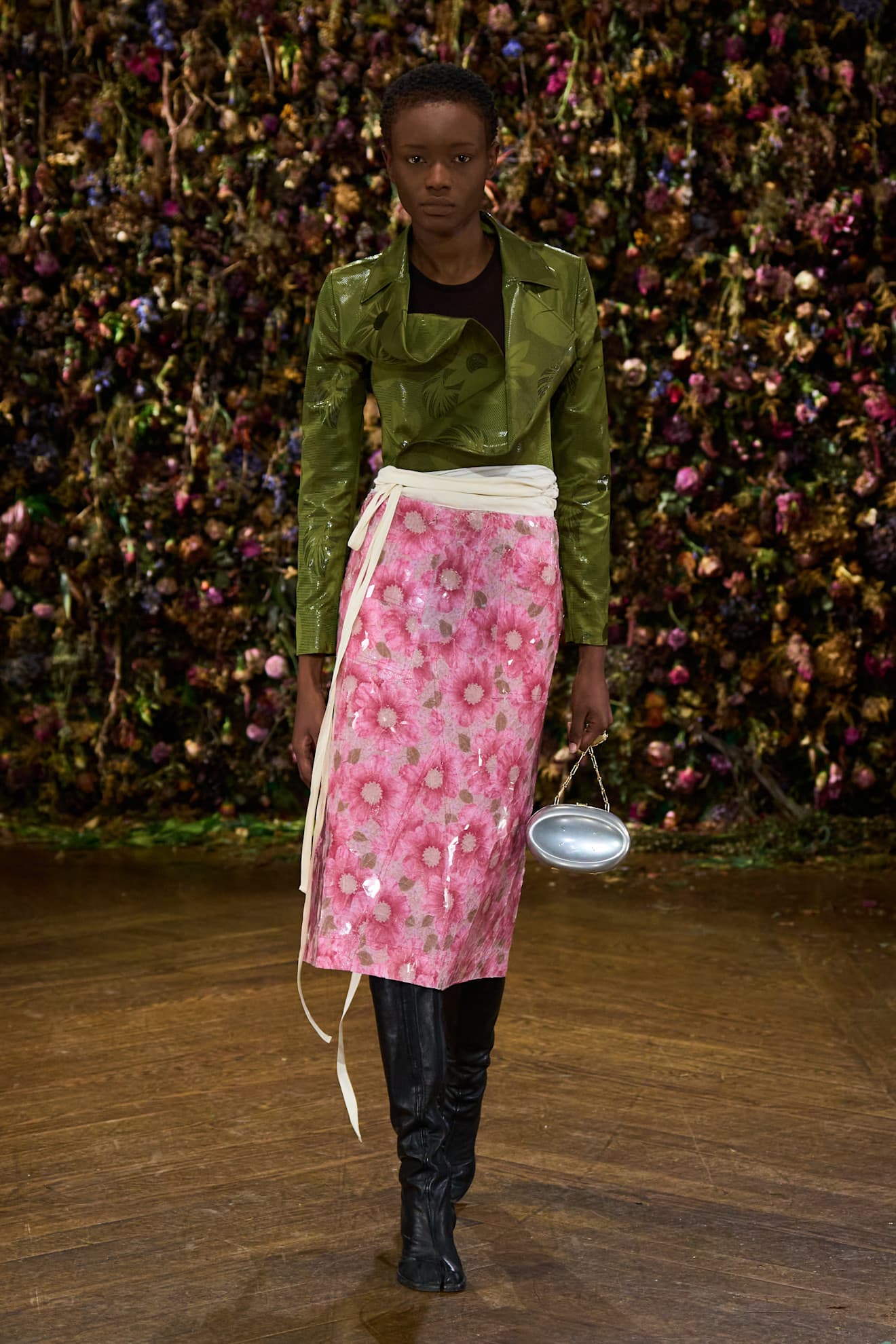 Maison Margiela SS27 // Spotlight Launchmetrics
The plastic themes continued at Maison Margiela and Prada in the form of pink plasticky skirts, Acne Studios as latex-coated cotton and denim separates that looked like Polly Pocket clothes, and Christopher Esber, who offered up shiny, rigid-looking plastic bralettes, wrap skirts, and mini dresses in a glossy printed pattern by artist Anna Studeli, which were then translated onto satin-backed pieces of PVC.
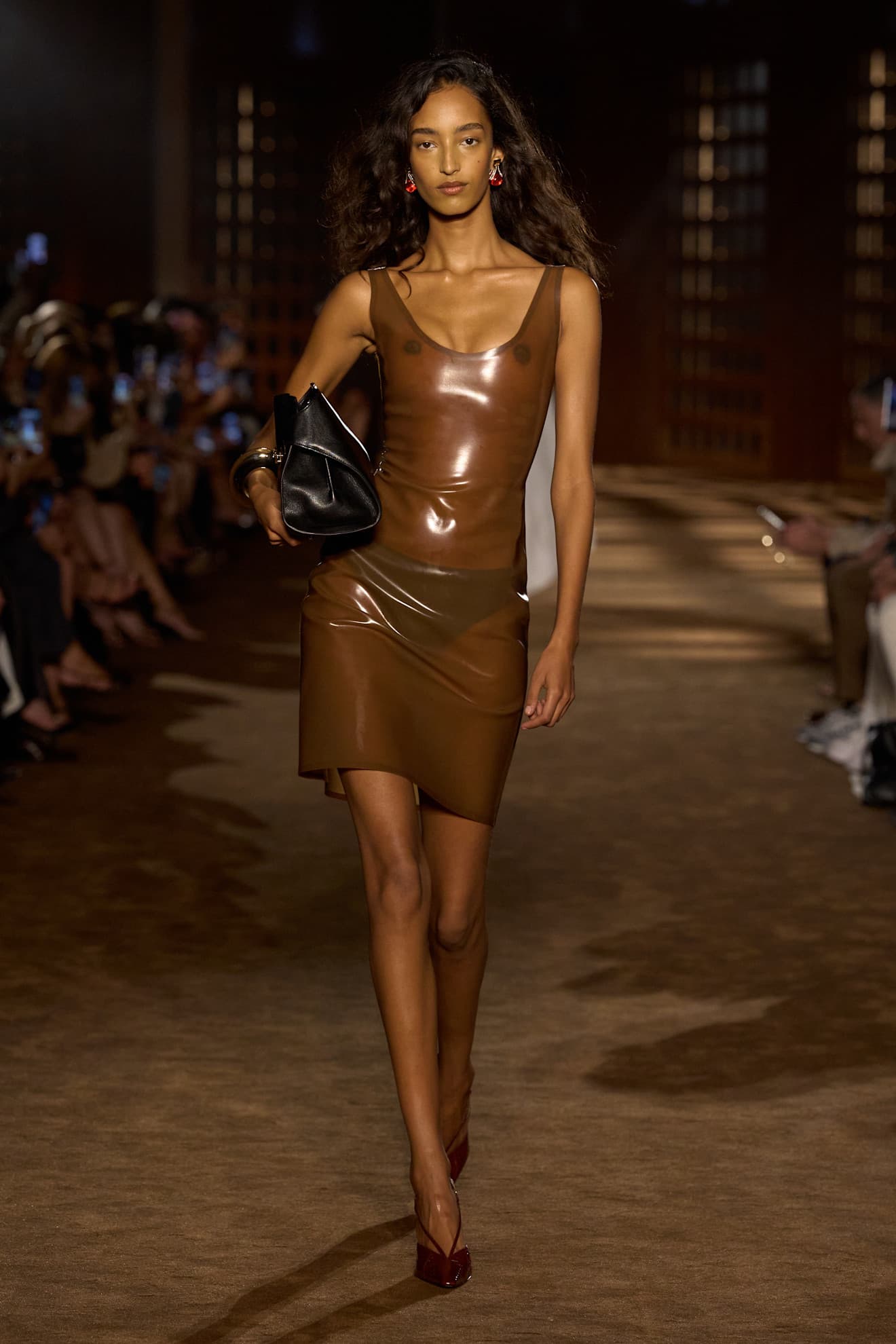 Ferragamo SS27 // Spotlight Launchmetrics
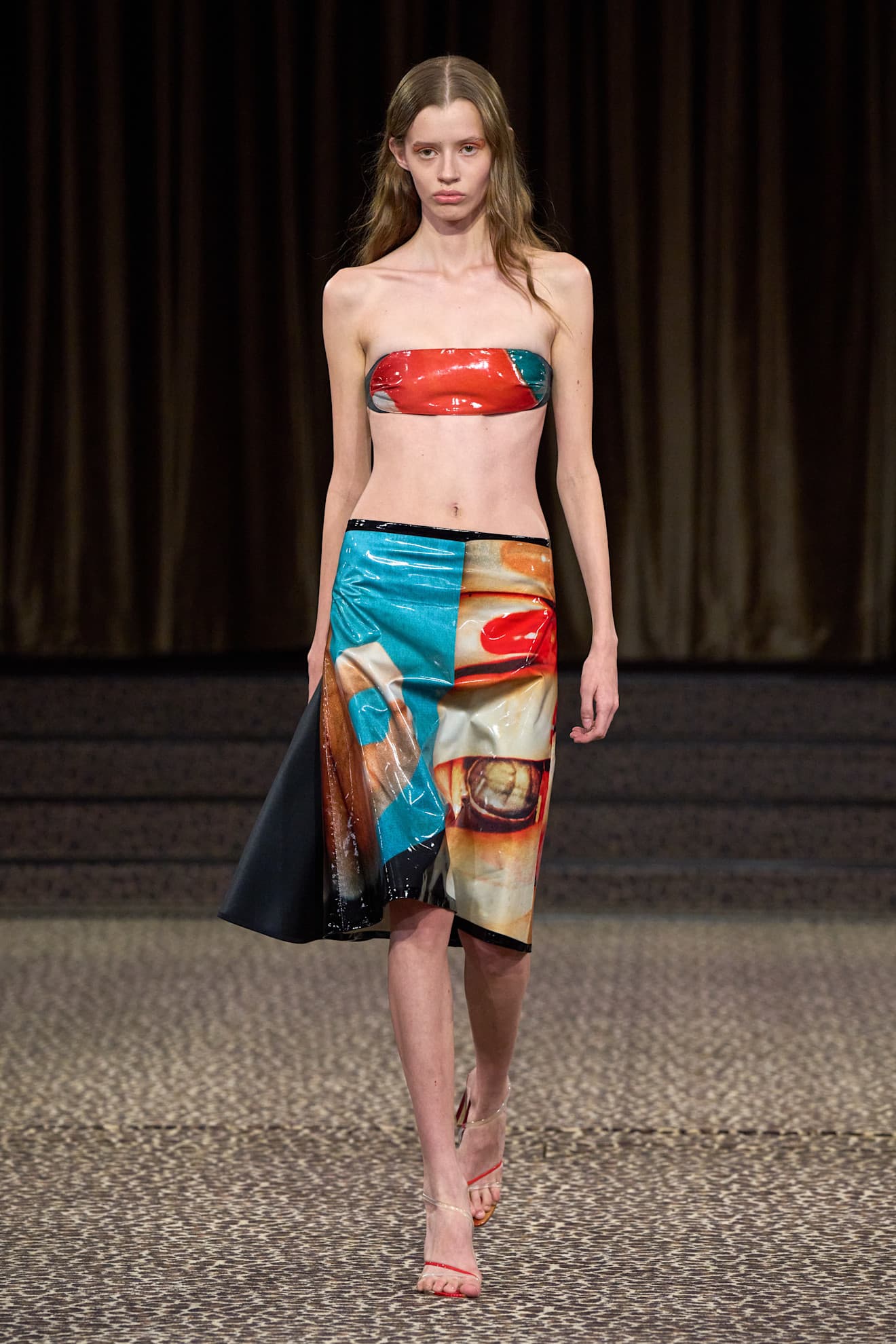 Christopher Esber SS27 // Spotlight Launchmetrics
While designers are embracing these materials as a visual language, the conversation around environmental responsibility has become much more hushed in the past 5 years. While these silhouettes can't be understood as a direct consequence of fashion's retreat from sustainability, it's worth noting that a renewed appetite for plastic-like artificiality, aesthetics, and even novelty via styling, is always influenced by the world around us and our collective attitude towards a topic. If we are seeing these materials represented through the lens of luxury, is it inevitable that we are interpreting the visual depiction of plastic through a more positive framework?
In the court of public opinion, man-made fibers and materials made from PET are widely considered "cheap" and of poor quality. With this in mind, the presence of plastic as a deliberate aesthetic proposition at luxury houses signals that our industry is becoming increasingly comfortable with contradictions. But is it really plastic fantastic?