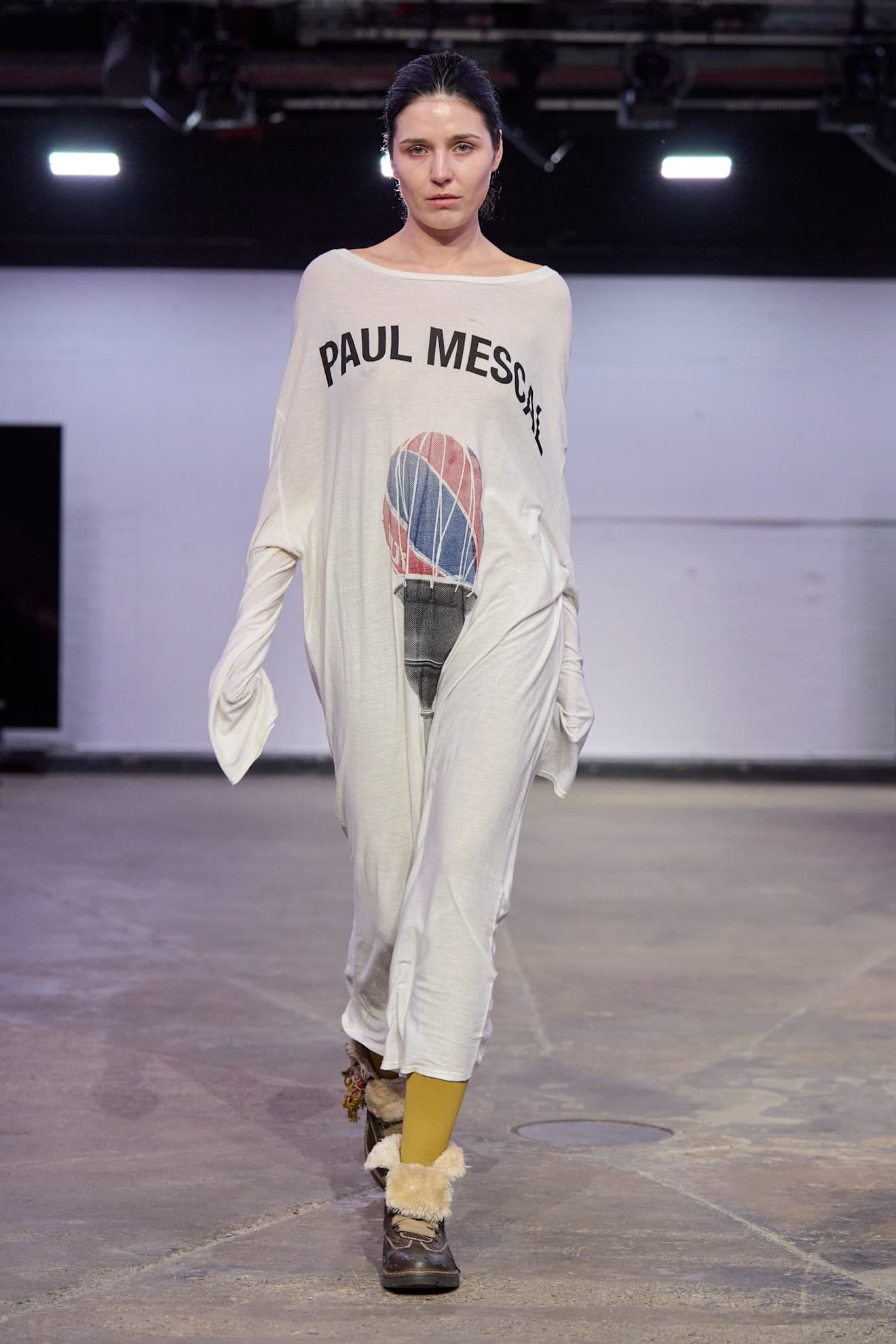
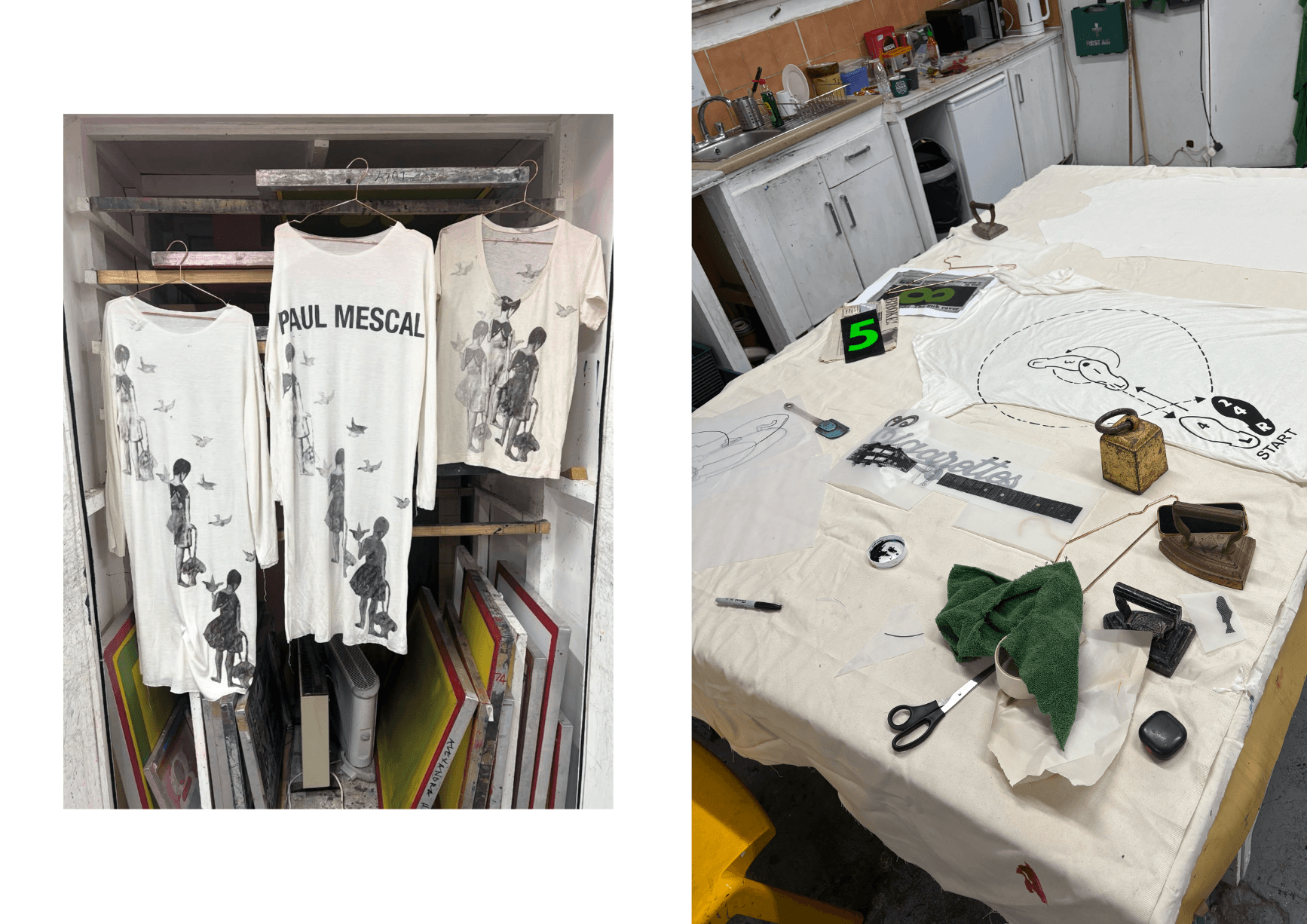
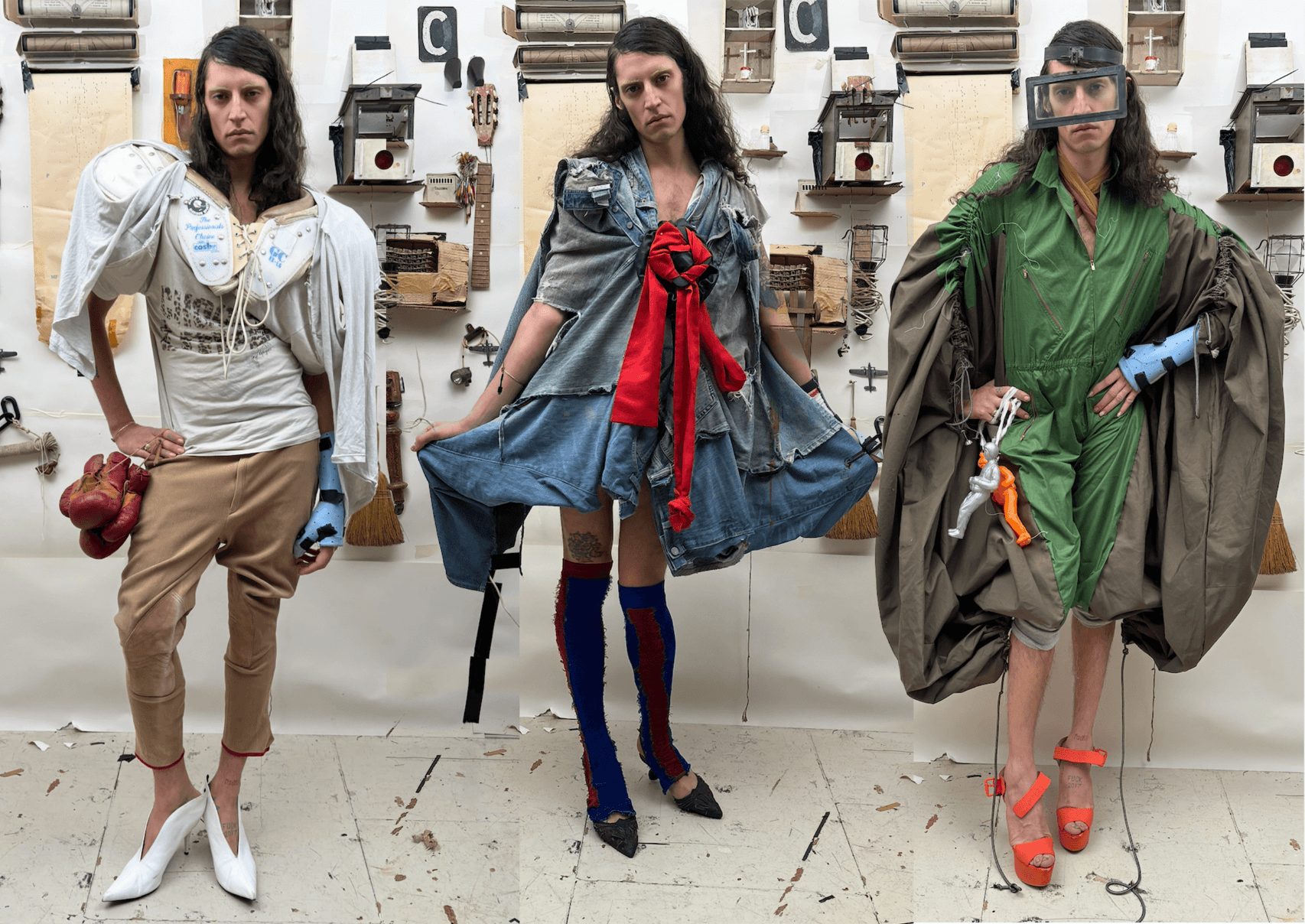
During London Fashion Week, Central Saint Martins graduate Oli Clarke stirred up conversation when he sent a t-shirt dress that read "Paul Mescal" down the runway—the representation of my all-time celebrity crush, the evident '80s influences through details like shoulder pads, and Clarke's willingness to experiment with structure, layers, and contrasting elements all contributed to the understanding that Clarke is onto something good.
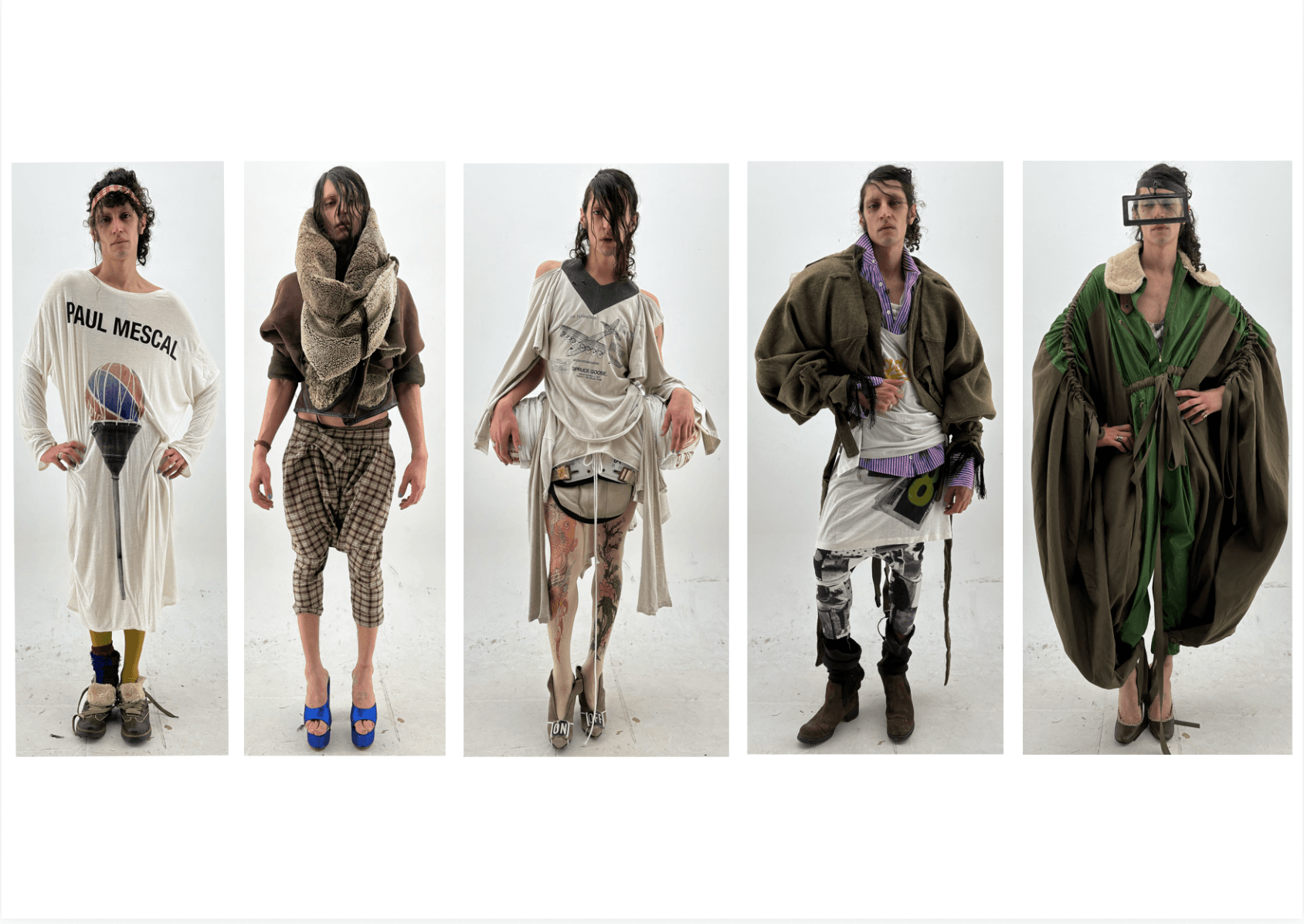
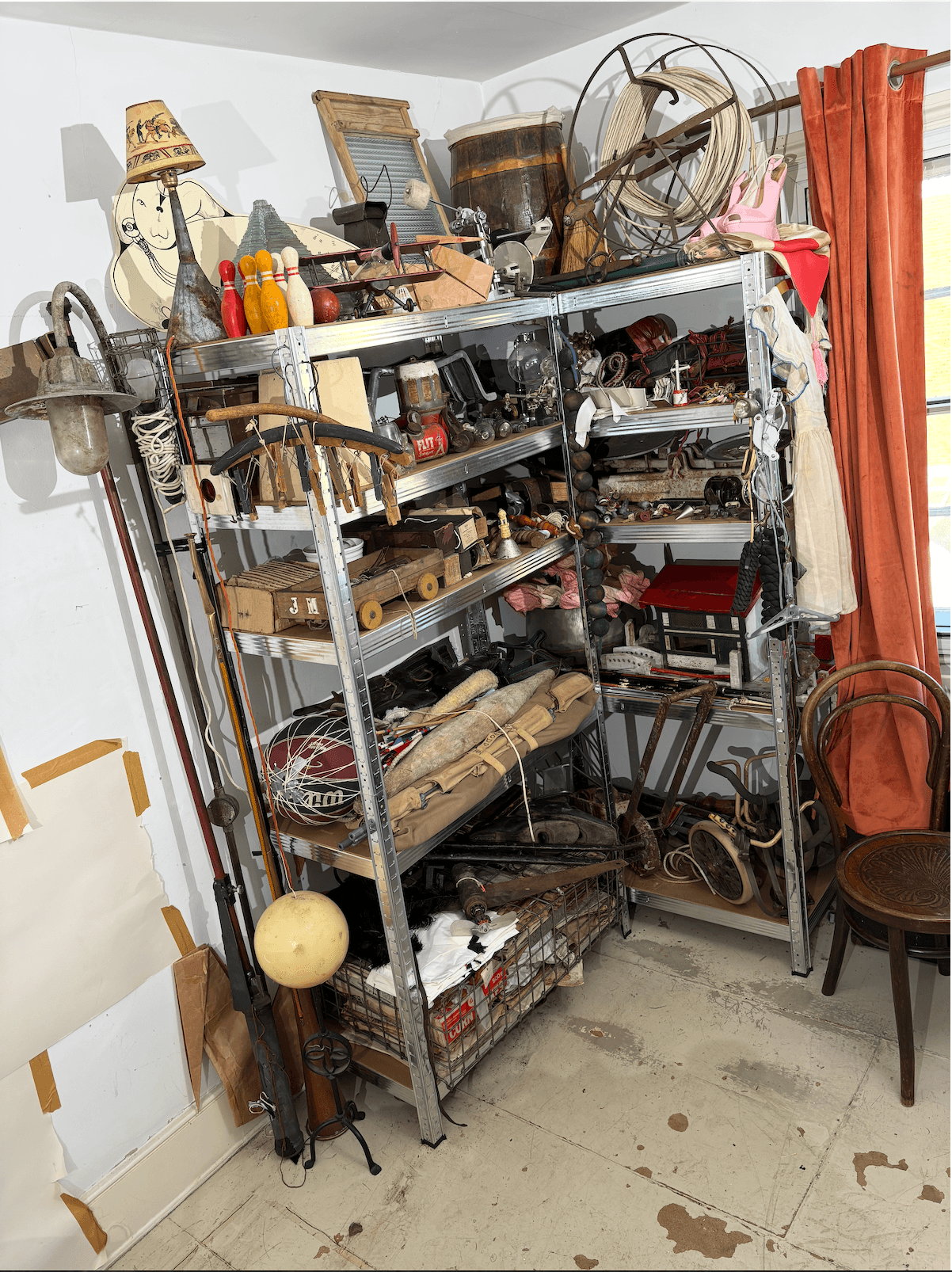
"My main [inspiration] is Christopher Nemeth from the '80s. He had a group called the House of Beauty and Culture in London," Clarke says, over the phone from London. "I love the whole '80s London thing really, because it was so spontaneous and free, and everyone was just making stuff and selling it at a market, and everything then developed naturally. I don't know if that can exist right now, but I look at the House of Beauty and Culture and think of ways I could develop myself."
The emerging British designer, who grew up in the London area, was initially drawn to fine art and sculpture as his first creative paths of choice, which makes sense considering his affinity for collecting random objects that stems from childhood. "When I was younger, I used to go for walks for hours and find stuff on the street. And as of recently, I work at an antiques market in London," Clarke says. "I work there every week and I just gather things—sometimes it's just a rusty piece of metal." This, coupled with a fascination with artists from the '50s like Robert Rauschenberg and Jean Tinguely ultimately led to a fascination with the concept of putting sculptures on human bodies—because that is, to an extent, what fashion is, right?
 Oli Clarke
 Oli Clarke
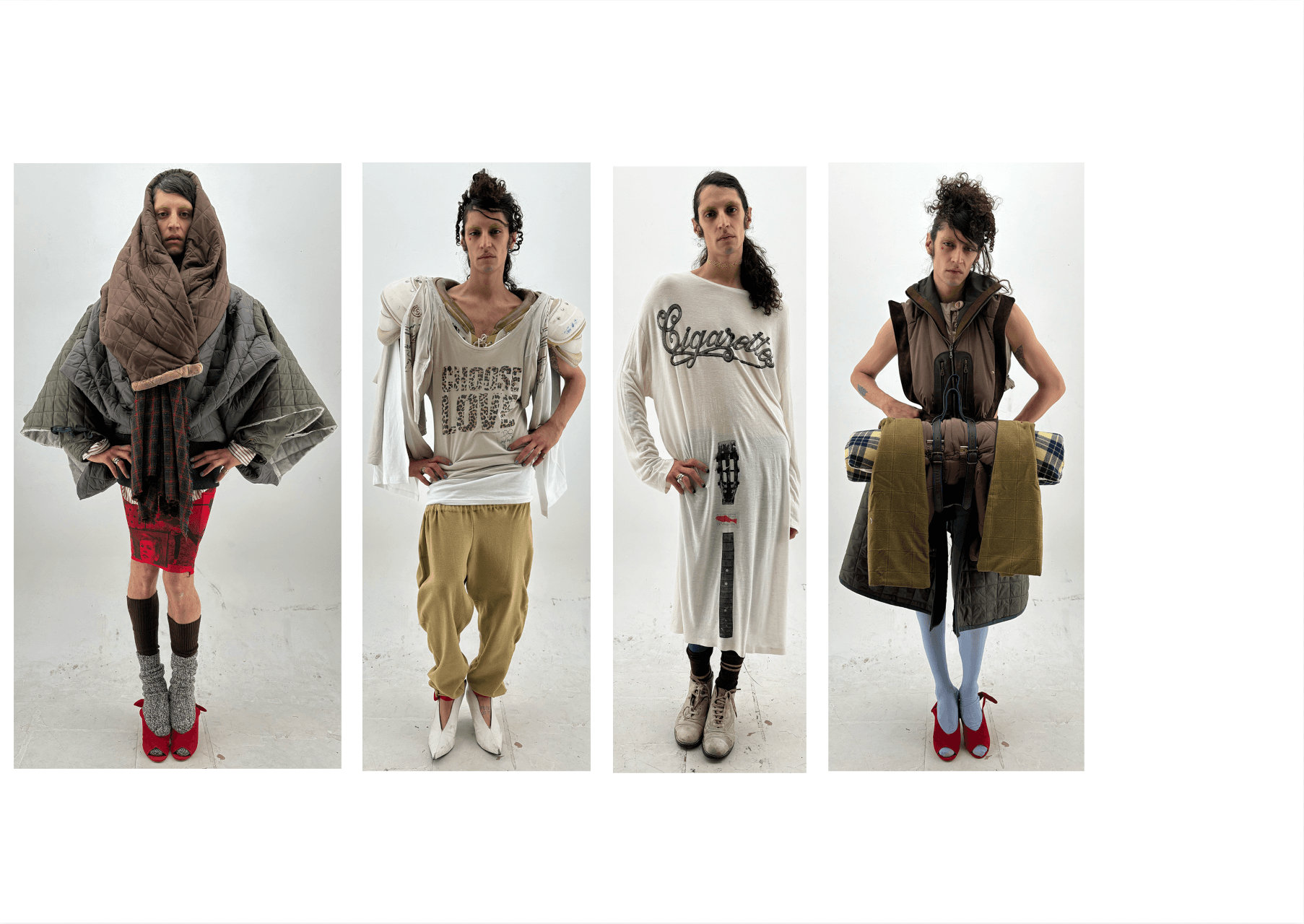
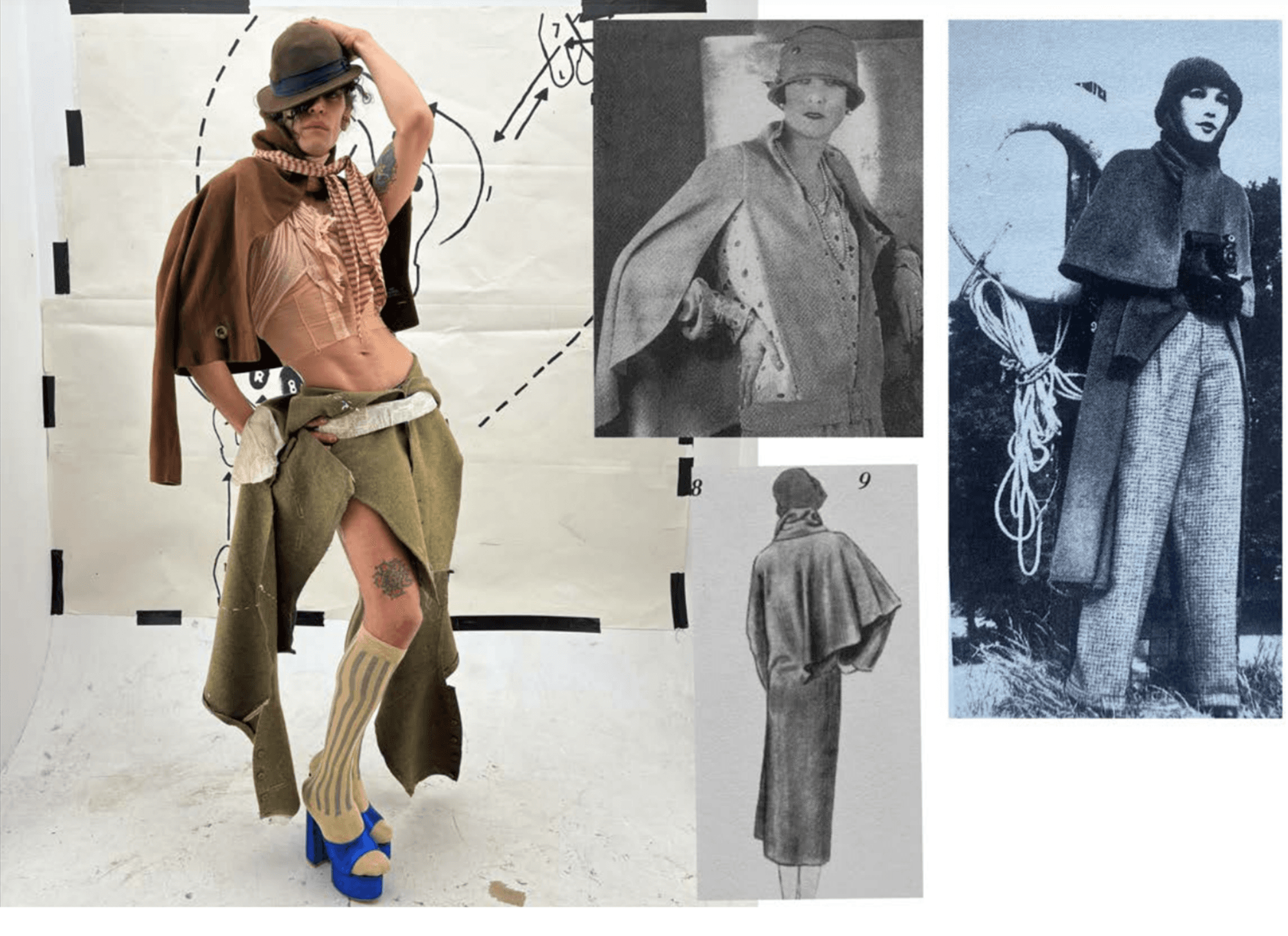
"I didn't even know what fashion was really," he says. "It's been a bit of a process even up until now learning about what fashion is and I'm still sort of learning." Luckily, Clarke has had the best teachers along the way through both bachelors and masters programs at Central Saint Martins and jobs at Burberry and Phoebe Philo where he worked on 3D teams transforming research images into draped garments. "Some people like to draw and then go about that with patterns, but I like to just sit with a mannequin and fabric and just make stuff," he says. "I feel like that is when I sort of properly understood the context of fashion in a way."
 Oli Clarke
For Clarke, the biggest blessing of a fashion education was the space to simply create—it wasn't about creating masterpiece after masterpiece but rather creating for the sake of learning through false starts, what could be personally interpreted as failed attempts, and technical mistakes. Now, his process is purely instinctual. On top of gaining the space to make things over and over again, he gained a built in fashion community in London. "Our class specifically is really good friends. And I love that. I think that's important," he says. "It hasn't felt competitive and it helps because everyone's so different. There's no competition because we're all doing completely different things."
So many artists can likely relate to this sentiment: to Clarke, creativity and being unorganized go hand-in-hand—there is really no other way to approach art as a creative keen on picking things up along the way that will one day play a role in your practice. "My room is just full of all these weird objects," he says. "I used to just be strapping those little objects together and then putting it on someone and then including fabric. It was a sculpture that just happened to build a body." He doesn't sketch out the looks that he plans on creating—instead, he does tons of research, prints out photos, and plays with the physical fabrics on a stand. One look, for example, will have a handful of potential collars of varying styles. Clarke will rotate the various styles out until one just makes sense.
 Oli Clarke
The Central Saint Martins fashion masters program culminates in a runway show during London Fashion Week which begins with all students casting models in the same space at the same time. "A lot of my friends modeled it as well," Clarke says. "I like using my friends as models mostly because I know what they're like, so it makes sense to me I can pair them with a certain garment." It was in this show that Clarke sent what people have deemed Paul Mescal "merch" down the runway. For Clarke, this decision had much less to do with a love for Paul Mescal and more to do with a love for ready-made art from the '50s and a desire to replicate that—and a desire to keep consumers thinking, questioning, and guessing. "It's playing with consumerism and commerciality, but not in a sort of negative way at all," he says. "It's about taking something that means so much, putting it somewhere, and changing the context of it."
 Oli Clarke
Sending your clothes down a runway naturally comes with nerves—especially as a an emerging designer. But for Clarke, the actual creation process was the best time of this life—and this feeling and freedom is exactly what he's chasing post-grad. That and wrapping his ahead around the business side of fashion. While 2026 feels like a particular challenging time for any and all career paths, Clarke has faith in his city: "I think there's a lot of space for the young designers in London especially," he says. "Now I need to learn about the business side of things, speak with and learn from people."
 Oli Clarke
If he could do fashion school all over again, he would shed the stress and put less stock into what he was actually making. "If itt's bad, that's good anyway, because you just learned something in that way," he says. "Doing these things should be playful and fun doing these things—that's when it's good."
The baseline for Oli Clarke's post-grad path forward is straightforward, though: "I just want to keep making stuff."