The first time I spent a night in the Moroccan Sahara, I fought the silence for roughly two hours. I checked a phone with no signal, reorganized my bag, read a few pages of something, and generally resisted the fact that there was nothing to do and nowhere else to be. Then the light left, the stars came out, and I stopped. That moment, somewhere near the dunes south of Merzouga, is probably as close as I've come to understanding what those ancient civilizations were doing when they built their temples in alignment with the sky. They were paying attention to the surroundings in the only way available to them: completely, and without distraction.
I've spent the better part of 20 years helping people find experiences that stay with them. What I've noticed is that the trips people carry with them longest are the ones that pull at something they didn't expect—where something quieter happened, where restlessness ran out, and the place won. The seven destinations below share that quality. They are environs where the sky takes over, where the land carries a kind of intelligence that predates people, and where boredom, if you're willing to sit with it, becomes something closer to wonder.
The Atacama Desert, Chile
 Photo: Black Tomato
The Atacama is the driest place on Earth—and home to two of the most powerful telescopes ever built ALMA and the ESO's Paranal. You don't need either of them to feel the difference in the sky here. The Atacameno people have done exactly that for generations, treating the sky as a living calendar, a map passed down in language and ritual rather than written form. Spending a night camping out there, with the salt flat stretching to the horizon in every direction, is one of the more genuinely otherworldly experiences I can point you toward, and the Tierra Atacama Hotel makes for the perfect base to return to.
Where to Stay: Tierra Atacama sits at the edge of San Pedro de Atacama with views straight to Licancabur Volcano, earth-toned walls that mirror the desert, and indoor-outdoor showers that feel like a reward after a more rugged night out under the stars.
NamibRand Nature Reserve, Namibia
 Photo: Black Tomato
NamibRand is one of only a handful of certified International Dark Sky Reserves in the world, meaning the darkness here is formally protected, and the silence has a texture to it that takes a few days to fully absorb. The San Bushmen have navigated these skies for thousands of years, reading the cosmos as a living map of myth and season, and the dunes of Sossusvlei at dawn have a ceremonial quality that no amount of prior reading quite prepares you for.
I have my own history with Namibia. Crossing the Skeleton Coast in a dusty 4x4 well after dark, our guide switched off the headlights somewhere on a stretch of track with nothing for miles in any direction. He pointed to the Southern Cross and told us to keep it at a certain angle off the hood. We drove like that for 20 minutes or so, the stars not as something to admire from a distance but as something useful, a navigation system older than any road we were on. It is the kind of moment that is almost impossible to explain to someone who wasn't there.
Where to Stay: Zannier Hotels Sonopis perched on boulders at the edge of the reserve, ten tented suites furnished with antiques and rich textiles that nod to early 20th-century expedition life. The contrast between the opulent interiors and the vast, uninterrupted desert outside is one of the more satisfying contradictions in travel.
Ladakh, India
 Photo: Black Tomato
Perched between 3,000 and 5,000 meters in the Indian Himalayas, Ladakh is a place that asks you to slow down before it opens up. Prayer flags snap in thin air above cliff-face monasteries, and the altitude has a way of making even a short walk feel considered. At the most historic monasteries—Thiksey and Hemis—monks have been reading the sky for centuries, using celestial charts to govern the monastery calendar in a tradition known as Jyotisha. This tradition is still woven into daily life here in a way that feels neither performative nor preserved, just present. What you get, beyond the landscape, is the feeling of being somewhere that runs on a completely different clock than the rest of the world.
Where to stay: Chamba Camp sits at 11,500 feet at the base of Thiksey monastery itself, thirteen luxury tents with the Himalayas as an unbroken backdrop. It's seasonal, so timing matters here more than most places, though in Ladakh that feels entirely fitting.
Peru: The Andes and Beyond
 Photo: Black Tomato
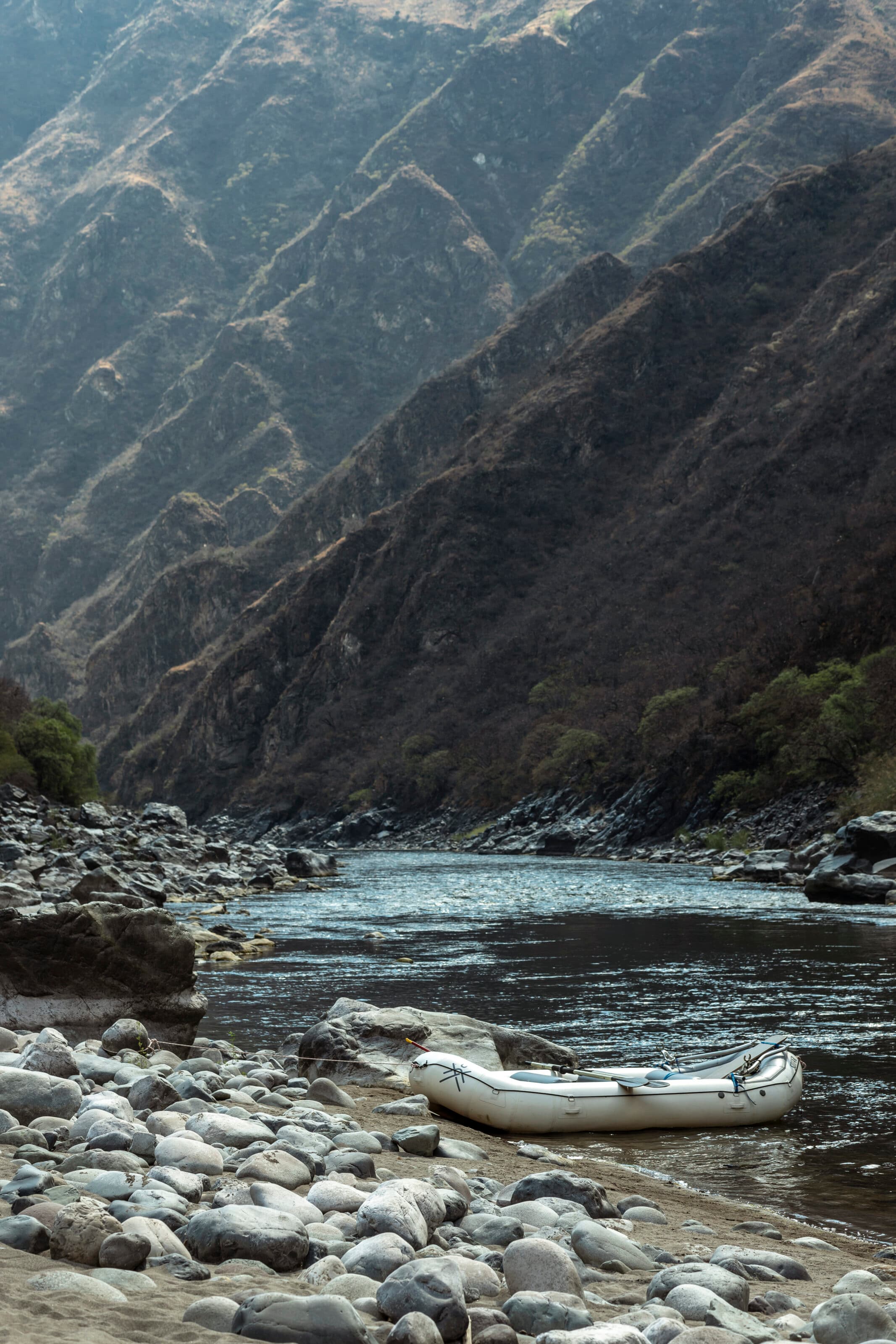
Peru rewards the traveler willing to move past the obvious. There are tons of places worth going the extra mile for: the Huchuy Qosqo archaeological site sits on a ridge so remote that silence becomes its own presence, and the Chavín de Huántar monument, built around 750 BC, belongs in the same conversation as Angkor Wat while receiving a fraction of the attention. Further north, Chan Chan is the largest pre-Columbian city in South America, rising from the coastal desert in terracotta quiet. The cosmological tradition that shaped all of this found meaning not in bright constellations, but in the dark cloud formations between the stars, which most Western eyes pass straight over. Once you know to look for the absence rather than the light, the whole sky shifts.
Where to stay: Getting to these sites requires permits and local logistics, so a specialist operator is essential. What we arrange through Black Tomato is a private glamping setup dropped directly into the landscape, with nothing between you and the Andes.
Morocco: Talassemtane National Park, Rif Mountains
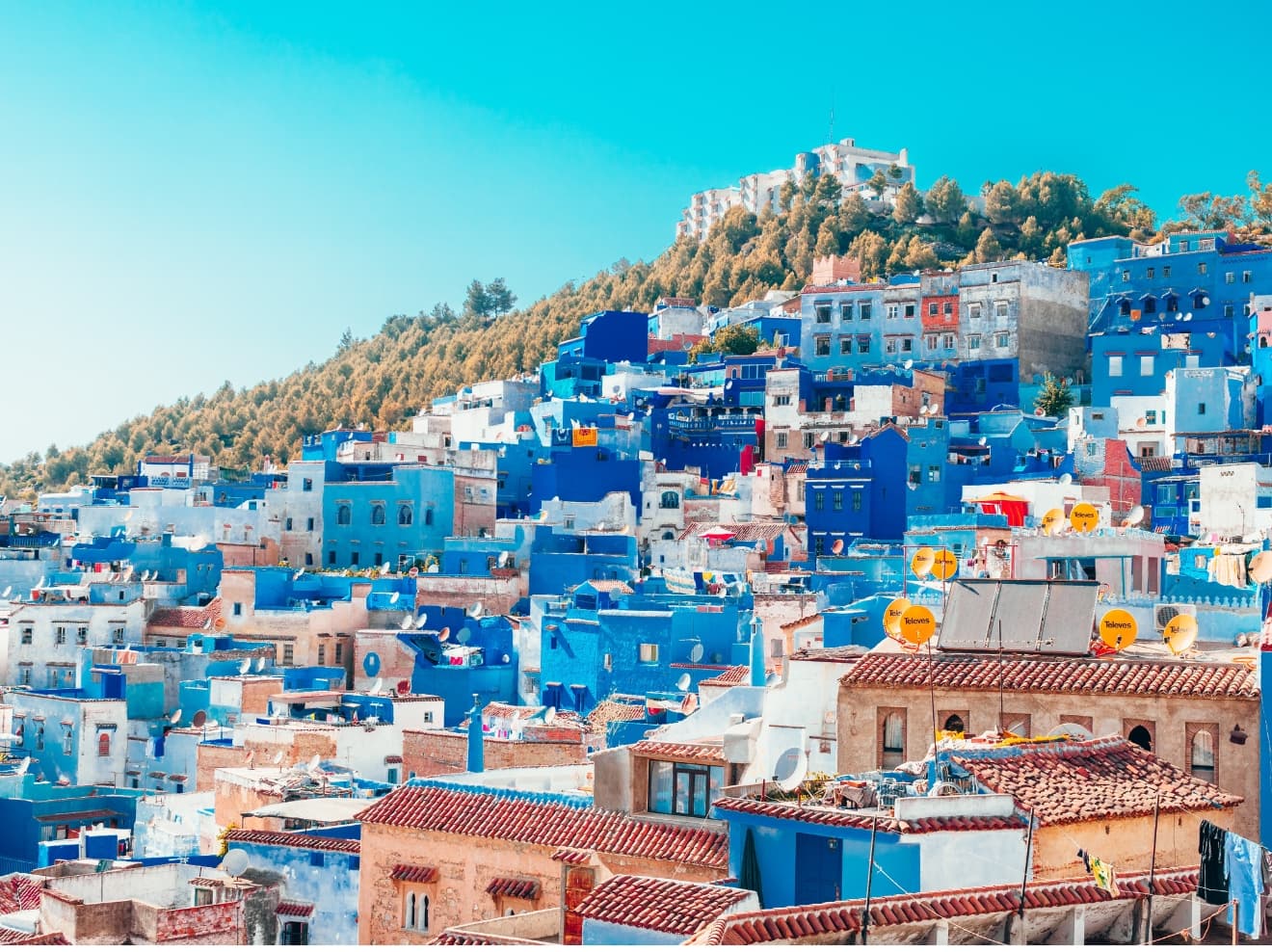 Photo: Black Tomato
Most people who visit Morocco don't make it to the Rif Mountains in Talassemtane National Park, but those who do are rewarded with something rare: a UNESCO Biosphere Reserve of cedar and fir forest, limestone gorges, and high alpine meadows where Amazigh Berber villages have existed in quiet isolation for centuries. This village is largely untouched by the kind of tourism infrastructure that has reshaped much of the country. The Amazigh tradition holds a cosmological relationship with the natural world that predates and quietly threads through every cultural layer that followed. For those who need a more concrete reason to start planning a visit: in August 2027, the path of totality for one of the longest total solar eclipses in modern history passes directly over northern Morocco, with some locations experiencing more than six minutes of complete midday darkness. It is the kind of event that makes people wish they had booked earlier.
Where to Stay: Dar Jasmine in nearby Chefchaouen occupies a hillside above the blue city's medina with nine rooms decorated by local artisans and an infinity pool with views across the Rif. It's intimate in the way that good riads always are, and a natural base for heading deeper into the mountains.
Cappadocia, Turkey
 Photo: Black Tomato
The landscape in Cappadocia looks like it was made by something other than geology alone: the fairy chimneys, cave hotels, and underground cities of Derinkuyu suggest a civilization that understood the value of disappearing entirely. The neighboring town of Konya is the birthplace of Sufi mysticism and the whirling dervish tradition, which is rooted in the belief that spinning mirrors the rotation of the celestial bodies and transforms the body into a miniature cosmos. It is one of the more quietly compelling ideas that travel has ever introduced me to, and Cappadocia carries it well, layered with the accumulated sense of a place that has always known there was something larger worth answering to.
Where to stay: Argos in Cappadocia is built into an ancient monastery and underground cave system in Old Uçhisar Village, rooms carved into the mountainside with terraces that look out over the whole extraordinary landscape. Dinner under starlight or among stone arches, with wine from the hotel's own vineyard.
The Mongolian Steppe
 Photo: Black Tomato
Mongolia is not a place you pass through. Getting to the steppe from Ulaanbaatar takes the better part of a day, and that is before you factor in the absence of roads in any conventional sense; it's the kind of driving where the landscape itself becomes the navigation. Once you arrive, though, something shifts. Absolute silence, a horizon that simply doesn't end, and a living nomadic culture with roots in Tengrism, sky-worship at its most elemental. In the Mongol tradition, the Eternal Blue Sky is not a metaphor. It is the supreme deity, a presence the landscape exists beneath and answers to. Staying in a ger with a nomadic family, with no signal and nothing between you and the edge of the world, is one of the more radical acts of disconnection still available to a modern traveler. The boredom arrives, usually around day two. What comes after it is harder to explain but worth the trip.
Where to stay: Mandala Mongolia sets up private en-suite ger camps on the open steppe, with a dedicated Magic Ger for dining, a telescope for the nights, and a nearby nomadic family whose daily rhythms you're welcome to observe or join in. Breakfast can arrive on horseback. There's no Wi-Fi, which is entirely the point.