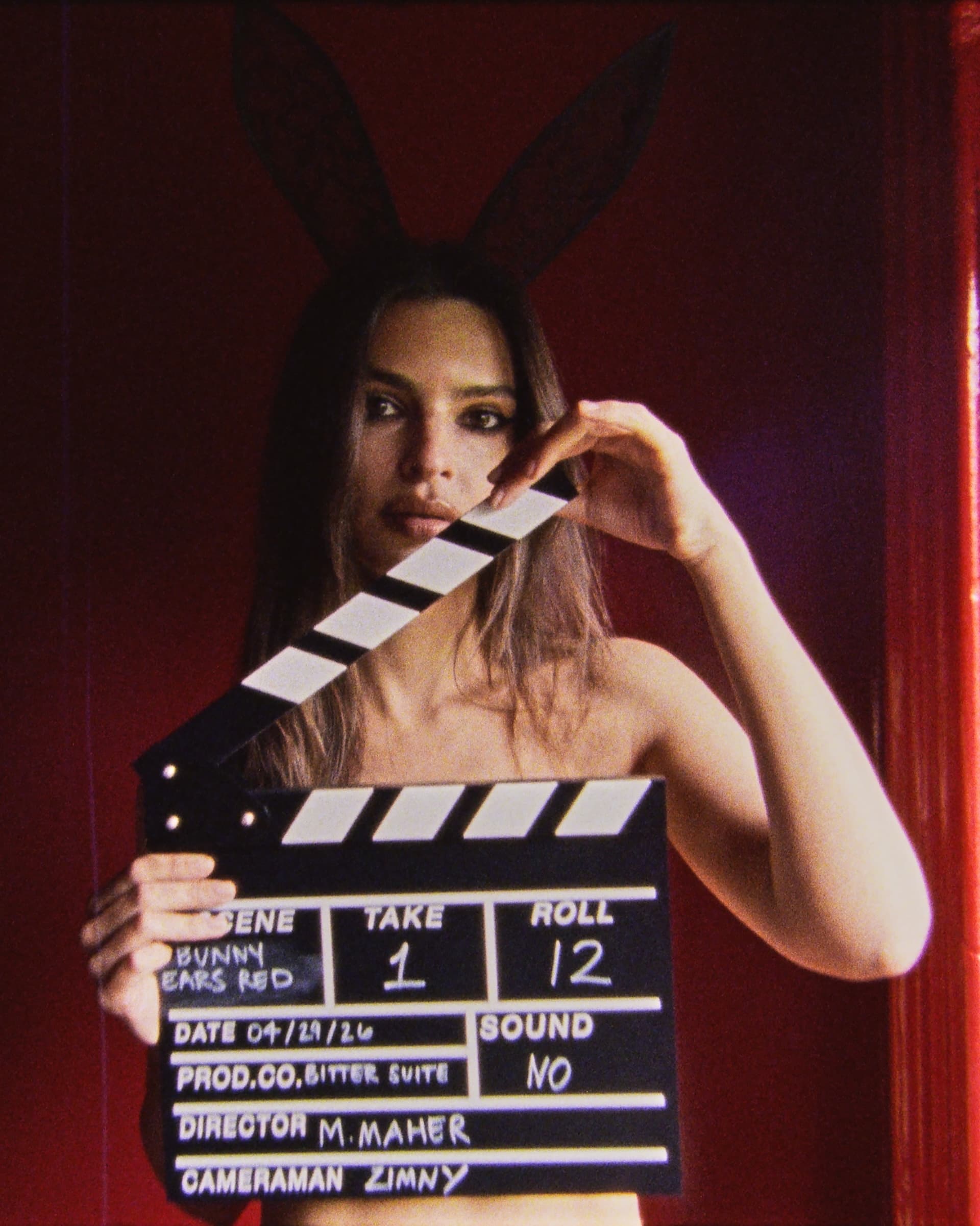
Chances are at least one of your girl crushes has been photographed by Morgan Maher. From Emily Ratajkowski and Clairo to Rachel Sennott and JT, Morgan Maher has made a habit of being behind the lens of the It girls of the moment. The LA-based photographer has lensed pretty much all of our current obsessions, and now, she’s bringing them all together in her new book, Everybody Loved Her, Everybody Wanted Her, out today.
The new book features 38 women photographed on 16mm film, with each portrait mimicking a classic screen test. A fan of old Hollywood, larger-than-life female characters, and a good fashion fantasy, Morgan has always been drawn to the idea of her: the woman everyone wants to be, knows, or can’t stop looking at. It’s an idea that runs through the book, which explores the space between the women she photographs and the women we imagine ourselves becoming.
 Photo: Morgan Maher
And this interest in femininity and capturing it started long before she was working with some of the coolest girls. Growing up in a small town in Maryland, she spent her time dressing up friends, taking pictures in abandoned farmhouses, and looking for inspiration wherever she could find it.
To celebrate the book’s release, we caught up with Maher to talk about the women who have shaped her work, her fascination with old Hollywood, and why sometimes the best thing you can do is play a character of your own making.
 Photo: Morgan Maher
 Photo: Morgan Maher
Tell us about your upbringing and how it has influenced your work.
"I was born in a small town in Maryland. From a very young age, it was clear that making photographs was the way I knew how to make sense of the world. I would dress up my friends and take photos in abandoned farmhouses and creeks. I was so curious about a world outside of where I grew up. I loved Flickr; I would post photos every single day. I would make handmade books and have penpals through Tumblr."
I love the title of your book, “Everybody Loved Her, Everybody Wanted Her.” Who is “her,” and what does she represent to you?
"There is a fixed character I have been exploring and constructing throughout my work. In a way, “her” is an extension of the girls I have spent years photographing. With this book, I am interested in the conscious construction of womanhood as it evolves from the experience of being a girl. How much of womanhood is inherited, imagined, or performed? At what point do you begin to believe the character you have created?"
What drew you to exploring Hollywood women and modern muses?
"My earliest understanding of a woman is how my mother dressed, or advertisements I would see while watching football on Sunday with my dad. They were two very different realities, neither of which I thought to question at a young age. I fell in love with movies much later, and became interested in these very established, almost archaic Hollywood portrayals of what a woman is supposed to be. I am interested in how we borrow from them, imitate them, and ultimately use those ideas to construct our own identities."
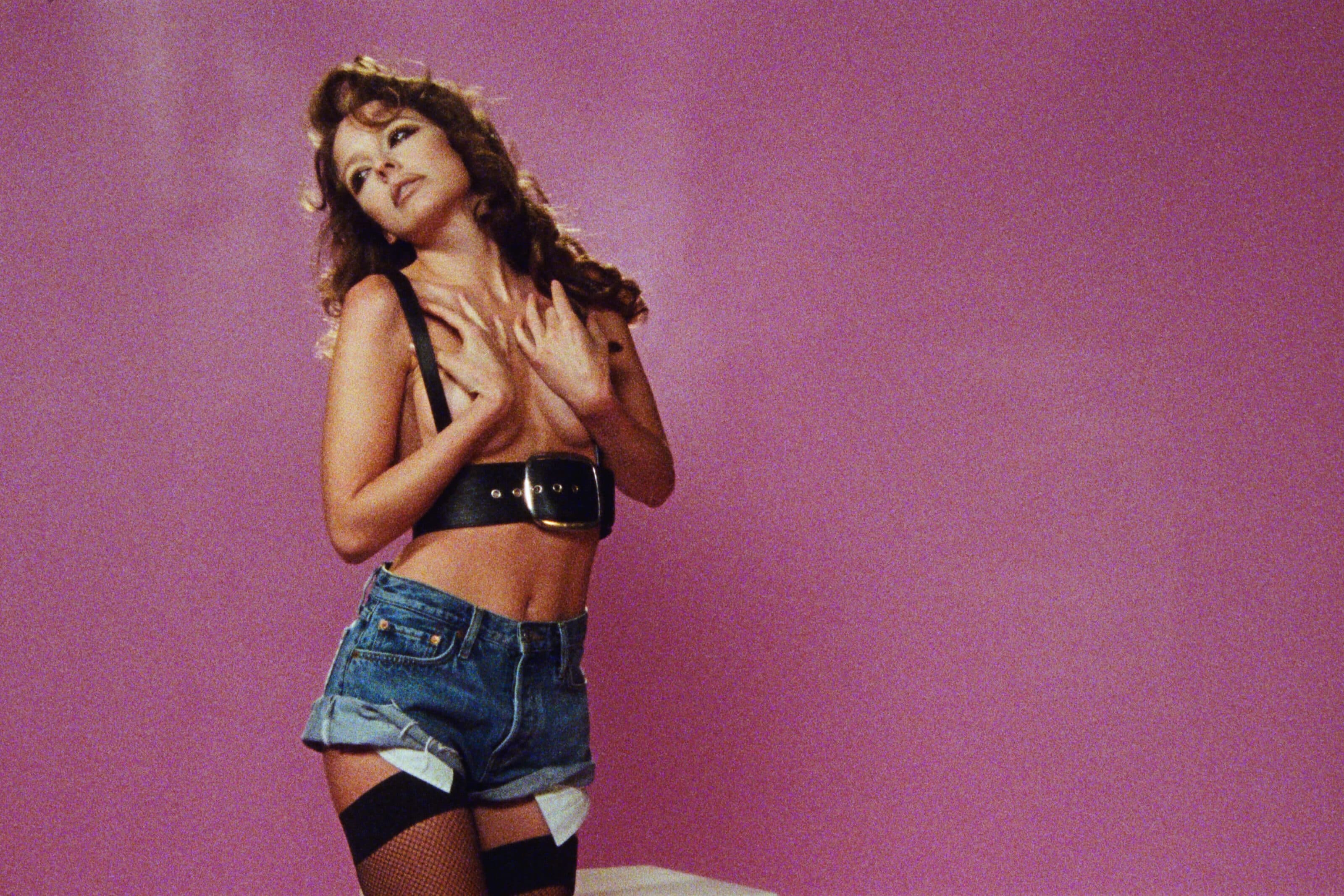 Photo: Morgan Maher
 Photo: Morgan Maher
Your work often captures the desire to be seen and the desire to disappear. What draws you to this tension?
"It is an exchange of intimacy and trust. How do I create a relationship with someone that allows me to photograph them in a way that gives them agency over how they are seen? We live in a hyper-documented world. It’s no longer a question of whether you will be photographed but who is doing it, and how the image is being disseminated.
My first project began with the question, 'Who can come into bed with me?' Safety and sculpting with intimacy were the real tools there. I am always trying to exercise the muscle of honesty and vulnerability. To me, dress up is as real as waking up and looking at yourself in the mirror. It’s one of the first ways we learn how to feel before we know who we are. We learn about women through fantasies and images that have been handed to us, and about how that informs our understanding of ourselves."
 Photo: Morgan Maher
If you could dream up your ideal shoot setup, what would it look like?
"I wish there was a Briese light and hair light and canned fog on everyone."
The book features so many of our faves, including True, Yasmin, Clairo, and Emrata. How did you choose who to photograph?
"It’s earnest. These are my friends, and it’s amazing we get to create together."
 Photo: Morgan Maher
For someone discovering your work for the first time, how would you describe your practice?
"Loud. I’m always screaming on set. I’m enthused, present, and reactive to whoever is on set with me."
What’s your favorite part of creating this kind of work?
"Being pushed outside of my comfort zone by my incredible collaborators. I was lucky to learn an entirely new vocabulary for bringing to life the things I had imagined."