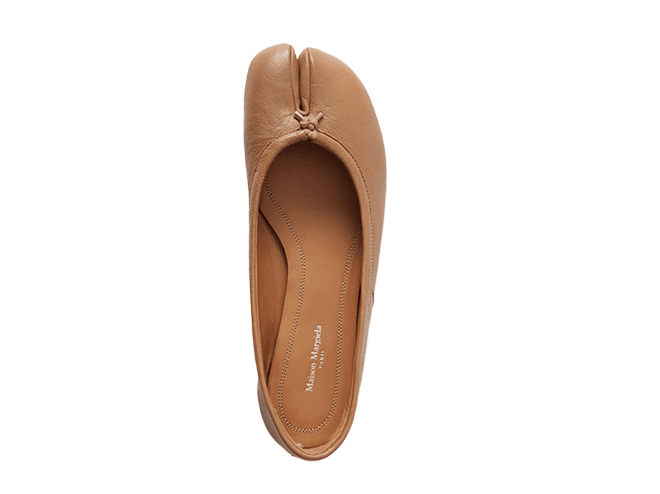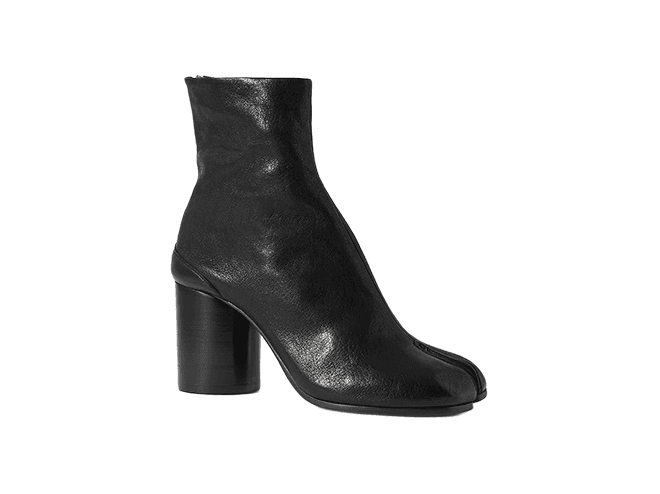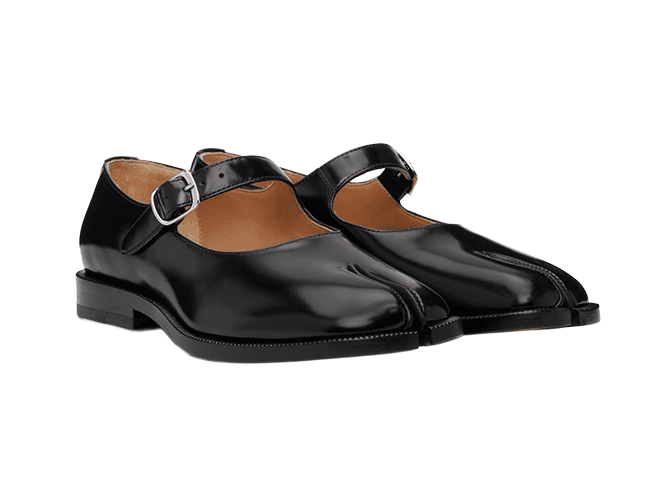
We've noticed that fashion has had a bit of a foot fetish as of late—but what if this fixation isn't necessarily a new thing? I, and probably most fashion historians, would attribute the first foray into the world of feet to Maison Margiela and his iconic Tabi shoes. Margiela debuted his first collection during the Spring/Summer 1989 season in Paris and very quickly left his mark—both literally and figuratively. Models walked the runway in face coverings and split-toe silhouette shoes with painted bottoms, leaving a blood-like trail in their wake. This debut made a controversial impact: some saw Margiela as a subversive genius and appreciated him for making fashion interesting, while others were taken aback by the unusual design that seemingly distorted the human body.
Ahead, we chart the history of the silhouette that remains a fashion girl staple to this day, and give credit to the design's origins that some are still unaware of: Japanese culture.
Japanese Origins
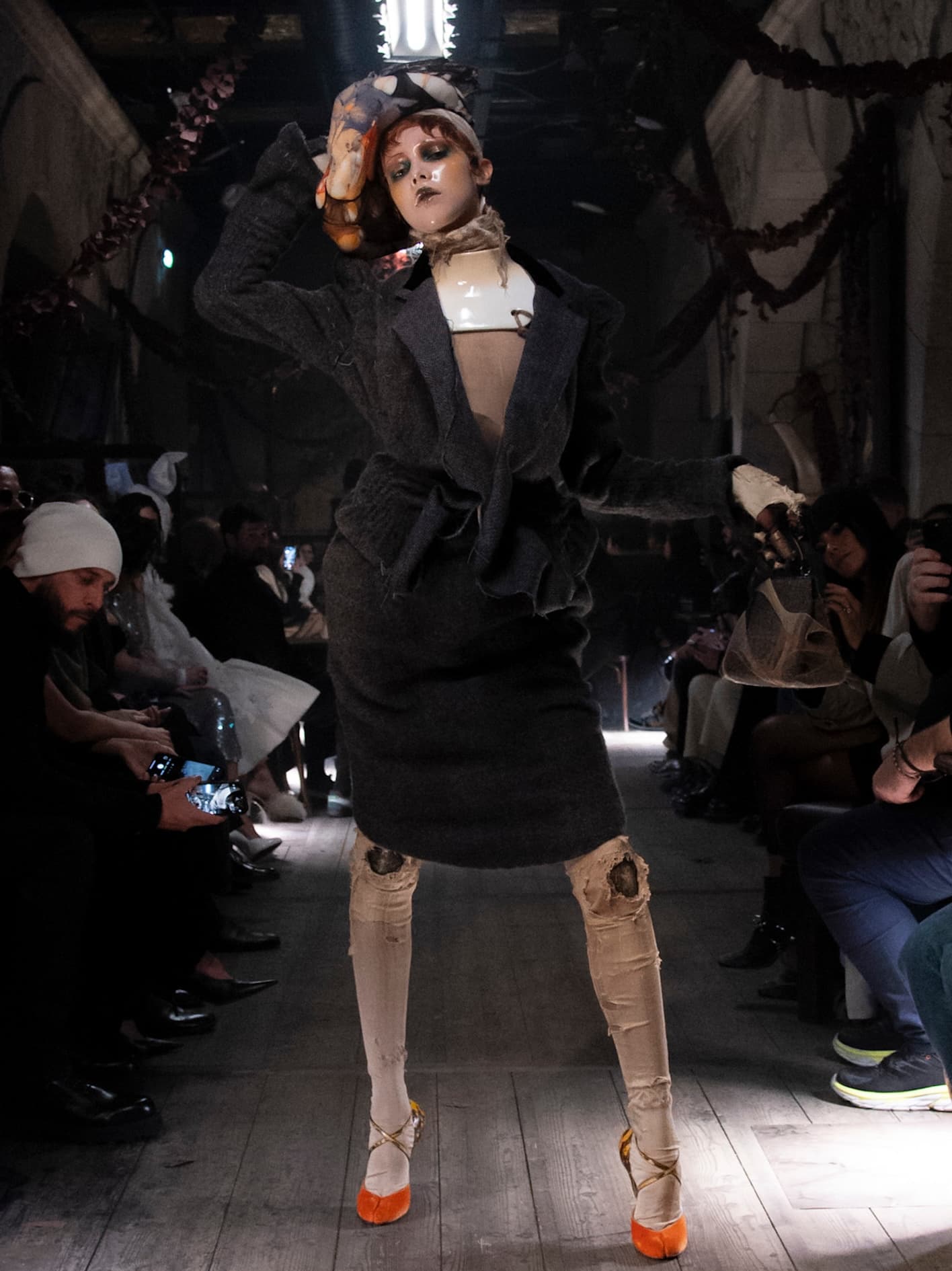
 Margiela SS24 Haute Couture // Launchmetrics
While some are quick to attribute the Tabi to Maison Margiela alone, they actually have ancient Japanese origins that deserve wider recognition. In 15th century Japan, the split-toe socks called the Tabi were invented with the intention of pairing with thong sandals. They became a go-to accessory for dressing up sandals and making them appear a bit more formal. Then, in the '20s, the Ishibashi brothers added rubber soles to the style for traction, allowing blue-collar workers to wear them outdoors.
Margiela's Take
 Maison Margiela SS21 // Launchmetrics
In 1988, Maison Margiela put his high fashion spin on the Japanese staple—and in his debut show, no less. Picture this: you're attending a fashion show in Paris completely unfamiliar with the Japanese socks that inspired the style, and you spot models walking the runway in split-toe shoes with painted soles, leaving footprints behind. You would, of course, consider this avant-garde and this emerging designer, who took something that already existed and completely reimagined it, would remain on your mind and on your radar.
Confusion & Controversy
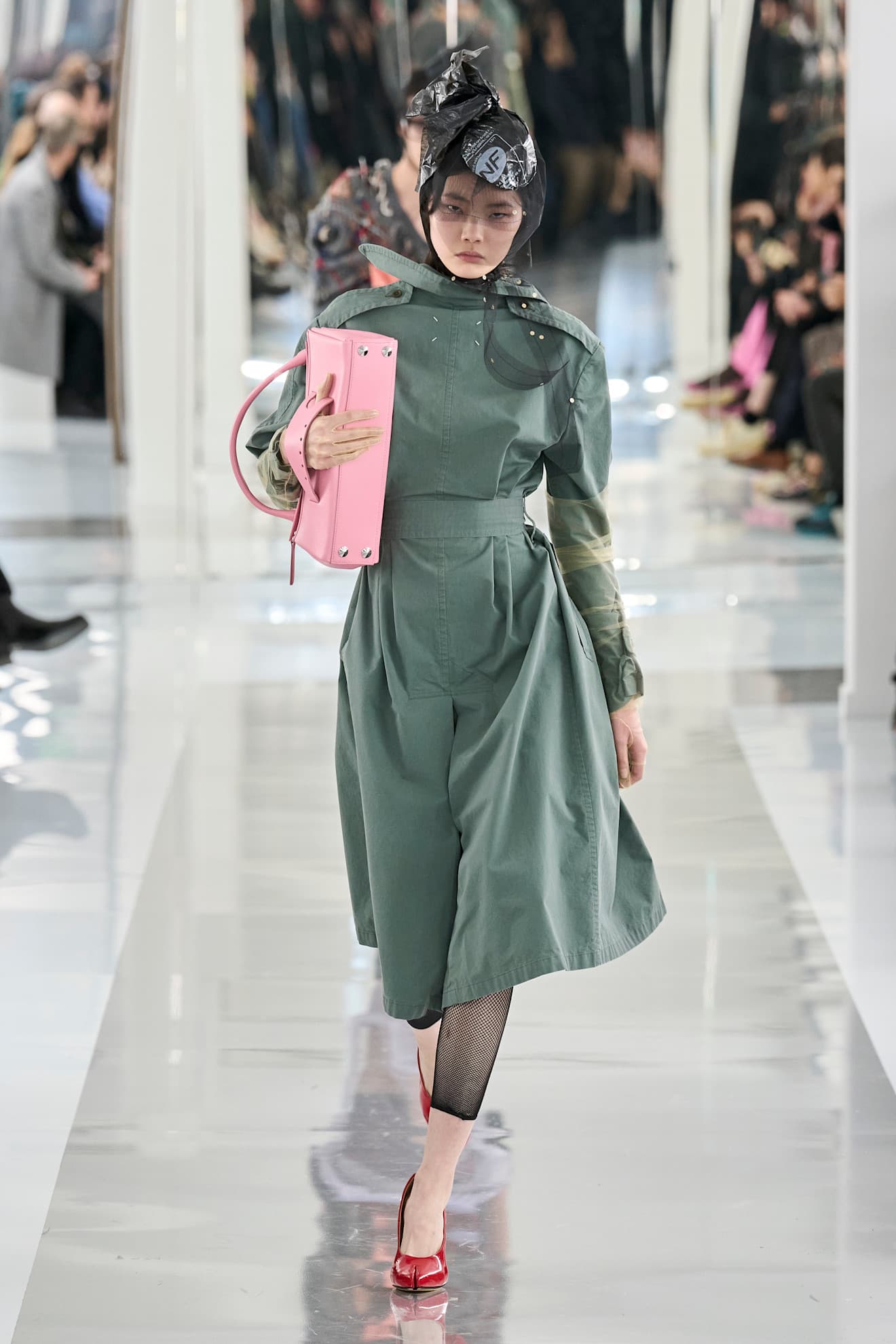 Maison Margiela Menswear FW23 // Launchmetrics
After their stunning debut, the controversy around the design continued. First and foremost, people were unsettled by the unnatural split of the toes and weren't quite comfortable with a style that seemed to reject human anatomy. Margiela, at first, wanted the shoe to resemble a barefoot. The leather of the Tabi conforms to the foots and the result, to some, appears like a mutated foot. On the other hand, some believed that the style looked like the hoof of an animal. The split of the toes offers an imperfection that can unsettle some who naturally prefer symmetry. In Western culture, the style was like nothing people had ever seen before—and some people simply didn't understand the change, difference, or subversions of beauty.
Others were concerned that Margiela's design appropriated Japanese culture, and without giving credit where credit it due. Still, to this day, some people believe that Margiela created the style without an understanding of its original origins.
A Permanent Fashion Fixture
 Maison Margiela Haute Couture FW25 // Launchmetrics
Despite the backlash and confusion, what began as a cult favorite fashion piece has transcended into the mainstream. Beloved for making a bold statement and showcasing an appreciation for risk-taking, subversion, and fashion history, the style is now available in every shoe type; from boots and loafers to ballet flats, mary janes, and sneakers. Recently, celebrities like Kylie Jenner, Bad Bunny, Zendaya, Lily-Rose Depp, and Margot Robbie have embraced the style. And whenever we spot another star dotting a pair, we look at them with appreciation, a little extra respect, and gratitude that they're not boring.