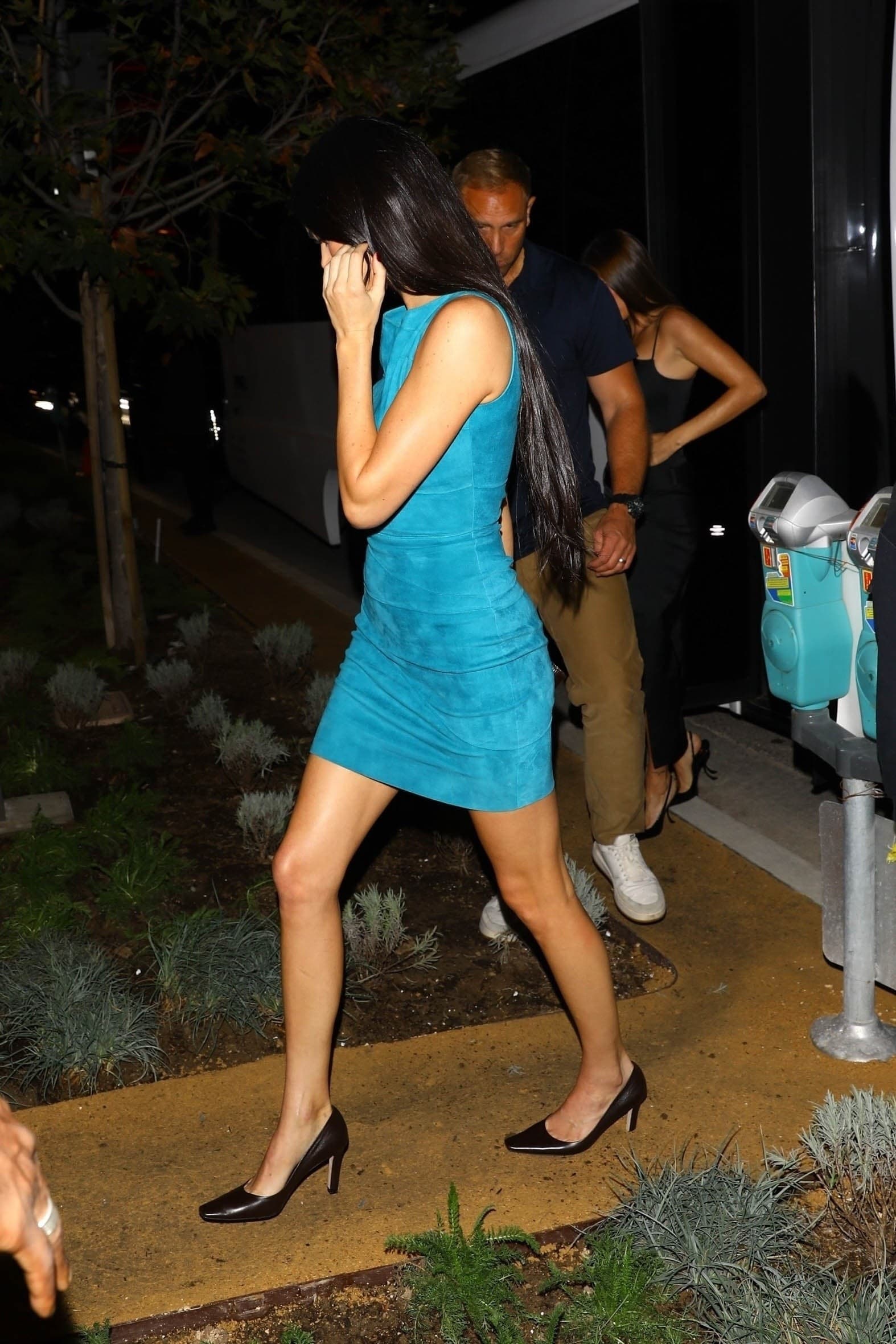
The culture industry relies on unknowing subjects. Fashion has street photography, YouTubers have Meta Ray-Bans, and the internet is filled with videos of strangers. Maybe it was a sweet moment that “restored your faith in humanity.” Maybe someone got caught cheating and deserves to be exposed. Maybe someone was just so hot we need to track them down—and who better to employ than the self-proclaimed FBI-level “stalker girlies.” Before “TikTok help me find this guy,” we had “Twitter, do your thing.” Alex from Target went viral, got on Ellen, and then promptly removed himself from the public eye. All this to say, you can become the biggest thing on the internet without having a clue. Sometimes it’s good, necessary, and welcome attention. Other times, your digital footprint is ruined before you even get a chance to notice. Everyone is a voyeur and no one is sexy. Everyone is paparazzi and nobody is famous.
 ShotbyNYP / BACKGRID
There’s this trending TikTok audio: “If you look for it, I’ve got a sneaky feeling you’ll find that love actually is all around.” The trend lends itself to second-long candid clips of “wholesome stranger moments.” I’ll admit, these types of videos feel less dangerous when they’re not sparking the same hate-fueled virality that followed Couch Guy and the Coldplay kiss cam couple. But the videos are all the same. Zooming in on the elderly couple across the street. Zooming in on the mom with her kid. Zooming in on the couple toeing the boundary between PDA and public indecency. Filming strangers always requires a zoom because the videos themselves are characterized by separation from the scene. But where do we draw the line between appreciation, exposure, and iPhone-opticon-level surveillance?
The smartphone era placed tools of mass surveillance in our pockets. The (alarmingly accessible) Meta Ray-Ban glasses are basically hidden cameras, even if Meta themselves released a “best practices” guidebook—“how to ethically carry spyware: please turn them off in bathrooms!” Call me paranoid, but something tells me the most problematic group of Meta Ray-Ban users aren’t the people who are unaware of how to use them, but perhaps the people who are a bit too savvy with the glasses. Surveillance can be constant and unnoticeable.
Whenever a video goes viral of someone clearly unaware they’re being filmed, the same debate happens in the comments. People call the poster a creep, and armchair lawyers are quick to remind everyone of the legality of filming in public spaces. To be in public is to relinquish your right to privacy. You consent to being filmed the minute you set foot on the sidewalk. But the critique has less to do with legality and more to do with the ethics of interpersonal surveillance. Just because it’s technically legal for us to employ the same monitoring tactics as our government, we ought to question why we’re so eager to do that to each other. Who needs Homeland when you have millions of people eager to document everything? Even if no person in public has the right to privacy, the legality doesn’t make it any less odd to want to publicize the lives of strangers, especially when the “public” is no longer confined to your immediate community, but expanded to anyone with working internet. We live in a world where I can see strangers on the other side of the country as often as I see strangers on the other side of the road.
Accounts like @influencersinthewild and @shibuyameltdown have built a following on stranger-based content. @influencersinthewild functions as a bit of a hall of shame, documenting and questioning some of the less considerate, more nonsensical behaviors of influencers. In all my scrolling, I’ve yet to notice any comments coming to a privacy-related defense of the caught-in-the-act influencers—likely because these are people who have already made it clear that they’re ready to go viral. @influencersinthewild is basically a collection of behind the scenes videos. The ethics of @shibuyameltdown are questioned the most, as the account is an archive of strangers at their lowest—drunk and unconscious, more often than not naked and covered in some sort of bodily fluid. Some people interpreted the account as a social commentary—how the intensity of Japanese work culture leads to the most extreme forms of alcohol abuse, while Japanese social norms have created an environment where it’s completely safe to pass out drunk in the street. Everyone wakes up unharmed and with all their belongings, so if anything, the phenomenon is especially foreign to Americans. But in a 2016 interview with Vice, Thom O’Brien explained why he started the account: “It’s the funniest thing in the world.” For him, the streets are fair game, whether you’re conscious or not.
In On Photography, Susan Sontag wrote, “Technology made possible an ever increasing spread of that mentality which looks at the world as a set of potential photographs,” arguing that photographers see every moment as an experience to be had, but a photograph to be taken. And she was writing this in 1977. Now, smartphones have placed us in a post-focused mindset. Buzzfeed called it “panopticontent,” where public spaces become content farms and every stranger becomes a potential ticket to virality—you just have to catch them at the right moment, which, in most cases, can feel extremely unflattering.
Last month, TikTok user @bella_gustafson posted a video of a young man crying while being comforted by an older man and captioned it, “my faith in humanity is restored.” It’s a sweet moment. The video was no doubt posted with good intentions. A few comments critiqued her filming, with attitudes ranging from halfhearted jokes to outrage on behalf of the man being filmed. The general sentiment was, “I wouldn’t want someone to film me crying. This is weird.” Other comments were optimistic, citing the video as a beautiful display of intergenerational connection, empathy among strangers, and healthy outlets for male emotion. One user commented, “I know recording people in public is wrong, but look at the bright side. Teens [could] be watching this video and might start talking with older people.”
Eventually, the video made its way to @aidenhd1, the young man on the bus. He stitched it and asked, “Why does my friend have to tell me there’s a video of me crying on the bus going viral? You should’ve asked me before posting that. That’s so fucked up.” He’s smiling in the video, and the caption, “bella we’re opps now unfortunately,” seems a little tongue-in-cheek, but even if he were completely earnest in his anger, he’d be justified. A commenter summed it up best:”It doesn’t matter how YOU feel about the video - it’s HIS private moment, not your hopecore.”
Two days after his initial stitch, Aiden posted another video, thanking commenters who used his viral video as an opportunity to comment words of encouragement and admiration. “This was the perfect thing to happen to me,” he says. He reflected on gaining 10,000 followers because of a publicized moment of vulnerability, saying, “I never would’ve thought [that] would come from actually showing who I am, and that’s probably the best lesson I could’ve learned.” He even messaged Bella—”we’re cool,” he says. While both the video and its aftermath demonstrate the surprising kindness of strangers, the ethical concerns remain. By this time, most commenters had reached a consensus: The initial video should’ve never been posted without consent, but at least some good came out of it.
 Diamond / BACKGRID
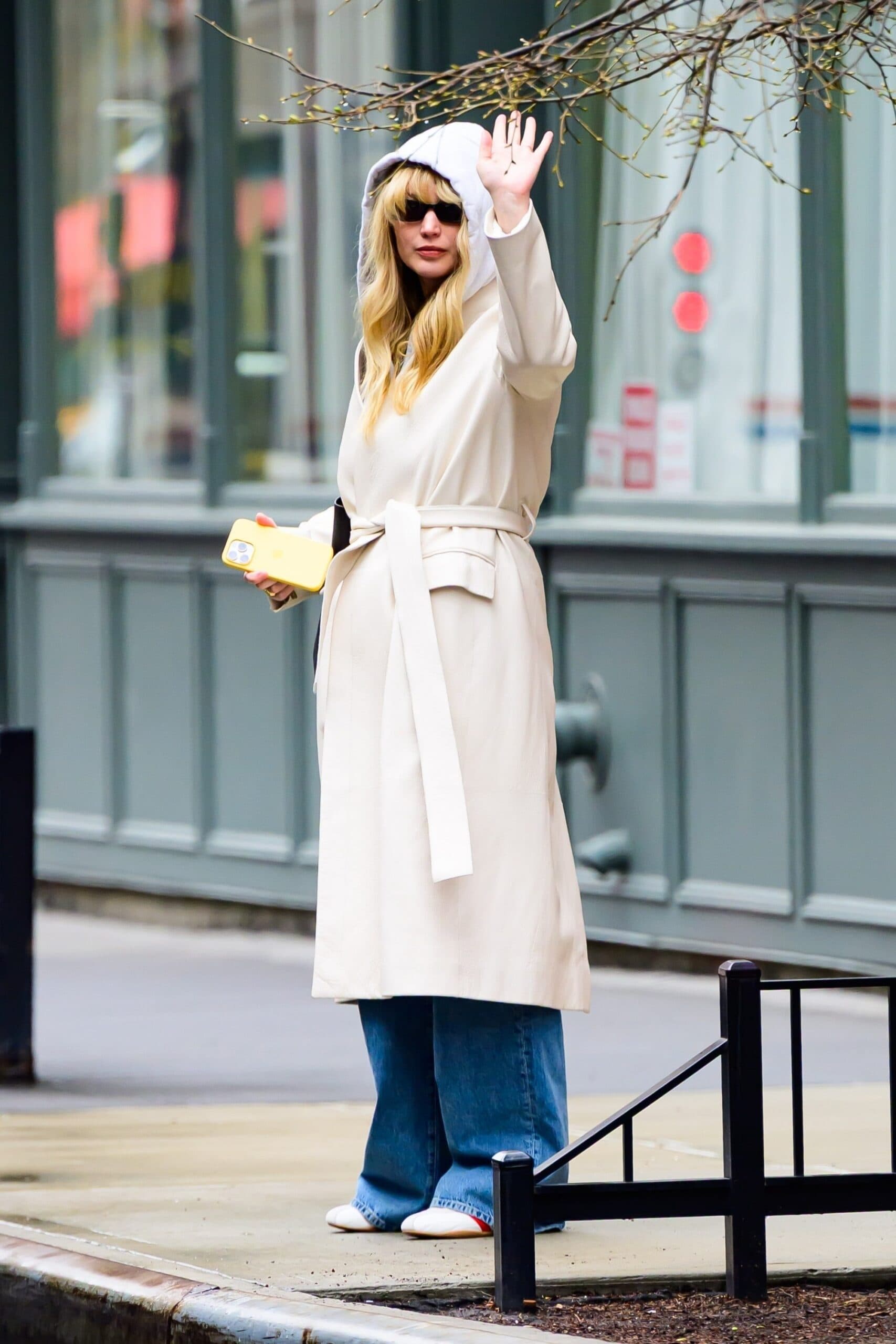
I’m not going to say I haven’t filmed the odd stranger now and again—especially in New York, where there’s no shortage of things that are undeniably so bizarre that posting is warranted, and accounts like @subwaycreatures normalize and encourage shock-and-awe-based posting. And let me be clear, there are some situations where I have to encourage filming. Documenting police and ICE encounters is often the public’s only form of insurance against instances of state violence that would otherwise be swept under the rug. But even as I’m writing this piece, a new TikTok trend based around filming unsuspecting strangers has surfaced. It goes like this—someone asks a stranger to hold the phone while it records a video, and then at the last second, the camera gets flipped to catch the unsuspecting face of the kind stranger. The punchline is their surprise. The gag is their unawareness. And the content, as a genre, is built around a lack of consent.
Psychologically, I can only imagine what the constant threat of being filmed does to a person. We all poke fun at constant performativity and “main character syndrome,” but when the entire world has the ability to turn everything into content, the instinct to perform is instilled in all of us. This Tweet making fun of Elon Musk says he “moves like he intends for every expression of his to be screenshotted and become the next big meme.” In honor of journalistic objectivity, I’ll admit that this is definitely not the worst clip we’ve seen of him (an incredibly low bar). But he’s anticipating documentation. He’s not living to live, but living to be memorialized in a way that he hopes will entertain people. But it’s weird to admit that Elon Musk (billionaire with deplorable politics) has done something that I (not a billionaire, never “Roman saluted”) can understand. I’d say he needs to free himself from the meme-opticon inside his head, but I also think he has bigger fish to fry. At his best, he’s cringe. At his worst, well…
Our performance is based on our reflexive voyeurism. We understand that we are constantly surveilled, and because of that, we’re constantly surveilling ourselves, monitoring the version of us that we know other people are taking in. In response to a “panopticontent” world, I just want to ask everyone to kill the content farmer in their head. I’m not photogenic enough to survive there.