
If you’ve ever wondered how in the world your favorite celebrities find the time in their busy schedules to score the best archival vintage, how that bride who’s Instagram you frequent found a highly sought after vintage Vivienne Westwood wedding dress, or if you’ve even browsed a well curated vintage store and the question where do they get all this great stuff from? Even momentarily crossed your mind, they likely had help from a professional vintage sourcer. Someone well versed in search terms, connected to both local and international vintage connoisseurs, and someone who finds a thrill and so much genuine joy in the hunt that they’ve made a living out of it.
“Anytime you come across an item that you're unable to locate yourself, you can contact a vintage sourcer to hunt it down for you—all we need is an image of the item,” Gab Waller says. Waller, an Australian native and Los Angeles resident, has been in the sourcing space for about eight years now, sourcing some of the most covetable items for celebrity and VIP clientele—it’s more recent that she has been receiving vintage requests, though. “Vintage sourcing requests have exploded within the past two to three years,” Waller says. “[At the beginning of my career] it was ten percent of my business, but now I would say it’s fifty percent.” According to Waller, you need to have eyes and ears all over the world in order to be a master vintage sourcer. While her hunt begins with thought out online searches that begin with a Google reverse image search (“I recommend everyone do that for any item that they're looking for,” she says) and often on Fashionphile, Treasures of NYC, What Goes Around Comes Around, and Vestiare Collective (which is jam packed with “hidden gems” according to Waller), vintage is, for the most part, an offline world. “These pieces are often found in very small boutiques somewhere across the globe,” Waller says. “I did a trip to Tokyo about two weeks ago, and Japan is truly the mecca of vintage sourcing and vintage products.”
 Courtesy of Gab Waller
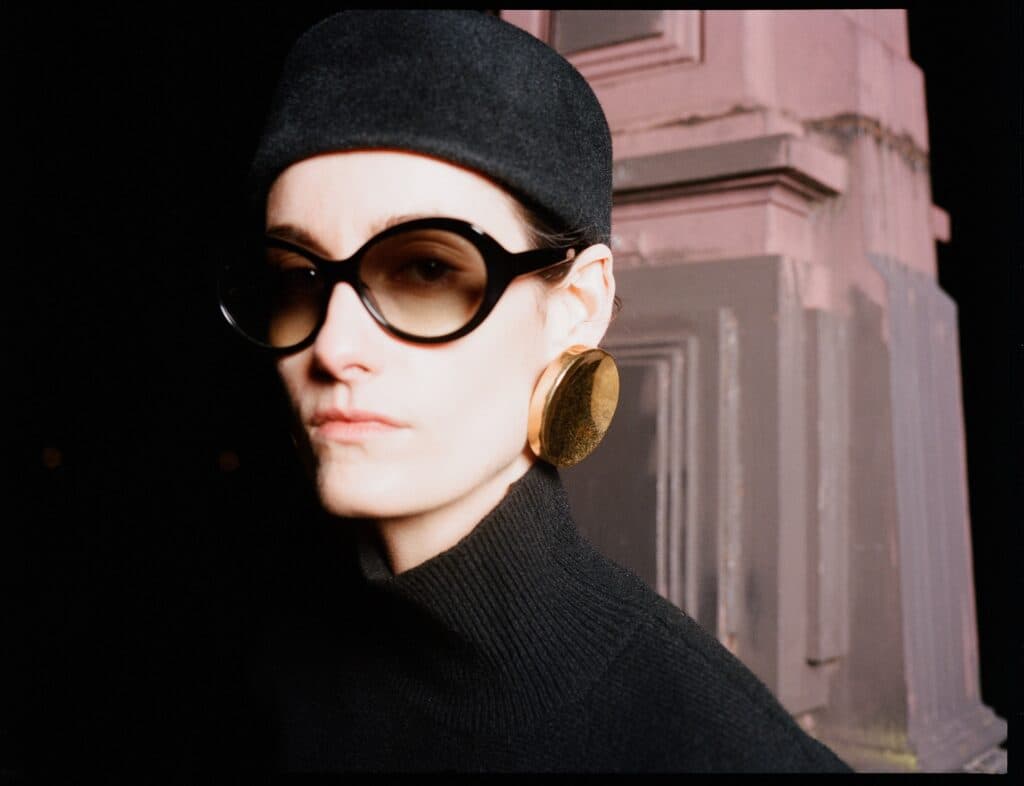
For Alice Violier Amzalak, founder of Paris vintage eyewear store Seconde Vue, her love for glasses preceded her love for vintage—but only slightly. "My grandfather was an optician, and I grew up watching him work with so much passion in this field. He opened his first store in France in 1961," Amzalak says. "One day, I went back to this shop, which still exists today, and in the basement I discovered old pieces stored in boxes—forgotten, incredible vintage frames that he had never sold but carefully kept." Through this discovery, Amzalak was overcome with the realization that vintage styles needed to be preserved—and that these treasures should be on the shelves in every opticians shop. Amzalak quit her marketing job at L'Oreal in Paris and embarked on the adventure of sourcing and owning her own business. Her job goes beyond simply finding the frames: "It’s also about restoring each piece with care and attention. My team spends a significant amount of time taking care of every frame we find," Amzalak says. "Each restoration is done by hand in our Parisian atelier, and it can sometimes take days to achieve the right result." For Amzalak, no sourcing experience is ever the same—instead, the right vintage find often comes as a result of a series of special, perfectly timed encounters. She avoids buying big batches of glasses because one of the most important things as a vintage sourcer is attention to detail and condition, and a keen eye for what's real and fake.
 Courtesy of Seconde Vue
For vintage collector, expert, and stylist Annette Vartanian who works on replenishing brand St. Johns’s archive as well as with individual clients, attention to detail is key for anyone that strives to be a great vintage sourcer. "You should just be able to see and touch a garment and know whether or not it's real. And that takes a lot of homework," she says. "So tell people, if you want to get into this business, you really need to know a brand inside and out almost better than they do." Another big qualification is the willingness to go to great lengths—sometimes international or other side of the world lengths, other times hesitantly following a vintage collector that you just met into their spooky attic lengths. "After talking to the owner of the house, I found out it's his wife's collection. He had built this beautiful closet for her in the attic space," Vartarian said. "And after speaking with him, I realized his wife had died ten years prior—he was just holding onto these items." With vintage, in general, the history, the stories, and the memories that each garment carries is a major part of the overall experience. For Vartanian, intimate encounters like this are just part of the rewarding journey. “I tell people that I help find and preserve fashion history,” she says. “And I’m finding something interesting and potentially keeping it out of the landfill.” And for Amzalak, one of the most rewarding parts of her job is sharing the stories about where the glasses came from with those who ultimately purchase them.
 Courtesy of Annette Vartanian
To Waller, Vartanian, and Amzalak, a genuine persistence and thrill for the hunt is the biggest vintage sourcer qualification. Whether it be a vintage Fendi baguette, vintage Dior sunglasses from the ‘70s, or vintage Levi jeans, a sourcer must have blinders on and tell themselves that every item exists somewhere in the world—and then, from there, make it their mission to track it down. “You need to have a mix of refusing to take no as an answer or not letting that block you,” Waller says. Now, Vartarnian watches proudly as her young daughters take it upon themselves to search for unique pieces at flea markets and high-end vintage markets and as they develop their own love for interesting pieces.
“I believe with every inch of me that this is my true calling. I feel so deeply passionate about this work and I'm a people pleaser at heart,” Waller says. “The search is of course the fun part, but the moment of going back to the client to be like, ‘I have found it!’—there is no better feeling.”