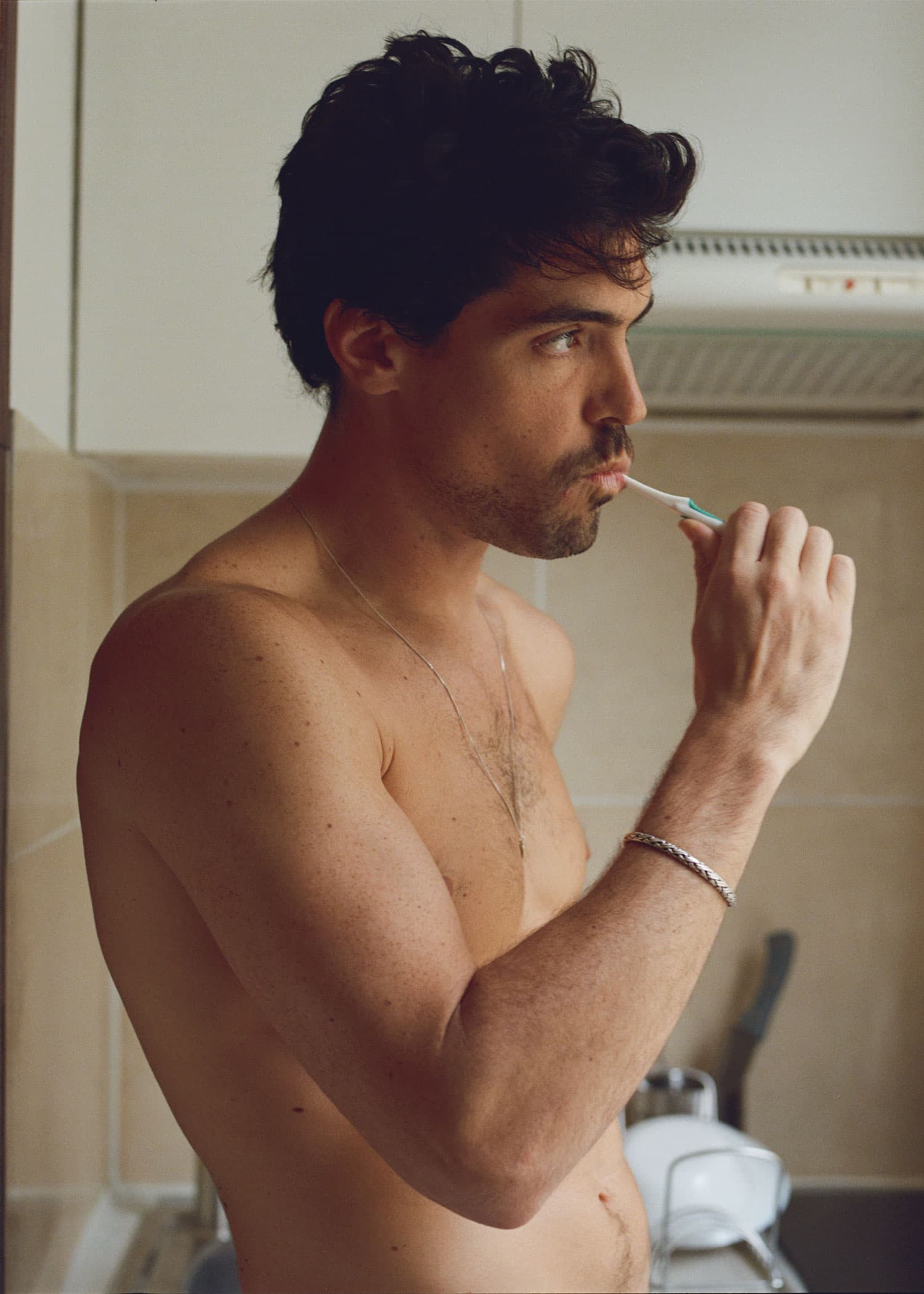
When Cambodian-born, New Zealand-raised photographer Rob Tennent was in his very early 20s, he made two photography books, Come Back To Bed and I'm Going To Miss You. Shot predominantly on film, the images explored themes of nostalgia, male sexuality, friendship, and intimacy. These were ultimately the moments that shaped his photographic style, one that was tender, introspective, and captured the unique intimacy and dynamics of boys growing into men.
Tennent, 27, now lives and works in Paris—a feat that is no small thing for a New Zealand expat on the freelance circuit. In the city, he has access to other demographics with their own stories to tell, usually groups of boys on the cusp of adulthood, figuring out how to move through the world as men. Tennent captures the softer moments that internet niches like the Manosphere are trying to crush: a shared glance or touch, the bonds of boyhood that explore the tension between friendship and intimacy.
Ahead, we catch up with Tennent on the evolution of his work, the way he navigates the dynamics he is seeking to document, and how he finds his non-model subjects.
 Rob Tennent
You work a lot with male subjects obviously and explore different ideas of masculinity. Why does it feel important or meaningful for you?
“I think ever since 2020, I've always been interested in the more gentle side of masculinity and the more mundane everyday feelings. Now I'm kind of drawn to the youth. I'm really intrigued by 18-year-old’s freshly graduating and the world that they're entering into, because now that I am 27, I feel so detached from what an 18-year-old is going through—vaping and finding a job and this heavy feeling of entering the real world...that's really been on my mind. I went to Scotland yesterday and I shot these 18-year-olds just around Edinburgh. And there's this feeling of the weight of the world on your shoulders, but also an innocence of entering the real world."
The environment for young men right now emerging into the real world is really convoluted too.
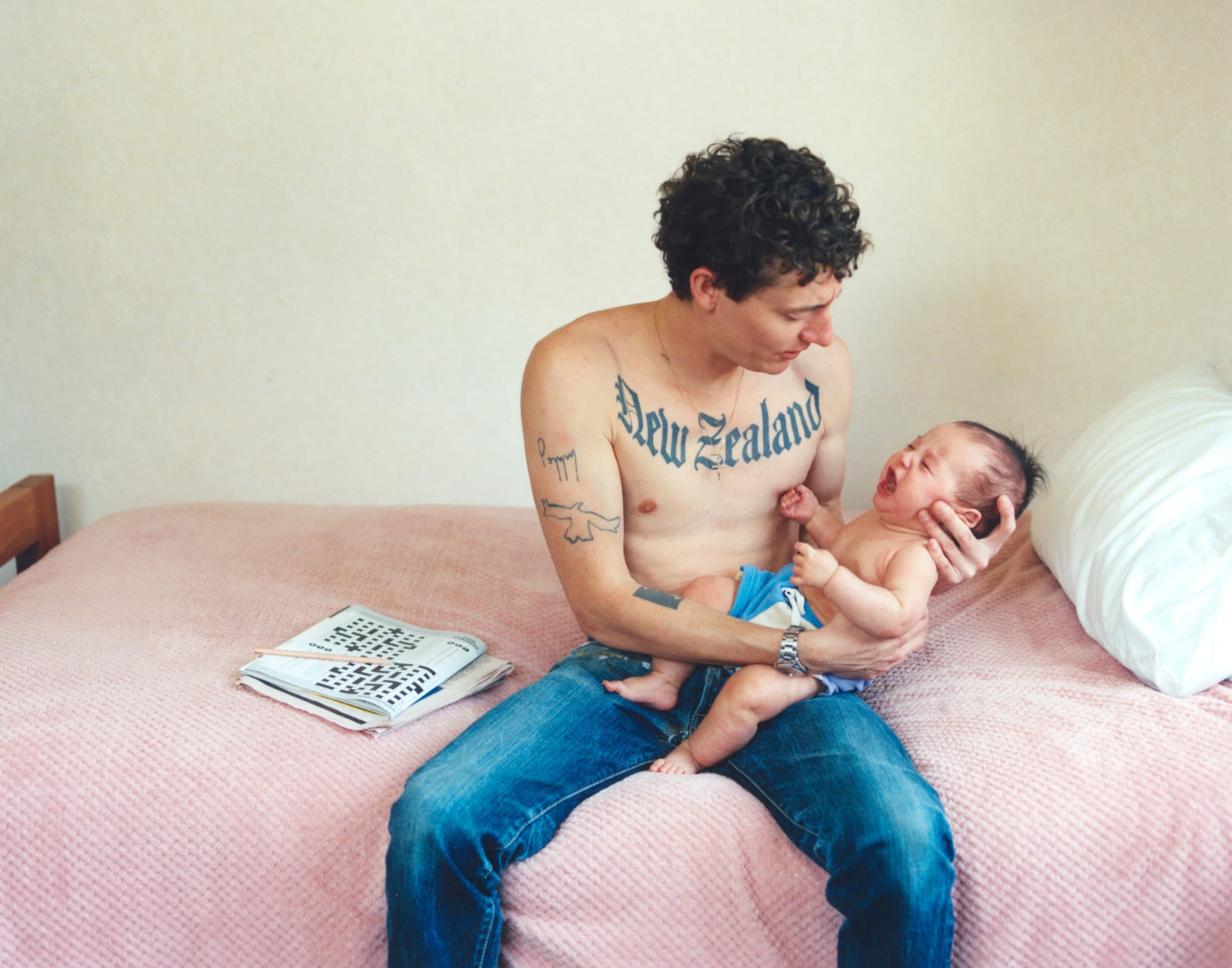
"Yes. And I think back then I wanted this utopia of joy and happiness and everything feeling light and fun and nostalgic. But then I think as I get older and as the things around us get a little heavier, I'm always intrigued by…if I had a kid, how would it feel? The landscape has just changed so much."
How do you find your subjects? A lot of the people you shoot for your personal work are not models.
"I find them all on Instagram, which feels really creepy and weird, but I find niche clubs. So for example, I would find a rowing club in Edinburgh and then I would go through their entire page and look at comments and likes and who they follow and who they tag. So when I went to Dublin, I found a musician that was playing gigs and then I found the photographer that was shooting these gigs, who is just this 18-year-old guy that's graduated and he wants to go be a documentary photographer in war torn countries. I reached out to him. He then was like, 'Yeah, I have friends.' And then I just go to their houses and shoot them. I think why I'm trying to do so much of it now is because while I'm close enough in age, the less creepy it is."
 Rob Tennent
 Rob Tennent
What's your favorite thing about making that kind of work?
"I do love meeting these people because they live such different lives and it's a slice of their country and I think that's the best way to explore a new city. If I went to Greece and Athens, I would try and line up a project like this and they give me recommendations.I usually ask, 'Okay, so what is something that you'd normally do in your day-to-day life?' and build the story from there. I've been loving Angela Hill. She shoots these really amazing portraits of young teens and it all does have this mundane feeling. But also I met Wolfgang Tillmans in Berlin. He shot my friend's album cover and I asked, 'What is some advice you'd give me?' He was like, 'Carry your camera everywhere because you never know when you can make a picture. I get that it's a job, but you also need to remember that you do it because you love it.' In Sydney, it became a job, but here it's become a hobby again and a way of making art rather than a way of surviving."
How do you feel like your work is linked to your identity?
"The queerness is always slightly there because it is shot through a queer man's lens, even though most of my subjects are straight. But I think that's what I try to not be really on the nose with anything. There is still that playful feeling, but I think just the connection between the subject and myself,I think you can always tell that it was shot through a queer lens. I think I just shoot things that feel like the life I would want to maybe live or the childhood that I had and I'm just recreating memories that I've had in my head."
 Rob Tennent
Tell me a bit about your upbringing.
"I spent seven years living in Cambodia and every day after school I would play with the kids in the neighborhood, riding our bikes. If it was raining, I'd play in the rain. And we had a sandpit that we would always just play in. And I don't know if the kids are still doing that these days with the iPads, but then I moved to St. Lucia, where I did competitive swimming for four years. So there's scenes of the water and athletes and training that I always think back to and stretching before you go for a swim. And then obviously, New Zealand is just nature and wrestling and playing bull rush. I went to an all boys boarding school, and being queer, you just notice things.
There's that recent pic I just shot of the guy tying his tie, those little tiny movements and very simple moments that I see differently because I guess I'm just drawn to it as a photographer."
You are currently working and living in Paris. I wondered if you've noticed a difference in male dynamics in Paris with the subjects you shoot?
"Yeah, totally. Australia is diverse, but it is nowhere near as diverse as New York or Paris or London. Everyone has such a different story, either growing up in Ukraine or growing up in Belfast, which is going through its own things. And I think because Australia is so big and so far away, I was limited to the stories that I could tell. Whereas here, I could jump on a flight and go to Morocco and document some break dancers or whatever and the dynamic would be totally different. It's just fully opened up the possibilities. I love Australia and I love those stories and I think that's always going to be something that some people think of when they think of my work, but I think I really want to do documentary photography and find real stories rather than making up stories."
 Rob Tennent
 Rob Tennent
How do you want people to feel when they see your work?
"I want them to feel warm. I want them to feel hopeful and that it feels like a hug. I think before, my work used to feel—someone said it felt like candy and that you just want to eat it, which is nice and it's sweet—but I think I would love to take you back to a time where things were less hard. Escapism is so in right now because everyone is so overwhelmed and overstimulated and brands know that, but I think this is a realistic way of escaping and also feeling like you're not alone."