Reykjavík is, as Icelandic fashion designer Steinunn Sigurðardóttir puts it, “quirky, whimsical and wonderfully peculiar.” She would know. After working for Ralph Lauren, Calvin Klein and Tom Ford at Gucci, she returned home to found her label, STEiNUNN, in 2000, drawing much of its visual language from the textures, light and landscape of the country.
“It is a city of mismatched architecture, where old houses sit beside modern buildings, and some buildings have the most unexpected details, colors and styles,” she says. “Reykjavík does not always try to be polished or perfectly coordinated. Its little architectural surprises, unusual combinations and unexpected touches give the city a personality of its own.”
That individuality runs through Reykjavík’s creative community. Designer Hildur Yeoman creates prints, patterns and handmade jewelry in the studio above her downtown store. Together with photographer and stylist Saga Sig, the two designers share the places they return to and where they send visiting friends.
“I sometimes feel that visitors experience a version of Reykjavík that is largely created for tourists,” Steinunn says. “But Reykjavík is so much more than that.”
Ahead, the creatives share their recommendations for a visit to Reykjavík, from where to stay to where to spa.
Where to Stay
The Reykjavík EDITION: Beside Harpa Concert Hall on the Old Harbour, The Reykjavík EDITION is the city’s polished contemporary choice. Its 253 rooms and suites place guests within walking distance of the waterfront and downtown shopping, while Tides, the signature restaurant, focuses on Icelandic seafood, locally sourced meat and Nordic cooking. The adjoining café offers coffee, pastries and sandwiches for a more casual start to the day.
“It’s right on the waterfront,” says Grace Bunker, a Europe travel specialist at Scott Dunn. “It has beautiful modern interiors and a great rooftop bar overlooking the harbor.”
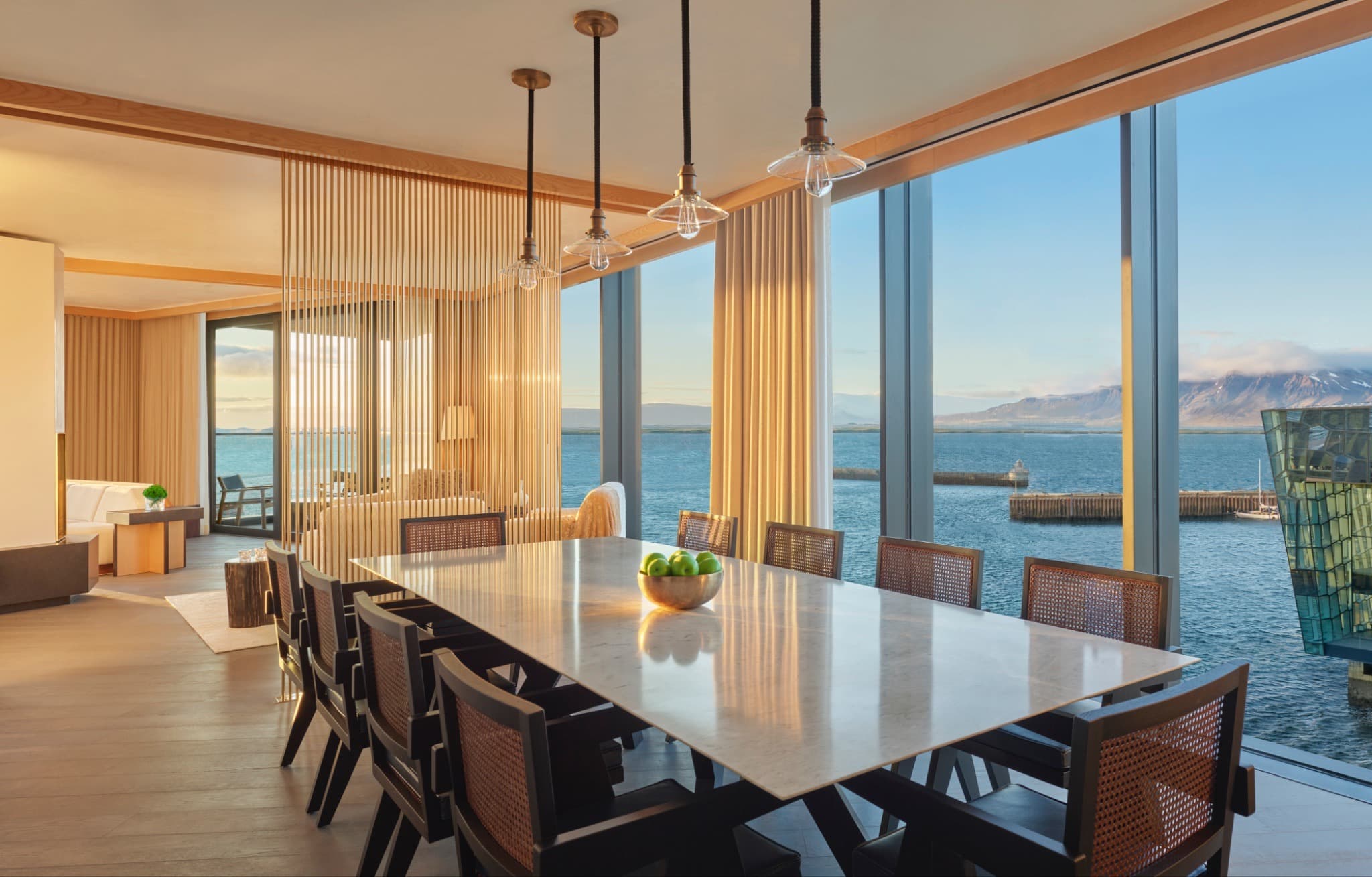 The Penthouse at The Reykjavík EDITION. Photo: Nikolas Koenig.
101 Hotel: “If my friends were coming to Reykjavík, I would absolutely recommend staying at 101 Hotel,” Steinunn says. “It is right in the center of town and, for me, in every sense of the word, just perfect. You are in the middle of everything, and so much of Reykjavík can be experienced simply by walking.”
Opened in 2003, 101 Hotel occupies a former 1930s office building on Hverfisgata, with Icelandic art throughout and interiors by owner Ingibjörg S. Pálmadóttir. It suits Steinunn’s version of the city: a morning swim, museums, galleries, the harbor and dinner, all folded into the same day.
Hotel Borg: For a hotel with more history, there is Hotel Borg. Dating to 1930 and overlooking Austurvöllur Square, Hotel Borg has 99 rooms and suites with Art Deco interiors. Parliament and Reykjavík Cathedral are just across the square, making it an easy base for exploring the old center on foot. Downstairs, Borg Spa offers hot tubs, steam baths and a menu of massages and treatments.
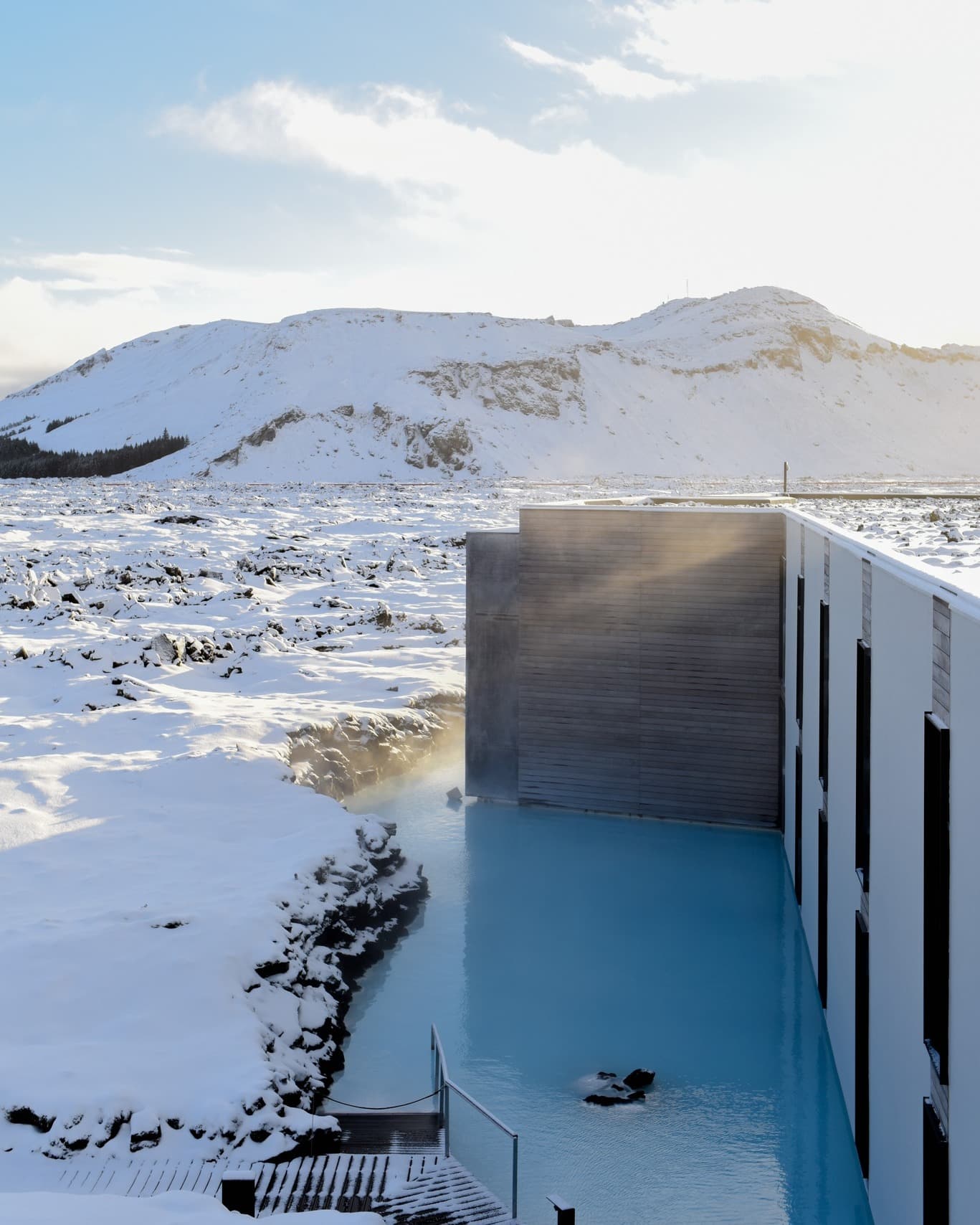
The Retreat at Blue Lagoon: For the version of Iceland most travelers have pictured before they arrive, there is The Retreat at Blue Lagoon, just outside the city. The 60-suite hotel sits within a landscape of moss-covered lava fields and mineral-rich geothermal water, with floor-to-ceiling windows bringing the surroundings into the rooms and select suites opening onto their own private lagoons.
The subterranean Retreat Spa has its own lagoon and the Blue Lagoon Ritual, centered on silica, algae, and minerals. For dinner, book Michelin-starred Moss, where chef Aggi Sverrisson works seasonal Icelandic ingredients and Asian flavors into a tasting menu. It is worth experiencing Blue Lagoon as an overnight destination rather than simply a day trip.
Where to Swim and Unwind
In Reykjavík, the neighborhood pool is as much a social meeting place as somewhere to swim. For Saga, who spent seven years in London, the everyday ability to swim or use a sauna was what she missed most. Her advice is emphatic: “You MUST bring your swimsuit.”
Sundhöllin: Steinunn recommends Sundhöllin for a local start. With indoor and outdoor swimming pools, hot tubs, a sauna and a steam bath, it offers plenty of reasons to linger beyond a few laps. “Swimming pools are such an important part of Icelandic life,” she says. “I think spending time there gives visitors a glimpse into everyday Icelandic life that they might otherwise miss.”
Árbæjarlaug and Breiðholtslaug: “I would send them to the local pools, especially the ones in suburbia,” Hildur says, recommending Árbæjarlaug and Breiðholtslaug. Both offer more than swimming lanes. Árbæjarlaug has an outdoor pool, hot tubs, children’s pools and water slides; Breiðholtslaug combines indoor and outdoor pools with hot tubs, a cold tub, sauna, steam room and slides. They are particularly good options for families, with space for children to play while adults soak.
Sky Lagoon: Saga recommends Sky Lagoon for a geothermal experience close to the city. Its oceanfront setting is part of the appeal, while the seven-step Skjól Ritual moves through contrasting temperatures and treatments, including a cold plunge, ocean-view sauna, cooling mist, body scrub and steam room. The emphasis is on moving slowly between heat, cold and water rather than swimming laps.
Hvammsvík: At Hvammsvík in Hvalfjörður, eight geothermal pools follow the shoreline, with different temperatures and some changing in depth and warmth with the tide. Visitors move between the baths with the fjord immediately beside them, giving the experience a wilder quality than the more structured geothermal lagoons closer to Reykjavík. “It’s a unique experience, and they have a great restaurant,” Saga says.
“After swimming and being in the cold winds, it’s a must to moisturize,” Saga says. Her recommendations start with Blue Lagoon’s mineral mask and lip balm and Bioeffect’s Hydration Cream. She also recommends products from Angan and Sóley, the body oil from SwimSlow, and Hvammsvík’s shampoo and conditioner. SwimSlow’s downtown space at Aðalstræti 9 brings its swimwear and wellness products together in a concept store and wellness studio. “It’s incredible how many amazing skin products are being produced here,” she says.
Where to Shop
STEiNUNN: At Steinunn’s store in Grandi, the clothes reflect her relationship with Iceland’s landscape. Knitwear is central to the label, and snow in its many forms, from newly fallen to wind-shaped and frostbitten, is a recurring source of inspiration. “These experiences have become part of my visual language,” she says. “Iceland is not simply the place where I live. The landscape, the light, the weather and its extraordinary contrasts have shaped the way I see the world and, inevitably, the way I create.”
Hildur Yeoman: At Hildur Yeoman’s store, the clothes are sold downstairs and much of the making happens directly above, from the prints and patterns to the jewelry. “We have womenswear for all ages,” she says. “We make our own prints, patterns and handmade jewellery in our studio above the store.”
Saga also counts Yeoman among her shopping recommendations, alongside designer Anita Hirlekar.
Farmers Market: Hildur recommends Farmers Market for Icelandic knitwear, and Steinunn also takes visiting friends here. Founded in 2005, the label draws on Nordic heritage and Icelandic country life across knitwear, outerwear and accessories. Its Grandi store makes a natural addition to an afternoon exploring the old harbor.
As We Grow: Hildur’s other knitwear recommendation is As We Grow. The Icelandic label makes clothing for children and adults with an emphasis on longevity, including children’s pieces designed with room to grow.
Kormákur & Skjöldur: For menswear, Hildur points visitors & Skjöldur. The Reykjavík shop spans suits, shirts, blazers and outerwear, while its Icelandic Tweed collection uses cloth woven entirely from Icelandic wool.
Hildur also recommends Feldur for jackets and accessories, while Saga adds 66°North for Icelandic outerwear.
Fischersund: Saga considers Fischersund essential. Founded by siblings including Sigur Rós musician Jónsi, the family-run perfumery and art collective combines fragrance, music, visual art and storytelling in its downtown shop. Visitors can also book a guided scent experience.
Grandi and Downtown: Grandi, around the old harbor, rewards an afternoon without too rigid an itinerary. Steinunn’s store sits among independent designers, makers and small businesses; she also sends friends to KIOSK and Sóley for Icelandic skin care. “It has the sea, the old harbor buildings, small shops, artists, designers and people making things with their hands,” she says. “There is a wonderful sense of creativity and independence there.”
For more browsing downtown, Saga recommends Stefánsbúð and Andrá for fashion, and OFFICINA and Mikado for design.
Where to Eat and Drink
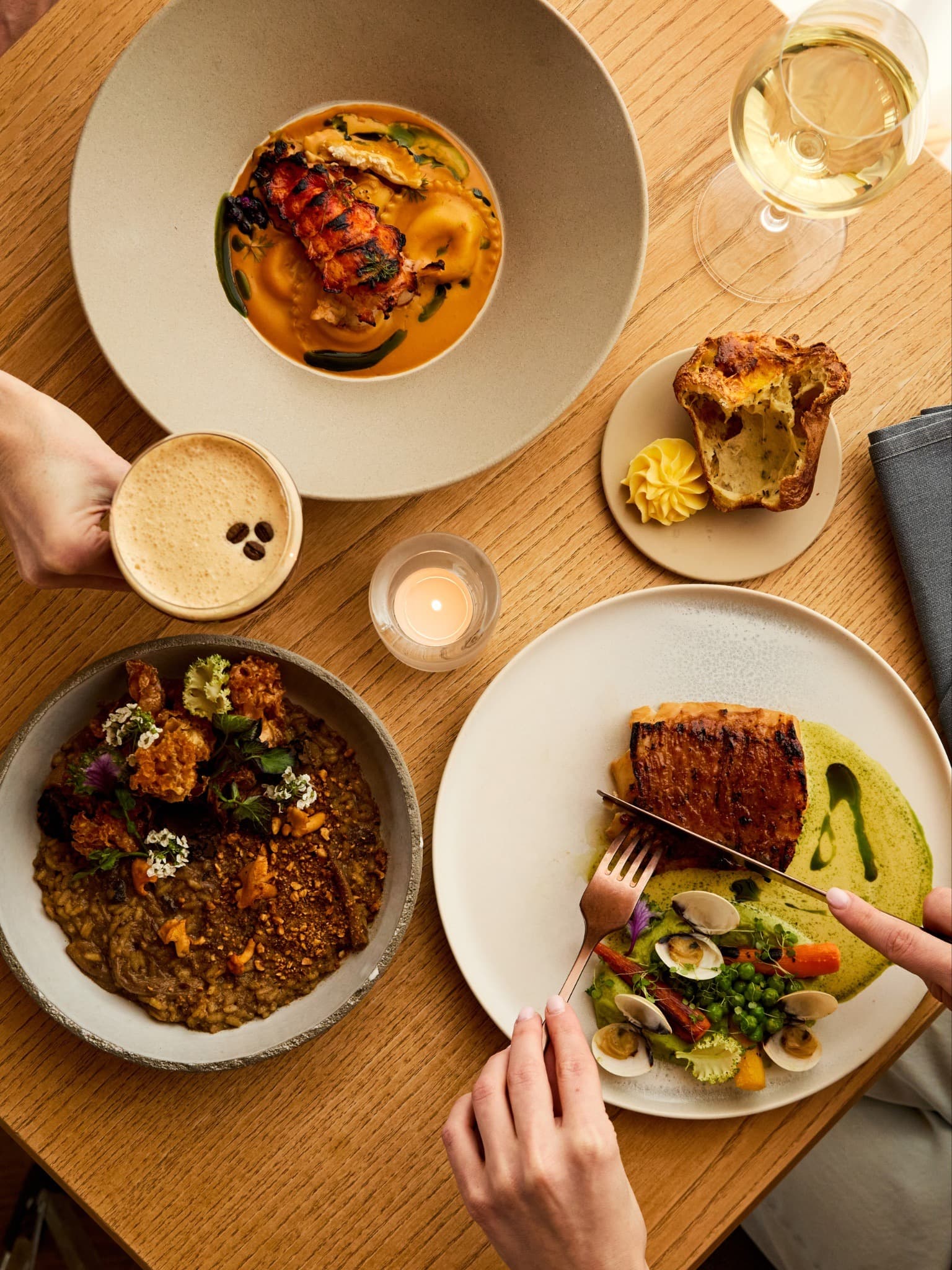 Dinner at TIDES, The Reykjavík EDITION. Photo: The Reykjavík EDITION.
Hósiló: Hósiló comes up repeatedly among the recommendations, and Hildur calls it her favorite restaurant. “The menu changes every week,” Hildur says. “I would recommend trying out as many courses as your table can handle. Everything tastes amazing. They also make mean cocktails.” Saga independently recommends Hósiló for a Friday night. If dinner leads to dancing, Hildur recommends Röntgen “to dance through the night.”
Sumac Saga recommends Sumac, where Icelandic ingredients meet Middle Eastern flavors, with influences stretching from North Africa to Lebanon. Its sharing menus are built around meze, making it a good choice for a table that wants to order widely.
SKÁL: Another of Saga’s favorites, SKÁL focuses on Icelandic produce alongside natural wines, craft cocktails, Icelandic beers, and house-brewed sparkling teas. After beginning life in a food hall, it moved into its own restaurant on Njálsgata in 2024.
Dill: For a special-occasion dinner, Saga points visitors towardDill. The restaurant’s tasting-menu format puts Icelandic ingredients and culinary traditions at the center, with optional wine and non-alcoholic beverage pairings. This is one to book ahead and plan the evening around.
ÓX: Saga also recommendsÓX for a special occasion. The evening begins in a retro cocktail bar inspired by chef Þráinn Freyr Vigfússon’s grandmother’s living room before guests move to an intimate 17-seat kitchen counter. Allow around four hours for the experience and book well ahead.
La Primavera: At Marshall House in Grandi, Hildur sends friends to La Primavera, which she calls “the best Italian in town.” The restaurant combines northern Italian cooking traditions with Icelandic ingredients, making it an easy place to move from an afternoon at the building’s galleries into dinner.
Fish Company: Grace recommends Fish Company for its seafood and inventive cooking. Its tasting menus take two different approaches: “Around Iceland” explores Icelandic cuisine, while “Around the World” brings international spices and herbs to local fish.
Kaffi Vest: Steinunn frequently returns to Kaffi Vest, whose slightly worn, lived-in character reminds her of The Odeon in New York. “I love places like that, where you feel that you are part of the neighborhood rather than simply a visitor,” she says. Saga also recommends it for coffee and a distinctly Reykjavík atmosphere.
Kjarvalsstaðir: For brunch, Steinunn chooses the café at Kjarvalsstaðir, the Reykjavík Art Museum venue in Klambratún Park. The museum is dedicated in part to the work of Icelandic painter Jóhannes S. Kjarval, alongside changing exhibitions of Icelandic and international art. “For me, they have the best brunch in town,” she says. “I love sitting there by the windows, looking out at the surroundings.”
Where to Wander
i8 Gallery: Steinunn regularly visitsi8 Gallery, a contemporary gallery founded in 1995 whose artists work across sculpture, painting, drawing, textiles, video and installation. Its main space is near the harbor, while i8 Grandi occupies two floors of Marshall House and focuses on year-long, single-artist exhibitions. “The Icelandic art scene is really blooming at the moment, and I find myself not wanting to miss a single exhibition,” she says.
BERG Contemporary: BERG Contemporary is another of Steinunn’s regular stops. Set in a former glass factory, the gallery presents emerging and established artists through a changing contemporary program, so it is worth checking what is showing before visiting.
Reykjavík’s Museums" Steinunn also regularly visits Reykjavík Art Museum and the National Gallery of Iceland. The National Gallery spans Icelandic art history and contemporary work, while Reykjavík Art Museum’s Kjarvalsstaðir venue combines exhibitions with her favorite brunch. For a broader introduction to the country’s history, she recommends the National Museum of Iceland.
Marshall House: Hildur’s primary cultural address is Marshall House in Grandi, a former fish factory now home to contemporary art spaces including the Living Art Museum, Kling & Bang and i8 Grandi, with La Primavera downstairs. It is an easy anchor for an afternoon around the old harbor.
Sigurjón Ólafsson Museum: For something less expected, Steinunn sends friends along the coastline toward the Sigurjón Ólafsson Museum in Laugarnes. Dedicated to the Icelandic sculptor, the museum occupies his former studio and displays sculptures, sketches and drawings. “The walk itself is part of the experience,” she says. “You have the sea beside you and beautiful, ever-changing views of the Reykjavík coastline. And then you arrive at the museum, where you can spend time with the sculptures and afterwards sit by the window with a really good cup of coffee, looking out over the sea. Who wouldn’t want that?”
Viðey: Hildur’s recommendation for an escape is Viðey, reached by ferry from Reykjavík. “It’s such a beautiful place to have a walk in nature, to collect gems or seashells or flowers and to find a great spot for a picnic,” she says.
Beyond Downtown: Back in the city, Steinunn recommends Þingholt for its old houses, quiet streets and Einar Jónsson Sculpture Garden. Laugardalur is her choice for the Botanical Gardens, while Elliðárdalur has a river running through the valley and can feel unexpectedly removed from the surrounding city.
Her advice for visitors is simple. “Wander a little further,” Steinunn says. “Take a different road. Follow your curiosity and see where it takes you. Those are often the places that stay with you, the unexpected discoveries, the quiet moments and the little encounters that become the memories you take home with you.”