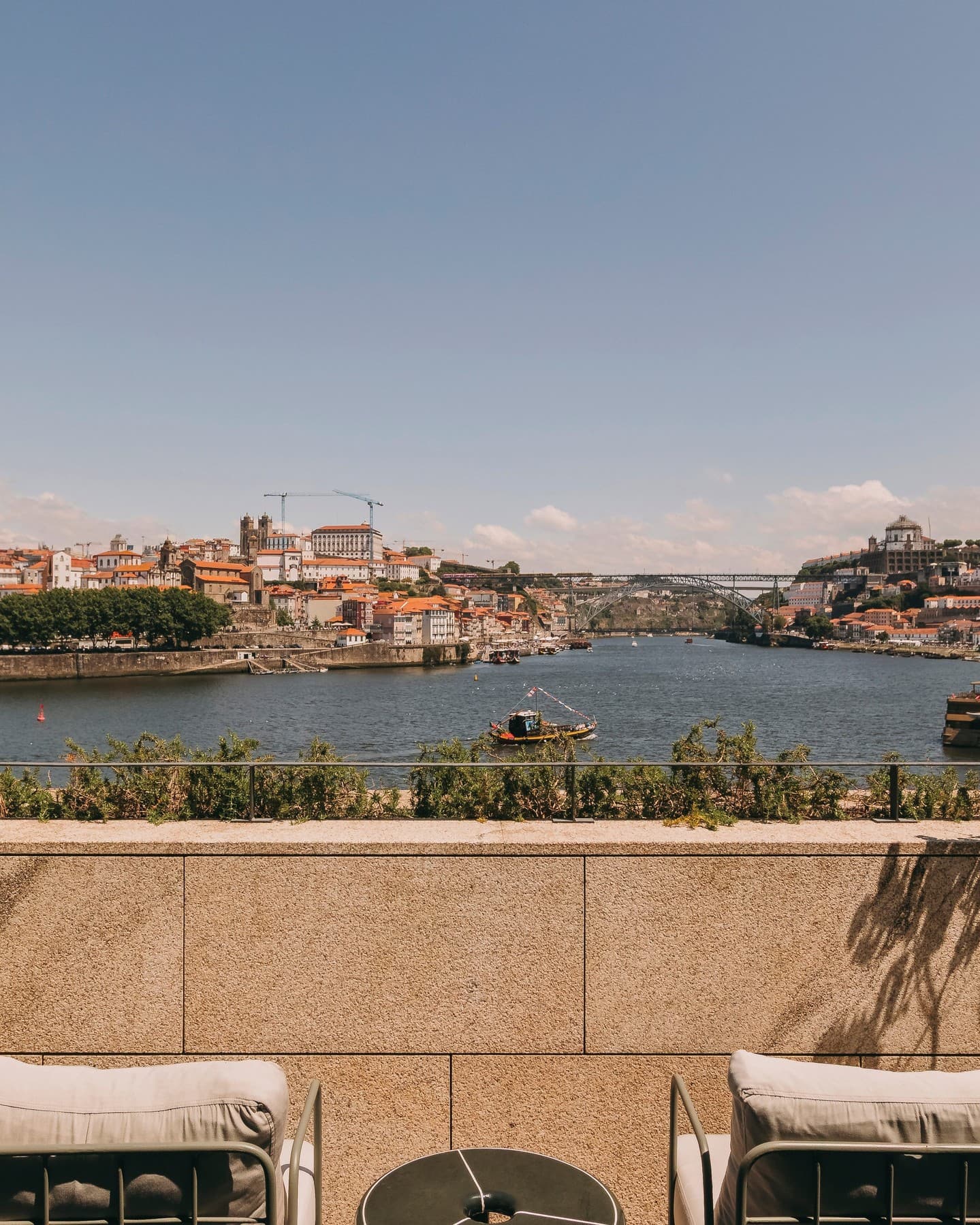
“Porto has this incredible aura,” says Élio Nogueira, the Porto-based fashion photographer who has worked with the likes of Alessandra Ambrosio and Liv Tyler. “From the old buildings and the tiles to the amount of art you find everywhere. There’s something very raw and authentic about it.”
That character extends throughout its creative community. Photographers, designers, artists, and musicians work within a city compact enough that their worlds regularly overlap. “The city center is quite small, so everything feels very close and connected,” Nogueira says. “You can walk around and easily come across photographers, designers, artists, musicians, and people from different creative fields.”
Fashion photographer and director Frederico Martins, who opened his Porto studio in 2008 and has built an international fashion career, describes a growing confidence in Porto that has attracted the fashion scene. “Porto has always had a strong creative identity, but I feel there is much more confidence in the city now,” he says. “There is a new generation of photographers, designers, artists, filmmakers and independent creative projects that are creating their own language rather than looking to Lisbon or elsewhere for validation.”
For fashion, in particular, Northern Portugal has been an important center for textiles, clothing and footwear, with factories producing for international brands alongside the country’s own designers. “There’s a huge textile industry here in the North that I think a lot of people outside Portugal don’t realize,” Nogueira says. “A lot of international brands, including big luxury names, produce here.”
The combination of fashion innovation and beauty of the city has the fashion scene ranking Porto high atop their list of must-visit destinations. Ahead, we tapped a few locals for their recommendations when visiting the city.
Where to Stay
Torel Palace Porto: For a more intimate city base, Torel Palace Porto occupies a 19th-century mansion on Rua de Entreparedes, with rooms and suites individually dedicated to Portuguese writers and poets. The literary theme continues at Michelin-starred Blind, named for José Saramago’s Blindness.
The Editory Boulevard Aliados: The Editory Boulevard Aliados is the more theatrical central option. On Avenida dos Aliados, its interiors have a cinematic, maximalist quality, with black-and-white chevron flooring, oversized sculptural pieces, rich color and surreal details. Design studio Ding Dong’s playful approach continues in Bar Ilícito, where circus-themed murals by Porto artist Sofia Torres give the room its own personality.
The Yeatman: Across the Douro in Vila Nova de Gaia, The Yeatman puts wine at the center of the stay, surrounded by the historic port lodges and with Porto spread out across the river below. There is a wine-focused spa, indoor and outdoor pools and a two-Michelin-star restaurant, but the defining feature is still the view.
The Rebello: On the Gaia waterfront, The Rebello occupies converted 19th-century industrial buildings, including a former cookware factory. Historic stonework frames contemporary, loft-style accommodation, while interiors draw on the surrounding water, wine, wood and industry. A rooftop bar looks across the Douro toward Porto, and the Roman-bath-inspired spa has a heated pool, sauna and treatment rooms.
Experimental Porto: Scheduled to open in December 2026, Experimental Porto will transform the historic Infante Sagres under the Paris-based Experimental Group. Interior architect Dorothée Meilichzon is reworking its 85 bedrooms, with Porto outposts of Experimental Cocktail Club and La Compagnie wine bar also planned. The combination of a historic hotel, a distinctive designer and two new drinking addresses makes this one to watch for a future visit.
Where to Eat and Drink
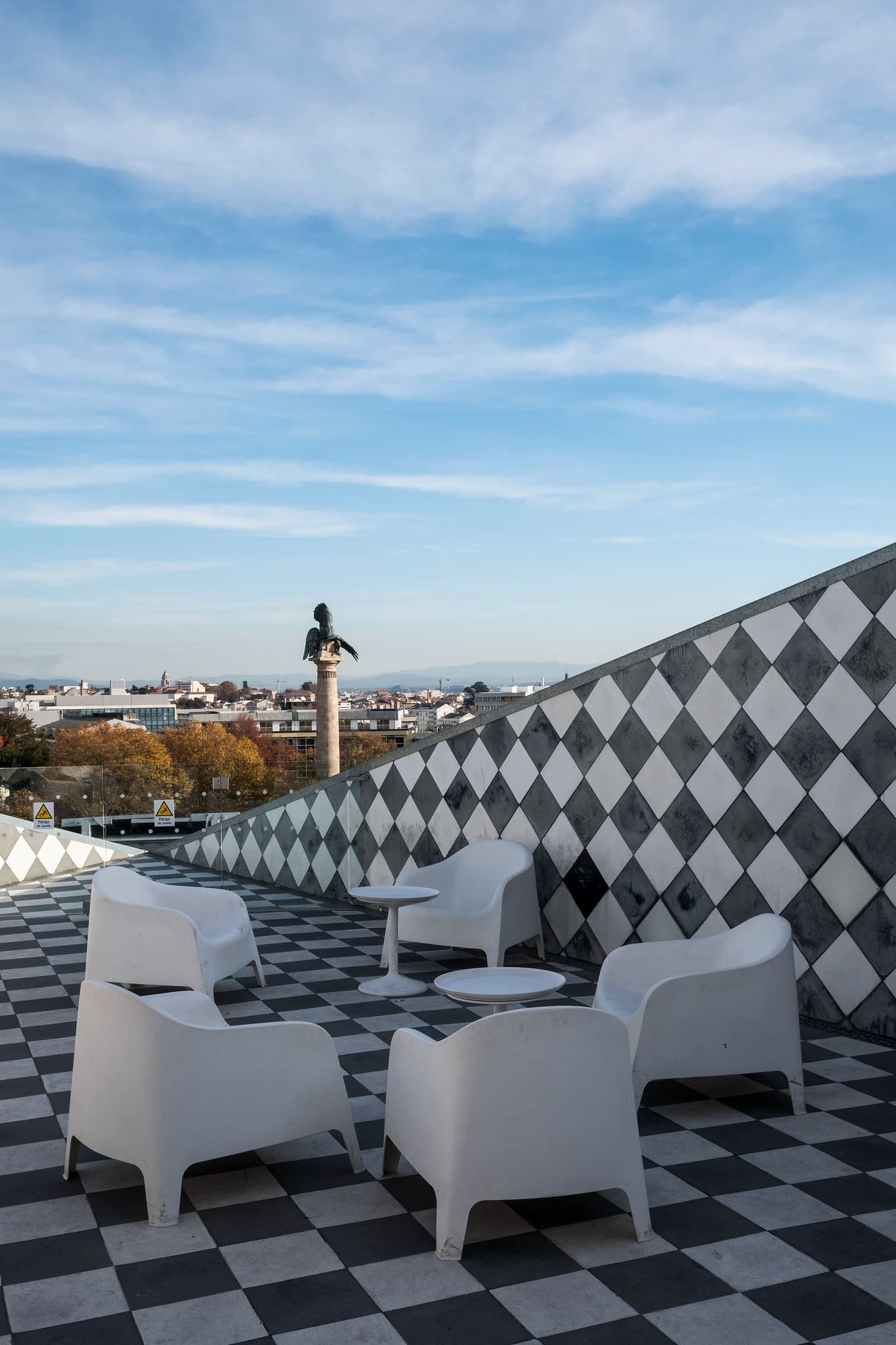 The restaurant at Casa da Musica. Photo: Porto Convention & Visitors Bureau.
Fiasco: For a drink in Bonfim, Martins points to Fiasco, where a cocktail bar, record shop and gallery share the same address. Vinyl is played and sold, with exhibitions adding another reason to linger. For Martins, it is somewhere to slow down and talk rather than structure an evening around a scene.
Café Candelabro and Café Galeria de Paris: Nogueira returns to Café Candelabro and Café Galeria de Paris for coffee or a drink. Candelabro occupies a former secondhand bookshop, retaining black-and-white mosaic floors and shelves of books on photography, cinema and the arts that visitors can browse or buy. Galeria de Paris offers a different kind of visual abundance, with vintage objects and memorabilia filling its walls and shelves. “They’re places where I can just sit, have a coffee or a drink and take in the city,” he says.
Porto’s New Michelin Stars: Michelin’s 2026 Portugal guide awarded first stars to four Porto restaurants: DOP, Éon, Gastro by Elemento and In Diferente. Éon occupies the art-filled Palacete Severo, while Gastro by Elemento centers its cooking on fire and a wood-burning oven, two distinct settings to consider when planning a more ambitious dinner.
Where to See Art and Shop
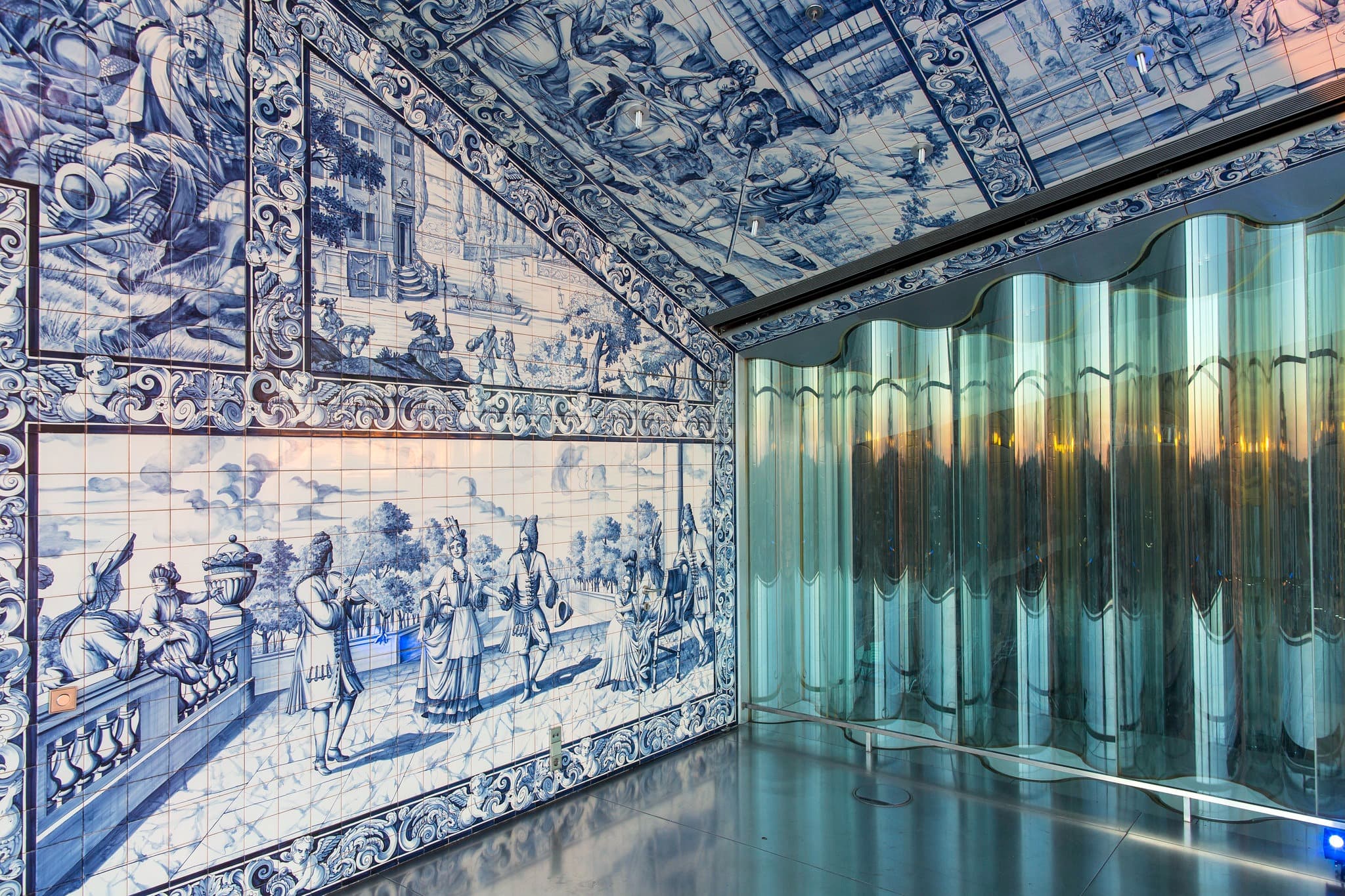 Casa da Musica. Photo: Porto Convention & Visitors Bureau.
Casa da Música: Designed by Rem Koolhaas’s OMA, Casa da Música is one of Porto’s defining contemporary buildings and a worthwhile stop for the architecture alone, even if you’re not catching a performance.
Serralves: For art at a larger scale, there is Serralves, where Álvaro Siza’s contemporary art museum sits within an 18-hectare park encompassing gardens, woodland and a traditional farm. Sculptures extend into the grounds, making this as much an architectural and landscape stop as a museum visit. Nogueira considers it one of Porto’s essentials, whether for an exhibition or a long afternoon outside.
Miguel Bombarda: For gallery-hopping, Martins gravitates toward Miguel Bombarda, where independent galleries and creative projects cluster west of the historic center. It is less about one institution than spending an afternoon moving between spaces and seeing what is on. “I tend to prefer places that have a strong sense of character rather than necessarily being fashionable,” he says. “I often find myself around Miguel Bombarda, particularly because of the galleries and the way the whole area brings together art, design and independent projects.”
PLATO: Among Porto’s newer independent art spaces, Martins singles out PLATO, which opened on Rua de Brito Capelo in 2025. Founded by Diogo Ramalho, the gallery focuses on emerging artists and combines commercial exhibitions with more experimental programming, including a project space devoted to a single work by an artist from Porto or based in the city. "There is a sense of experimentation happening outside the more established institutions,” Martins says.
Nieuwes: For vintage shopping, Nogueira sends visitors to Nieuwes, a small city-center shop run by an older couple. It is the personal character of the place, as much as the shopping, that draws him back. “I love places like that,” he says. “They have so much character and feel very personal rather than a typical commercial store.”
Where to Wander
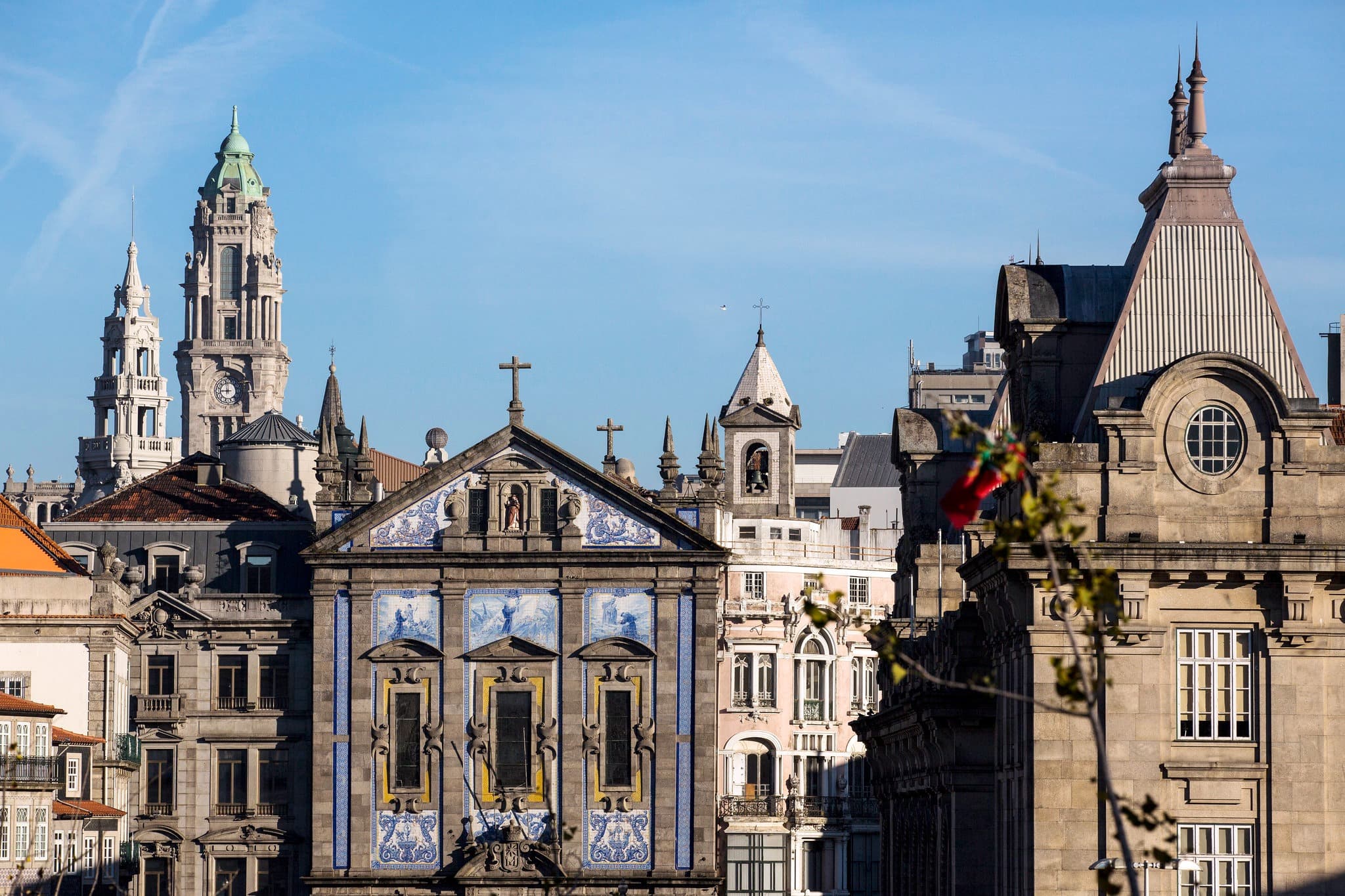 Porto City. Photo: Porto Convention & Visitors Bureau.
Bonfim: Martins’s advice to visiting creative people is direct: do not spend the entire day in the historic center. “I would send them toward Bonfim, and then let them walk,” he says. “It’s full of cute coffee shops and restaurants. There is a different energy there, the old industrial buildings, workshops, residential streets, new creative spaces appearing alongside very traditional neighborhoods.”
The Douro Riverfront: Nogueira recommends something requiring no ticket at all: sitting near the Dom Luís I Bridge and looking across the Douro at the houses climbing the opposite bank. Martins knows that perspective especially well. His previous studio was on the southern bank in Vila Nova de Gaia. “The view back toward Porto is something I never really get tired of,” he says. “The changing light over the river is probably one of the things that has influenced my work the most.”
Foz and Matosinhos: Martins encourages visitors to head toward the Atlantic and spend time in Foz and Matosinhos. In Foz, seafront promenades and beaches offer a change of pace from the historic center’s steep streets. Farther north, Matosinhos adds a working fishing port and restaurants known for simply prepared grilled fish, a reason to build lunch into the coastal excursion.
“For me, Porto is interesting because of the contrast between its beauty and its roughness,” he says. “It is a city with incredible architecture and history, but also with industrial areas, working-class neighborhoods, contemporary culture and a very strong connection to the Atlantic.”
Beyond Porto: The Douro Valley
Porto is the natural gateway to the Douro Valley, but what is changing there is not the wine. The region has been serious about that for centuries. It is the architecture, hospitality and way people are now staying there that feels newly considered.
The journey east shifts the register quickly. Tiled streets give way to terraced slopes, river bends and working vineyards. Estates are spread out and visits often require planning, so the most satisfying itinerary is usually a light one: a winery, a long lunch and enough time to take the slower road back.
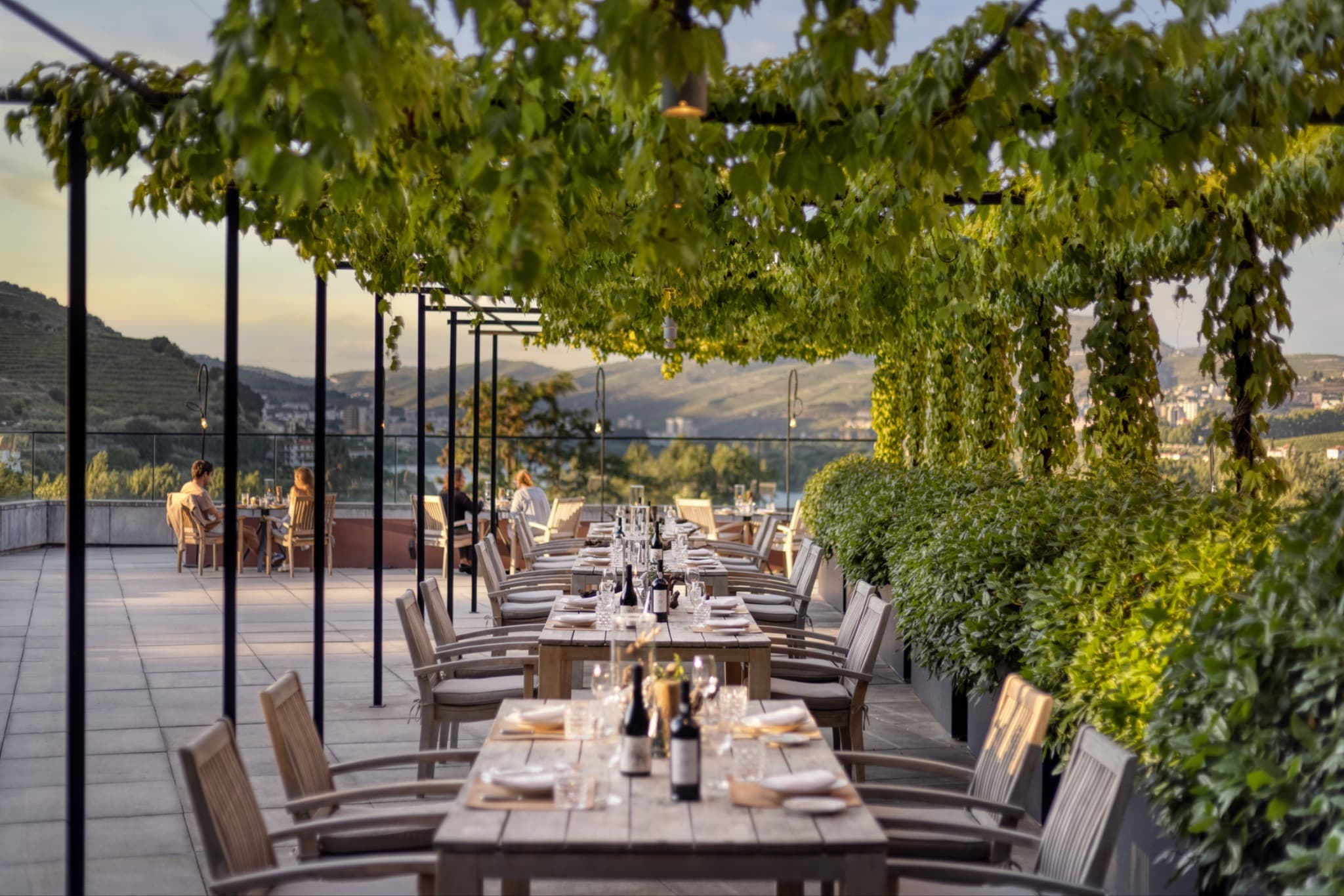 Wine library at Six Senses Douro Valley. Photo: Six Senses.
Six Senses Douro Valley: Six Senses Douro Valley, on the Quinta de Vale Abraão estate near Lamego, is the established luxury anchor. Set around a 19th-century manor overlooking the river, the resort combines the wine-country setting with a substantial spa, wine library, regional food and vineyard experiences. It makes a convincing base for experiencing the Douro as somewhere to stay rather than simply somewhere to taste.
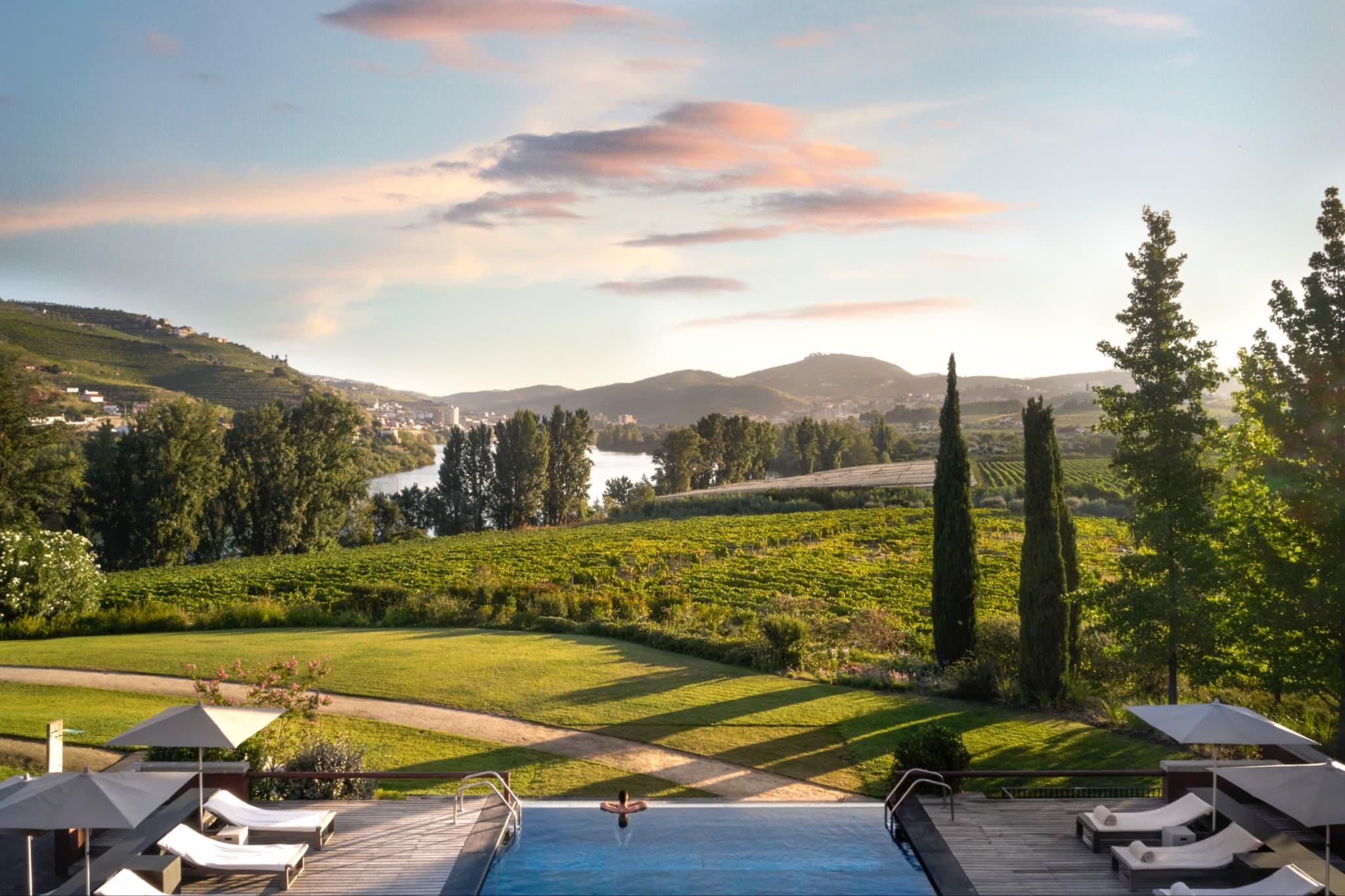 Outside pool at Six Senses Douro Valley. Photo supplied by Six Senses.
Quinta da Côrte: Quinta da Côrte, near Pinhão, offers a smaller, more design-driven counterpoint. French winegrower Philippe Austruy brought in Paris-based architect and interior designer Pierre Yovanovitch to reimagine the historic estate, which has just eight guest rooms alongside its winery. Terracotta floors, hand-painted tiles, antiques, bespoke furniture and contemporary art give the interiors the feeling of a private house rather than a conventional wine hotel.
Quinta do Vallado: Quinta do Vallado, near Peso da Régua, approaches the wine-estate stay differently. Founded in 1716, it combines its historic house with a schist-clad contemporary building by architect Francisco Vieira de Campos, who also led the winery renovation. The material connects the newer architecture directly to the landscape around it.
The connection between Porto and the Douro is more than geographical. Fashion, wine and architecture here share a reliance on people who know how to make things, often using knowledge passed across generations and materials particular to the landscape.