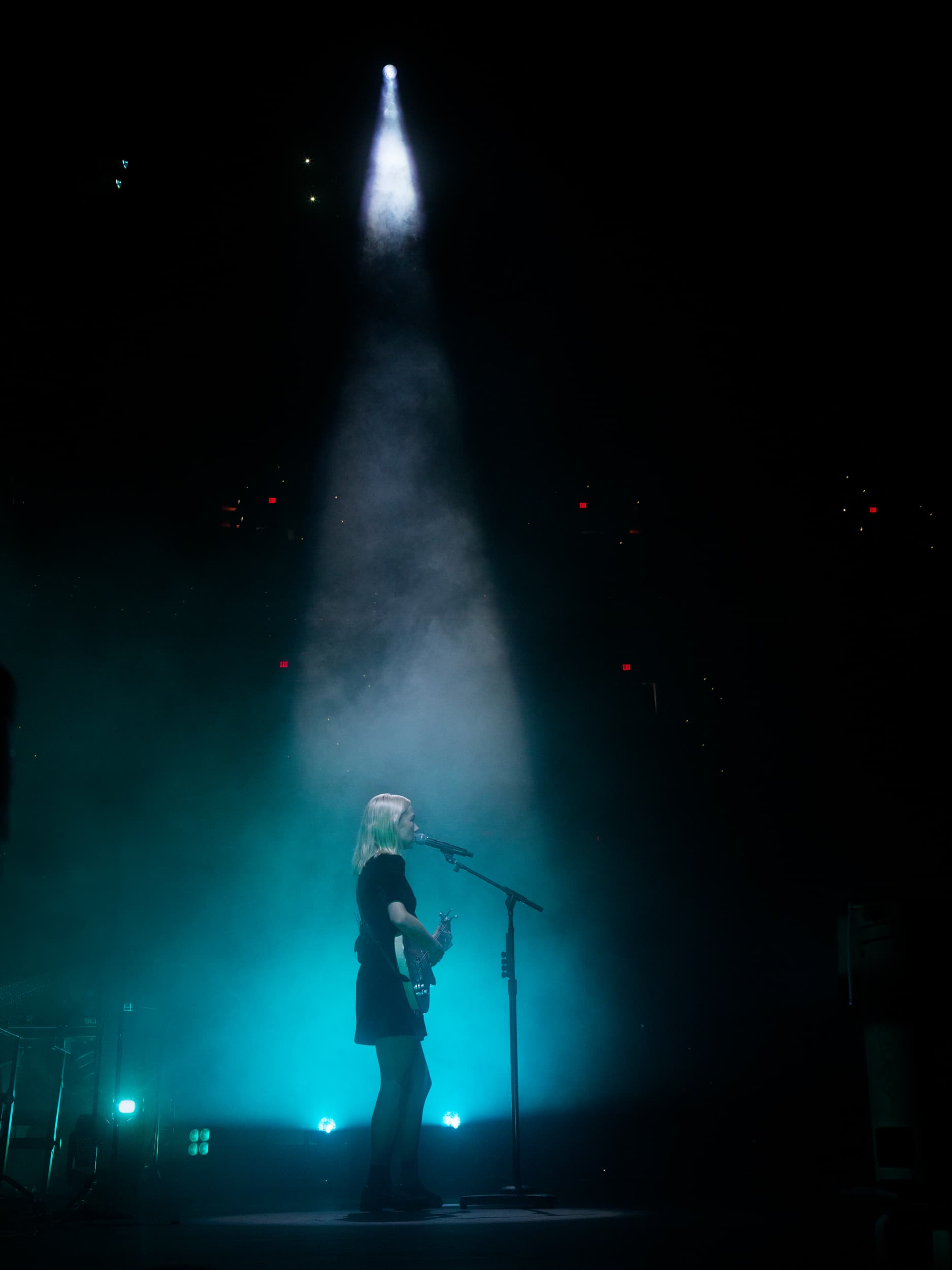
It is somewhat impossible to have a collective phoneless experience in 2026. As a freshly 30-year-old person, I have the luxury of being able to recall a time before they reached critical mass. Many of the people surrounding me on Thursday night were younger and presumably hard-pressed to remember such a thing at all. “She wants the phones completely off—she doesn’t want any light coming from the pouches,” an attendant outside of Barclays Center informed us, gesturing towards a bin of gray cushion-y rectangles that’d swallow up our devices for the foreseeable. The “she” in question was, of course, Phoebe Bridgers, and the occasion was the kickoff of The Lost Tour’s Brooklyn leg.
The Grammy-winning indie folk artist broke the news of her phone-free world tour back in June, with a succinct social post that immediately sparked a thousand conversations. In an era when I can pull up TikTok and watch virtually any performance from any artist without paying a cent, I was curious what it would feel like to enter a show that existed exclusively for the people in the room—a moment in time we’d have no choice but to experience together and, eventually, commit to memory, for it’d otherwise be lost. (Fitting, given the tour’s name.) Would taking away our little pocket computers materially change the experience? I handed over my phone and went inside to find out.
 On the left, my first observations upon sitting down in the arena. On the right, my rendering of the stage pre-show — plus a little note on the crowd’s pastime of choice.
On that hazy September evening, throngs of fans turned out in their Bridgersian best—some old (skeleton suits), some new (glitter tears). Those in the latter camp were an especially quick study from a set of behind-the-scenes images Bridgers posted after the tour’s first week, which revealed sparkly, glow-in-the-dark sobs below both of her eyes.
The floor itself was split into two halves: “Above GA” and “Below GA,” nodding to the album’s lyrics. After opener Alex G finished his set came an indeterminate stretch of time before Bridgers would take the stage—and, without phones, an unusual opportunity to deeply take in the room. (In my case, I had my moleskine and a pen handy to help me memorialize it all for the purposes of this story.) Showgoers studied the choices around them instead. What is that on stage? A planetarium? Do we think those curtains will open to some insane stage design? Is that a second stage in the middle of the room? People even—wait for it!—started talking to strangers around them. Chatter wafted from songs everyone was hoping to hear to rumors that Bridgers’ boygenius bandmates Lucy Dacus and Julien Baker might take the stage, after appearing on a kiss cam in this very venue the night prior. Guests at the rear even kicked off a shrieky, crowd-wide wave that circled the arena six or seven times. Then, the lights went down.
“CRYING IN A SUIT AND TIE—” Above the center stage, a giant nestlike sphere descended from the ceiling, turquoise lightbeams pulsing out with every vocoder-filtered syllable. “/ BUT YOU SHOULD SEE THE OTHER GUY.” Screams abounded. The giant half-sphere at the fore of the room lifted, trailing the vocoder’s own fade-out, revealing Bridgers and her band as the chorus of “The Outside” lilted
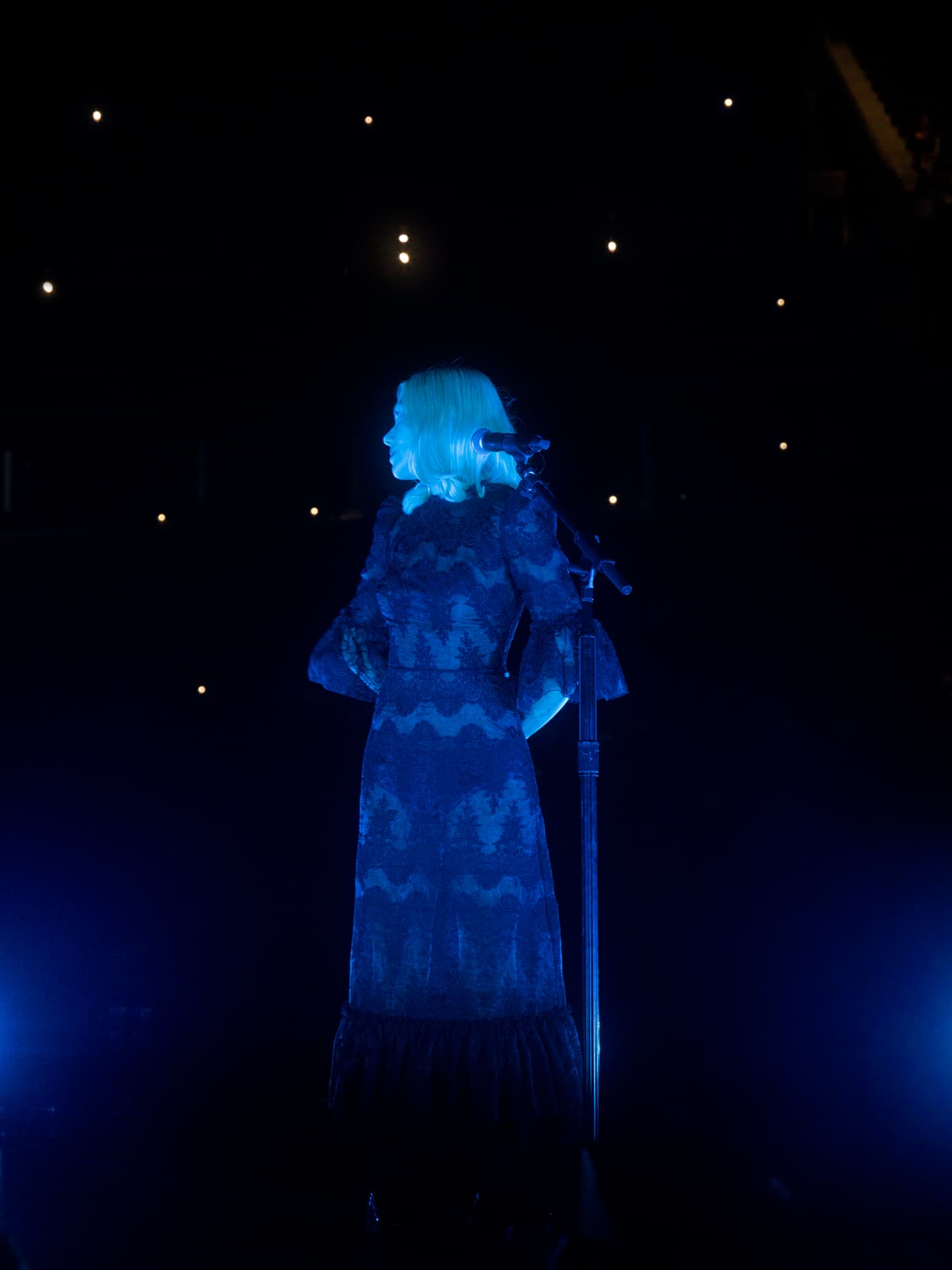 Photo: Matt Grubb
With poet sleeves and pronounced shoulders, glittering tears and Grace Kelly-worthy waves, Bridgers looked Victorian widow meets space alien meets old-Hollywood starlet. The first was no coincidence: her dress, redolent of 19th-century mourning gowns, was a custom creation from Susie Cave Weddings and Funerals. (Launching earlier this year, the label is Cave’s first since The Vampire’s Wife abruptly shuttered in 2024.)
 On the left, the working setlist. I ultimately gave up on chronicling the song order after boygenius came out. By then, all bets were off. On the right, Phoebe’s likeness projected onto curtains onstage during “Kill Me.” Her hair was glowing turquoise.
Bridgers’ third studio album is practically designed to be pictured in the mind’s eye. Its musicality often stretches well beyond its lyrics, leaving long instrumental passages and strange sonic detours for the imagination to furnish. Even listening through AirPods, one is left to wonder what kind of zany chaos Bridgers envisioned while composing each track. Here, there was no need to wonder. Those openings became opportunities that dazzled.
“The Governor’s Waltz” leaned literal on Bridgers’ state of wonder about the universe: Jupiter glowed under the hood of the half-sphere, framed by a solar system of celestial bodies—saturn, the Milky Way, stars, and limitless darkness. Technicolor blues, oranges, and reds washed over the stage. Looking toward the sky while she sings is a classic Phoebeism; here, under a glowing planetarium of her own making, it especially made sense. During “Moon Song,” a gigantic moon was projected on the underbelly of the dome from one single standalone beam of light at the back of the arena, cutting an entirely dark room into something of an old movie hall. Towards the final coda, the moon vibrated with every strum, receding farther and farther into the distance until it, by the song’s end, was completely gone. (Or should I say, lost?)
 My personal favorite. Is there a more brilliant lyric than “You’re holding me like water in your hands”?
Even the performance itself was screen-free—there were no LED video walls with Bridgers’ face flanking the stage. Instead, her likeness was projected onto long curtains. It was like watching a dream; like being inside of a movie filmed in the subconscious. (Bridgers herself is something of a cinephile herself, with filmic themes appearing across all three of her studio albums.)
The phone ban quickly began to make visual sense. Had there been thousands of phone screens interrupting that darkness, none of the mechanics of the lighting would have worked. Sometimes, throughout the show, the light hit Bridgers directly, bathing her in blue or amber; other times it backlit her completely, leaving her in silhouette with the edges of her hair and body glowing teal, red, or orange.
 Photo: Wes Ellis
For all the otherworldliness of the production, Bridgers herself remained hilariously earthbound. Her music can sound like it was produced by ghosts—hushed and haunted and faraway—while she is so insanely human and self-deprecating that it can be hard to believe the two come from the same person. Every once in a while, she’d drop from her airy soprano into her quintessentially low speaking register to deadpan a gruff “hello”—as if that were the most normal thing in the world to hear from a seemingly supernatural entity. The show was the perfect reminder of the fact that Phoebe Bridgers is a complete original in that way. She doesn’t borrow the usual artist-in-arena parlance (“HOW’S EVERYONE DOING TONIGHT?,” et al). When she messed up the chords opening one song, she muttered a quick “—fuck—” and simply started again.
 Photo: Wes Ellis
Halfway through the show, Bridgers, also in classic Bridgers form, treated the whole phoneless arrangement less like a grand artistic statement than an imposition she needed to thank everyone for tolerating. “I can’t tell you how much I appreciate that you put your phones away for this,” she confessed. “I had a shitty couple years. My dad died, and it was at a time where I was getting a lot more attention than I am used to,” she added, likely alluding to a period of heightened public interest in her personal, romantic, and familial life. “I developed this hatred in me. I worked through a lot of that on this album. To have it received so well is so personal and overwhelming. It makes it the opposite of bad,” she laughed. And then, almost immediately, came the most vulnerable performance I have ever seen.
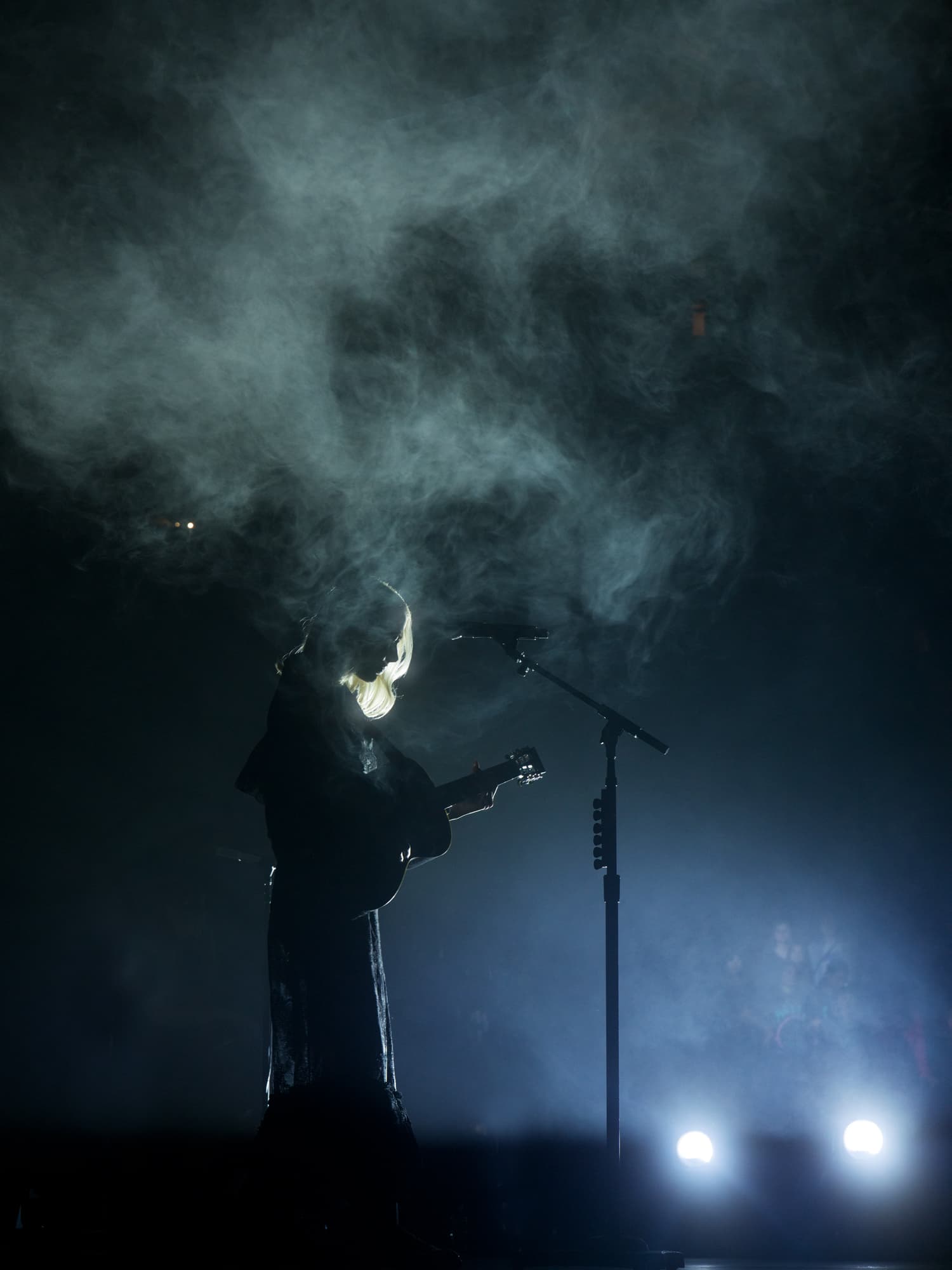 Photo: Matt Grub
 Photo: Yvan Nguyen
During “Still Standing,” a song that navigates themes of abuse, grief, and forgiveness, Bridgers performed solo with her acoustic guitar under a single spotlight from above, a glowing aquamarine ring encircling her feet. It looked as if she were being sucked up into a UFO. “You left your suitcase by the bed / like you needed to know you could go whenever you wanted.” The arena was completely still. Nobody was reaching above the person in front of them to capture the moment, watching Bridgers through a rectangle six inches from their face. Nobody was singing or speaking—not even a murmur. Everyone was transfixed. The crowd simply gave her the space to deliver something extraordinarily raw and painful, then let it disappear. She sang the final falsetto “ooh-ooh, ooh-ooh-ooh”s barely above a whisper.
 The stage design during “Still Standing” and “As Above.”
  Photo: Matt Grub
In that moment, it was clear to me that the phone policy wasn’t merely a gimmick or an attempt to engineer exclusivity. It created the conditions Bridgers needed to perform an album this personal night after night—and for the audience to actually receive it. It was the most courteous exchange I’d ever witnessed between an artist and an audience. Bridgers had decided exactly how much of herself she wanted to give us, and, for once, nobody was trying to take any more.
In that moment, I thought sadly of Yoko Ono’s Cut Piece, and the central question it poses: When an artist invites an audience to take something from them, why are we so compelled to take more than we were offered? For two hours, Bridgers allowed us in, but only as far as she wanted us to go. What she offered was the show, and the audience, remarkably, was more than content to leave with exactly that. It was an oddly hopeful reminder of what a fan community can afford an artist: the safety to be vulnerable, the privacy to remain a person, and the freedom to decide where the giving ends.
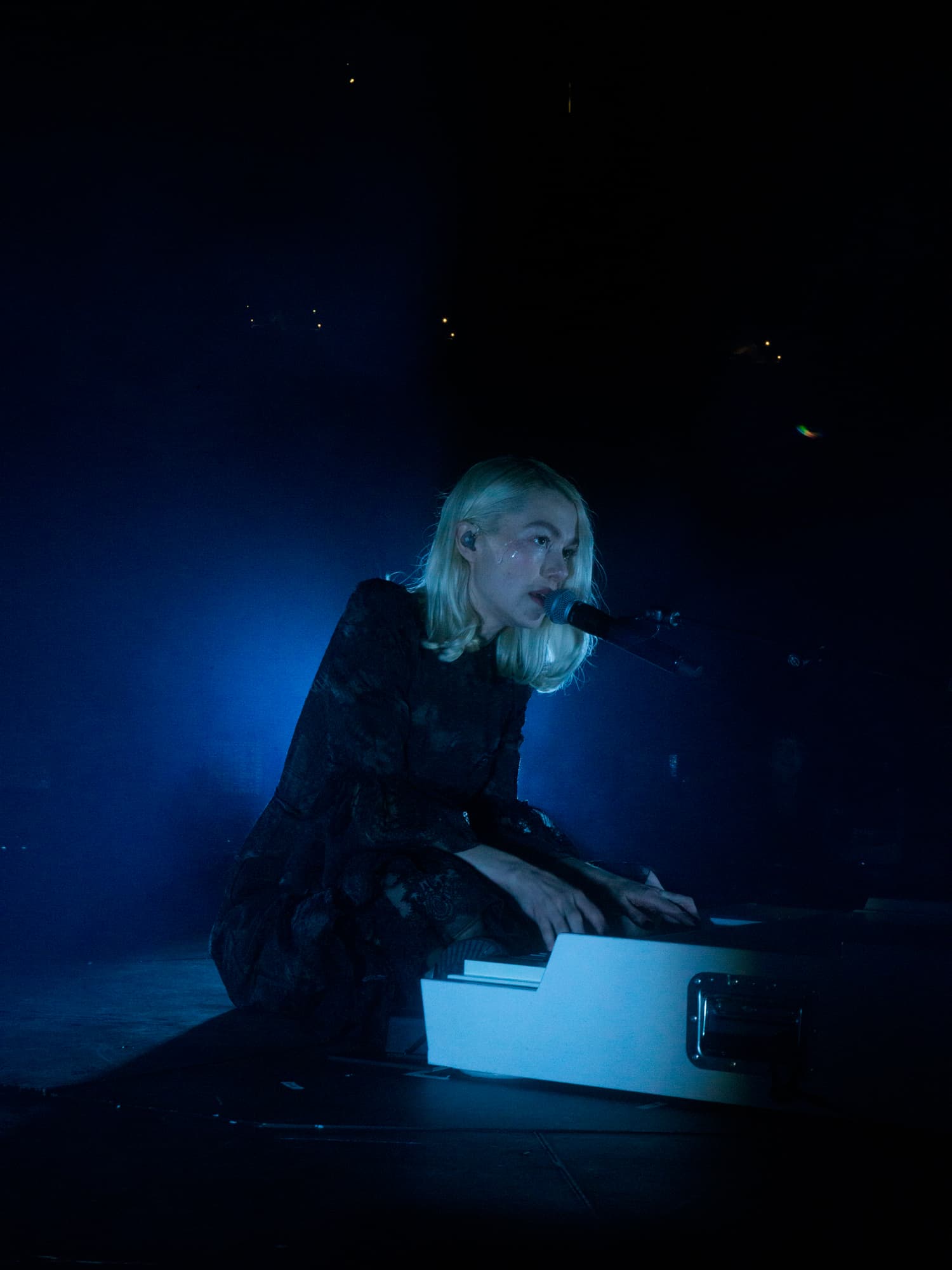 Photo: Matt Grub
During “As Above,” lasers shot out from the nestlike structure hanging in the middle of the room, their beams limitlessly touching the far walls of Barclays in every direction, close enough for people to reach their hands into them and bathe their fingers in the milky RGB glow. As Bridgers screamed, “You don’t have to believe in magic / leave it to me and I’ll make it happen,” silver snow dropped from the ceiling, cascading around her. Then, in “Lost Weekend,” a song that seems to beg for a dark arena—the vocals dropped out and the instrumentals launched into the track’s strange jumble of chords and swooshes and madness. At that instant, the room filled with what can only be described as rainbow spaghetti, projected onto every inch of the arena and flickering on every note. Audible gasps abounded. It was the ultimate treat for the senses.
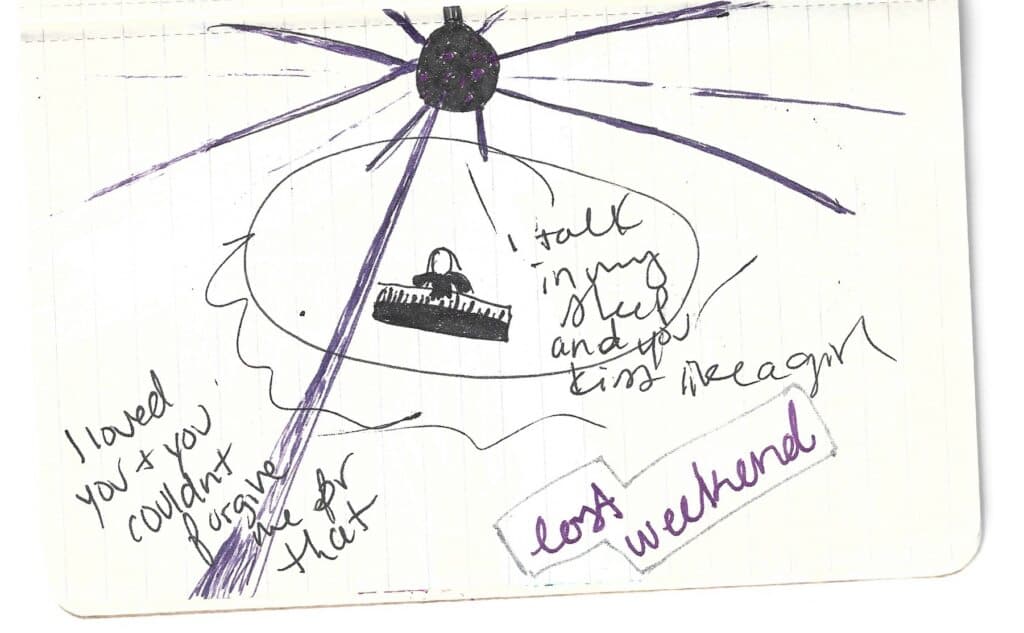
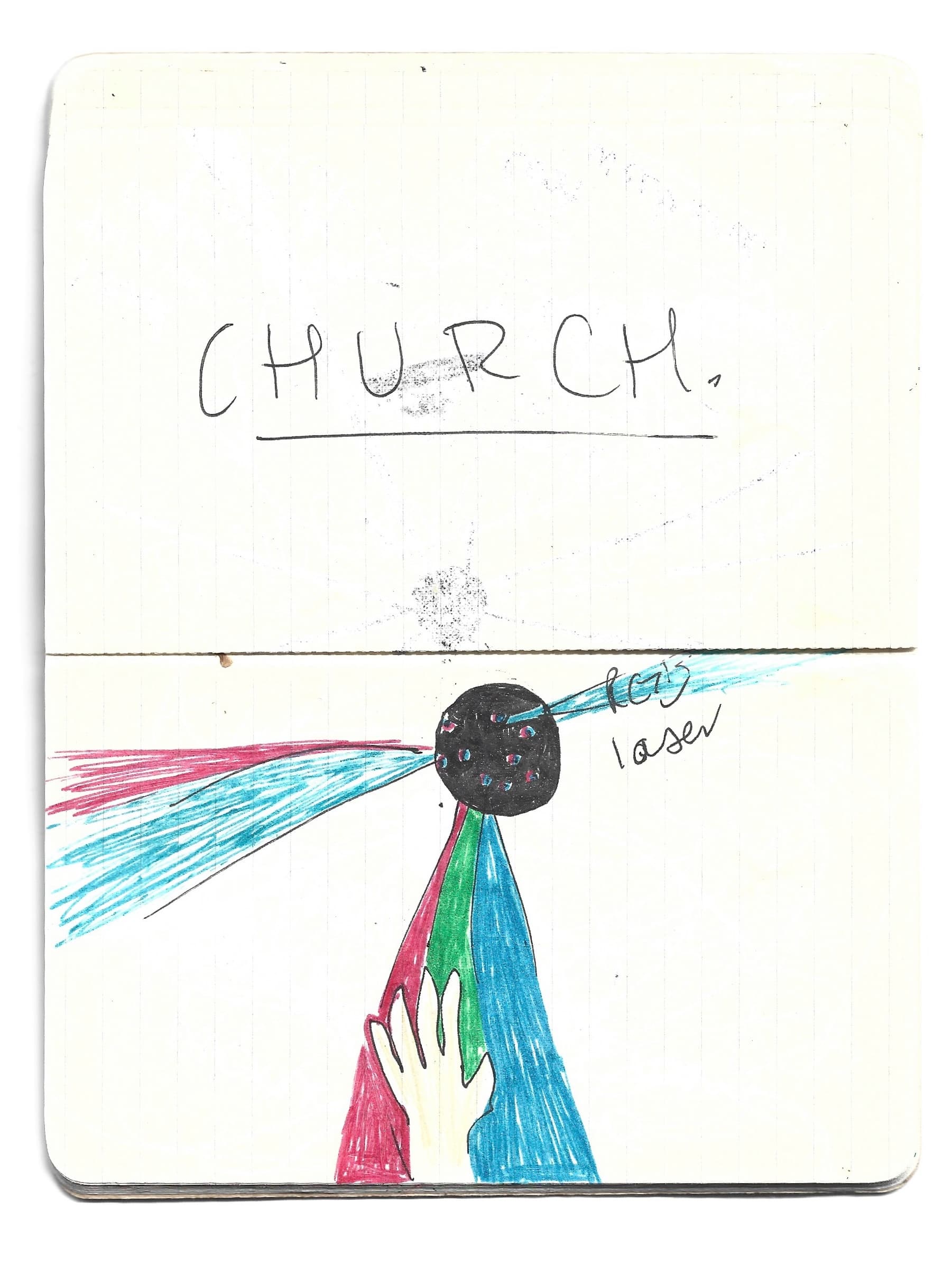
 During “Lost Weekend,” we were each bathed in color as lasers passed over each of us. It made all of our silhouettes glow fluorescently. And then they exploded into squiggles all over the room.
As if the night didn’t have enough surprises lined up, she gave the room something nobody could immediately look up afterward: “On Video,” a new song from Primetime that would be released at midnight. For once, hearing that something would be “out at midnight” actually meant waiting until midnight. There was no clip to replay, no shaky video already making the rounds online. For the next few hours, the song existed for us only as something we’d just heard.
 Photo: Ashley Gellman
  I can sit in the backseat…
And then the boygenius rumors proved true. Lucy Dacus and Julien Baker emerged to join Bridgers onstage, and the room absolutely lost it. “It was so hard to get through the previous song knowing they were coming out,” Bridgers admitted afterward. “I was like, ‘hehehe!’” That giddiness hardly let up: The three smiled and laughed through the troika’s entire two-song performance, looking almost as delighted by the reunion as the people screaming below them. People sang. They jumped up and down. I jumped up and down. And, of course, when the three-way kiss happened—the one that’d soon after circle social media by word of mouth—everyone screamed all over again.
 Photo: Ashley Gellman
For the encore, Bridgers returned for “Scott Street,” this time dressed entirely in white, the glittering tears beneath her eyes newly exaggerated, spreading across both cheeks like angel wings. After two hours of carefully controlled darkness—blue hair, amber light, alien beams, glowing planets—the transformation felt almost like turning on the lights. Then, quite literally, they did. The entire arena illuminated. Suddenly, we could see one another. Thousands of people waved their arms and sang the same line over and over again: “Anyway, don’t be a stranger.”
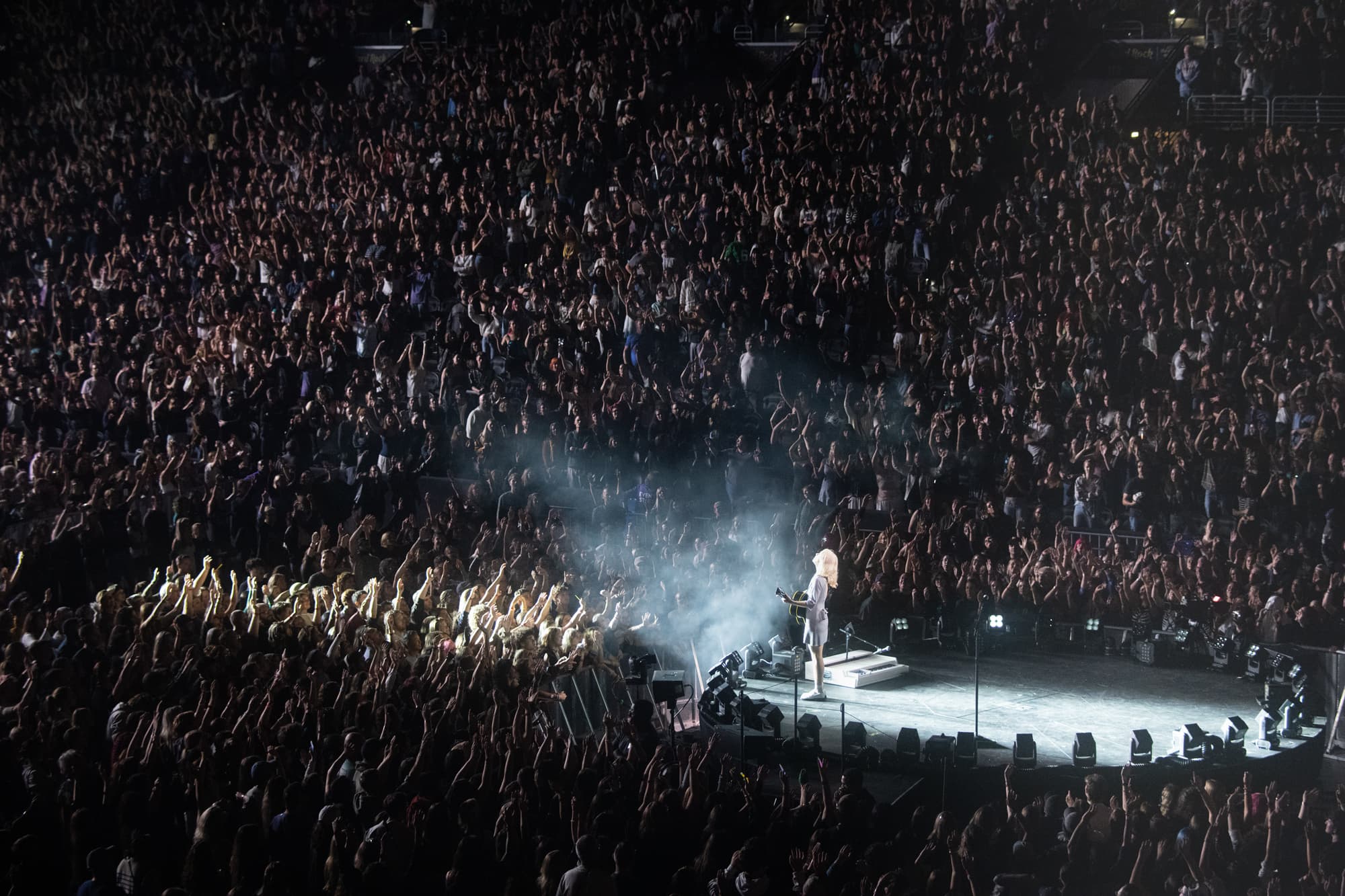 Photo: Matt Grub
And then it was over.
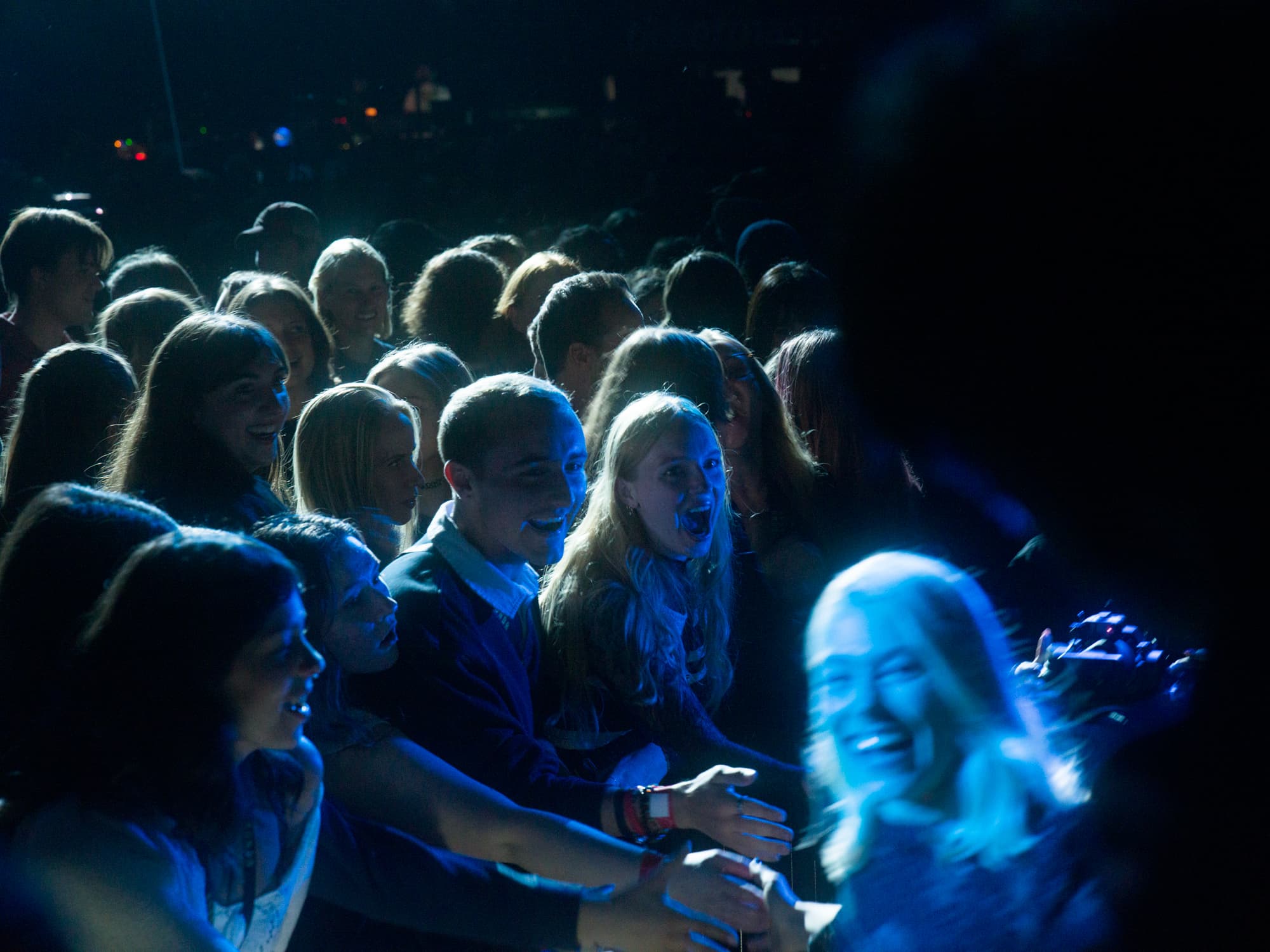 Photo: Matt Grub
It felt like it had happened in an instant. I got my phone back, turned it on, and discovered that two hours had somehow disappeared. Around me, everyone filed out of Barclays with makeup smeared across their faces from crying, naturally.
So often, a concert comes with the impulse to keep some piece of it for yourself: the clip, the photo, the proof that you were there. On Thursday, there was no choice but to let most of it disappear. And somehow, the room felt more generous for it.
I’ve never left a show so thankful for what an artist gave. The tears, the screams, the spectacle, the things that disappeared before we could keep them.
 The only two words I could manage to get on the page during “I Know The End.” Plus, Phoebe’s final outfit change.
Phoebe fucking Bridgers: thank you.