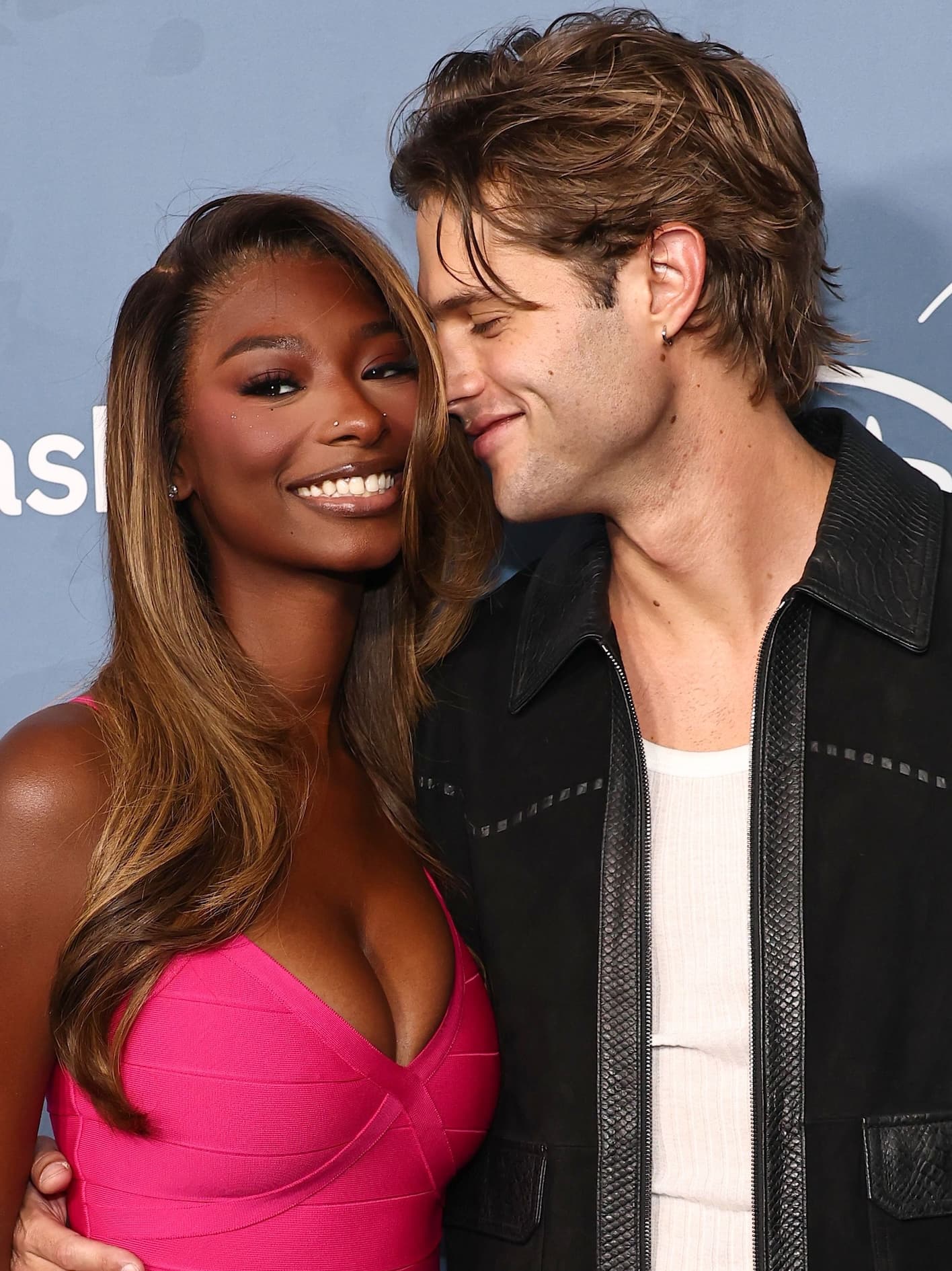
We're in an age where the Club Chalamets of the world receive Wall Street Journal features, and reality shows like Love Island USA are a one-stop shop to fame. With reality TV's rise in popularity, fan clubs fostering obsession, paparazzi willing to do anything for the shot, and social media granting us an inside look at celebrities' lives, it's as if developing parasocial relationships with stars is the default.
For me, this manifested itself after season 8 of Love Island USA came to what should have been a satisfying end. After the finale, I found myself in the rabbit hole that is the show's Reddit page. In my defense, a show that airs five days a week can start to feel like a bit of a routine, and it quickly became a pillar in my day-to-day life. So, I began missing these people that I had watched every day, and found solace in the Reddit community that felt the same; there, threads tracked the breakout stars and their every move, both physical and professional. Comments ranged from "I miss them" to "Brinity was spotted here," in an attempt to fill the void left by the show's loss and, in turn, our relationships with them. Luckily, they communicate with us via their Instagram channels, making us feel like best friends and nurturing the parasocial relationships.
"Sixty years ago, parasocial relationships were with newscasters who were on TV several nights per week. Today, celebrities and content creators are available seemingly on-demand, which creates even more of a feeling of a deeper relationship," Los Angeles-based therapist Curt Widhalm says. "What was once relegated to posters on a bedroom wall and private diary entries is now publicly available on social media with rewards such as top fans, most likes on a comment on a celebrity's post, and TikTok trends, making having the deepest relationships with a celebrity feel like a competition with other fans."
If we are collectively growing more parasocial over time, it's safe to assume that we're also collectively more and more in need of an escape—because, at the root of becoming fully invested in what is technically a stranger's life, is some dissatisfaction in your own.
"Our brains process the proximity to someone's stories as emotional intimacy because we have so much access to them, even though that connection is one-sided," Widhalm says. "These feel like low-risk relationships because they give a feeling of comfort and regular contact without the messiness of rejection or negotiation that comes with navigating real-life relationships."
So what happens when the continuous access that something like Love Island USA provides comes to an end? We rely on whatever content we're fed and turn to interviews and Get Ready With Me videos for the sake of receiving what we perceive as "unpolished" content. But when you're a fan of a celebrity or creator who is an avid poster, feelings of reliability may develop, for better or worse. "Natural relationships have times of presence and times of absence. There are natural and healthy boundaries that develop during these times of absence," Widhalm says. "When someone is constantly available on your device because they post several times per day or have a back catalog of available content, they feel accessible 24/7, and that constant access develops feelings of trust and friendship."
We're in an age where information is often mistaken for intimacy. We tend to hold onto whatever minuscule amount we contributed to a star's success and believe that, in return, they owe us something.
Parasocial relationships aren't always inherently bad, though. For Jay Styler, running a One Direction fan Twitter account at 13 and gaining around 70,000 followers in seven months helped him build a community for himself. "I made a huge number of friends through the account and suddenly had this group of people who I could talk to every day," he says. "I also wasn't out as gay at the time, so having a semi-anonymous account gave me a space where I could be much more open and honest about who I was. I could talk about things I probably wouldn't have felt comfortable talking about in my real life at that point. Looking back, I think the community was probably more important to me than the actual fan account. One Direction was what brought everyone together, but the people I met were what kept me there."
Although Styler was on that Twitter account 24/7 and One Direction meant everything to him, he was never under the impression that he ever knew the members personally or that they owed him anything. "If anything, I was very aware of how strange the situation was. I knew an enormous amount about them because I followed everything they did publicly, but they obviously had absolutely no idea who I was," he says. "There was something quite strange about knowing so many details about someone's life while being completely unknown to them. I could know what they had been doing, what interviews they had given, what they had said about something, and what they were doing on a particular day, but there was no equivalent knowledge of me on their side. I knew logically that it wasn't a real relationship, but I was still emotionally attached. I think those two things can exist at the same time. You can understand that someone doesn't know you while still feeling a genuine emotional connection to what they represent in your life."
Despite the lack of reciprocity, his connection to the band was very real, evoked joy, and still represents an important period of his life. "I don't think a parasocial relationship is automatically unhealthy just because it's one-sided. The important thing is being able to recognize that it is one-sided and still maintain a life outside of it. For me, the fandom became a positive part of my life because it gave me somewhere to belong," Styler says. "For me, One Direction wasn't just One Direction. They were being 13, being homeschooled, discovering who I was, making friends online, and eventually becoming comfortable enough to express parts of myself that I wasn't ready to express in my everyday life."
Widhalm echoes the notion that parasocial relationships aren't inherently bad—instead, with growing access to social media and reality TV personalities, it's becoming easier for those relationships to grow unhealthy. "For many people, these bonds act as an emotional bridge, help navigate loneliness, process grief, or self-soothe during stressful periods. In fact, we often develop parasocial relationships to characters or creators as young children, such as Mr. Rogers, Sesame Street, Miss Rachel, or Bluey, to learn how to navigate life transitions like moving, having a new sibling, or starting school," Widhalm says. "They can be risk-free relationships where people of any age are able to navigate mistakes or difficult situations without having risks of social rejection or embarrassment. A healthy parasocial relationship helps add to someone's real life."
At the end of the day, parasocial relationships are inevitable in 2026—but, as being grounded in reality becomes more and more difficult, it’s important to remember that while these connections can offer comfort, community, escape, a sense of belonging, and more, we're not entitled to anything from people that we don't actually know—and these relationships should never come at the expense of or be compared to those that are tangible and that exist in real life.