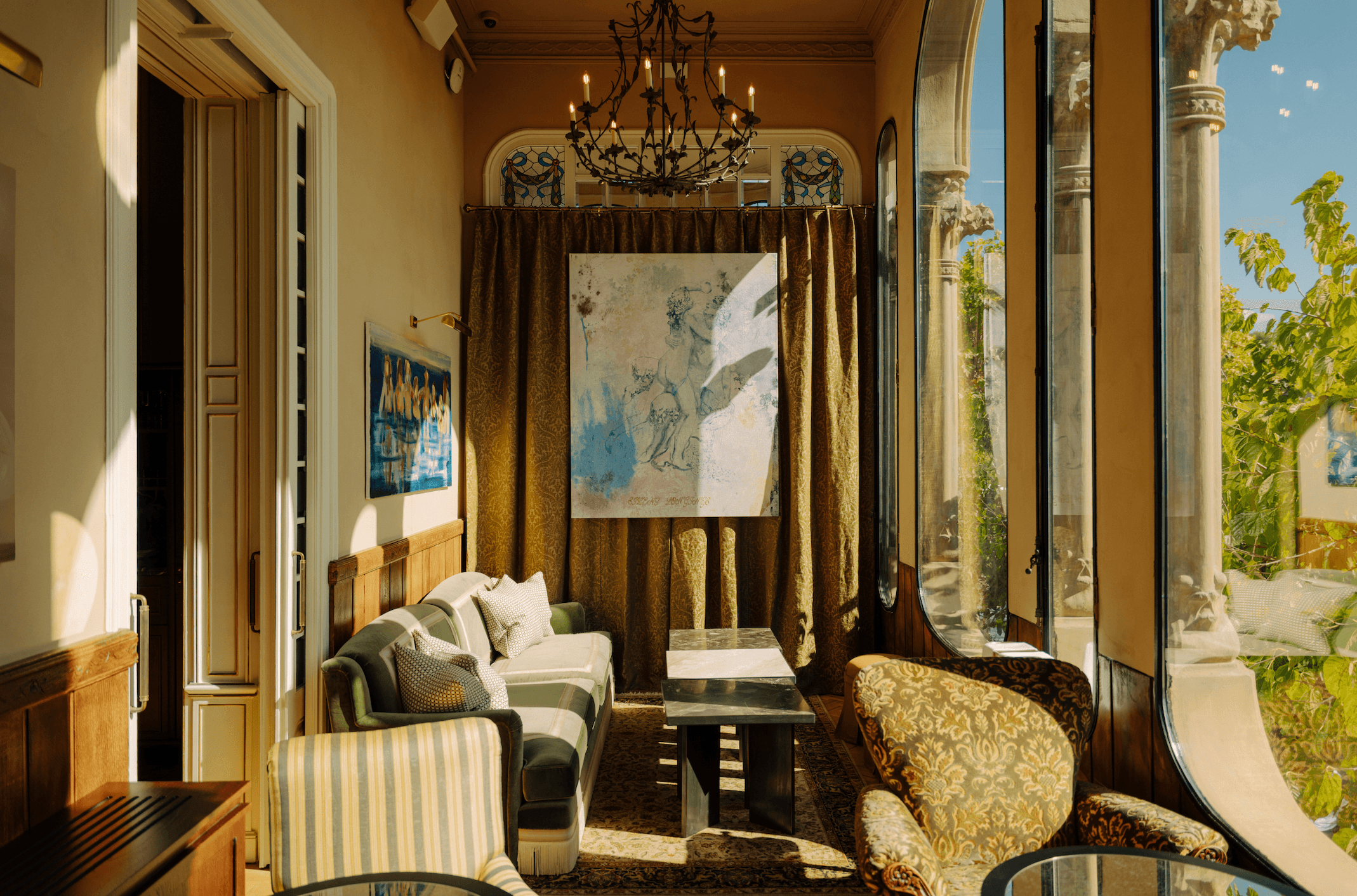
The obvious version of Barcelona is already well documented. Gaudí deserves the attention, as do the beaches, markets, and grand boulevards. They are part of what has kept me coming back, but on successive visits, I have become more interested in the city threaded between them: independent designers, historic fashion institutions, intimate wine bars, neighborhood restaurants and addresses passed between friends rather than compiled for visitors.
That Barcelona comes into focus through the people who actually live, eat and work here. Juliet Lash, Moda Operandi’s senior director of global VIP client development, lives in the city and approaches it with the eye of someone professionally accustomed to finding the good thing before everyone else does. Juliana Cala, the retailer’s creative director, has family ties to Barcelona and a similarly specific address book.
Then there is Katie Kerfoot, my longtime Tribeca neighbor, who traded New York for Barcelona two years ago. Her recommendations supply the lived-in layer: the restaurant she takes visitors to, the dirty martini her husband considers the best in the city, and the brow artist it took her months to find. Between my own familiar stops and their considerably more current intel, a more useful itinerary emerges: archival fashion and emerging Spanish designers, neighborhood fish restaurants and natural wine, Modernist architecture and Mediterranean swims.
Where to Shop
Santa Eulalia: Barcelona has its own fashion institutions, most notably Santa Eulalia, the Passeig de Gràcia store that Kerfoot describes as “the Bergdorf’s of Barcelona.” The comparison is less about scale than sensibility. Founded in 1843, Santa Eulalia began as a textile store and held its first fashion show in 1926, pioneering the format in Barcelona. Today it mixes international designers with the kind of old-school service that makes shopping there feel faintly ceremonial. Lash includes it among her regular fashion stops, particularly for its international designer edit, with the likes of Tom Ford, Khaite, Magda Butrym, Dorothee Schumacher and Cult Gaia.
Mango: Barcelona happens to be the birthplace of Mango. It was founded in Barcelona by Isak Andic in 1984, opening its first store on Passeig de Gràcia, and still runs its global creative and design operation from Barcelona.
1812: For vintage, Lash starts with 1812. “It has cool, Y2K energy,” she says. “It reminds me of the vintage stores around Dimes Square and the Lower East Side, which makes me feel at home.”
Alabama Collect: Lash recommends Alabama Collect as an option where the distinction between a designer label and an anonymous find matters less than the edit.
“The owner has such a great eye,” Lash says. “I love the way she mixes designer vintage with perfect no-name pieces. It’s always worth a look if you’re in the neighborhood.”
E.GUSMERINI: Another stop for designer vintage, with ’90s and ’00s Prada among the draws.
Muy Frágil: Casa sends friends here for emerging local designers and accessories, and to Cortana, the label founded by Mallorca-born designer Rosa Esteva. Cala has a personal reason for the latter: Esteva designed her wedding dress.
BASSAL: The store mixes Spanish and international labels and is the sort of store where the reward is finding a name you did not arrive looking for.
Shon Mott: A great choice for is good for elevated everyday pieces.
.248 Colmado: For menswear, .248 Colmado carries smaller international labels and pieces you are less likely to encounter elsewhere.
CASA LOEWE Barcelona: A store that belongs on the same circuit. The flagship is inside Casa Lleó Morera, Lluís Domènech i Montaner’s Modernista landmark on Passeig de Gràcia, part of the celebrated Block of Discord.
What to Eat
Casa Taos: Lash orders the same breakfast at least once a week: eggs with crème fraîche. “The music is always perfect,” she says, “and even the coffee comes in a beautiful ceramic cup you’ll wish you could take home.”
Osaka Bang: Her enthusiasm for Osaka Bang is even more persuasive given that she has been vegetarian for most of her life. “I’ve never been so impressed by a restaurant,” she says. “The owner is there, creating something special for you in the kitchen. It feels incredibly personal and completely unpretentious.”
Masa Vins: For wine and small plates, she goes to Masa Vins, with one piece of logistical advice worth taking seriously: arrive early. There are only two outdoor tables.
Lluritu: Lluritu is her choice for fresh fish with a Catalan feel.
Bar Mut: A must-try for tapas
Els Pescadors: In Plaça de Prim, this restaurant is all about seafood, in one of Poblenou’s prettiest old squares.
La Boqueria: I still have a weakness for La Boqueria, tourist traffic and all. Walking in from La Rambla for fruit and juice has become part of the ritual of returning to Barcelona. For a more everyday market experience, Cala points instead to Mercat de Sant Antoni for produce and fresh fish.
After Dark
Masa Vins: An option that can carry on from dinner into wine.
The top of the W: A go-tos for a cocktail above Barceloneta. The space has since become NOXE, a Japanese restaurant, cocktail bar and late-night club on the 26th floor, but the reason to head up remains much the same: the stunning view of the Mediterranean and the city below.
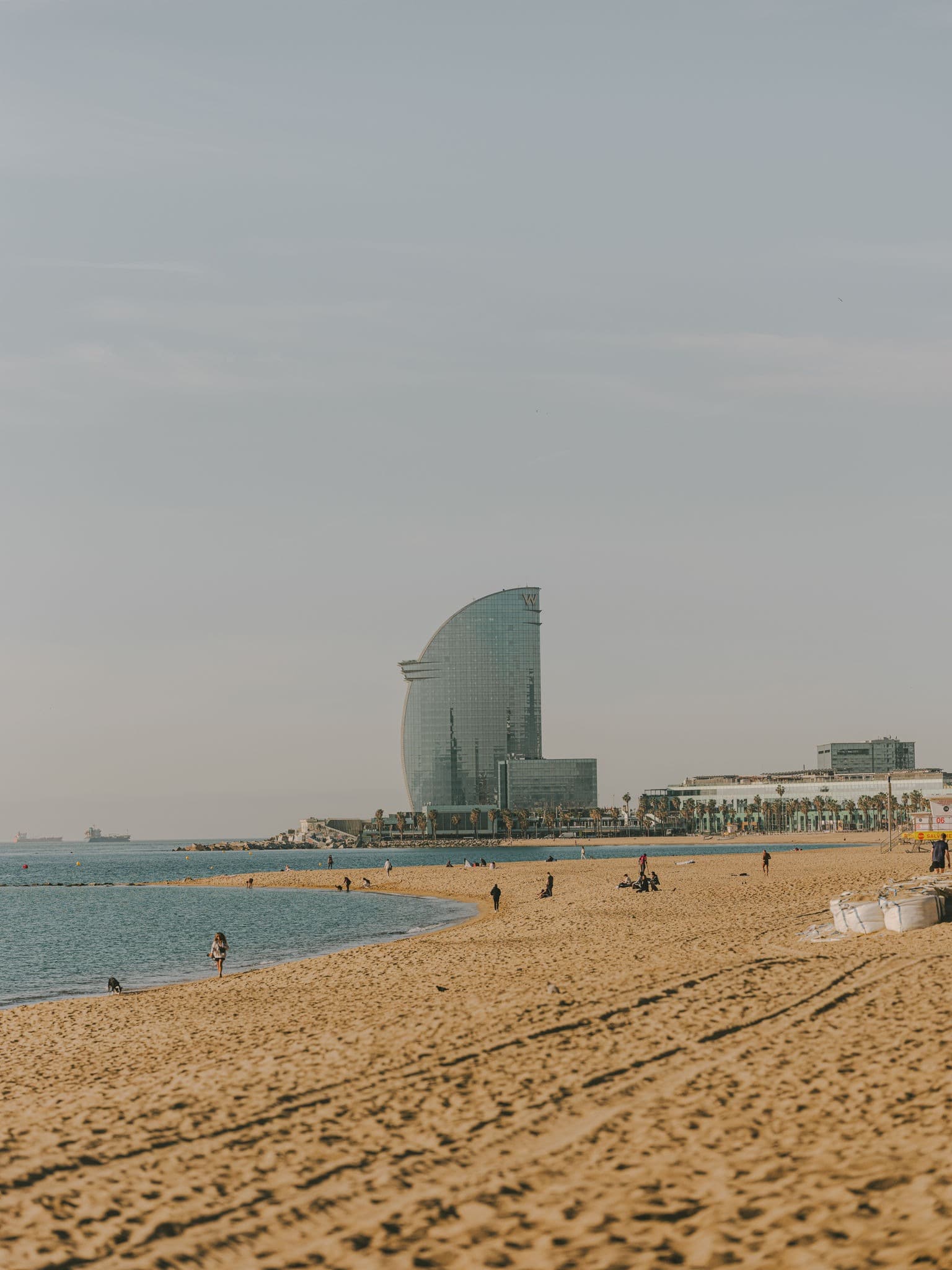 Barceloneta Beach, Barcelona. Photo: Turisme de Barcelona
14 de la Rosa: For a dirty martini and what Kerfoot's husband considers the best Gildas in the city.
Cohete: A rare nightclub recommendation from someone who readily admits she is not much of a late-night person. Its two club rooms, G Spot and Discobar, are the reason to stay later.
For Art, Architecture And An Afternoon Outside
Mies van der Rohe Pavilion: This pavilion was designed by Ludwig Mies van der Rohe and Lilly Reich for Barcelona’s 1929 International Exposition. Glass, steel, marble, onyx and water do most of the work.
Fundació Joan Miró: Stop by where the Catalan artist’s work is housed in Josep Lluís Sert’s hilltop building on Montjuïc.
Casa Vicens: Gaudí's first major residential commission, rather than defaulting exclusively to the Sagrada Família circuit.
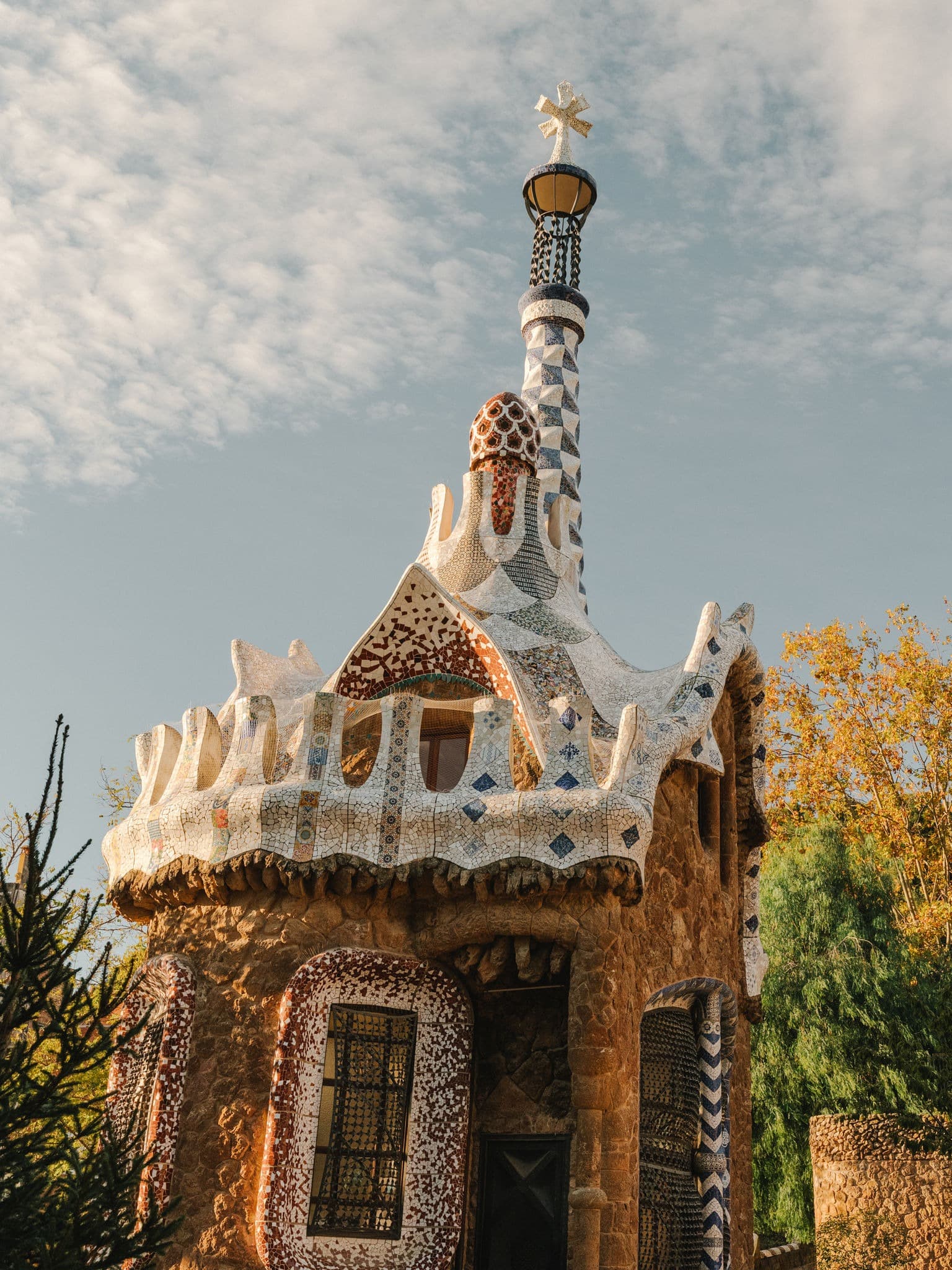 Park Güell, Barcelona. Photo: Turisme de Barcelona.
Bogatell Beach: When you have had enough architecture for one afternoon, there is Bogatell Beach. Barcelona’s particular advantage is that an afternoon of galleries, vintage and Modernisme can still end in the Mediterranean.
Where to Stay
Where you stay in Barcelona changes the experience considerably. The city’s best hotels range from Belle Époque grandeur to discreet Gothic Quarter boltholes and members-club bedrooms overlooking Port Vell.
El Palace Barcelona: The grand dame of the city. Opened in 1919 as the former Ritz, it carries the formality and scale of a different era while remaining a current address, with a rooftop garden and Roman-inspired pool, Amar Barcelona from chef Rafa Zafra, and a location in the Eixample just moments from Passeig de Gràcia.
Mandarin Oriental: For full-scale contemporary luxury, Mandarin Oriental, Barcelona remains difficult to dislodge. Set on Passeig de Gràcia, steps from the Block of Discord, it has a rooftop pool, spa and the sort of location that allows a morning of Gaudí, LOEWE and Santa Eulalia to happen almost accidentally.
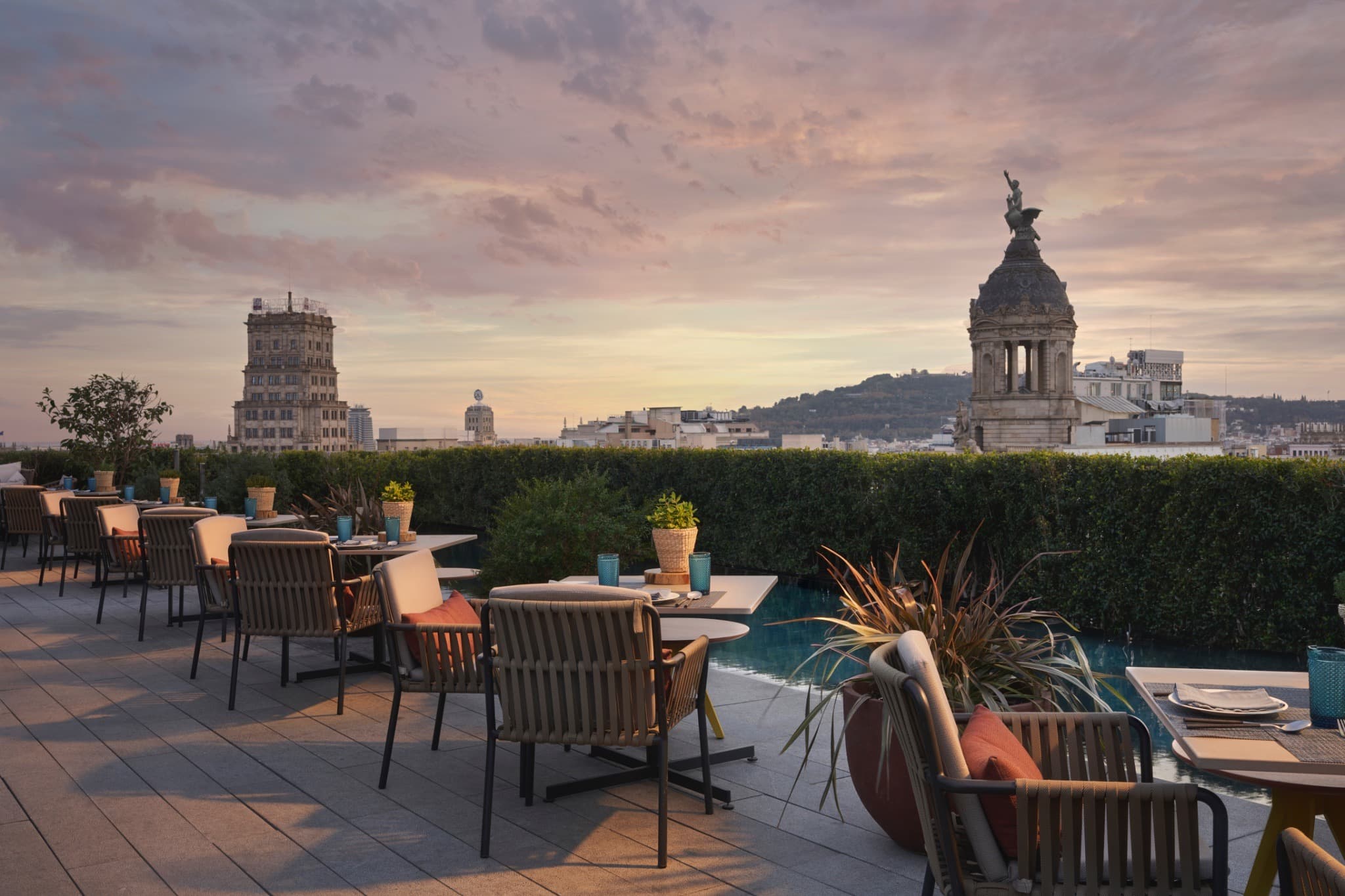 Mandarin Oriental, Barcelona. Photo: Mandarin Oriental
Mercer Barcelona: A hotel that offers a completely different proposition. It's in the intimate Gothic Quarter hotel, which incorporates sections of ancient Barcino’s Roman wall into the property.
Soho House Barcelona: For the fashion and creative crowd, Soho House Barcelona remains one of the city’s social anchors, but the hotel is useful in its own right. Its rooms take their cues from Catalan design, while the rooftop pool looks across Port Vell; downstairs are the club, gym, Cowshed spa and screening room.
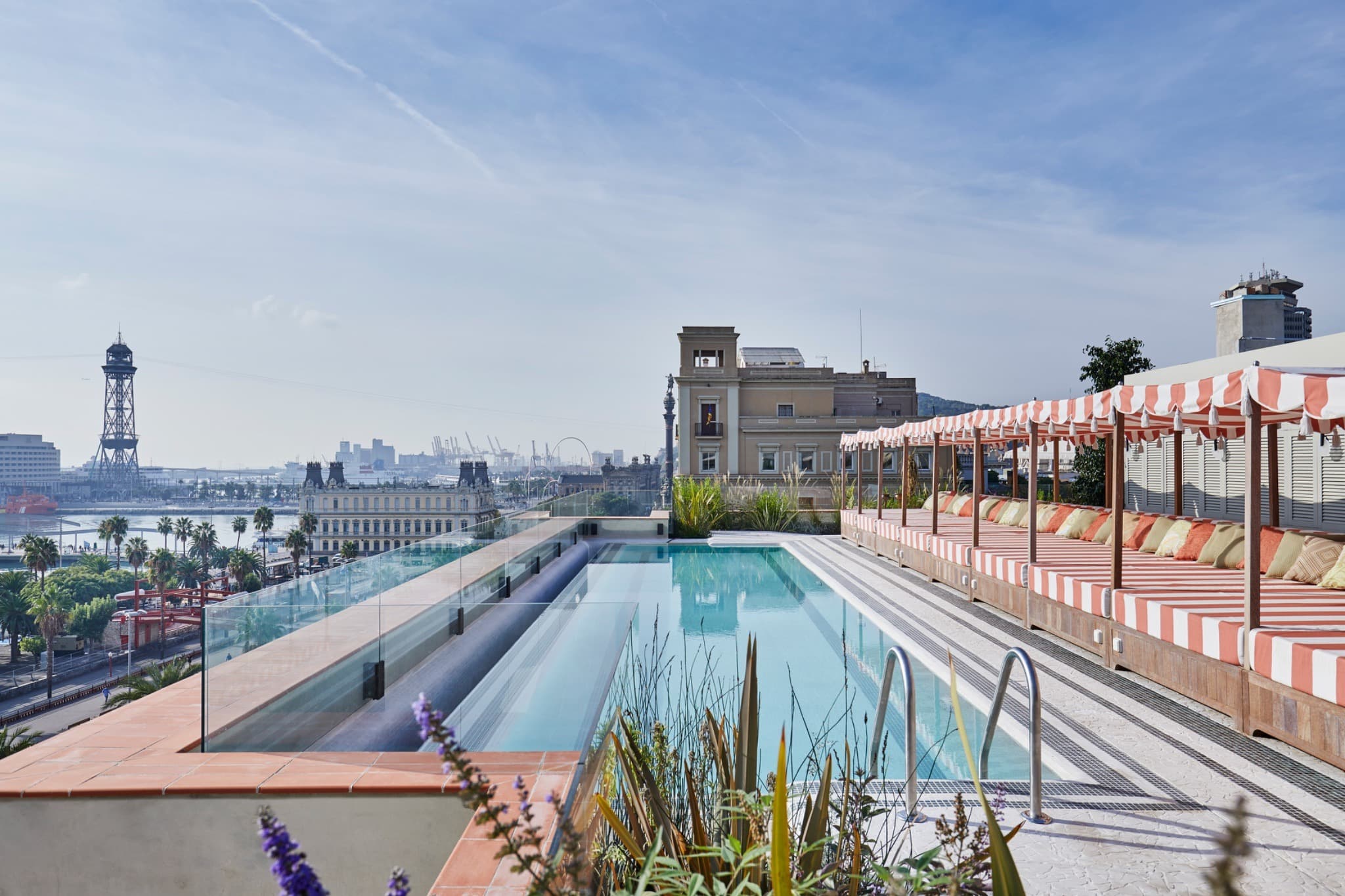 Soho House Barcelona rooftop. Photo: Soho House.
The Barcelona EDITION: A contemporary alternative on the edge of El Born, beside Santa Caterina Market. Its location makes sense for anyone who wants the Gothic Quarter, Born restaurants and independent shops outside the door while keeping the scale and service of a proper luxury hotel.
Cotton House: A hotel that offers another version of Barcelona altogether. The former headquarters of the city’s Cotton Producers’ Guild retains the scale and detail of a 19th-century private residence, with a library, conservatory, terrace and references to its textile past throughout.
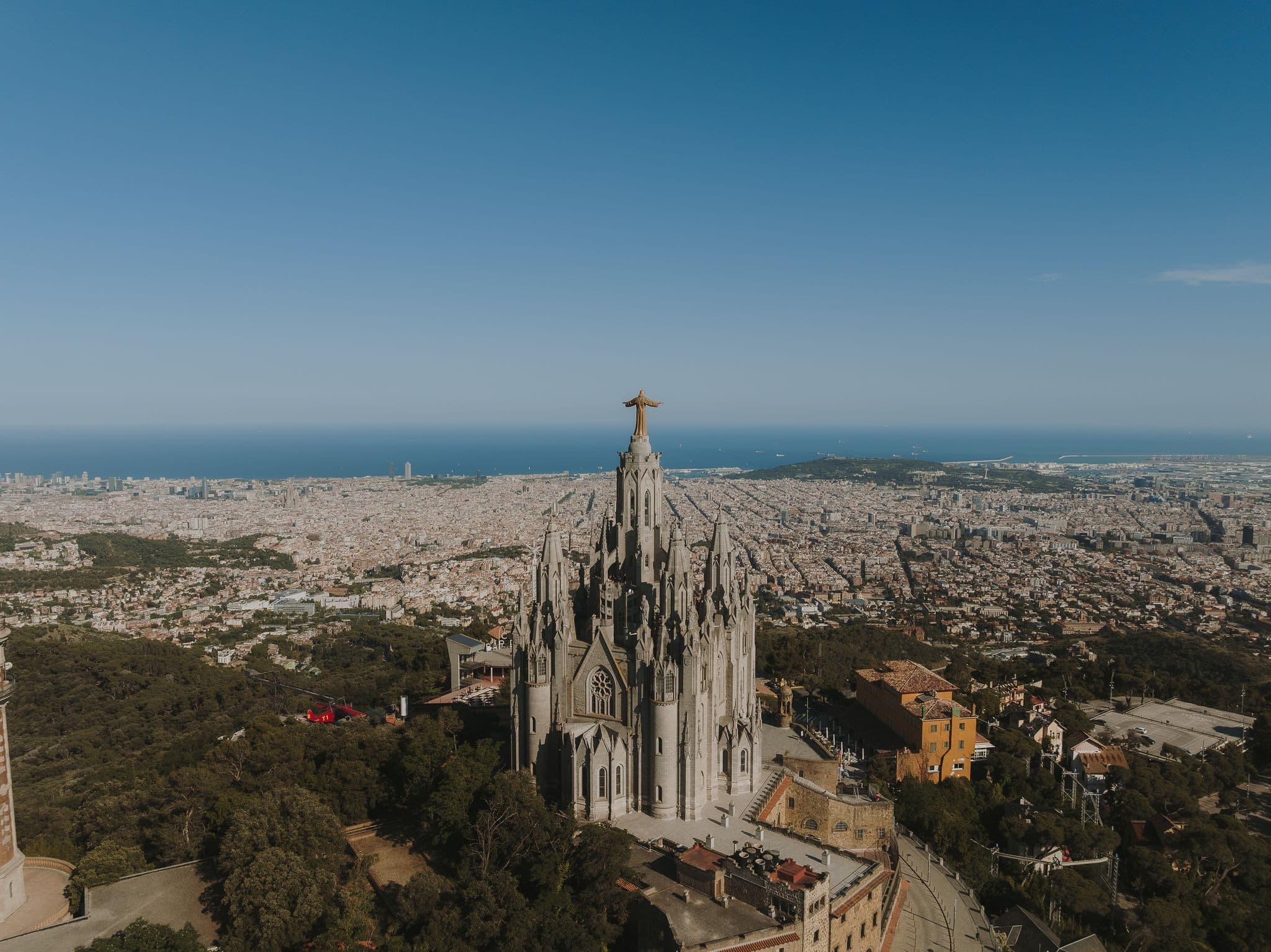 Tibidabo, Barcelona. Photo: Turisme de Barcelona.