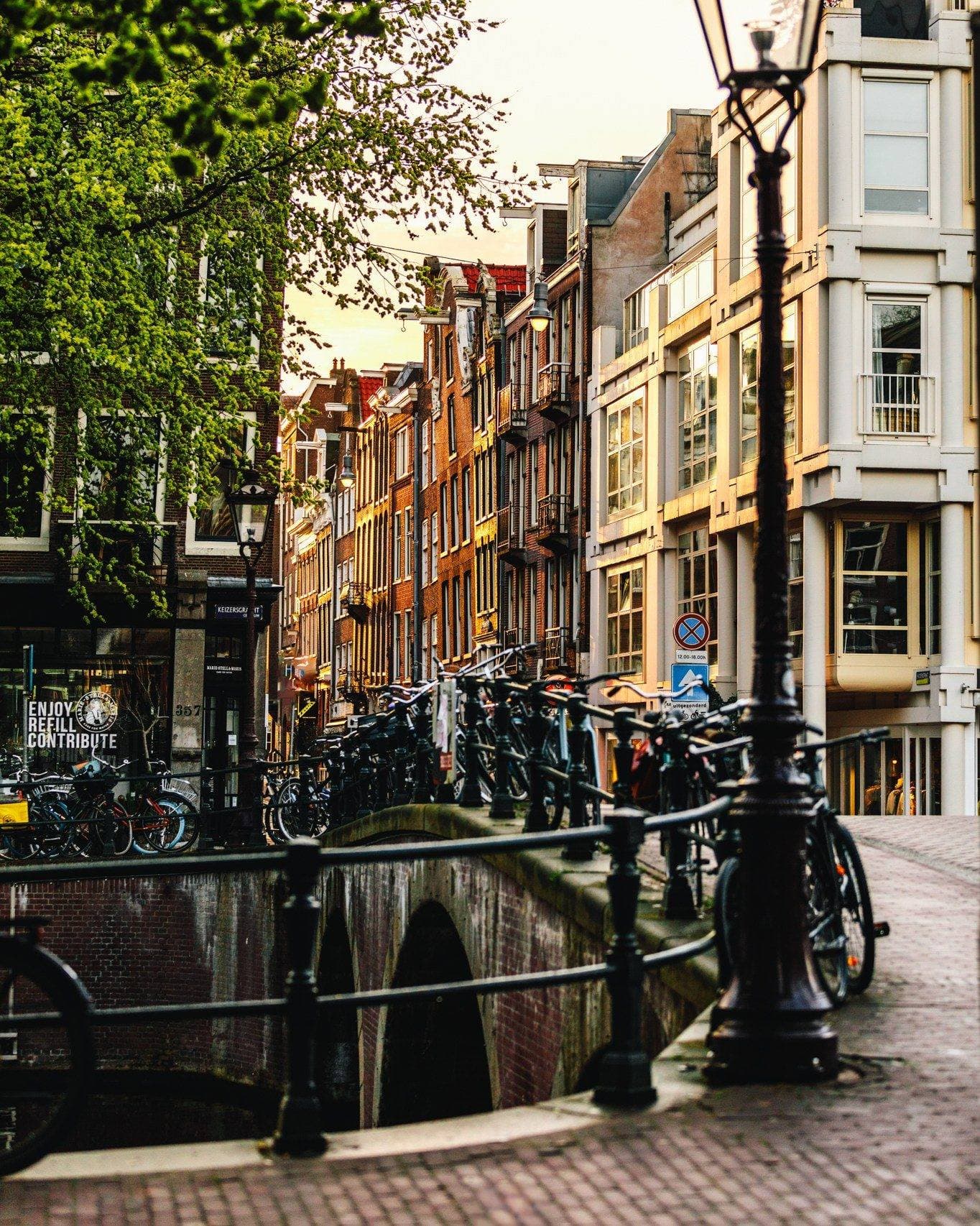
Amsterdam has been famous for the same things for a very long time: the canals, the seventeenth-century architecture, the Rijksmuseum, the flowers. All worth seeing, none especially useful, however, when it comes to understanding where to book, where to go, or how the city actually operates now.
This has, after all, been a city of merchants, makers and collectors for centuries. That history still surfaces in unexpected ways: in the antique dealers clustered around Nieuwe Spiegelstraat, Saturday mornings at Noordermarkt, specialist cheese and tea shops, and independent stores where the edit matters more than the label on the door.
Fashion is part of the picture too. Imaan Hammam grew up here, while Claire Rose Cliteur studied at the Amsterdam Fashion Institute before taking her polished approach to style to an international audience. Extreme Cashmere opened its first flagship on Utrechtsestraat in 2025, while Róhe has built a following from Amsterdam with its precise tailoring and knitwear.
For Róhe co-founder Marieke Meulendijks, the appeal lies partly in the city’s scale. Fashion, art, food and design exist in unusually close proximity. “There is a strong creative energy, but it still feels quite personal and intimate,” she says.
That intimacy also comes through in the recommendations of Wies Verhoofstad of Amsterdam-based Extreme Cashmere, whose address book moves easily between restaurants, vintage dealers and specialist food shops; Rizka Rivianti, Moda Operandi’s buyer for resortwear, denim and ski, who brings another layer of fashion-world intel; and Elza Wandler, founder and creative director of the Amsterdam accessories label Wandler.
Ask the people who live and work here where they actually spend their time and certain patterns recur: Saturday morning flowers and cheese at Noordermarkt, antiques around Spiegelstraat, a long lunch, natural wine at a canal-side table and a brown café after dark. The museums and seventeenth-century landmarks are essential, but they tell only part of the story. Ahead, get their recommendations for how to properly enjoy Amsterdam.
Where to Stay
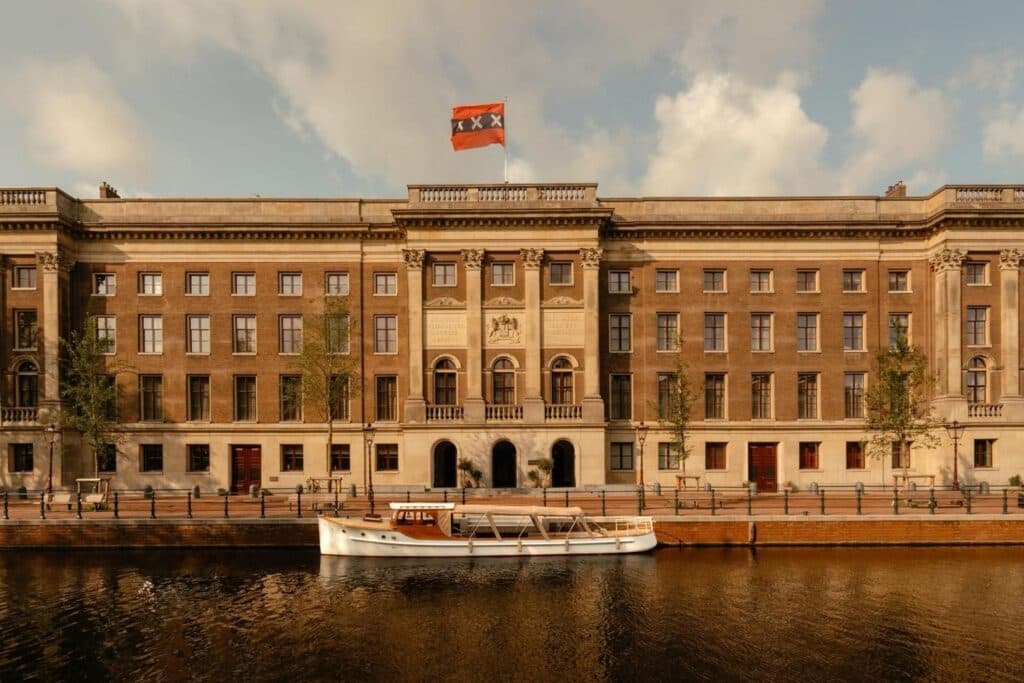 A private boat experience at Rosewood Amsterdam. Photo: Rosewood Amsterdam.
Rosewood Amsterdam: Opened in 2025 inside the former Palace of Justice on Prinsengracht, the hotel has 134 rooms and suites, interiors by Studio Piet Boon and a courtyard garden by Piet Oudolf. The restoration places contemporary Dutch design inside one of the canal ring’s most imposing historic buildings, with Advocatuur, the bar named for the building’s judicial past, providing a good reason to stop in even without a room key.
De L’Europe: The original grande dame of Amsterdam, De L'Europe opened on the Amstel in 1896 and has the accumulated social history and sense of occasion that Claridge’s brings to London or The Carlyle to New York. Flore, its two-Michelin-starred restaurant, Freddy’s Bar and a contemporary cultural program keep it firmly in the present.
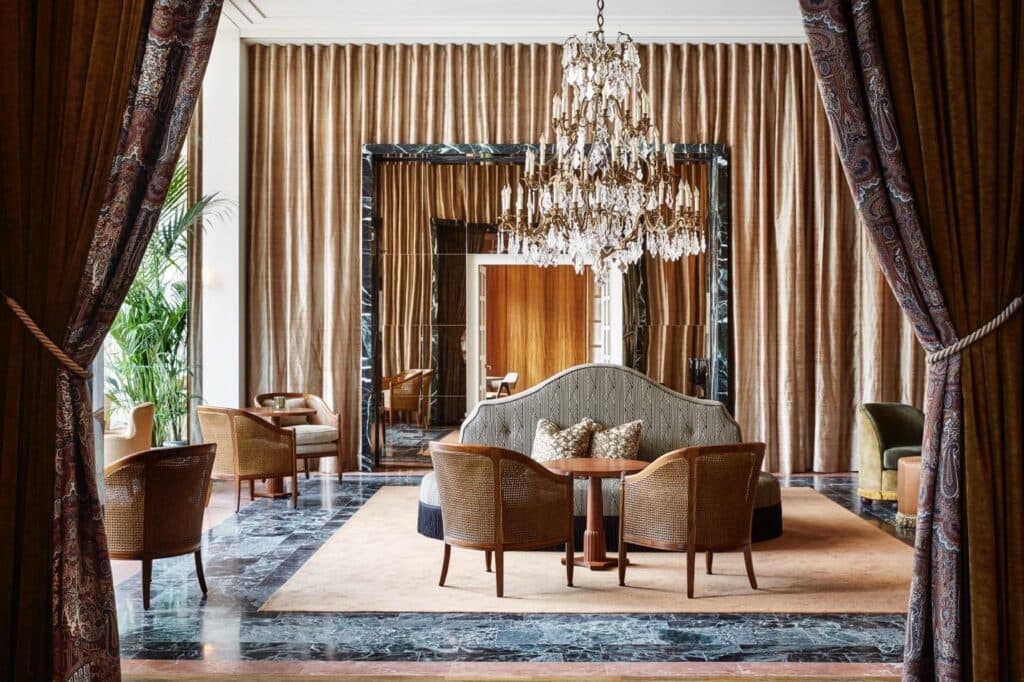 The lobby at De L’Europe Amsterdam, the city’s longtime grande dame. Photo: De L’Europe Amsterdam.
Waldorf Astoria Amsterdam: The Waldorf Astoria offers a more formal version of canal-side luxury, spread across six seventeenth- and eighteenth-century palaces on Herengracht. Its 93 rooms, suites and lofts are joined by a private garden and a Guerlain Spa with an indoor pool.
Pulitzer: For the canal-house version of Amsterdam, Pulitzer remains difficult to improve upon. The hotel unfolds across 25 interconnected seventeenth- and eighteenth-century houses between Prinsengracht and Keizersgracht, creating the sort of odd corners, individual rooms and unexpected views that a purpose-built hotel cannot replicate. Its position beside the Nine Streets makes it an easy base, while the hotel can arrange a private canal cruise aboard its classic 1909 salon boat.
The Dylan: Nearby on Keizersgracht, The Dylan is smaller and more intimate, tucked behind an archway around a secluded courtyard. Grace Bunker, a Europe travel specialist at Scott Dunn, is particularly fond of it. “It’s a beautiful boutique hotel tucked away along one of the city’s picturesque canals and has a much more intimate feel than some of the larger luxury hotels,” she says. “You’re right in the Nine Streets neighborhood, surrounded by charming cafés, independent boutiques and great shopping.”
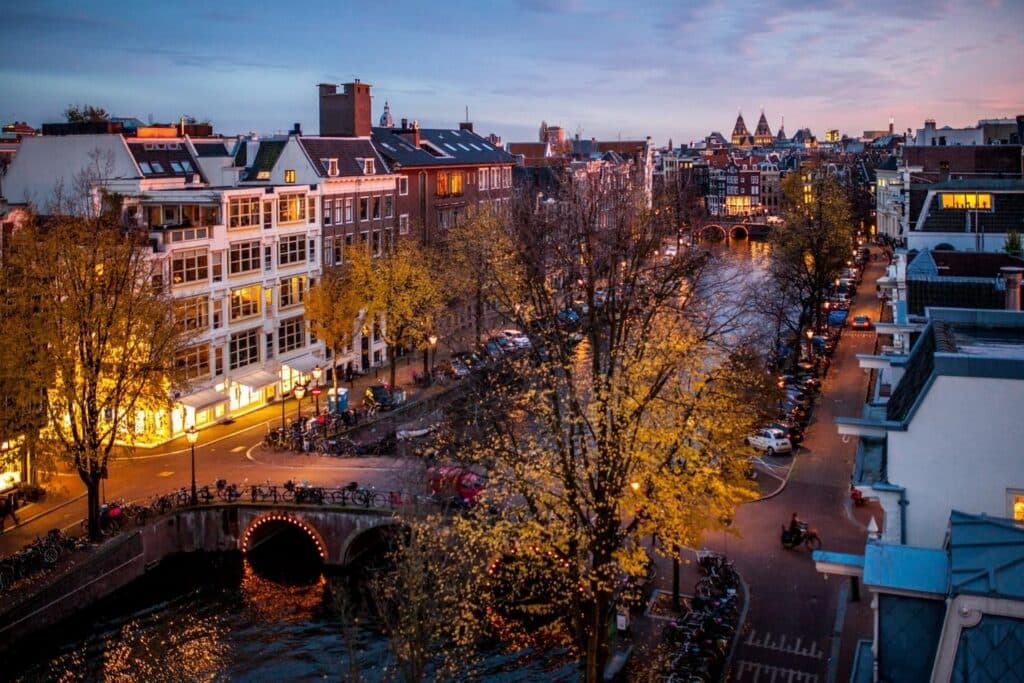 An evening along the canals outside The Dylan Amsterdam. Photo: The Dylan Amsterdam.
Mandarin Oriental Conservatorium: For museums rather than canals, Mandarin Oriental Conservatorium occupies a former music conservatory beside Museumplein. The Rijksmuseum, Stedelijk and Van Gogh Museum are all nearby, as is P.C. Hooftstraat for the international fashion houses. It is also now home to Ottolenghi Amsterdam, Yotam Ottolenghi’s first restaurant in the Netherlands, which opened in March inside the hotel’s glass atrium
Soho House Amsterdam: For the fashion and creative crowd, Soho House Amsterdam occupies the 1930s Bungehuis on Spuistraat. There are 79 bedrooms, a rooftop pool overlooking the city and a substantial contemporary art collection, while Cecconi’s and Cowshed spa sit on the ground floor. It is the social choice of the group, but the Art Deco bones of the building give it an identity beyond the familiar House formula.
Where to Shop
Extreme Cashmere: A useful place to begin. The Amsterdam label opened its first flagship on Utrechtsestraat in 2025, bringing its seasonless cashmere collection together with books, objects and coffee.
KAMER: Alongside Wandler’s Amsterdam West office is KAMER curated by Wandler, the label’s gallery and showroom. Each season, it presents emerging artists whose work connects to the collection. “It’s a lovely way to keep discovering new, young artists,” Wandler says.
Salon Heleen Hulsmann: Wandler sends vintage shoppers to Salon Heleen Hulsmann, a tightly curated destination for designer fashion and, in her words, “that one perfect vintage Dries Van Noten.”
CARMEN: This store has the rare distinction of appearing on three local lists: Verhoofstad’s, Meulendijks’s and Wandler’s. The guesthouse, kitchen and store occupy a seventeenth-century canal house on Keizersgracht, where fashion sits alongside objects for the home, while the kitchen and garden encourage staying beyond a lap of the racks.
Nine Streets: Rivianti points to the Nine Streets for local shopping, particularly vintage. But some of the best things to buy in Amsterdam have little to do with clothes.
Noordermarkt: On Saturday morning, Verhoofstad heads to Noordermarkt for farmers’ stalls, fresh produce and antiques. Her nearby circuit includes cheese from Kef, tea from Formocha, flowers from Pom Pom and, if there is a kitchen waiting, meat from Slagerij De Leeuw. Broken Bend is her recommendation for vintage china and silverware, where the logistics of getting six glasses home can be addressed later.
Spiegelstraat: Across town, Meulendijks gravitates toward Spiegelstraat, where smaller galleries, antique shops and design spaces cluster together. “It is a beautiful part of the city to wander around without necessarily having a plan,” Meulendijks says.
Spiegelkwartier: That instinct makes sense in the surrounding Spiegelkwartier, where specialist dealers cover everything from paintings and Delftware to jewelry, glass and twentieth-century design. Rivianti adds Kramer Kunst & Antiek, her pick for “all your gifts and tchotchkes.”
Athenaeum: For magazines and books, Wandler recommends Athenaeum on Spui, whose magazine selection is among the city’s best; the adjoining bookstore is where she buys her own books.
What to Eat
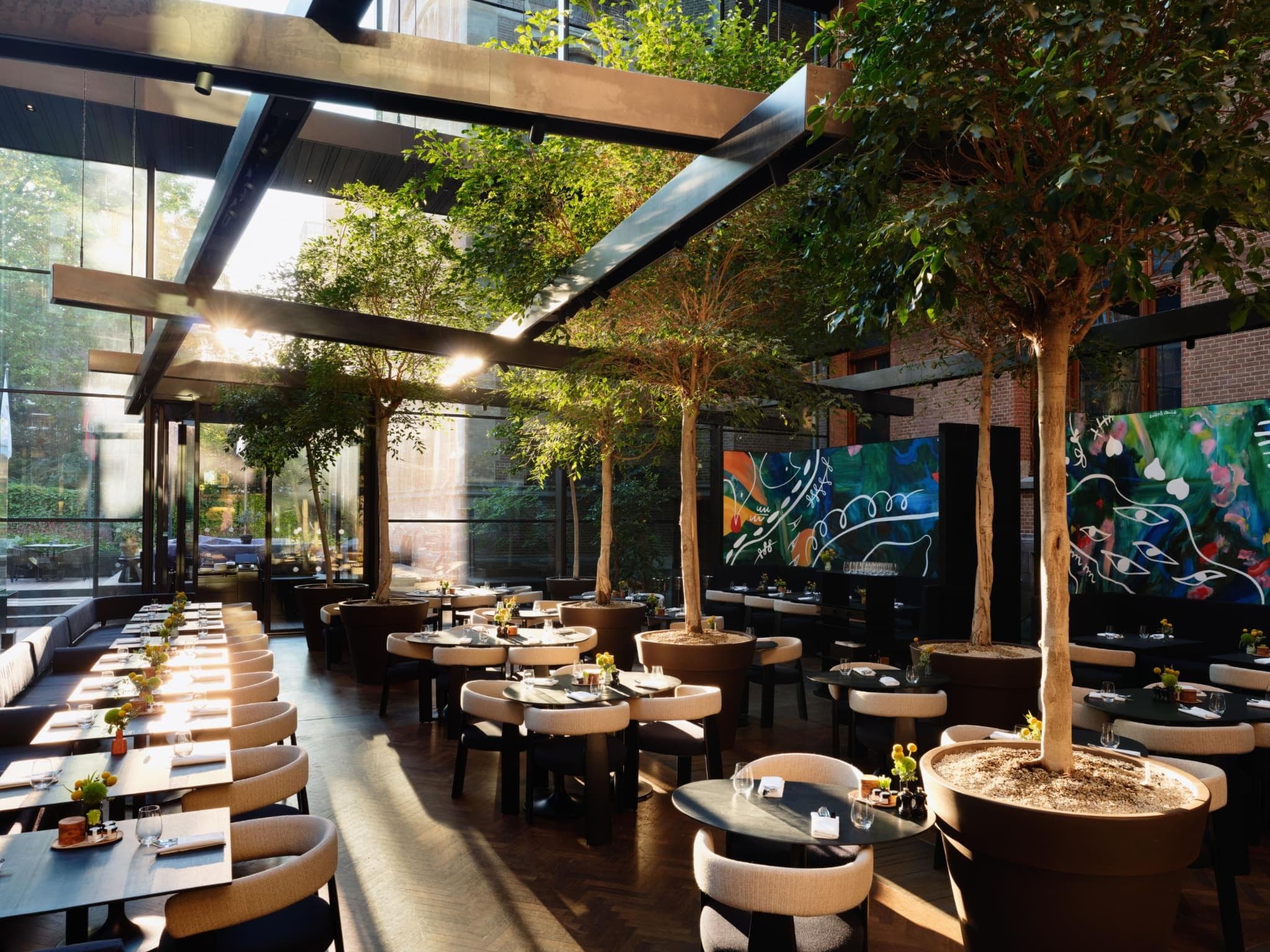 Ottolenghi Amsterdam, Yotam Ottolenghi’s first restaurant in the Netherlands, inside Mandarin Oriental Conservatorium. Photo: Mandarin Oriental.
Zoldering: At Zoldering on Utrechtsestraat, Verhoofstad has a very specific instruction: start with the tomato américain bite. The Michelin-starred restaurant has a serious wine program, but knowing what someone who actually eats there orders is considerably more useful than the accolade.
Toscanini: This institution appears on both Verhoofstad’s and Meulendijks’ lists. The longtime Jordaan institution serves regional Italian cooking in the sort of lively room that explains why people have kept returning for decades.
Scheepskameel: At Scheepskameel, inside a former naval building at Marineterrein, Verhoofstad keeps the order similarly straightforward: “perfect for sharing a piece of meat with potatoes and salad.” Its German-focused wine list provides a convincing reason not to make plans immediately afterward.
Tujuh Maret: Indonesian food is inseparable from the Netherlands’ long colonial relationship with Indonesia, and Rivianti points to Tujuh Maret as “a really great spot for Indonesian food.” It deserves space in a food itinerary otherwise easily dominated by Amsterdam’s European restaurants.
Tewatashi: Meulendijks saves Tewatashi for date night, recommending the intimate omakase restaurant when dinner calls for something more considered.
Café Restaurant Amsterdam: For a relaxed family lunch, Verhoofstad sends visitors to Café Restaurant Amsterdam, inside a former pumping station, which she describes as “a lowkey, typical Amsterdam family lunch.” Rijsel is another regular recommendation, while Wijnlokaal Stern is the answer when schnitzel and German specialties are called for.
Buffet van Odette: Meulendijks’ own ideal Amsterdam day includes lunch at Buffet van Odette after a morning wandering the galleries and antique stores around Spiegelstraat.
After Dark
Amsterdam does not require an elaborate cocktail itinerary. Some of its most useful nighttime addresses are simply places where another drink is the objective and no one is in a hurry to leave.
Café de Pels: The Dutch bruin café, or brown café, is Amsterdam’s answer to the neighborhood pub: traditionally a small, dark-wood room built around beer, jenever and regulars. The name comes from the brown-toned interiors, historically darkened further by decades of cigarette smoke. Meulendijks sends friends to Café de Pels in the Nine Streets.
Café Twee Prinsen: a canal-corner bar serving natural wine and tapas, she has one instruction: “Highly suggest coming right before sunset for a seat on the canal,” Rivianti says.
GlouGlou: For natural wine, small plates and an outdoor terrace.
What to See
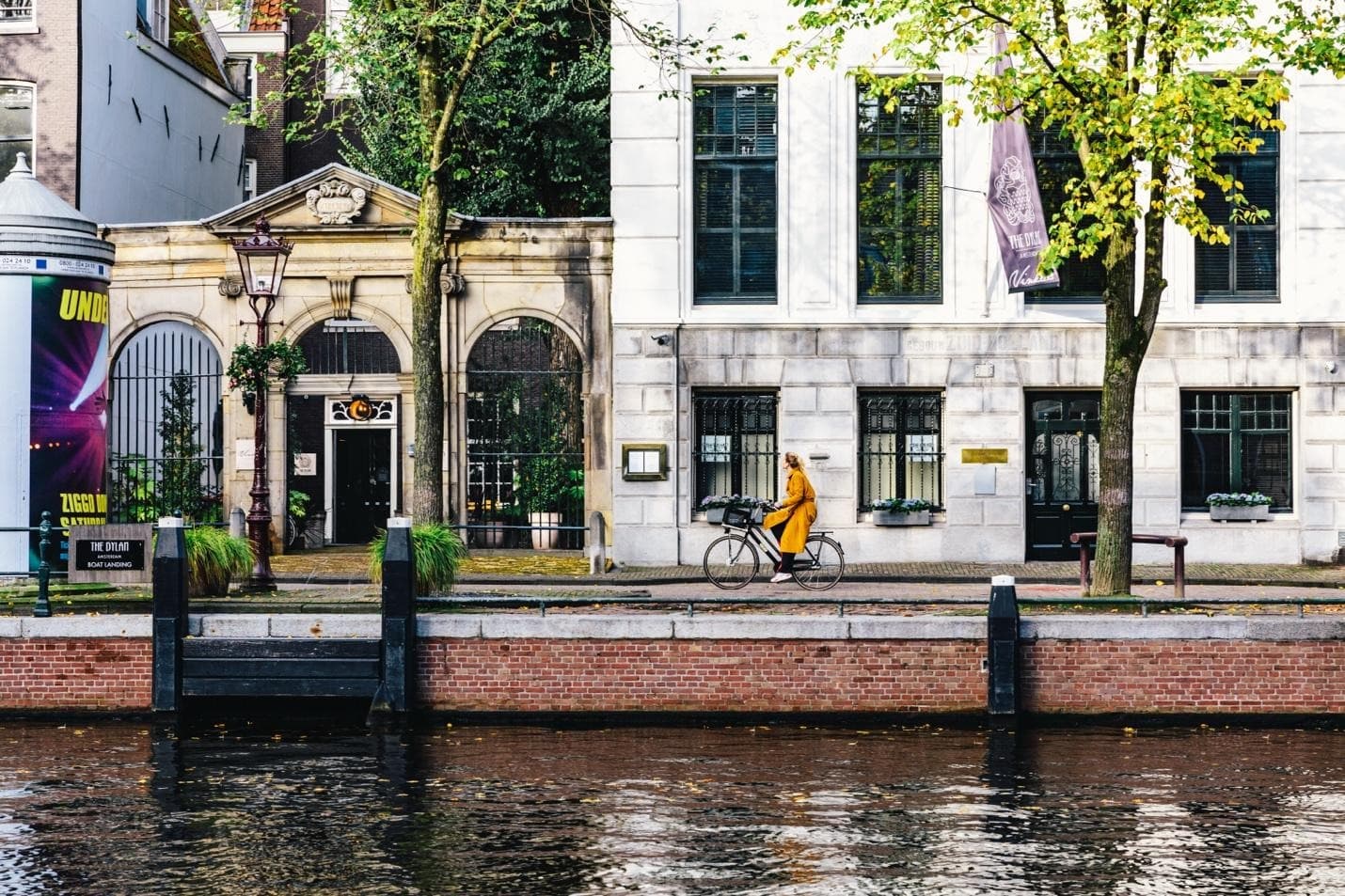 Canal-side living at The Dylan Amsterdam. Photo: The Dylan Amsterdam.
The Rijksmuseum and Van Gogh Museum are obvious for good reason. Neither needs to be demoted simply because everyone already knows about them.
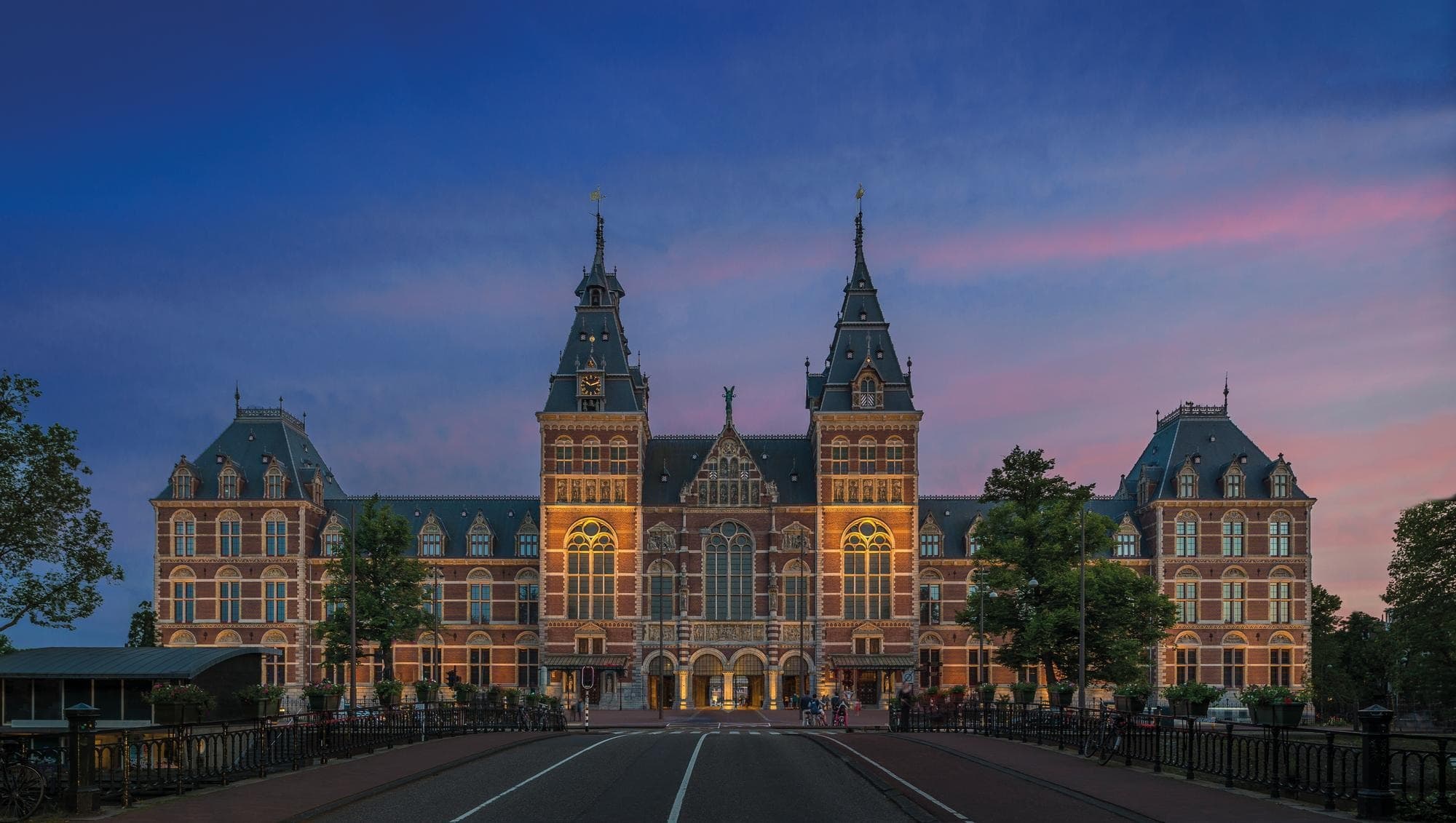 The Rijksmuseum, one of Amsterdam’s essential cultural stops. Photo: Mandarin Oriental.
Stedelijk: Across Museumplein, the Stedelijk turns to modern and contemporary art. Through January 17, 2027, it is staging a major Yayoi Kusama retrospective spanning more than seven decades of work across painting, sculpture, installation, fashion, collage and drawing.
Huis Marseille: Meulendijks also returns to Huis Marseille, Amsterdam’s photography museum, spread across historic canal houses on Keizersgracht. “I like that combination of contemporary photography and the history of the building itself,” she says. “It feels very Amsterdam to me.”
Rembrandt House Museum: Liam Dunch, Abercrombie & Kent’s director of Global Tailormade Travel, goes considerably further for clients interested in Rembrandt. He recommends arranging a private evening at the Rembrandt House Museum, beginning with champagne and a guided tour of the seventeenth-century canal house, followed by dinner in Rembrandt’s historic kitchen. Dunch describes it as “an exclusive dining experience in one of Amsterdam’s most distinctive cultural landmarks.” Having the house after hours also solves a familiar Amsterdam problem: trying to squeeze another museum between lunch and dinner.
EYE Filmmuseum: This museum provides a reason to cross town, both for its waterfront building and cinema programming, but Noord makes more sense when treated as somewhere to spend a few hours rather than a ferry ride with a museum attached.
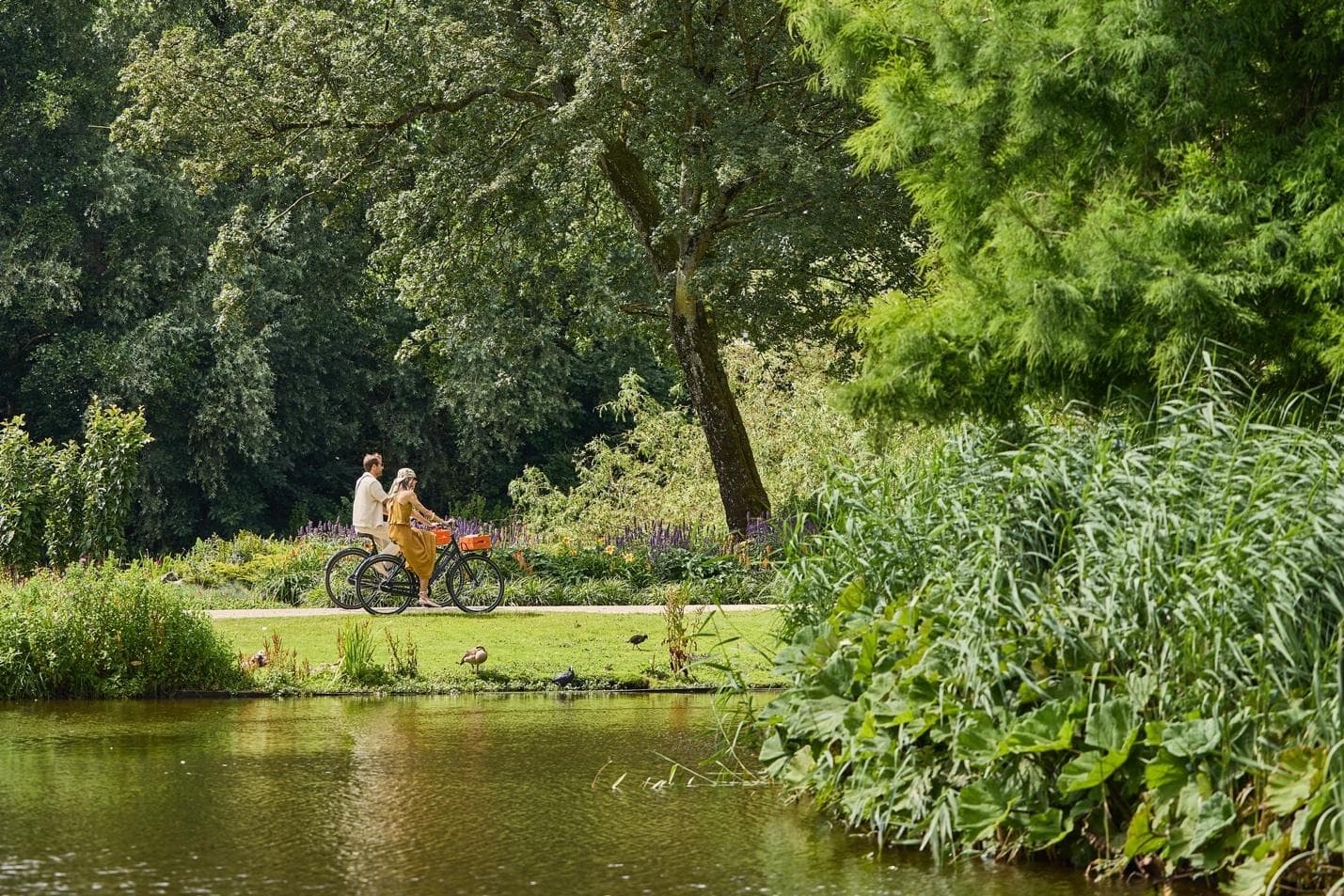 Cycling through Vondelpark, one of Amsterdam’s essential daily rituals. Photo: Mandarin Oriental.