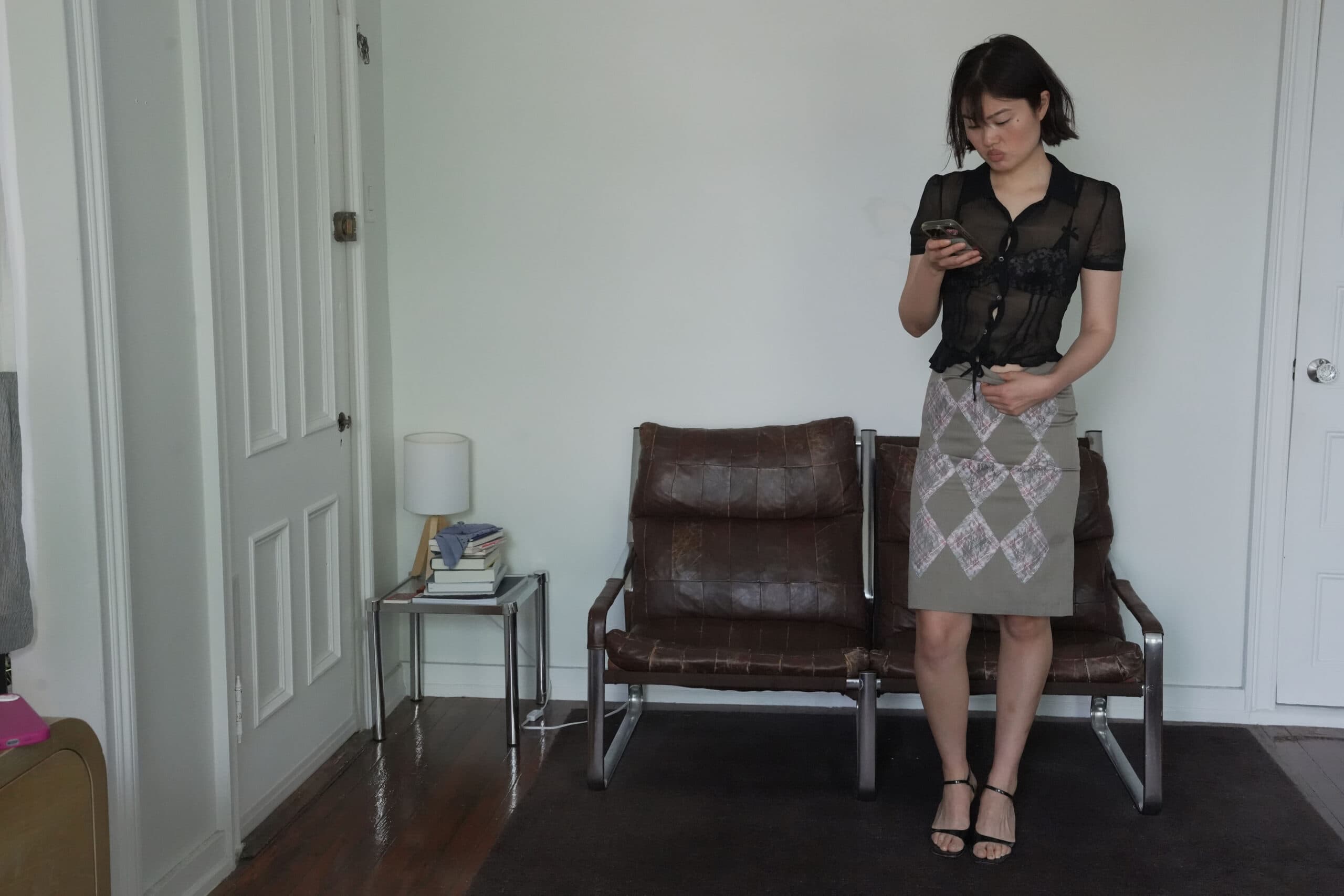
New York City is a place that is the sum of it's parts. Without the people that inhabit it—those who exist at the intersections of various cultures—the city would not be what it is: an incubator of talent, a melting pot of perspectives, and, ultimately, the place people come to follow their dreams, especially creatives.
This AAPI month, we rounded out the month by visiting the homes and spaces of the Asian-American New York City creatives on their lives and work. We went uptown to the home of model and musician, Varsha Thapa, who recently returned from Biarritz where she walked Chanel's Cruise 2026 show, and downtown to check in with style it-girl, writer, and brand consultant Michelle Li. Over in the West Village, Chrome Hearts public relations manager Michelle Yang introduced us to her new puppy, Dagger, and back in Brooklyn, writer and director Katarina Zhu welcomed us into her peaceful one-bedroom apartment to play dress-up and talk about her go-to writing spot in the city. Ending in Greenpoint, creative Tanya Ravichandran, who shot this story, got in front of the camera in her breathtaking loft as our final subject.
Ahead, we get to know 5 AAPI creatives on their heritage, how their culture influences their work, and their relationship to New York City.
Varsha Thapa, Model & Musician
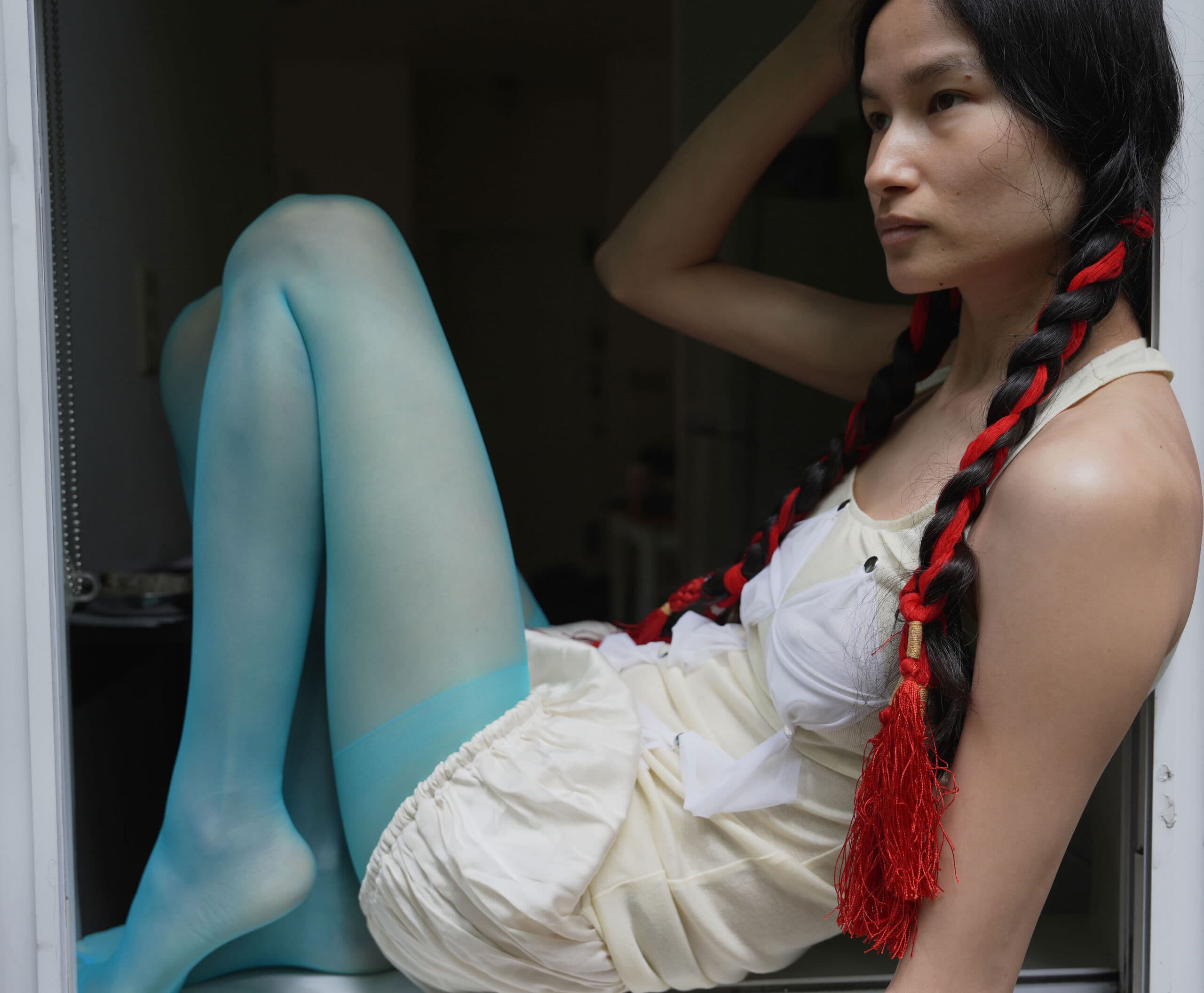 Tanya Ravichandran // Taottao top, Dauphinette bloomers, stylists own tights, model's own Dhago.
 Tanya Ravichandran
 Tanya Ravichandran
Tell us about your heritage…
“I am Nepali. I was born and brought up in Nepal. I went to boarding school between Nepal and India so both cultures shaped how I saw the world in a big way.”
When did you move to NYC?
“2011.”
Did you grow up in an environment that encouraged creativity?
“Yes and no. I grew up in boarding schools in Nepal and India. The schools had extra-curricular activities which included music, dance, yoga classes but they were never seen as an integral part of a child’s education and the majority of the importance was given to academics which I wasn’t interested in at all. I was into music and sports and was therefore seen as a bad student which made me feel like I wasn’t good enough. It perpetuated a cycle of wanting to prove that I am worthy. That bled into life as well—the people pleasing tendencies were always at work. Paradoxically it also made me lean harder into music as it became the only place where I felt free and I could be myself.”
How does your culture influence your work?
“Being Nepali has influenced the way I see life, and naturally, the way I make music. A lot of my work is rooted in impermanence, freedom, spirituality, nature, and trying to understand what’s real beneath performance and validation. I grew up hearing and learning about Hindu mythologies and witnessing Buddhist philosophies. Mountains, prayer, silence, rituals and a deep connection to nature, were a part of my childhood. I’ve noticed that even when I explore ideas through practices like meditation or Carl Jung’s psychology, it still comes through a very Nepali lens. Trees, rivers, wind, stillness—don’t feel ornamental to me, they feel alive. I think that’s why my music often feels more like an emotional or spiritual experience than just storytelling.”
How about your style?
“My style is usually a more relaxed, mix of masculine feminine with a touch of Nepali accents. In Nepal “Pote” (beads necklace) are worn by only married women but I wear it all the time—it is my staple accessory. I used to wear Dhago (Nepali hair braid accessory) a lot but now I wear it once in a while. It makes me feel close to home.”
Do you feel like living and working in NYC has had an impact on the way you dress?
“Yes, New York has awakened the freedom in me in ways that I may not be fully conscious of and it continues to do so in every big or small way. Before I moved here, it wasn’t that I didn’t dress how I wanted to but I think it stayed within an invisible line. New York has blurred those lines by making me question whether I was choosing to be myself with an outfit or I was conforming to a set of rules.”
The creative AAPI community is very vast here. Do you find inspiration from your peers?
“Yes, all the time. Every once in a while someone will write a song, recite a poem, make a movie reflecting their childhood and their culture and it inspires me to create something that reflects my own personal experiences. It’s that spark that eventually lights up an entire room. I’m always in collaboration with that spark.”
The city is constantly changing and evolving. What are some things you’d like to see evolve either in NYC or in your creative sector?
“New York is one the most interesting and creative places in the world but affordable housing to artists is very limited. If there were more affordable houses, more artists would be able to not just survive but thrive, and of course art makes this world a better place.
I’d love to see the music industry become more embracing of artists who live and create at intersections. I’m a musician, but I also work in fashion, and for a long time industries have made people feel like they need to choose one identity. I don’t think humans were meant to be just one thing. We’re spiritual beings having a human experience, and I want to experience all the different versions of myself while I’m here.”
Is there a place in the city that makes you feel connected to home or your culture?
"Yes! Jackson Heights in Queens. It’s like little Nepal. I walk around and hear Nepali being spoken and it feels like I’m home again. I love going to the restaurants there and getting daal Bhat tarkari and achaar and of course momo. Patel brothers has all the snacks from Nepal and India that I love like Waiwai and blue Lays."
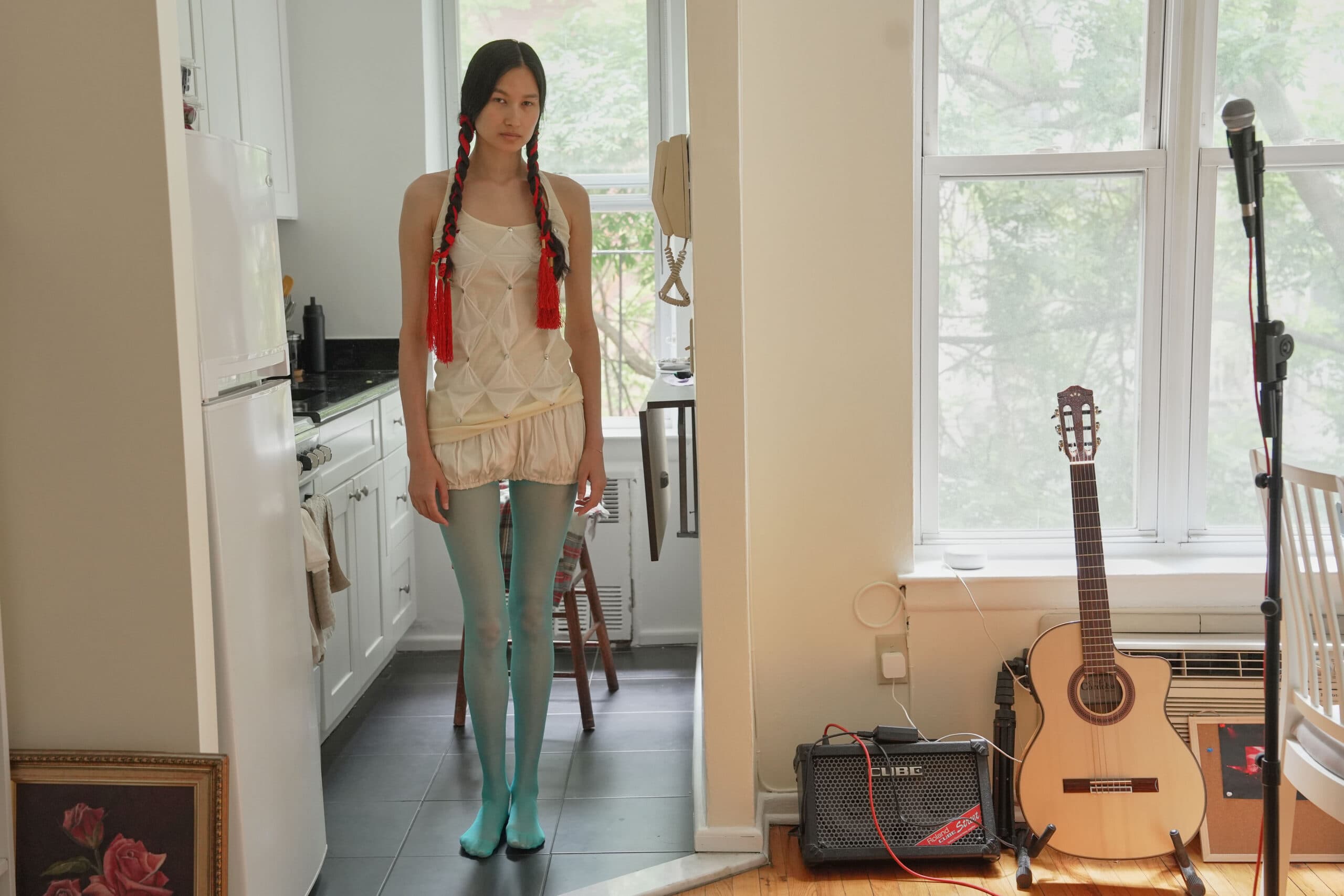 Tanya Ravichandran
Michelle Li, Writer, Stylist, & Brand Consultant
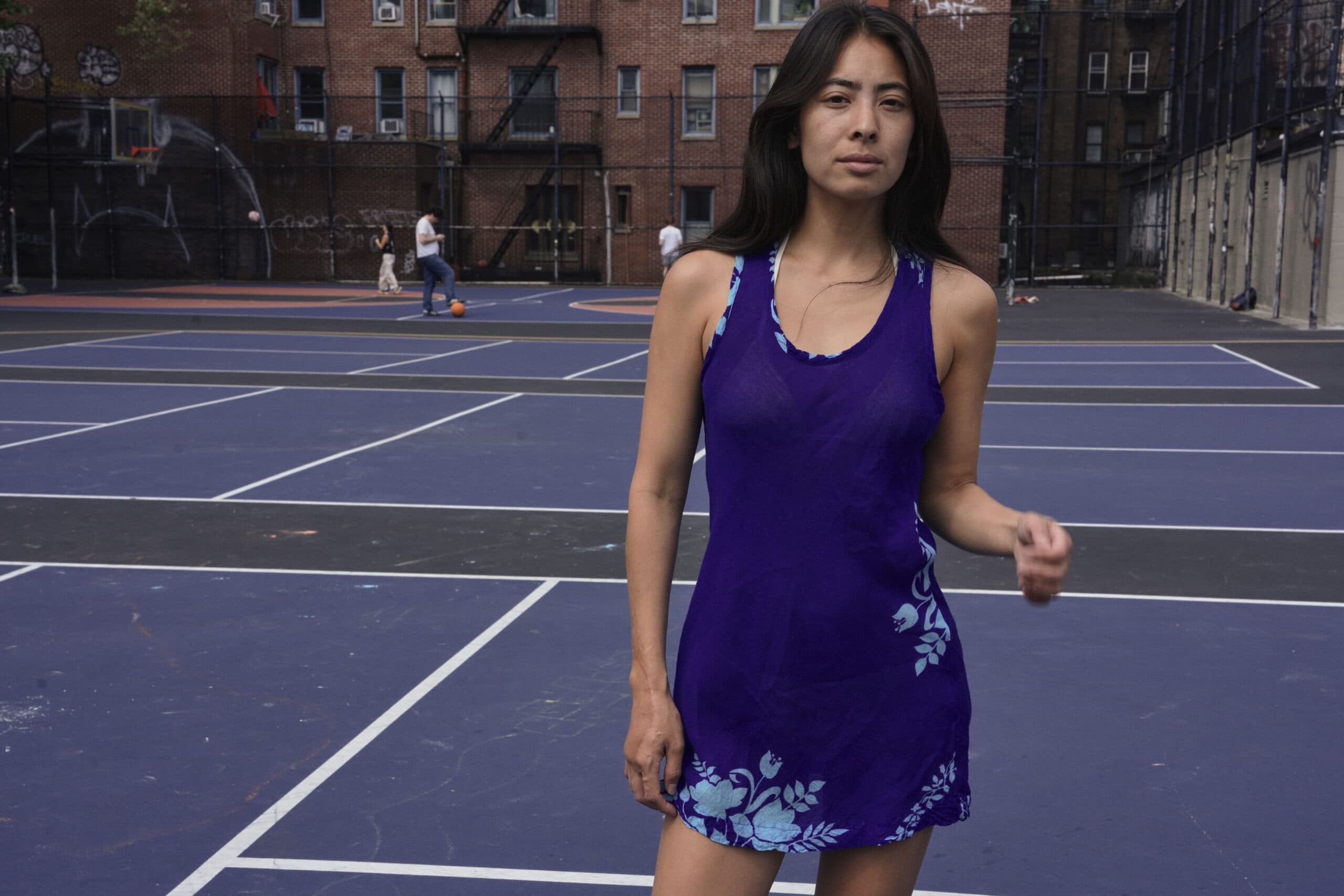 Tanya Ravichandran // Model's own dress
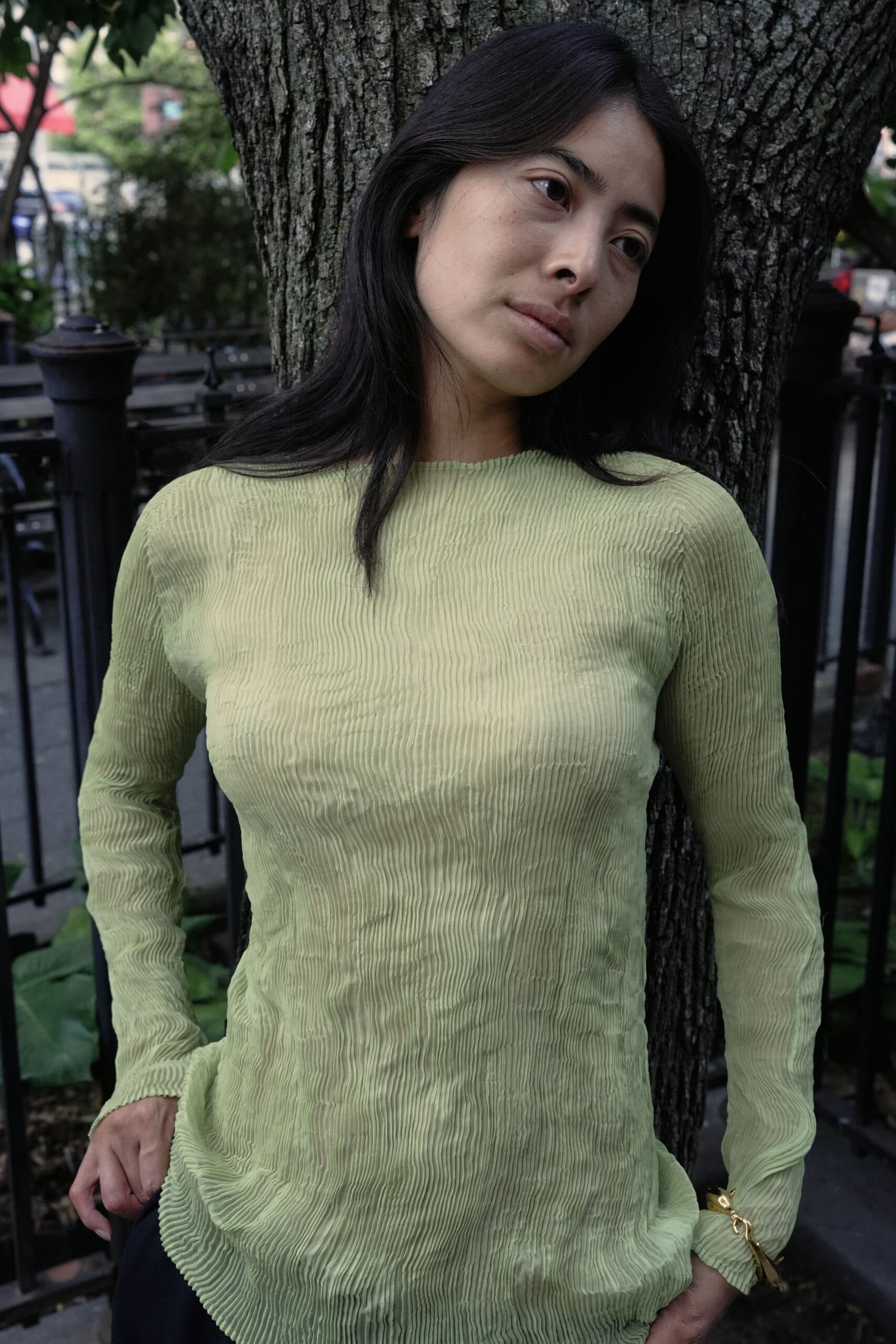 Tanya Ravichandran // Model's own shirt, pants, and shoes.
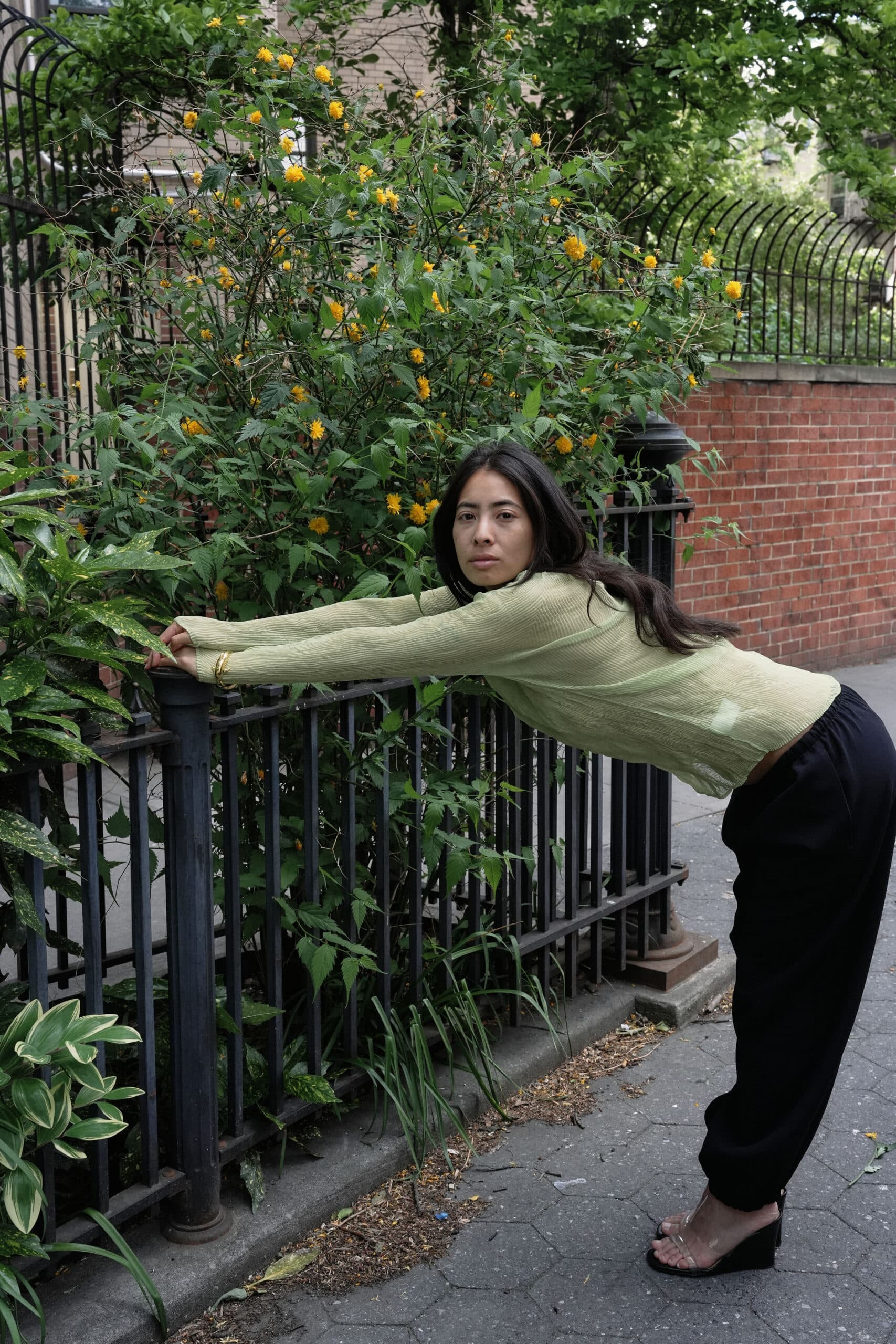 Tanya Ravichandran
Tell us about your heritage…
“I grew up in Indiana. My mom's from Beijing and my dad's from Shanghai and when they came to Indiana, they met at graduate school. My mom was getting her PhD in math and my dad was getting his doctor degree.
When did you move to New York?
“I moved to New York for college in 2012. I moved here and I have stayed here ever since.”
Did you grow up in a household that encouraged creativity?
“I feel like being able to encourage creativity can be such a privilege. I feel like my parents were just working so much that they were like, "You just need to focus on your grades and if you get good grades, you'll be successful.” So they didn't discourage it, but they weren't always encouraging it. They signed me up for piano classes, so I played piano for a while, and then we grew up playing tennis. So during every summer we had tennis camp. It was very fun and very active. I feel like that's where they really pushed us and wanted us to have these hobbies outside of school.”
Did that affect the way that you pursued your work in the beginning?
“No, not really. I love exercise and I love activity, but I was never going to be an athlete.”
How does your culture influence your work?
“I think it influences my work in terms of work ethic for sure. I'm very family oriented and love my parents and my family, they really keep me grounded. So I think that helps me with my work because I feel like it helps me stay very authentic and real and I don't get as caught up on all of the other outside things. As much as I love fashion and I love beautiful things, I like to find a lot of meaning in it. I think that that comes from just growing up with my parents and how they've taught us to live our lives.”
How does your culture influence your style?
“My mom has always had really colorful style and I think that that's always made it so that I've never shied away from color. I never thought it was even that big of a deal because I think I grew up with so much color. I mean, I love red, which I feel like is a very Chinese, lucky color. I've just always been really drawn to it. I'm not a very superstitious person, but I think the older I've gotten, the more superstitious I am, and the more red I wear all the time. Or if I have something big coming up, I'll definitely wear red.”
Do you feel like living and working in New York has had an impact on the way you dress?
“Definitely. I think living here and just seeing everybody's outfits and seeing people have such lived in outfits as well, like lived in clothing, it really has changed how I see luxury and how I see how I define beauty. I spend a lot of time in Chinatown, so it's fun to just sit and watch how everyone's layering all their outfits together. These people are not fashion people, but they actually have influenced me the most style wise because I think it's just so lived in and personal.
The creative AAPI community is extremely vast here. Do you find inspiration from your peers?
“I think that my peers are super inspiring. I think that I can get very discouraged feeling like there's not a place for me. And then I think that seeing them kind of move through the industry and a lot of times they're very fearless about it. I find that really inspiring and they're not as afraid or shy about being Asian, which I think for me growing up in Indiana, I kind of felt like maybe it wasn't as celebrated. I kind of just wanted it to be like, “okay, yeah, I'm Asian. Let’s move on.” But now I feel like being here and seeing my friends who are Asian just really embrace it and use it to their advantage has been so fun to see.
My friend Isa Sung really inspires me because I think she's someone who is very courageous and she's a California Asian. I feel like she really embraces it and grew up completely different than me, which I think is really nice.
Is there anything you'd like to see evolve either in New York City or in your creative sector?
“I would love for there to be a stronger Chinatown. I think that's something that—being there all the time—I really struggle with, because I feel like there's not the new age of Chinatown. I want to see it evolve and step into a new era and help change people's perspectives about Chinese food, like how much Chinese food should cost, because I think that a lot of people are like, "Oh, I would never pay more than $20 for Chinese food." And it's like…well, you pay a lot for sushi. I just wish that there was a better focus on quality and I don't know, just shifting people's perspective about Chinese food and Chinese quality of stuff and everything like that.
Within the industry I would love obviously less tokenism, which I think exists across the industry for all underrepresented people. And I feel like that's just such a struggle because it's hard to monetize that and I think that fashion has really tried it and then they realize it doesn't actually translate to more sales so they just don't really care. I feel like being in the industry for as long as I have, I've seen that cycle and watched it go through every single underrepresented group within the industry.”
Is there a spot in New York that makes you feel either connected to your culture or connected to home as in your family?
“Yeah. I love the spot on Mott Street. I don't even think it has a name, but it's right below Canal Street and it's on Mott and it's this tofu shop and they make their own tofu and they make soy milk and they make these white rice cakes. And I grew up eating those rice cakes ever since I was little. So anytime I'm really homesick, I usually will just go there and buy rice cakes.”
Katarina Zhu, Writer & Director
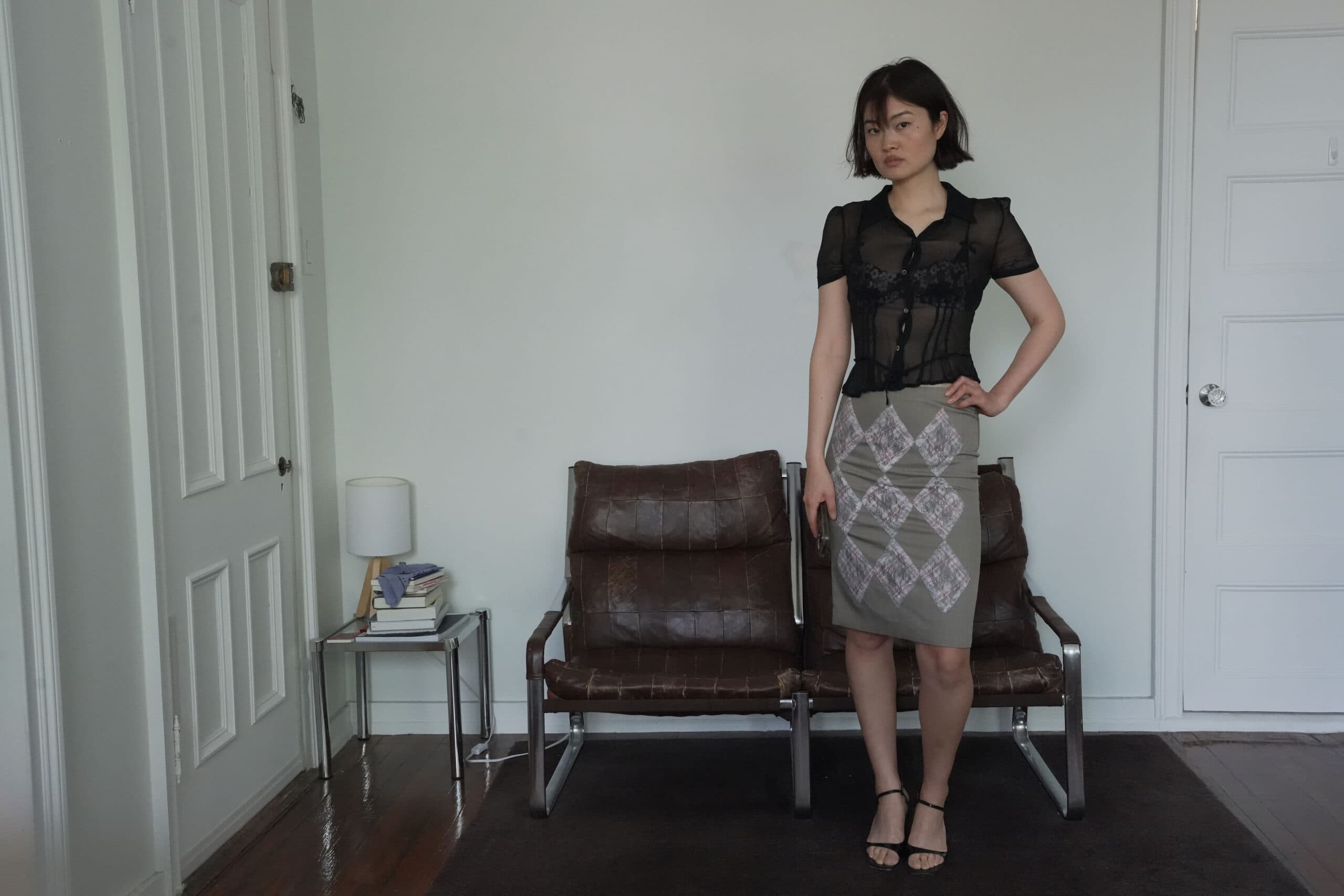 Tanya Ravichandran // Taottao skirt, model's own shirt & shoes.
Tell us about your heritage…
“So both of my parents are from China. Both of their parents were in the military so they moved around a lot. I feel like whenever I ask my mom where she's from, she names 20 different places, but then mostly she'll just say I'm from the Szechuan province. And then my dad—I don't actually know really where he's from. I think of him as being from Beijing because I think of him as a city person, but I don't know if that's actually right. Both of my parents are from China and I grew up in the States. I grew up in the suburbs of New York and Westchester.
When did you move to New York?
“I moved to New York in 2014 for school. I went to NYU. I studied acting, but I grew up coming into the city on the weekends to go to Broadway shows. My dad was really into musicals, so he would make us all go into the city on the weekend to see Les Mis or something. I think it definitely made the city feel like this very special glam place where that's where entertainment and art was. I remember going to see Madame Butterfly at the Met or something when I was really young. The city I felt was always this hub of art and culture so from a young age I knew that I ultimately wanted to get to New York City.”
Did you grow up in an environment that encouraged creativity? How do you feel like it affected the way you pursued your work?
“I feel really, really lucky because I feel like I grew up in an overwhelmingly supportive environment as it relates to creativity. My mom put me in every class under the sun.
Every instrument, every sort of dance, drawing classes, painting classes, acting classes, guitar, piano, ballet, tap, everything. I think she just wanted to give me the exposure that she hadn't had as a child. But she doesn't really have any aptitude for the arts or creativity, but I feel like my dad was that...My dad has a real aptitude for the arts and also I think he just had a different appreciation for the arts that my mom didn't have. My dad was just an amazing artist, like literally just drawing. He would just sketch and it would be the most amazing sketch. And his parents were like that too, like his dad was a playwright and then his mom was an actress, but they both worked for the military. So she was a nurse, but she acted for the soldiers or whatever.”
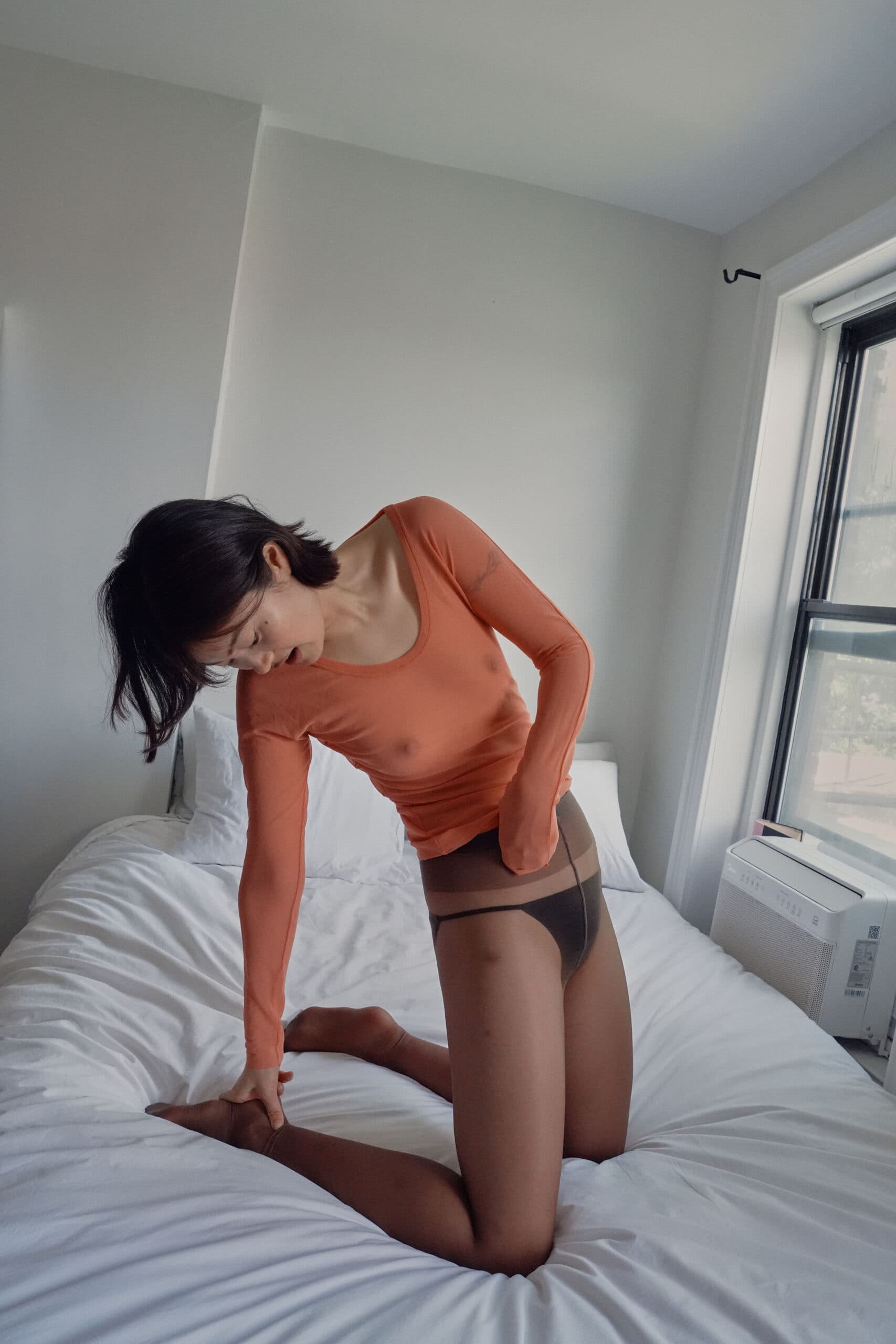 Tanya Ravichandran // ODDOBODY underwear, model's own shirt and tights.
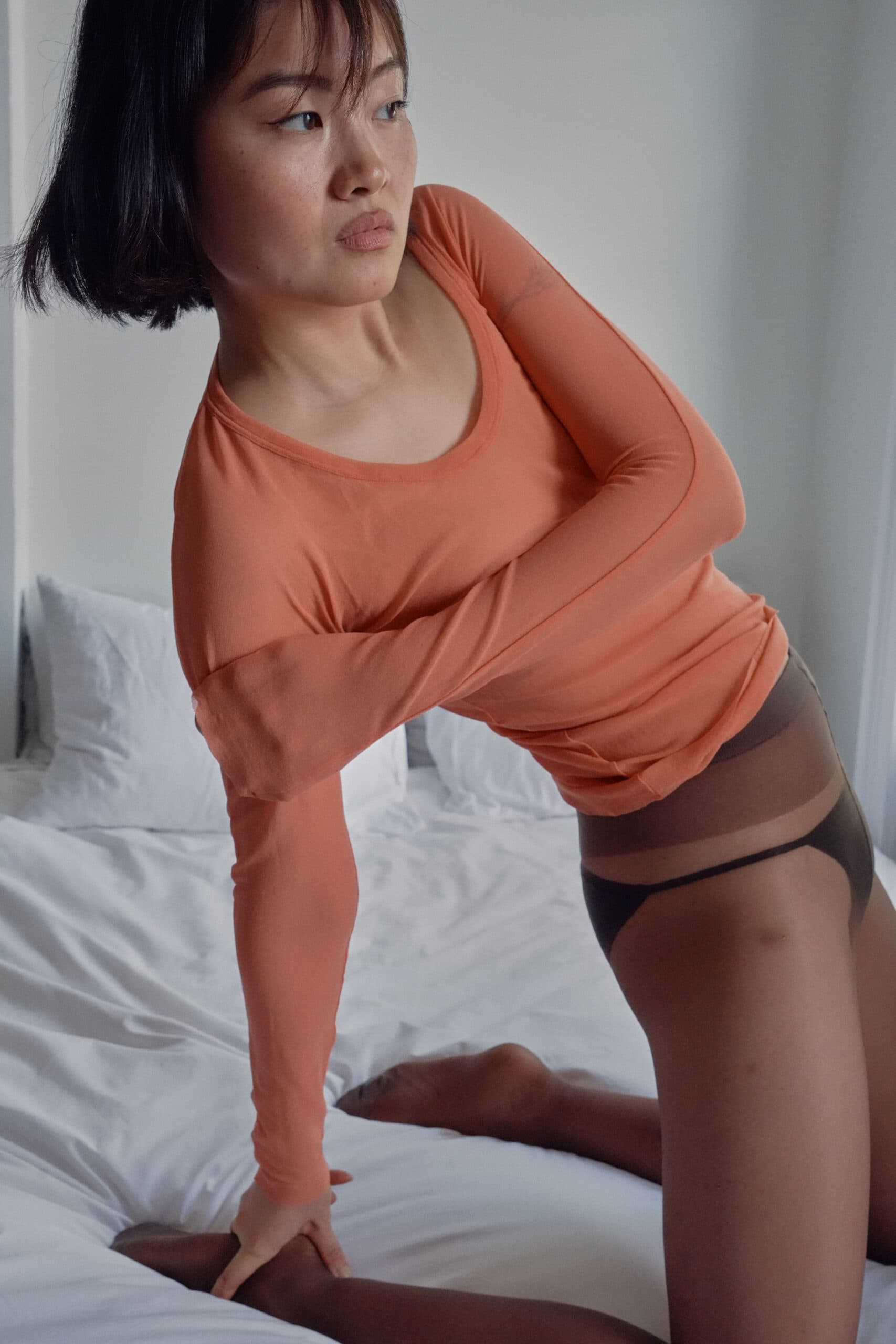 Tanya Ravichandran
Tell us a bit about how your culture influences your work.
“I feel like it's just embedded in everything. Every choice that I make. And so that includes creative decisions about my work. Growing up Asian American, my references are so different I feel because my parents had such specific references. I feel like there's institutional cultural knowledge that maybe they didn't have that they couldn't pass down onto me. I feel like sometimes there's a shared reference that people have that I'm just not aware of. And I feel like in those ways it sort of seeps into my work. I think family influences my work for sure, and I do think that is cultural, this emphasis on family and the importance of family.”
How does your culture influence your style?
“I'm sure it does influence my style in these ways that I'm not even aware of. Growing up there was a real sort of effort to set myself apart from my culture because it felt like anything that made me different was going to be the thing that other kids bully you about. And so I feel like there was an effort to really blend in and not draw attention to the fact that my culture was different from my friends or the people that I was growing up around. I feel like now I have more of an interest in getting in touch with my culture. I remember for my brother's wedding a couple years ago, my mom got a custom green silk qipao and it reminded me of how seen I felt when I saw Lindsay Lohan wearing a qipao in The Parent Trap. It was like a co-sign of seeing my culture in fashion and reflected back at me. “
How about New York? Has that had more of an impact on the way you dress?
“Completely. Yeah. I think it's the thing that everybody says where it's like you sort of have to dress for utility in many ways in New York. You have to be so considered about your footwear because you have to be able to walk 20,000 steps in it, but then also I feel like New Yorkers are so vain, it also has to be beautiful too. So I feel like it definitely has influenced the way that I dress and just living in New York makes me want to elevate my style.”
The creative AAPI community is very vast here in New York. Do you find inspiration from your peers?
“Completely. I've lived in New York, not necessarily New York City, but like New York my whole life and in 2021 I needed a change of pace, so I moved to LA for six months. And I think what really drew me back to New York, among other things, was I just was like, what type of work do I want to be making and who do I want to be making it with? And there's this amazing emerging group of AAPI filmmakers in the city in a way that I wasn't able to find in LA. I wasn't in LA for that long, but I just felt like it was already established in New York and I knew who those people were and I wanted to cultivate those friendships. I was just with my friend Jeannie Sui Wonders who is a filmmaker, director, and writer, and she's working on her first feature. We were writing together yesterday at Swan Room. That's my spot. During the day I drag everybody there and make them work with me, but it just feels really nice to be able to have this really supportive community who you can share things with.”
The city is changing and evolving all the time. What are some things that you would like to see evolve either in New York as a city or your creative sector?
“I think New York City has always been a hub for emerging creatives in all different disciplines, all of my friends are always coming together and working on projects and putting on shows in a grassroots way and I just think we need more of that in New York, I’d like to see that continue to grow,”
Is there a place in the city that makes you feel connected to your culture or home?
“I love walking...yesterday morning before I met Jeannie at Swan Room, I was looking for a legal pad, and there are all these little cute stationary shops around that area, but it was early so like none of them were open and so I stumbled into a Chinese-owned shop and it had everything you could think of. Specific snacks, plumbing equipment, notepads, toys, clothes, it was everything. And I feel like whenever I walk into one of those sorts of stores, I feel like that brings me back to my culture... My grandparents lived with us growing up and we would go to Flushing on the weekends to go to the big Hong Kong supermarket or something and I feel like that always sort of reconnects me with a sense of my culture and family and home, just like a little random shop in Chinatown that has everything. I always feel very comforted by that.”
Michelle Hyebin Yang, Public Relations & Creative
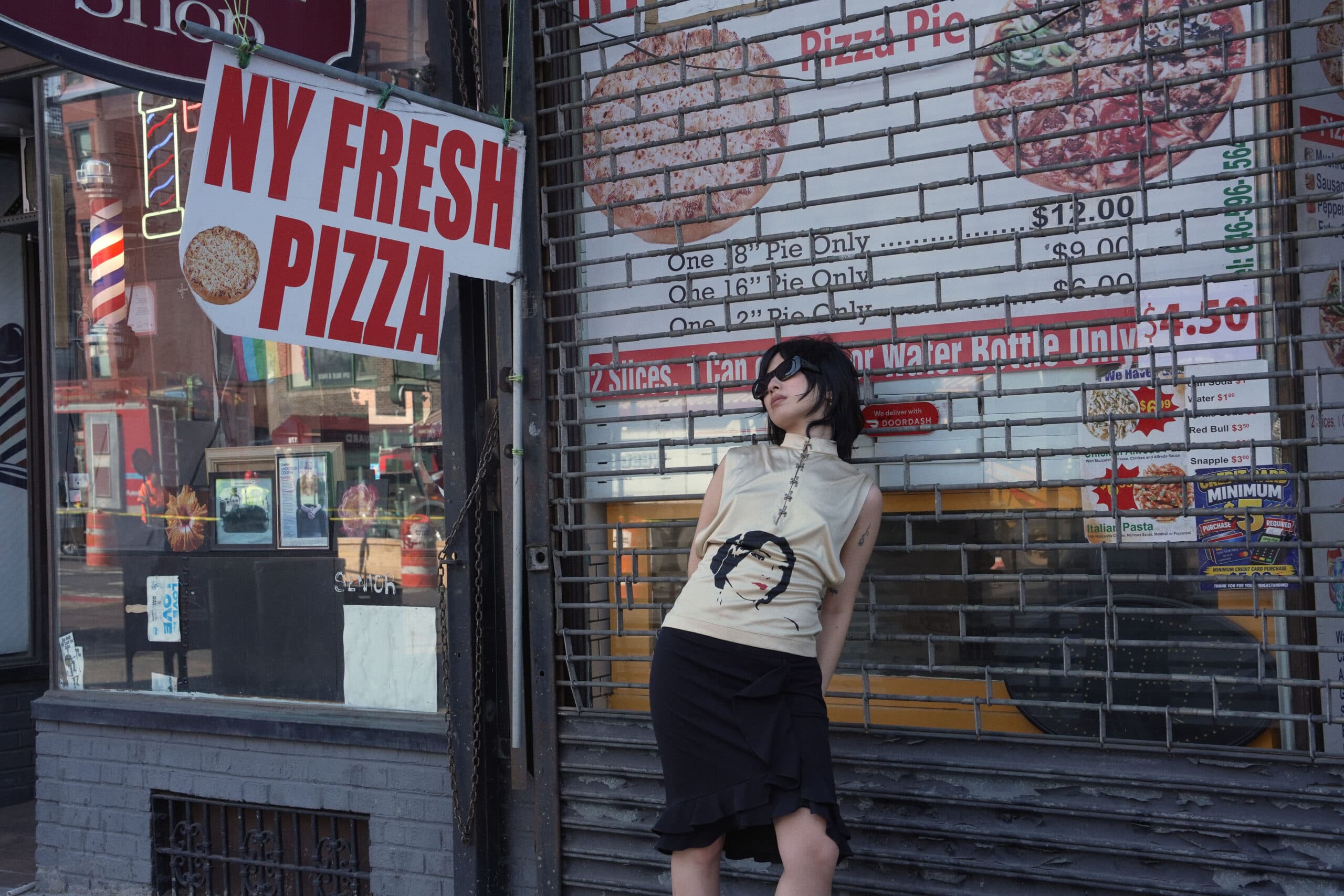 Tanya Ravichandran // Stylists own shirt, model's own skirt and sunglasses.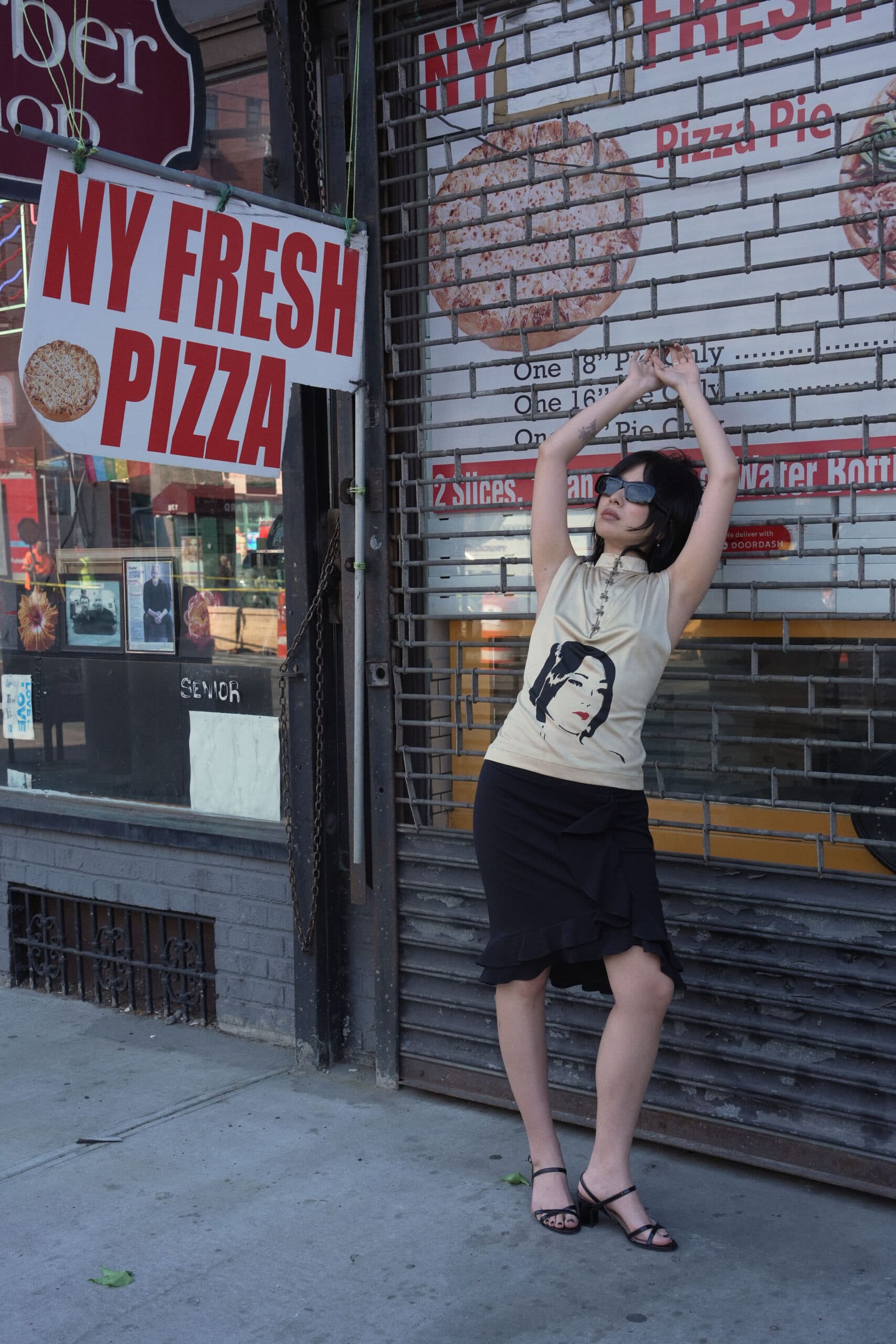
Tell us about your heritage…
“I was born and raised in Korea until I was 10 years old. I moved to Canada when I was 10 and then I moved to North Carolina when I was 13 and then I moved to New York at 18. I grew up between Korea and the Western world.”
Did you grow up in an environment that encouraged creativity?
“Creativity was always around growing up because my dad would always bring around his camera, shooting all the memories. I would always be posing in front of him and I also went to an art oriented preschool. So I think that was just planted in my head to always think creatively from the beginning. And my family, my grandpa, my grandma, my uncle and they all are in the classical music world. My dad always encouraged me to be creative and he always encouraged me to do what I love. But my mom sort of tried to talk me out of being in the creative industry because she preferred stability. So I think that's why I sort of met in the middle. I wanted to be a fine artist, actually, but I chose textile design because it's not fully art, but it's drawing on fabrics. My mom was like a classic Korean mom so she just preferred me to do something else and just have more stability."
Tell us a little about how your culture influences your work.
“Korean culture influences my work in a lot of subtle ways. I think there's a delicacy and attention to detail with Korean culture that naturally shaped how I see aesthetics. And growing up, no mistakes were allowed in the household. I had to be a perfectionist. So I think I put that into my work and go from there. And also being in New York brings a freedom out of me, so I think they are now merged together.”
How does your culture influence your style?
“Being a Korean, you have to be very put together. Growing up as a Korean, you should not be too loud or too over the top, it’s a lot about restraint. But then being in New York, you can just be yourself. Everyone loves you for who you are. And so that just made me want to explore and push the boundaries.”
The creative AAPI community is very vast here. Do you find inspiration from your peers?
“I am inspired by how other fellow Asian Americans are pushing their boundaries. For me, I think inspiration also comes from just supporting one another and working together.”
The city is always changing and evolving, what are some things you'd like to see evolve in either New York City or in your creative sector?
“I think we're finally moving past a lot of old stereotypes and obviously K-pop is becoming very huge these days. I would say it is already happening, but allowing people to just be themselves and less judgment and freely be in their own world.”
Do you have a spot in the city that connects you to home or your culture?
“Koreatown always. Korean food is definitely my go- to.I like to go to Soju House with my friends if I'm feeling homesick, but I love Vietnamese pho. It just makes me feel so comforted and brings me back to life. I go to Nha Trang One in Chinatown.”
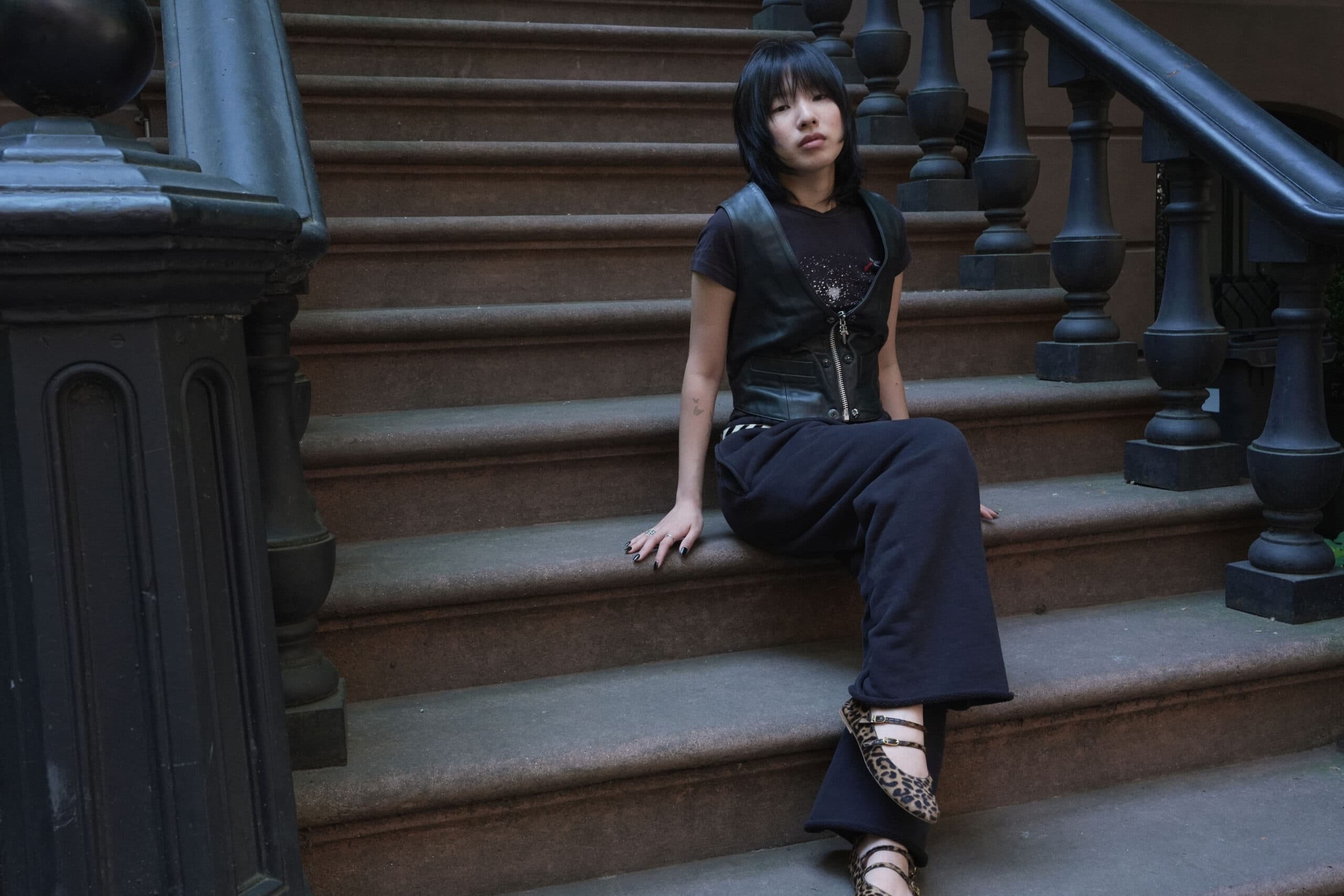 Tanya Ravichandran // stylists own vest, model's own trousers, shirt, and shoes.
Tanya Ravichandran, Photographer & Creative
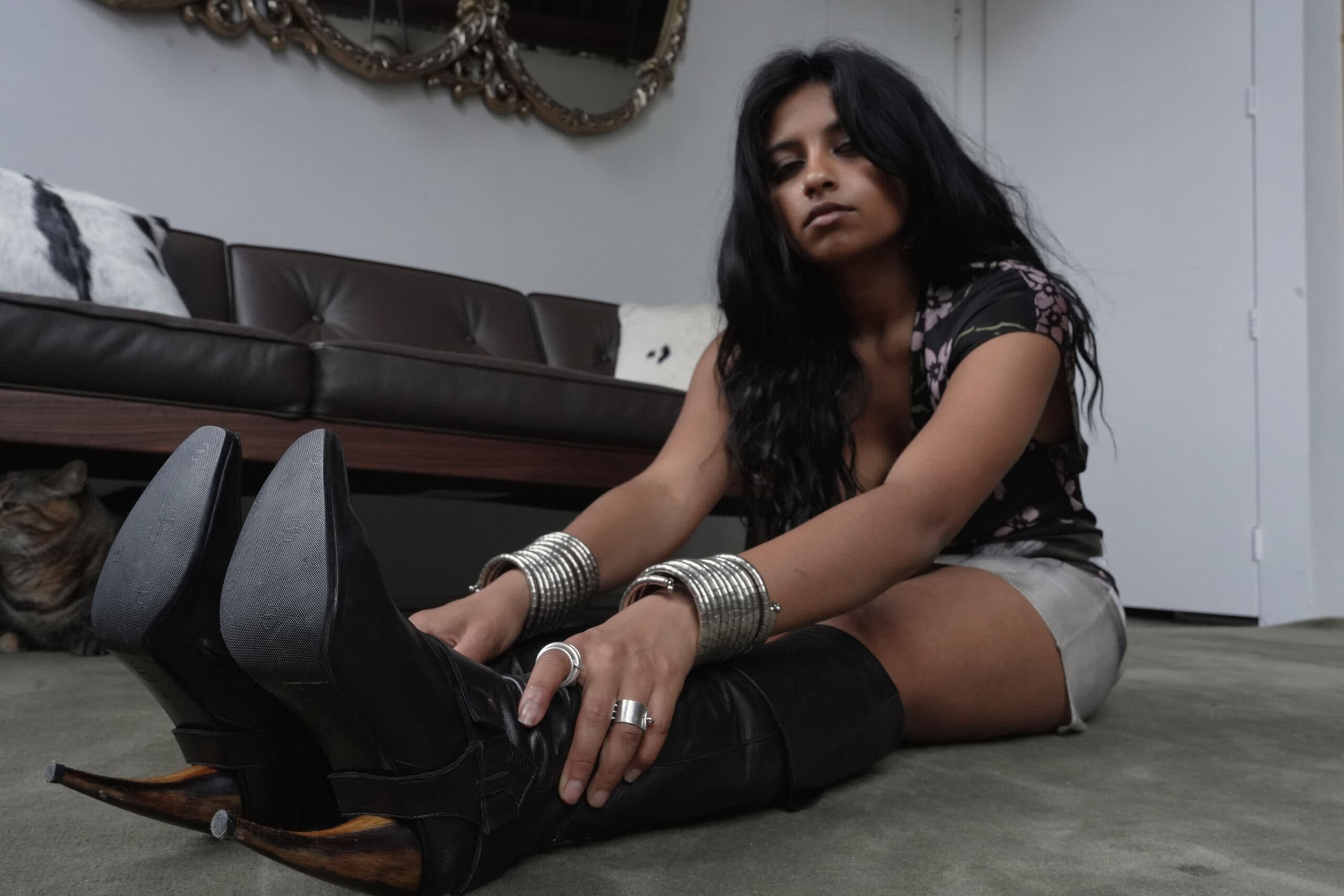 Tanya Ravichandran // Model's own dress, shoes, and jewelry.
Tell us about your heritage…
“My parents grew up in Bangalore, India. They both are South Indian and they actually met each other in the newspaper in India when my mom I think was 17 or 18, and my dad was like 27 or 28. He basically said: “Moving to United States. Looking for a wife.” Which is very common in India. Arranged marriage still apparently is, but obviously especially back then. My mom met him once, married him, then didn't see him for a year or two because he had to move to the United States and her visa was still getting processed, and she was finishing up university. Then she moved to the United States and met up with him. They moved to Minnesota together because there were a lot of immigrants and there's still a lot of immigrants there at this time. They're very highly educated people and they got multiple master's degrees, living that “American dream”. They then moved to the Bay Area, California, and that's where I'm from."
When did you move to New York?
“I actually graduated college a little over two years ago and I booked a one-way ticket to New York one day after I graduated. I said, "Bye-bye." I studied computer science and UX design and just moved here two years ago. This is my first apartment, and I hope my only apartment because when are you going to find an apartment like this again? “
Did you grow up in an environment that encouraged creativity?
“Yes and no. I grew up in Cupertino, California. It's Apple headquarters’ city. Where I grew up, you're only allowed to be a few things in life: A doctor, engineer, lawyer, loser. You can't be anything else. Even my parents are engineers and doctors. I grew up in a 90% Asian community, so if you know a little bit about Asian culture, especially immigrant Asian culture, you really need to live up and do your parents good and make some money, especially if you also need to support your family because you're first generation. So there's a lot of trauma and bonding across working very high profile STEM or lawyer jobs. So creativity was not very well honored and it was not fostered or nurtured. I started in middle school doing photography because it was the one thing my peers couldn't touch and never influence. It's one thing my parents couldn't be like, "Yeah, we can get you a job." I don't like that. It was the one thing that felt very separate in my escape from everything else in the world. It was just my way of getting out of it, but my parents never really understood it. But I think what they did understand and to this day, what they understand is that I work hard and they do value that. “
How does your culture influence your style?
“There's this really amazing article on Vogue by Christian Alaire, and he's talking about being a person of color with culture and reclaiming your identity in ways that Western fashion has exploited, like a craft that you're ethnically connected to. I've been practicing it ever since I read that article four years ago, buying back pieces where they stole your culture. So I feel like the way to reclaim the identity in a place where I'm not very represented is to buy back those pieces that use my craft. I don't really wear things that are very South Asian particularly because I feel like it's not a reflection of my personal style and I am part of the South Asian diaspora. So the way I've been able to find connection to my roots is through purchasing back pieces that belong to my culture.”
How does that influence your work, if at all?
I think there is an overarching theme of working really hard in South Asian culture. I would just say any Asian culture, but obviously I'm going to give my experience as a South Asian or an Indian person because for a lot of us are first generation immigrants and even in India there's such a high level of competition. So I think the way that my culture's influenced my work is by working really hard.
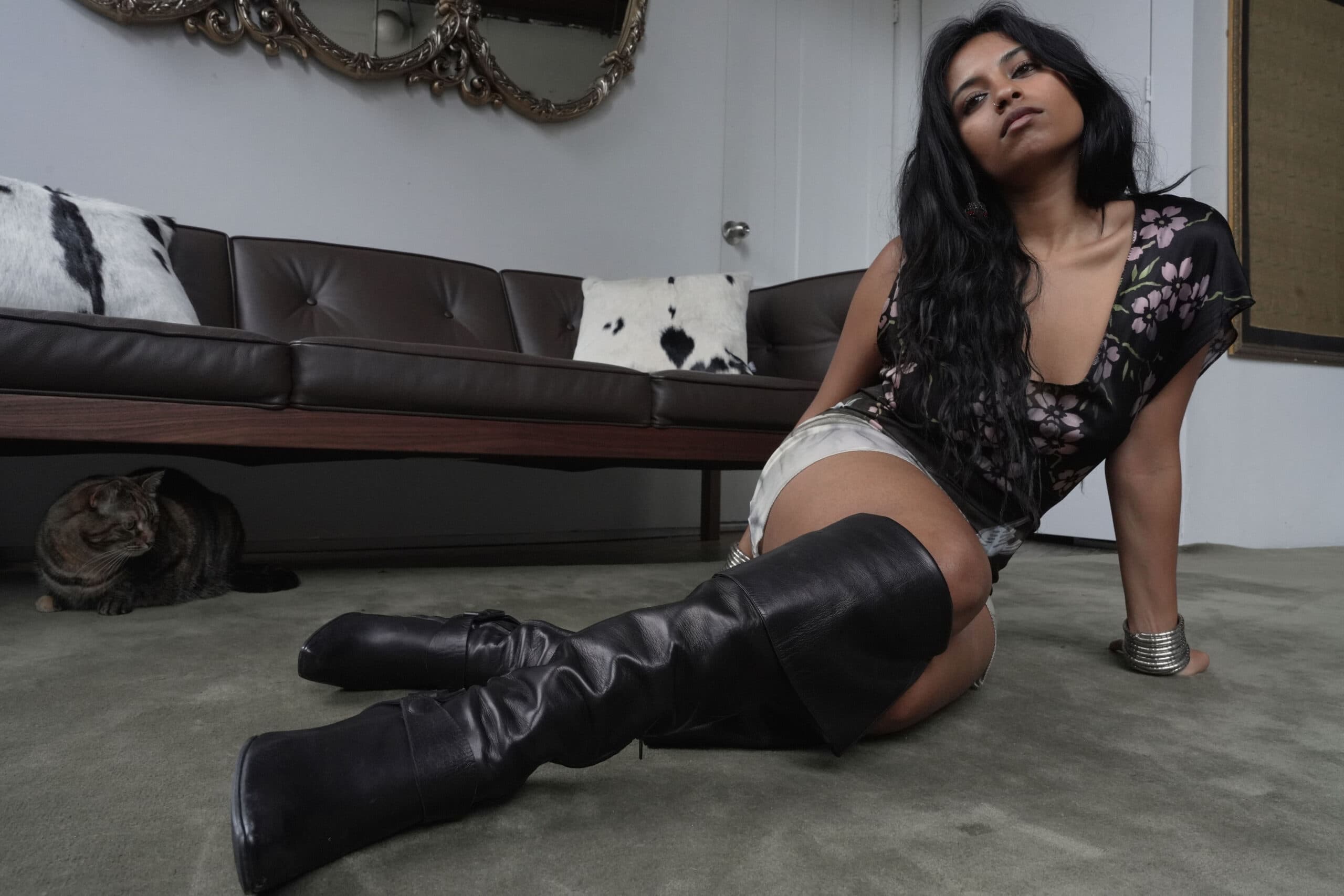 Tanya Ravichandran
Do you feel like living and working in New York has had an impact on the way you dress?
“I feel like once again, this ties back into being South Asian. We're very extra. We love to overdress. I mean, look at an Indian wedding. We love to overdress. My mom was dressing me up in full, hot, pink, juicy, couture sweatsuits in middle school. So there's a chronic thing of overdressing. I actually think it's gotten more tame, which is interesting. I've dressed a lot more for utility. It's still very loud. I objectively know I'm a loud dresser, but it's much more for comfort.”
The creative AAPI community is very vast here in New York. Do you find inspiration from your peers?
“I've told so many people this and they're just like, "What?" but I think all South Asians hate each other. I think there's a lot of internalized racism within the South Asian community. It's because I think we've been pitted against each other. We need to really unlearn this in the community and we could really be uplifting each other.
Is there a place in the city that makes you feel connected to either your home or your culture?
“I don't think there's a place in the city that makes me feel connected, but I think there are experiences that do. So maybe once or twice a month, I do big Indian meal nights. I make a group chat with 15 of my friends, and basically we basically do a four course Indian meal and I cook it all from scratch with my family's recipes and it's such a good time and then in the summer we'll sit on the roof and do it.”
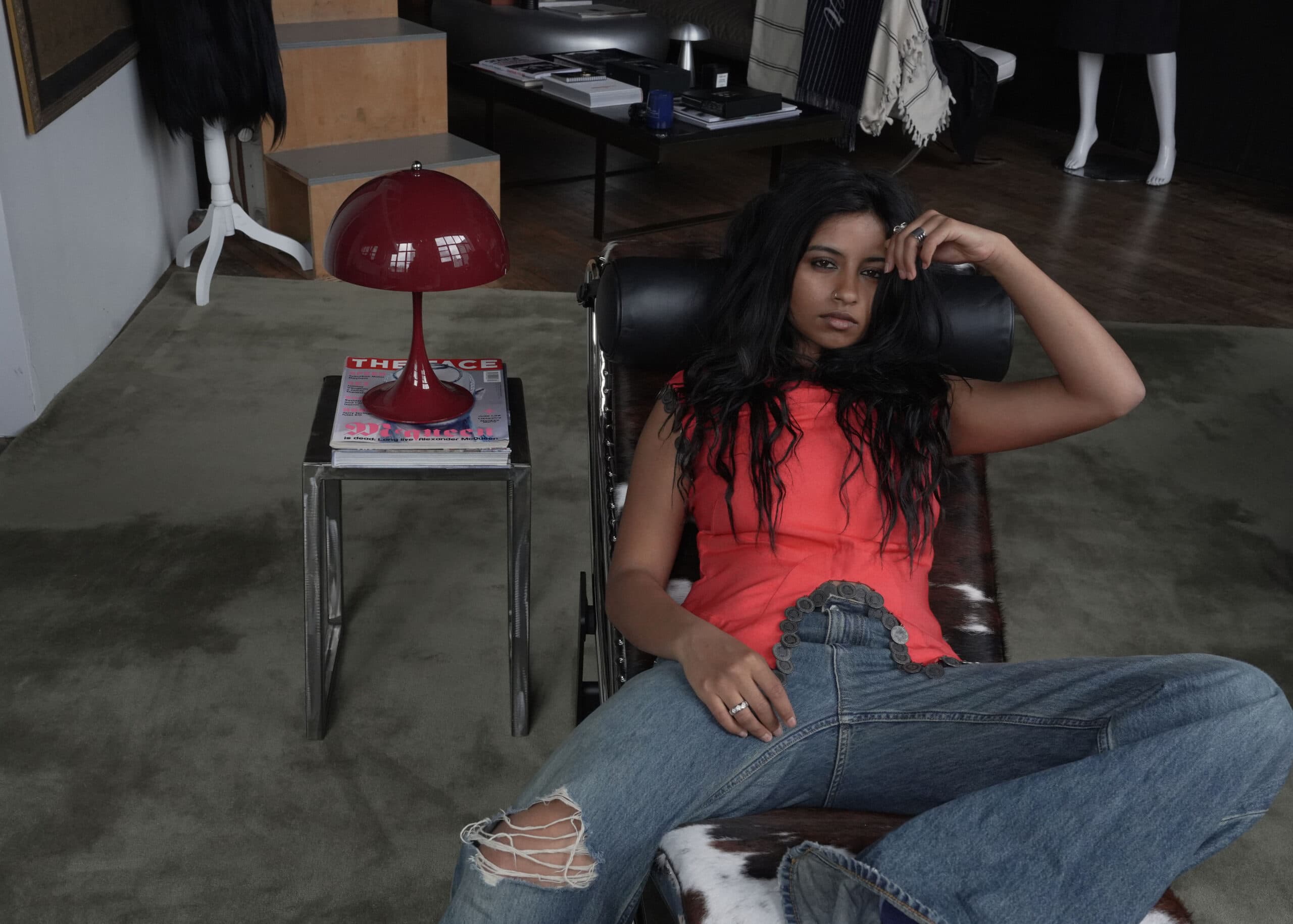 Tanya Ravichandran // Model's own top, jeans, and jewelry.
Credits:
Photography: Tanya Ravichandran
Senior Fashion Editor: Ella O'Keeffe
Talent: Varsha Thapa, Michelle Li, Katarina Zhu, Michelle Yang, Tanya Ravichandran.